Guide To The Robotic Joint Processing Technology
Table of Contents
The robotic joint processing technology serves as a “bridge” connecting raw materials to the robotic joint performance: the material determines the foundation of robotic joints, while the processing technology defines the performance ceiling of these joints. High-quality materials cannot demonstrate their optimal advantages without appropriate processing technology; conversely, average materials can enhance performance and be adapted for high-end robotic applications when matched with suitable joint processing techniques.
The Meaning of Robotic Joint Processing Technology
Robotic joint processing technology refers to a comprehensive system that uses a set of specialized methods and operational processes to manufacture the components of robotic joints, meeting demands for precision, performance, and reliability. The core goal is to ensure that joints can achieve precise, flexible, and stable movements while balancing production efficiency and cost control.
The selection of robotic joint processing technology must comprehensively consider factors such as joint grade, application scenarios, and material properties to balance performance, efficiency, and cost.
Significance of Robotic Joint Processing Technology
| Precision Control of Robotic Joints: The motion precision of robotic joints is directly dependent on the accuracy level of the robotic joint processing technology. High-precision processing (such as micron or even nanometer levels) ensures the dimensions, shapes, and fitting precision of joint components, reducing transmission errors, stuttering, or deviations, thereby enabling accurate positioning and complex movements of the robot.
| Optimization of Robotic Joint Performance: For instance, surface treatment processes (like electroplating, spraying, and anodizing) create a protective layer on the surface of joint components, enhancing corrosion resistance, wear resistance, and lubrication. Specifically, after anodizing, the surface of aluminum alloy joint shells forms a dense oxide film, which both enhances corrosion resistance and reduces friction coefficients, making them suitable for damp or outdoor environments.
| Reliability of Long-Term Operation: Precision forming processes (like precision casting and powder metallurgy) ensure the structural integrity of joint components, particularly beneficial for those with complex shapes or miniature joint parts. This reduces subsequent processing errors and stress concentrations. A reasonable robotic joint processing technology can also optimize stress distribution, reduce fatigue failure risks, and improve reliability during prolonged operation.
| Adapting to Different Applications: Different types of robots have varying performance requirements for joints. Robotic joint processing technology can be adjusted based on specific application scenarios. For instance, process optimization can fulfill the demands of industrial robot joints for high load-bearing and wear resistance.
| Balancing Efficiency and Cost: Choosing the appropriate processing technology can achieve a balance between performance, efficiency, and cost. For example, machining is suitable for rough and fine processing of most joint components, while precision forming is ideal for mass production of complex high-end joints, thus shortening production cycles and reducing material waste while achieving a scalable production and cost control balance.
Recommended In-depth Reading from AI Robots Eidos
The theme of this article is the processing technology of robotic joints. To prevent misleading readers, it should be emphasized that raw materials have a significant impact on robot performance, as emerging new materials are quietly changing the design logic of robots. To provide readers with a comprehensive understanding of the factors influencing robot performance, readers are encouraged to read articles related to robot materials.
Classification of Robotic Joint Processing Technologies
Cutting Processing
Cutting processing is the “basic process” of robotic joint manufacturing, primarily responsible for “removing excess material to obtain required dimensions, shapes, and precision,” akin to “sculpting”—cutting, milling, drilling, and grinding raw materials into the various components of the joint (like shafts, gears, and shells). This is the first step in joint manufacturing and a core stage for ensuring joint precision.
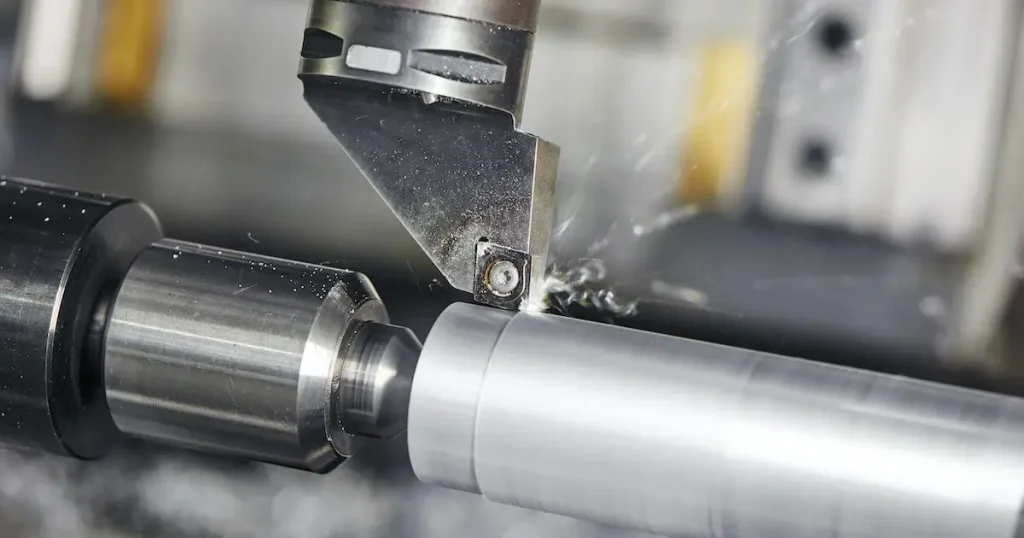
Core Advantages: High processing accuracy, precise dimension control, adaptability to various materials, capability of producing complex shapes; however, it generates material loss during processing, and some complex shapes have lower processing efficiency.
Different cutting methods are suitable for various joint components:
| Turning: Mainly used for processing circular joint parts (like shafts and gears) using a lathe to rotate the workpiece, ensuring circular components’ roundness and cylindrical accuracy, with precision reaching microns.
| Milling: Suitable for irregular-shaped joint components (like joint shells and support brackets), utilizing a milling machine to rotate the tool while the workpiece is fixed or moving, processing shapes like flat surfaces, grooves, and complex curves.
| Grinding: Used for high-precision, high surface roughness joint components (like precision gears, shaft end faces) by grinding with grinding wheels to improve precision and surface smoothness to sub-micrometer or even nanometer levels.
| Drilling: For processing joint component hole positions (like mounting holes, fixing holes) using a drill press to rotate the drill bit, ensuring hole position accuracy and diameter precision.
Heat Treatment Processing
Heat treatment is the “reinforcement process” for robotic joint processing, primarily enhancing the material’s strength, hardness, wear resistance, and toughness through heating, insulation, and cooling methods. This process is essential for compensating for inherent material performance deficiencies and extending the joint’s service life.
Core Advantages: Can significantly enhance material performance without altering shape and dimensions, suitable for most metal materials; however, it is complex and costly, requiring strict temperature control to avoid degrading material properties.
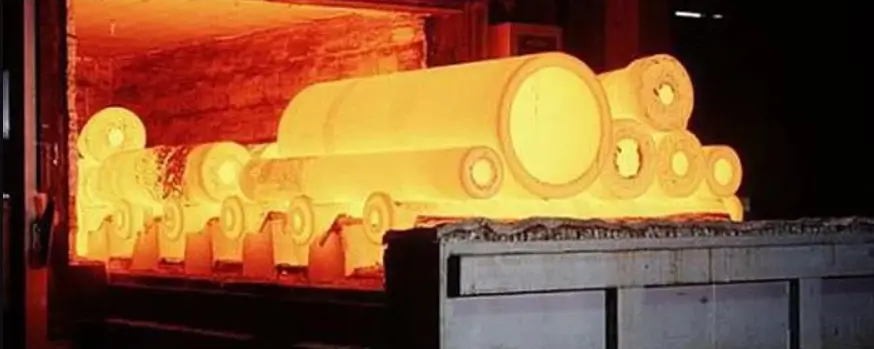
Common Heat Treatment Methods:
| Quenching: Increases strength and hardness by heating metal to critical temperatures and rapidly cooling it.
| Tempering: Reduces internal stress from quenching and enhances ductility by reheating quenched materials at specific temperatures.
| Annealing: Lowers hardness while increasing ductility and plasticity, facilitating subsequent cutting processes.
| Carburizing: Enhances the surface hardness and wear resistance of metals while maintaining internal toughness.
Surface Treatment
Surface treatment is the “protective process” for robotic joints, forming a protective layer on joint components to enhance corrosion resistance, wear resistance, lubrication, and aesthetic appearance. This process prevents direct exposure to the external environment (like dust, oil, corrosive liquids), thereby reducing wear and corrosion and extending joint lifespan.
Core Advantages: Diverse processes adaptable to materials and scenarios, improving protective capabilities and surface quality; however, some methods (like electroplating) can be costly and require strict process control.
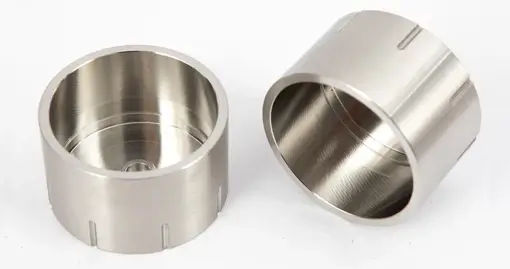
Common Surface Treatment Methods:
| Electroplating: Enhances corrosion resistance and appearance by depositing a metal layer onto joint components.
| Spraying: Improves corrosion resistance and appearance by evenly applying paint or powder coatings to joint surfaces.
| Anodizing: Creates a dense oxide film on aluminum alloys for corrosion and wear enhancement, with aesthetic benefits.
| Lubrication Coating: Reduces friction and wear by applying a lubricating layer on transmission parts.
| Passivation: Enhances corrosion resistance of stainless steel through a chemical process.
Precision Forming
Precision forming is an advanced robotic joint processing technology that directly shapes raw materials into required joint components using molds and pressure, minimizing or eliminating subsequent cutting, thereby enhancing processing efficiency and reducing material waste.
Core Advantages: High efficiency, low material loss, capability for complex and miniature parts; however, it involves high mold costs and is suitable for high-end joints.
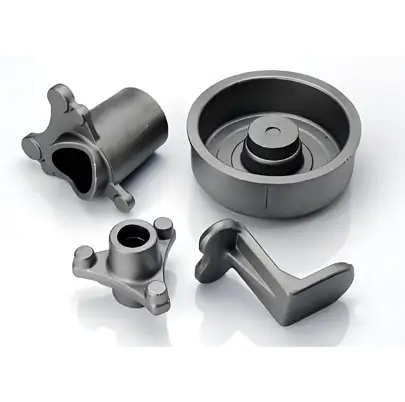
Common Precision Forming Techniques:
| Precision Casting: Used for complex-shaped metallic components by pouring molten metal into molds.
| Powder Metallurgy: Processes high-precision, high-density joint transmission parts by pressing metal powder into shapes, followed by sintering.
| Micro-forming: Processes microscopic joint components using micro-molds and stamping techniques.
Interrelations of Robotic Joint Processing Technologies
| Cutting and Heat Treatment: Components processed via cutting may require heat treatment to eliminate internal stress and enhance wear resistance, yet heat-treated materials can become harder, increasing cutting difficulty.
| Cutting and Surface Treatment: Surface quality from cutting affects surface treatment outcomes; rough surfaces may impair the adhesion and protection capabilities of coatings.
| Heat Treatment and Surface Treatment: The surface state of heat-treated materials can influence the choice and effectiveness of surface treatment methods.
| Precision Forming and Other Technologies: Precision forming minimizes subsequent cutting but might still require heat and surface treatment processes to meet performance requirements.
| Cooperative Impact on Precision: Variances in processing techniques can accumulate, affecting final precision, thus requiring optimization and error compensation methods to ensure joint accuracy and performance.
Emerging Robotic Joint Processing Technologies
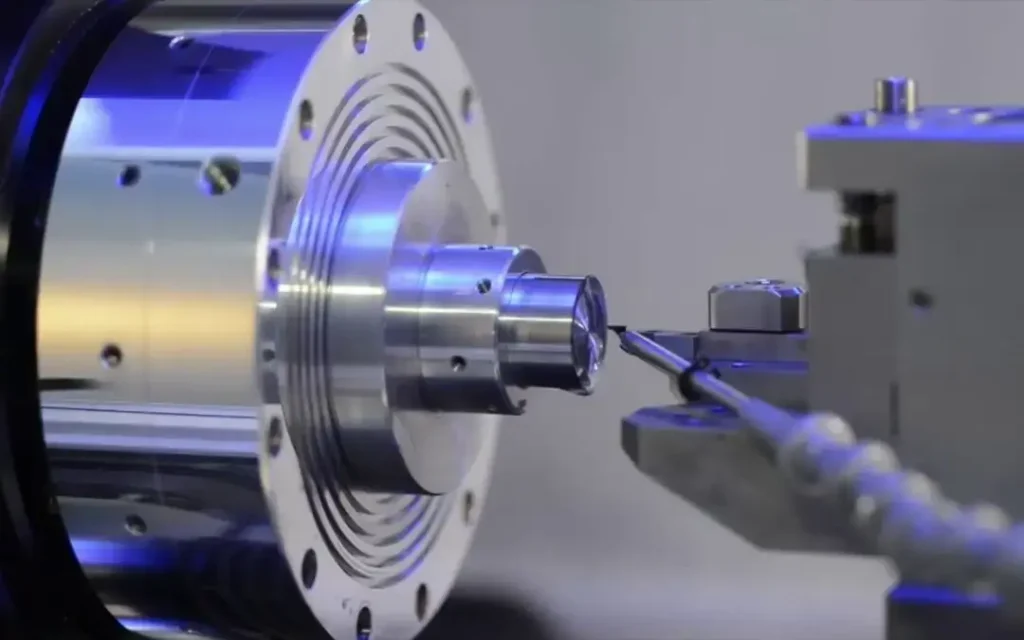
| Ultra-Precision Processing Technology: Achieves the formation of complex surfaces in one go, controlling axiality within 0.005mm.
| Intelligent Processing Technology: Integrates multiple data sources based on AI models to automatically generate optimal processing parameters.
Application For Various Robotic Joint Processing Technologies
| Cutting Processing: Applicable for all levels of robotic joints, from low-end household joint simple components to high-end precision components.
| Heat Treatment Processing: Used for mid to high-end robotic joints, particularly industrial high-load, precision, and specialty joints.
| Surface Treatment Processing: Different surface treatment choices available based on applications – attractive and cost-effective for household joints versus durability and corrosion resistance for industrial joints.
| Precision Forming Processing: Ideal for high-end robotic joints, particularly miniature and complex structures, often employed in large production runs.
Choosing Suitable Robotic Joint Processing Technologies
| Low-End Household Joints: Primarily utilize cutting (turning, milling) and simple surface treatments without heat treatment to control costs.
| Mid-End Industrial and High-End Household Joints: Use a combination of cutting, heat treatment, and conventional surface treatments, possibly including precision casting for complex components.
| High-End Precision and Specialty Joints: Focus on precision cutting, heat treatment, high-end surface processing, and precision forming to maximize precision, strength, wear resistance, and protective capabilities to meet high-end application demands.
Recommended Reading from AI Robots Eidos
It should be noted that even if the robotic joints are processed with precision and tolerance control is perfect, without high-quality motors to drive these joints, the robotic joints would become meaningless. The performance of servo motors determines how accurately the robotic joints can reach their targets. Moreover, the selection and matching of servo motors will, in turn, affect the structural design and processing technique choices of the joints. Interested readers can explore in-depth articles about the robot servo motor.
Insight from AI Robots Eidos about The Robotic Joint Processing Technology
| In the future, every joint component will run its ‘digital twin’ in virtual space before processing. AI will dynamically adjust process parameters not only based on material characteristics but also according to the microstructural differences of that batch of materials and even the temperature and humidity in the workshop on that day. This means that the process will evolve from ‘standardized operations’ to ‘personalized customization,’ achieving optimal processing for single-piece flows.
| Advanced joint manufacturing in the future will widely adopt composite manufacturing equipment. For example, complex internal cavities or topologically optimized structures will first be produced through precision molding to approach the final shape, and then immediately undergo ultra-precision cutting on the same machine tool to ensure the highest fitting accuracy. This ‘immediate forming and grinding’ approach will completely solve the pain points of traditional processes, such as the difficulty of ‘post-processing after forming’ and ‘errors from multiple clamping.’
| Future manufacturing will no longer control cutting precision or heat treatment deformation in isolation, but will establish a ‘whole-process error transfer model.’ Through a network of sensors, real-time feedback will be provided on the shrinkage rate of casting, the amount of deformation during heat treatment, and the thickness data from surface processing, which will then be compensated back into the tool path of the preceding cutting process. The goal is to achieve ‘zero-tolerance manufacturing for final assembly,’ meaning that even if there are individual process errors in the machined parts, they will fit together perfectly when assembled.
Image Credits: Csmfg & Standardbots & Mazin & Dekmake & Hlc-metalparts & Bulktek