End-to-End Technology: The Core Engine of The Smart Factory
Table of Contents
End-to-end technology is a key driving force for smart factories to achieve high efficiency, flexibility, and sustainable development. Moreover, it is reshaping the competitive logic of smart factories, which is the topic of this article.
What is End-to-End Technology?
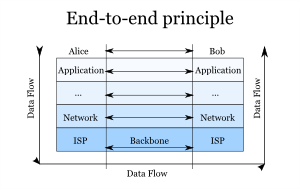
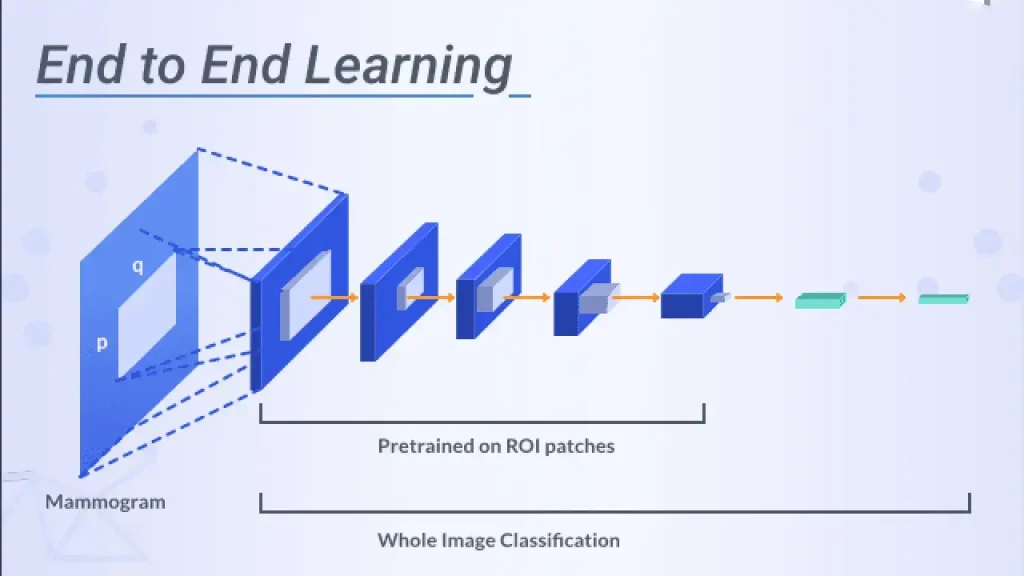
End-to-End Technology is a system design and implementation method. Its core philosophy is to directly map input data (such as images, audio, text, etc.) to final output results (such as control commands, etc.) through a single model or neural network model. The model learns the mapping relationship between input and output through vast amounts of data, eliminating the need for manual intervention in intermediate steps like feature extraction or rule definition.
The Dilemmas Facing Smart Factories
The intelligent architecture of traditional industrial robots follows a layered logic of “Perception → Planning → Control.” It must first perceive the environment through sensors, then have the control system calculate and plan the operational steps, and finally issue commands to drive the actuators to complete the action. The advantage of this layered design is clear logic and ease of debugging. However, with industrial advancement, it has gradually revealed several issues that need to be addressed.
| Response Lag: The core drawback of the layered architecture is the “fragmentation of information transfer”: environmental data collected by the perception module needs to undergo multiple rounds of conversion and analysis before it can be passed to the planning module; the operational path generated by the planning module then needs to be broken down into specific commands and passed to the control module to drive action execution. The handoff at each stage introduces time delays, leading to slow overall response speed.
Taking a material handling scenario as an example, traditional AGVs require pre-set travel paths. If temporary obstacles appear on-site (e.g., workers crossing, material stack misalignment), the perception module must first identify the obstacle, then feed back to the planning module to re-plan the path, and finally adjust the action execution. This entire process often takes several seconds or even tens of seconds, impacting production rhythm. Ubtech’s early humanoid robot, the Walker S Lite, could only locate materials by scanning QR codes, with an operational efficiency of only 20% of manual labor. The problem lies precisely in the response lag caused by the layered architecture.
| Weak Robustness: Robustness, which is a system’s “anti-interference capability” in abnormal and complex environments, is a core requirement for robots in industrial settings. In real factories, unforeseen situations such as mixed material specifications, changing lighting, dust interference, and workpiece position offsets are endless. Traditional robots with layered architectures have poor adaptability to environmental changes and struggle to handle complex scenarios.
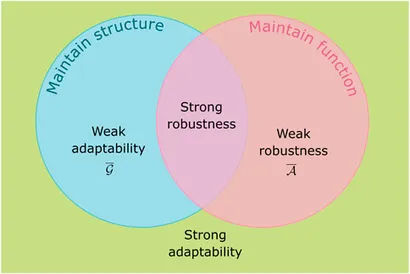
For instance, traditional loading/unloading robots require workpieces to be placed in precisely fixed positions. Once a workpiece has a minor offset (e.g., a 0.5mm deviation), the perception module “fails to recognize,” the planning module cannot generate a valid operational path, and the robot halts, waiting for manual intervention. In sorting scenarios, traditional sorting robots require preset material characteristics like size, shape, and color. When faced with irregularly shaped materials, mixed materials, or materials with surface stains or wear, misjudgments and missed picks are highly prone to occur, indicating severely insufficient robustness.
| Lack of Flexibility: Smart factories’ core demand is “flexible production” – the ability to quickly switch product models, adjust production processes, and respond to dynamic market changes. However, traditional robots with layered architectures are essentially “single-task executors.” Their perception, planning, and control capabilities are customized for specific scenarios, making it difficult to quickly transfer skills and impossible to achieve collaborative operation across multiple devices and scenarios.
For example, when a production line switches product models, it requires re-debugging robot perception parameters, re-planning operational paths, and rewriting control programs. The entire debugging process often takes hours or even days, severely impacting production efficiency. In multi-process collaborative scenarios, traditional robots cannot exchange information. They can only each execute preset tasks, making it difficult to create synergistic effects. This leads to “breakpoints” in the entire operation chain, preventing fully automated, end-to-end unmanned operations.
Recommended In-depth Reading from AI Robots Eidos
To avoid misleading readers, it should be noted that industrial robots employing traditional layered architectures still maintain advantages in stability and reliability within specific high-precision, high-repetitiveness scenarios. To provide readers with an objective and comprehensive understanding of industrial robots, interested readers are recommended to read another article on industrial robots.
The Viable Solution: End-to-End Technology
End-to-end technology restructures the intelligent logic of industrial robots, endowing them with “human-like intuition.” It breaks down the layered barriers of perception, planning, and control, directly mapping raw environmental data (visual, tactile, force control, etc.) into action commands. This eliminates the need for information conversion and decomposition in intermediate steps, achieving an intuitive “perception-is-decision” response. It’s akin to how humans can naturally and smoothly avoid obstacles without deliberate thought.
| End-to-End Architecture: Exponential Improvement in Response Speed
The core logic of the end-to-end learning architecture is “data directly driving action.” Through training on massive amounts of industrial scenario data (including environmental changes, material characteristics, operational feedback, etc.), the industrial robot’s “brain” directly learns the mapping relationship between “environmental input → action output,” bypassing multiple rounds of data decomposition and analysis. Just like Tesla’s FSD V12, trained on 3 million video clips, which reduced hand-written code from 300,000 lines to 3,000 lines, achieving an intuitive “perception-is-driving-action” response, embodied robots also leverage this logic to achieve an exponential improvement in response speed.
Unlike traditional layered architectures, after an end-to-end industrial robot’s perception module collects environmental data (e.g., material position, shape, surface condition), it doesn’t pass it to other modules. Instead, it directly inputs it into the embodied large model. The model instantly outputs the optimal action command, driving the actuator to complete the operation—the entire process takes only milliseconds, equivalent to a human “instinctive reaction.”
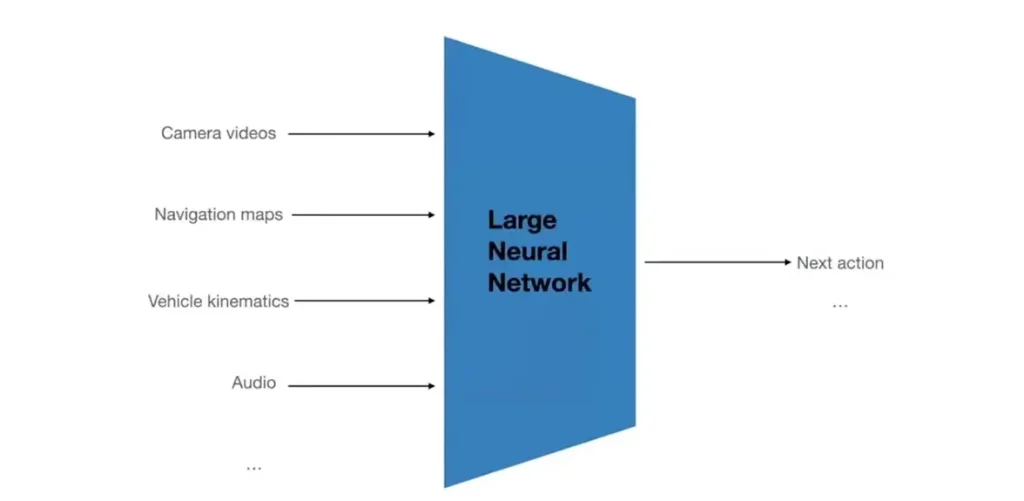
The reason end-to-end technology responds so quickly is that the end-to-end architecture relies on training with vast amounts of high-quality data. The model can automatically learn complex patterns and rules from the data. With continuous data accumulation and model iteration, the system can adaptively adjust its own behavior, quickly adapting to new scenes and changing requirements, thereby achieving rapid response.
| Multimodal Fusion Perception Enhances Robustness
End-to-end technology is built upon powerful multimodal fusion perception capabilities—just as humans perceive the world by “seeing with eyes, hearing with ears, and touching with hands,” end-to-end industrial robots integrate various sensors like vision, tactile, force control, and auditory. They construct a three-dimensional stereo environmental cognitive system, capable of comprehensively and accurately capturing environmental changes and material characteristics, providing reliable support for end-to-end responses.
The multimodal perception module can fuse and analyze different types of sensor data, eliminating the limitations of single sensors and enhancing the accuracy and comprehensiveness of environmental cognition. Siasun’s intelligent humanoid dual-arm platform, using vision + force control multimodal perception, can accurately identify items of different shapes and sizes, completing complex operations like autonomous grasping and storing, with a repeat positioning accuracy of ±0.05mm.
The perceptual capabilities formed by end-to-end technology effectively enhance the robustness of industrial robots. In complex scenarios like dust, lighting changes, or material offsets, they can still operate stably without manual intervention. For example, in BYD’s factory, the Walker S1 handles mixed scenarios using multimodal perception, doubling operational efficiency compared to traditional industrial robots. The Zhiyuan Jingling G2 industrial robot, in a flat-panel production workshop, autonomously optimizes operational paths through tactile feedback, adjusting force based on micro-deformations of components, increasing screen lamination pass rate by 12 percentage points compared to traditional automation equipment.
| Flexible Execution, Adapting to Multi-Scenario Flexible Production
Another major advantage of end-to-end technology is its “adaptive adjustment capability for movements.” The robot’s actuators do not simply execute preset commands. Instead, they can autonomously adjust action force, posture, and path based on real-time changes in perception data, achieving “flexible operation,” perfectly adapting to the flexible production needs of multiple varieties and small batches.
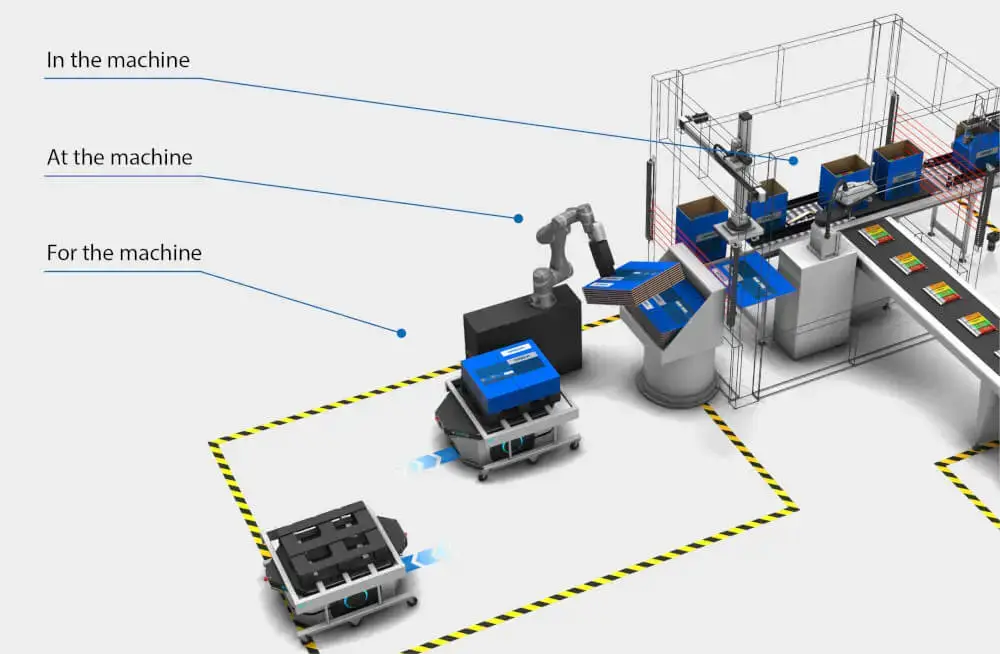
The actuators of traditional industrial robots have fixed force and posture, only suitable for materials and scenarios of specific specifications. Once material specifications change, re-debugging is required. In contrast, the actuators of end-to-end industrial robots, through training by the end-to-end model, can learn the characteristics and operational requirements of different materials and autonomously adjust action parameters. Estun’s Codroid02 robot has an end-effector force control precision reaching the 5 Newton-meter level, far exceeding that of traditional industrial robots, enabling it to perform multi-process flexible operations like bolt tightening and circuit welding.
Application of End-to-End Technology in Smart Factories
The value of end-to-end technology must ultimately be reflected in the production of smart factories. In the three core scenarios of material handling, loading/unloading, and sorting, end-to-end technology uses data and case studies to drive efficiency improvements in smart factories.
| Material Handling: Material handling is the most fundamental and frequent operational link in smart factories and the most widely applied scenario for traditional automation equipment. The emergence of end-to-end technology has enabled an efficient model of “autonomous positioning, flexible obstacle avoidance, and multi-machine collaboration.”
Traditional AGVs require preset paths and cannot handle temporary obstacles or material position offsets. Once encountering unexpected situations, they halt, causing logistics chain interruptions. In contrast, end-to-end robots, leveraging end-to-end intuitive response and multimodal perception capabilities, require no preset paths. They can perceive environmental changes in real-time, autonomously plan optimal handling paths, flexibly avoid obstacles, and simultaneously precisely locate material positions without manual assistance. At Foxconn’s factory, the Walker S1 successfully demonstrated its application feasibility in logistics scenarios, capable of handling the handling requirements for mixed-size totes, with handling efficiency increased by over 30% compared to traditional AGVs.
| Loading/Unloading: Loading/unloading is the core link connecting processing equipment with material storage, placing extremely high demands on robot precision, robustness, and flexibility. Traditional loading/unloading robots require precisely fixed workpiece positions, have rigid operation, and once workpiece positions shift or specifications change, operational errors occur, leading to equipment downtime, workpiece damage, and affecting production stability and product qualification rate.
End-to-end technology effectively solves this problem: through the multimodal perception module, industrial robots capture the position, posture, and specification changes of workpieces in real-time. Without the need for manual positioning and debugging, the model instantly outputs the optimal action command, driving the actuators to perform flexible operations, accurately completing loading/unloading tasks, while autonomously adjusting force based on workpiece characteristics to avoid damage.
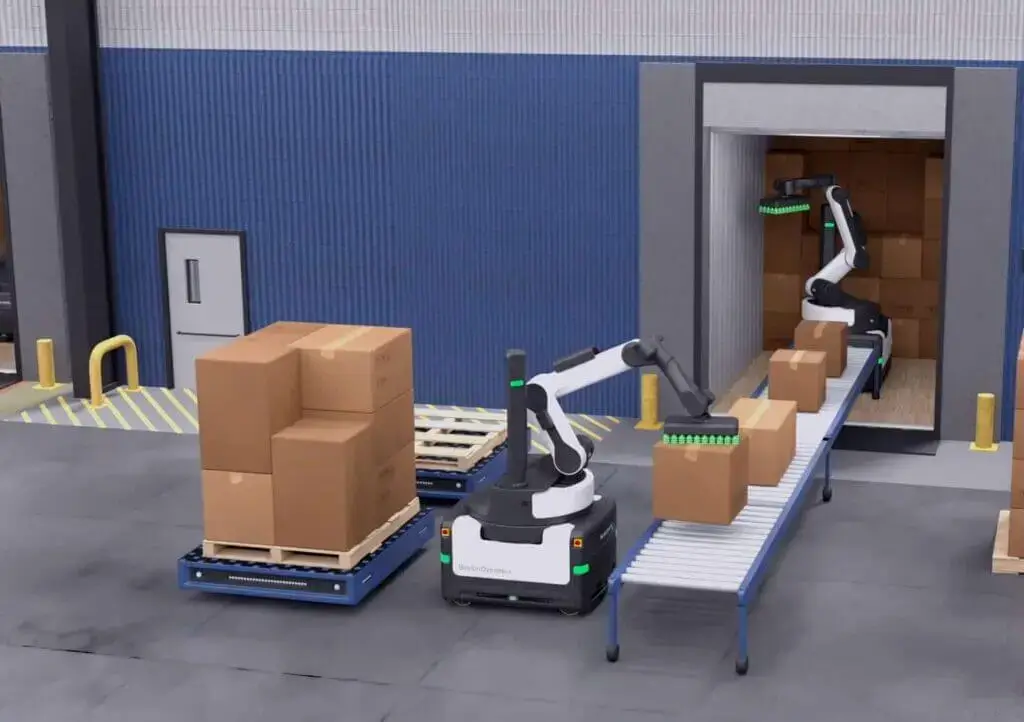
In automotive parts processing scenarios, end-to-end technology enables robots to autonomously recognize different models of parts. Without reprogramming, they can quickly switch loading/unloading modes. At an Audi production base, the Walker S1 loading/unloading robot, leveraging flexible execution capability, adapts to components of different specifications, achieving an operational pass rate of over 99.5%, far exceeding the 90% pass rate of traditional loading/unloading robots.
Furthermore, the response capability of end-to-end technology can effectively handle unexpected situations during processing—for example, if a part undergoes slight displacement, the robot can perceive it in real-time and adjust its movement posture without stopping for adjustment, ensuring the continuity of loading/unloading operations, significantly reducing downtime, and improving production efficiency.
| Sorting: The sorting link is one of the scenarios with the “strongest demand for flexibility” in smart factories, especially in industries like electronics, automotive, and logistics, where material specifications are diverse, form complex, and mixed stacking, surface wear, and stains are common. Traditional sorting robots rely on preset material characteristics, making precise sorting difficult. High mis-pick and missed pick rates necessitate extensive manual assistance for verification, increasing labor costs.
Through prior learning, end-to-end technology can autonomously distinguish the characteristics of different materials (size, shape, weight, material, etc.), judge in real-time material types, quickly complete sorting operations, and simultaneously adapt to the sorting requirements for irregularly shaped, mixed, and worn materials, exhibiting extremely strong robustness.
In electronic component sorting scenarios, the Zhiyuan Jingling G2 robot can autonomously identify electronic components of different specifications. Even if components have surface stains or slight wear, it can sort them precisely, achieving a sorting accuracy rate of over 99.8%, an increase of 8 percentage points compared to traditional sorting robots.
When production requirements change and new material categories are added, there is no need for reprogramming and debugging. Only a small amount of sample training is required for the end-to-end technology to quickly master the sorting skills for new materials, quickly adapting to production switchover demands, significantly reducing the debugging costs and time costs associated with flexible production.
The Profound Impact of End-to-End Technology on Smart Factories
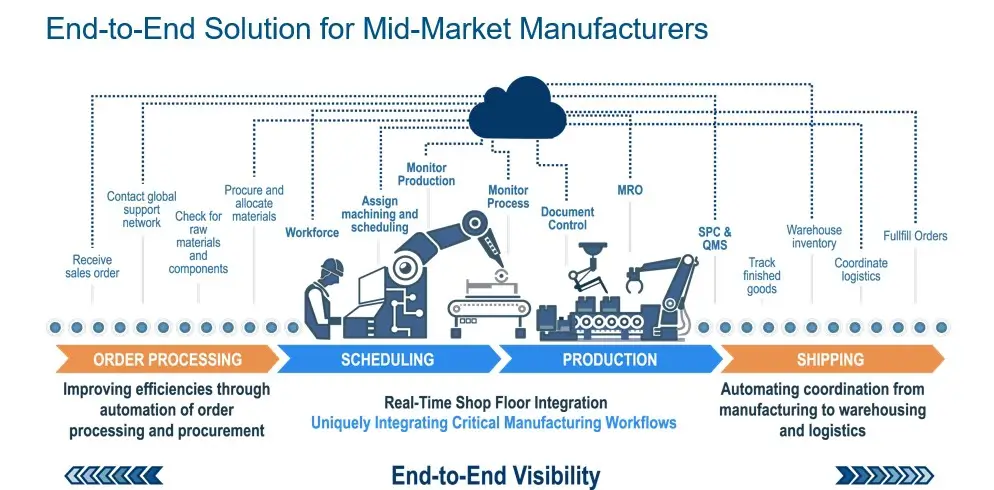
| Optimizing Smart Factory Production Links: Traditional smart factories have an obvious problem of fragmented production links—material handling, loading/unloading, sorting, and other links are completed by different types of automation equipment. These devices cannot achieve information exchange and collaborative operation, requiring manual connection. This leads to a discontinuous operation chain and low efficiency.
The intelligent architecture and multi-scenario adaptability of end-to-end technology can connect in series core links like material handling, loading/unloading, and sorting, becoming the “core carrier” for full-process collaboration: Robots can grab materials from the warehouse, autonomously transport them to processing equipment, complete loading/unloading operations; after processing, they can autonomously sort finished products and transport them to the finished goods warehouse. This achieves fully automated, end-to-end unmanned operations “from material inbound to finished product outbound,” completely breaking link barriers and eliminating the time loss and errors associated with manual connections.
| Optimizing Costs for Smart Factories: The core demand of smart factories is to optimize costs through technological upgrades. End-to-end technology creates a new value chain for enterprises:
End-to-end technology can effectively reduce response times and downtime, thereby lowering production costs and losses. Practice at BYD’s factory shows that after the large-scale application of end-to-end technology, efficiency improved, product qualification rate increased by 8 percentage points, and annual cost reduction per production line exceeded 5 million RMB.
The flexible adaptation capability of end-to-end technology allows enterprises to quickly respond to market changes, achieving multi-variety, small-batch flexible production without investing substantial funds in replacing equipment and debugging production lines. This significantly reduces market response costs and enhances the enterprise’s core competitiveness.
| Optimizing the Upgrade Path for Smart Factories: The large-scale application of end-to-end technology will promote the “standardization and modularization” construction of smart factories. Smart factories will restructure production processes, optimize workshop layouts, and formulate industry standards revolving around the logic of end-to-end technology, driving smart factories towards more efficient, flexible, and intelligent development.
Challenges of End-to-End Technology
| Poor Explainability: End-to-end models are often regarded as “black boxes,” with internal decision-making processes that are difficult to intuitively explain. The complex computational process from input to output lacks transparency, making it hard to understand why the model makes specific decisions. Industrial production has extremely high requirements for safety and reliability.
| Strong Data Dependency: The performance of end-to-end models highly depends on vast amounts of high-quality, diverse data. The coverage, labeling accuracy, and completeness of data distribution directly affect model effectiveness. If training data is biased, the model may learn incorrect patterns, leading to failures in practical application. Since factory data is subject to the factory’s privacy, how to collect and training on large amounts of it is also challenging.
| High Training Difficulty and Cost: End-to-end models typically require substantial computational resources and training time, especially when the model scale is large or the data volume is large. Training may face difficulties like convergence issues and overfitting, requiring fine-tuning and optimization strategies. Furthermore, the costs of data acquisition, labeling, and processing are also high, correspondingly increasing enterprise costs.
Development Directions for End-to-End Technology
| Increased Intelligence: With continuous breakthroughs in core technologies like embodied large models, multimodal perception, and flexible execution, embodied robots will develop towards being “smarter, more flexible, more efficient, and more affordable.”
| Lower Training Costs: With advancements in deep learning technology and the reduction in large model training costs, the training costs of end-to-end technology will also decrease further. As training costs drop, industrial robots can learn more skills, and their skill transfer capabilities can be enhanced. As end-to-end technology matures and costs decline, it will effectively promote the large-scale application of end-to-end technology.
Insight from AI Robots Eidos about The End-to-End Technology
| The future smart factories will create a “dynamic production topology” through the autonomous collaboration of end-to-end robots—where production line layouts can be reorganized in real-time based on order demands, and robots automatically switch roles (handling, assembly, inspection), achieving a truly “software-defined production line.” This requires end-to-end models to possess cross-scenario meta-learning capabilities, as well as deep integration with factory-level digital twins and real-time simulation systems, forming a “virtual-physical” closed-loop optimization.
| Future smart factories may construct distributed training networks through “federated learning + edge computing.” Data from each factory does not need to be uploaded to a central server; instead, models are trained locally, and only model parameter updates are shared, achieving “data remains on-site, intelligence can be shared.” This will break down industrial data silos, create industry-level collaborative intelligence, while also meeting enterprises’ confidentiality needs for core process data.
Image Credits: Understandingai & Solidworks & Xenonstack & Ctrlc & Frontiersin & Omron & Bostondynamics