
Table of Contents
Coreless motors, through structural innovation, meet the stringent demands of modern high-precision, high-tech equipment for lightweight design, high responsiveness, and high power density, making them the preferred drive components for cutting-edge applications such as robotics, aerospace, and precision instruments.
What Is A Coreless Motor?
A coreless motor is a type of micro-specialty motor. It belongs to the category of DC permanent-magnet servo control motors (Note by AI Robots Eidos: coreless motors are therefore also referred to as coreless DC motors). Structurally, it breaks away from the traditional stator-rotor configuration by adopting a coreless stator/rotor. This novel structure eliminates the electrical energy losses caused by eddy currents generated in the iron core.
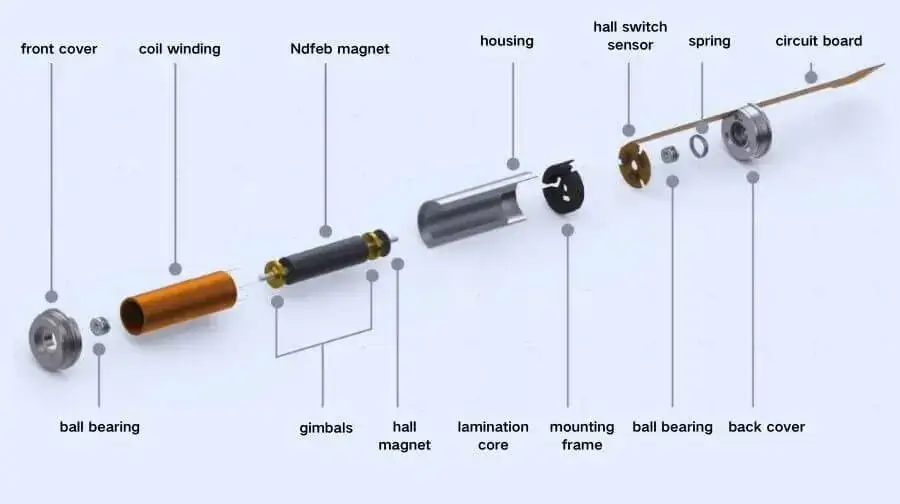
Additionally, the weight and moment of inertia of the coreless motor are substantially reduced, thereby decreasing the mechanical energy losses of the stator/rotor itself. The change in the stator-rotor structure greatly improves the motor’s operating characteristics. Not only does it feature outstanding energy-saving properties, but more importantly, it offers control and drive characteristics that are unattainable with iron-core motors. With its remarkable energy efficiency, sensitive and convenient controllability, and stable operating performance, the coreless motor demonstrates clear technical advantages. As a highly efficient energy conversion device, it represents the development direction of motors in many fields.
Brushed Coreless Motor & Brushless Coreless Motor
Coreless motors can be divided into brushed coreless motors and brushless coreless motors based on their commutation method.
–Brushed Coreless Motor: They have a simple structure and relatively low cost. The carbon brushes on the rotor come into contact with the commutator to convert electrical energy into mechanical energy. This contact causes wear, which can affect motor performance. Brushed coreless motors are suitable for applications with less stringent requirements on size and weight.
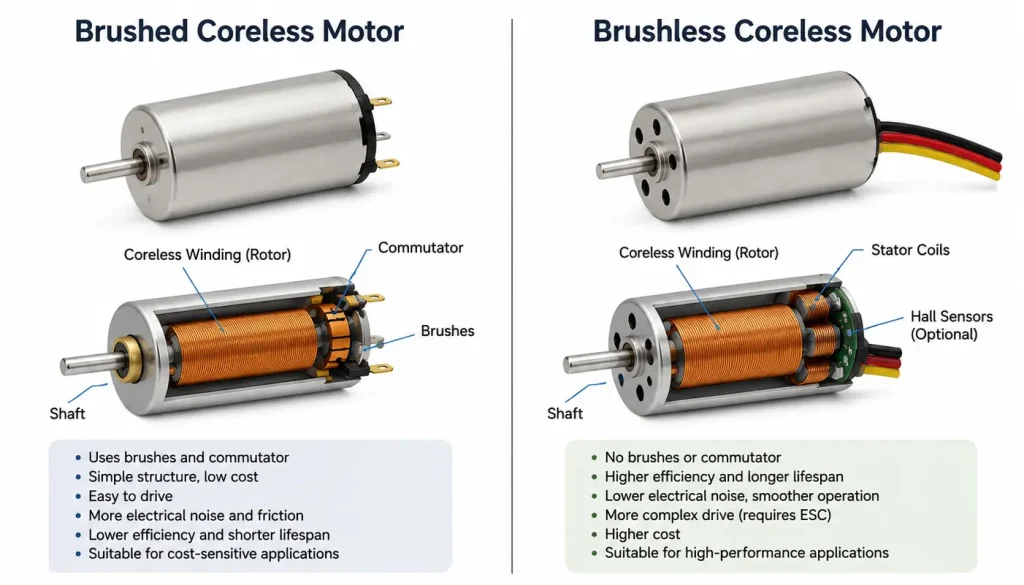
–Brushless Coreless Motor: They have a more complex structure and higher cost. Since they have no carbon brushes or commutators, brushless coreless motors use an electronic converter to achieve electrical energy conversion, automatically adjusting the current direction based on rotor position. This eliminates the carbon particles generated during brushed motor operation and extends the motor’s service life. Brushless coreless motors do not require brushes, so they are relatively smaller in size and weight.
| Brushed Coreless Motor | Brushless Coreless Motor | |
| Structure | Mainly composed of stator, rotor, carbon brushes, commutator, etc. | Mainly composed of stator, rotor, electronic commutator, etc. |
| Efficiency | Limited motor speed | High speed |
| Control Precision | Simple control | Requires drive control |
| Response Speed | Mechanical commutation lag, simple control | High (electronic controller achieves millisecond-level response) |
| Size and Weight | Relatively larger in size and weight | Smaller size, lighter weight |
| Coreless Component | Rotor (coil) | Stator (coil) |
| Cost | Low cost | High cost |
Advantages of Coreless Motors
–High Power Density: The power density is the ratio of output power to weight or volume. In terms of weight, the coreless rotor is lighter than a conventional iron-core rotor. In terms of efficiency, the coreless rotor eliminates the eddy current and hysteresis losses generated by the iron-core rotor, improving the micro-motor’s efficiency and ensuring higher output torque and power. Most coreless motors achieve maximum efficiencies above 80%, whereas most brushed DC motors typically have maximum efficiencies around 50%. The combination of lighter weight and higher efficiency enables coreless motors to achieve higher power density.
–High Torque Density: The coreless design reduces the rotor’s weight and moment of inertia. Low moment of inertia means the motor can accelerate and decelerate more quickly, allowing it to generate greater torque in a short time. Additionally, the absence of an iron core makes the coreless motor more compact and smaller in size, enabling it to deliver high torque output within a limited space.
–Fast Response Speed: Traditional motors have relatively large moments of inertia due to the iron core. In contrast, coreless motors are compact, and the rotor is a cup-shaped self-supporting coil, making it lightweight. This lower moment of inertia gives coreless motors sensitive start-stop and adjustment characteristics. The mechanical time constant of a typical iron-core motor is about 100 ms, while that of a coreless motor is less than 28 ms, with some products even achieving less than 10 ms.
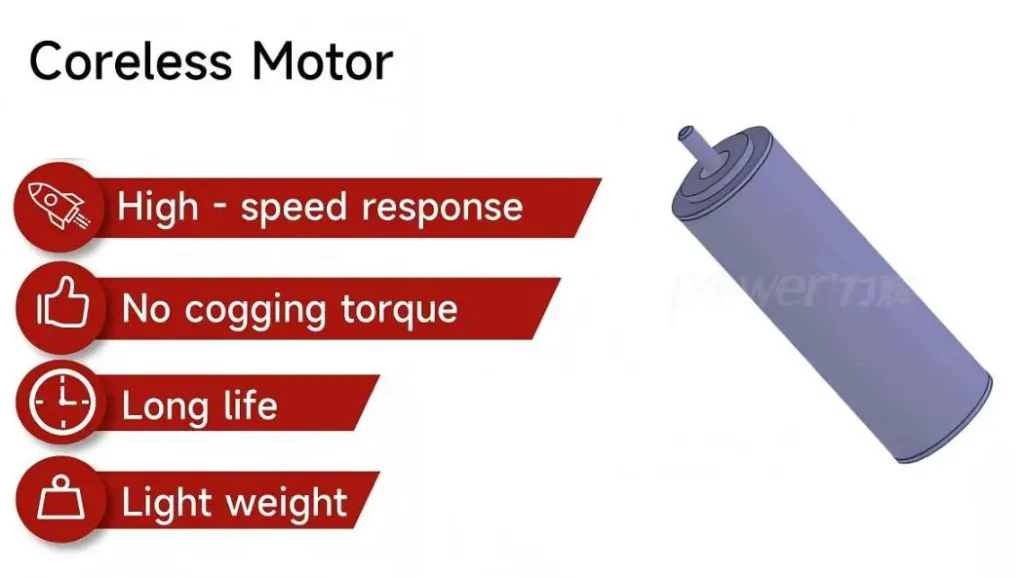
–High Peak Torque: The ratio of peak torque to continuous torque in coreless motors is very large because the torque constant remains unchanged during the rise of current. The linear relationship between current and torque enables the micro-motor to generate high peak torque. In conventional iron-core DC motors, once saturation is reached, torque will no longer increase regardless of further increases in current.
–Good Heat Dissipation: The surface of the coreless rotor allows air to flow, providing better heat dissipation than iron-core rotors. In iron-core rotors, the enameled wire is embedded in silicon steel sheet slots, where airflow over the coil surface is limited, resulting in higher temperature rise. Under the same power output conditions, coreless DC motors have a lower temperature rise.
Disadvantages of Coreless Motors
–Low Power Ceiling: Due to the lack of a firm iron-core support, the coil thickness is relatively thin, and the connection strength between the coil and the output shaft is limited. As a result, the size and power cannot be made very large. Generally, the maximum power of coreless motors is only a few hundred watts, making them a type of micro-specialty motor.
Coreless Motor Manufacturers/Suppliers/Providers
Market Share of Top Coreless Motor Manufacturers/Suppliers/Providers
Due to the difficulty of manufacturing coreless motors and the deep technical accumulation of leading companies, the CR5 (Concentration Ratio 5, referring to the market share of the top five companies in an industry) in the global coreless motor market in 2022 was 67.00%. The top five global companies are Faulhaber, Portescap, AlliedMotion Technologies, Maxon Motor, and Nidec Copal Corporation.
| Company | Country | Core Strengths | Typical Applications |
| Maxon | Switzerland | Ironless windings, low inductance, high dynamic response, systematic micro-drive product line | Industrial automation, robotics, aerospace |
| FAULHABER | Germany | Self-supporting skew-wound coils, micro-precision drives, and high reliability | Laboratory automation, optics, and precision equipment |
| Portescap | Switzerland | Rich product portfolio of brushed coreless and brushless slotless motors, comprehensive thermal modeling, and reliability methodologies | Industrial robotics, aerospace |
| Allied Motion | USA | Motion control synergy, strong industry-specific customization capabilities, extensive system integration experience | Industrial, transportation, specialty equipment |
| Nidec | Japan | Miniaturization; motor diameters can be easily achieved from 6mm to 14mm with millisecond-level dynamic response | Aerospace and unmanned aerial vehicles (UAVs), as well as high-end consumer electronics |
Nidec (Japan): Miniaturization; motor diameters can be easily achieved from 6mm to 14mm (some micro models can reach below 6mm, with millisecond-level dynamic response); applications in aerospace and unmanned aerial vehicles (UAVs), as well as high-end consumer electronics.
Advantages of Top Coreless Motor Manufacturers/Suppliers/Providers
–Technological Advantages: The manufacturing process for coreless motors is complex, with the core technical barrier concentrated in coil winding. The coil winding manufacturing process directly affects the coreless motor’s size, speed, power density, yield rate, and other performance metrics. Coreless motors have no stator slots; the enameled wires are wound in mid-air without any internal support, making the manufacturing process relatively difficult. Due to their small size, coreless motors have a lower tolerance for errors compared to ordinary motors. Variations in wire thickness and winding turns can lead to significant differences in parameters such as coil winding resistance and starting current. The long-term technical accumulation of leading companies gives them a technological edge.
–Service Advantages: As the application fields of coreless motors continue to expand, different customers have varying performance requirements. Manufacturers must possess a certain degree of customized production capability—for example, adjusting the design and process of coreless motors according to customer product specifications. This also fosters a strategic collaborative model between manufacturers and customers, which creates strong customer stickiness and makes it difficult for new entrants to break through.
–Capital Advantages: Coreless motors are small in size and require high-precision control, necessitating strict process requirements. This demands substantial equipment investment, such as high-precision molds, fully automatic high-speed stamping machines, fully automatic stator plating, and precision rotor production lines. In addition, product upgrades and iterations require sufficient capital to support subsequent equipment investments and R&D expenses. These factors create barriers for other companies.
Technical Specifications of Top Coreless Motor Manufacturers/Suppliers/Providers
| Brand | Maxon | Faulhaber | Portescap |
| Model | ECXSPEED 13L | Series 1218B | 12ECP 488B21 |
| Dimensions / mm | 13 | 12 | 12 |
| Rated Voltage / V | 18 | 6 | 9 |
| Rated Current / A | 1.42 | — | 3.3 |
| Rated Torque / mNm | 5.16 | — | 8.1 |
| No-Load Speed / rpm | 41,900 | 30,500 | 36,000 |
| Motor Efficiency / % | 79% | 62% | — |
| Weight / g | 34 | 8.3 | 30 |
| Housing-to-Ambient Thermal Resistance / °C/W | 19.5 | 48.3 | 24.2 |
| Winding-to-Housing Thermal Resistance / °C/W | 2 | 10.6 | 2.5 |
| Maximum Winding Temperature / °C | 155 | 125 | 125 |
| Mechanical Time Constant / ms | 3.25 | 7.7 | 1.1 |
Technical Barriers of Coreless Motors: Coil Winding
Coil Winding Designs
The coil winding design of a coreless motor is one of its barriers because different winding designs affect the automation rate of coil production, the slot fill factor, copper losses, and other factors, which in turn impact the coreless motor’s losses, heat dissipation, power, and other performance attributes. The winding designs for coreless motors can be divided into straight winding, skew winding, and saddle winding.
–Straight Winding: Characterized by coil conductors parallel to the motor axis, forming a concentrated winding structure. The design approach for straight-wound coils involves first winding ordinary ring-shaped enameled wire on a winding jig according to the required number of turns, then connecting them into windings on a core-winding mandrel, and finally curing and shaping them with adhesive at both ends. Relatively speaking, the ends of straight windings do not produce torque and add to the armature weight and armature resistance.
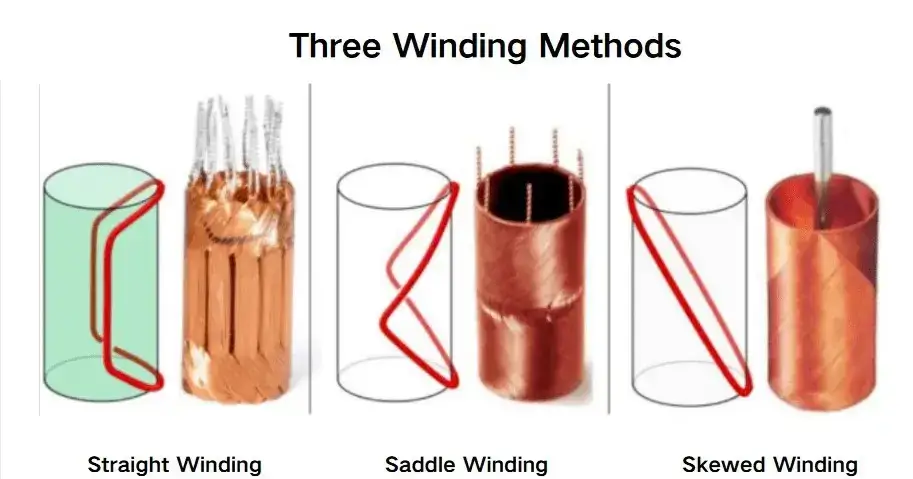
–Skew Winding: Also known as honeycomb winding, made using a honeycomb winding method with a center tap. To enable continuous winding, the coil and the armature axis form a certain inclined angle. This winding method results in smaller end dimensions, but because continuous skew winding requires a certain lay angle, the enameled wires overlap, resulting in a lower slot fill factor. Compared to straight winding, skew-wound armatures have no end windings, reducing armature weight. They offer advantages such as low moment of inertia, good drive characteristics, and high output torque. Germany’s Faulhaber and Switzerland’s Portescap predominantly use skew winding.
–Saddle Winding: Also known as concentric or diamond winding, this method involves first winding pre-formed coils and then arranging them. Self-bonding enameled wire is wound on a specialized forming winding jig and shaped multiple times to form the armature cup. During winding, the two layers of coils are neatly arranged and shaped, making it easier to control the dimensions of the shaped armature cup and improve the slot fill factor. This method also offers high production efficiency and is suitable for mass production. The end overlap layers of saddle-wound armatures are fewer, the air gap is smaller, and the utilization rate of permanent magnets is higher, improving the motor’s power density. Some products from Switzerland’s Maxon use saddle winding.
In summary, saddle winding is preferred by many high-performance motor manufacturers because it effectively utilizes the magnetic field and increases power density. Skew winding is characterized by mature technology and ease of production. These two are currently the most mainstream winding designs, while straight winding is relatively less common.
Coil Winding Processes
The one-shot molding process is a fully automated process in which a winding machine automatically winds a single enameled wire onto a spindle according to a set pattern. The coil is removed after being wound into a cup shape in one step, without requiring multiple processes such as flattening or rounding. This process offers high winding efficiency, high yield, and small coil diameters, making it suitable for small-size (below 10mm) high-precision coils with good dynamic balance. However, it requires high initial equipment investment and extremely precise tension control and wire routing accuracy from the winding machine, making it the mainstream solution for top international manufacturers (such as Maxon and Faulhaber).
Coil Winding Equipment
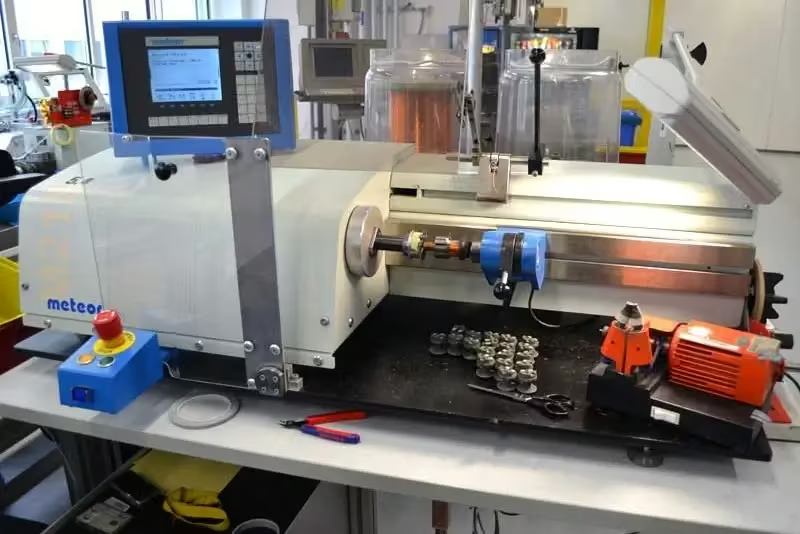
Equipment capability determines process capability. The challenges of winding machines lie in tension control for ultra-fine wires and winding under different winding designs. A winding machine primarily consists of a frame, spindle structure, wire-laying mechanism, tension control mechanism, molds, and other components. Because the wires are relatively thin, generally with diameters of about 0.02–0.25mm, excessive tension can pull and increase wire resistance, while insufficient tension can cause loose winding and degrade quality. Therefore, high-precision PLCs, servos, and transmission components are required.
Applications of Coreless Motors
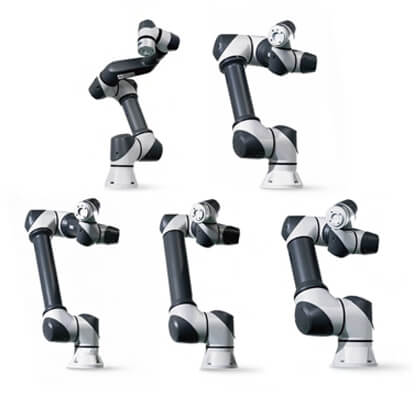
–Robotics: Robot joints require frequent start-stop cycles and rapid posture switching. The extremely low rotor inertia of coreless motors enables instantaneous response and fast direction changes with minimal dynamic control errors. They operate smoothly without jitter, ensuring stability in robotic gripping, locomotion, and manipulation. The lightweight nature of coreless motors aligns with the trends toward miniaturization and flexibility in robotics. Therefore, they are used in the limb joints and dexterous hands of humanoid robots, as well as in the precision actuation ends of collaborative robots.
Recommended Related Reading from AI Robots Eidos
Humanoid robots and collaborative robots (cobots) are two important and complementary segments within the robotics industry, representing the respective industry positions of “general-purpose intelligent terminals” and “core enablers of flexible automation.” Collaborative robots are the “pragmatic” workhorses of the industry, addressing the current pain points of flexible manufacturing upgrades; humanoid robots represent the “forward-looking” direction of the industry, embodying the future of general-purpose intelligent robotics.
If readers are interested, please refer to these two articles.
Humanoid Robots: More Than Metal
Cobots: Collaborative Robots Explained
–Drones: The motors offer the advantages of light weight, small size, and low energy consumption, which can minimize the weight and inertia of aircraft, improving endurance and maneuverability. UAVs driven by coreless motors are more responsive in steering, achieving millisecond-level response and improved wind resistance.
–Aerospace: Brushless coreless motors feature ultra-low electromagnetic interference, ensuring they do not disrupt aviation navigation and communication systems. Their millisecond-level response speed enables rapid attitude correction. As a result, they are used in satellite attitude control gyroscopes, micro-aerial propulsion systems, and aerospace valve actuators.
Technical Optimization Directions for Coreless Motors
–Process Iteration for Cost Reduction: Through automated winding molding and integrated curing processes, improve production yield and reduce labor costs, promoting the adoption of coreless motors in mid-to-low-end civilian applications.
–Structural Performance Upgrades: Optimize high-strength winding materials and rotor reinforcement structures to break through the power range limitations and expand into industrial heavy-precision drive applications.
–Intelligent Integration Upgrades: Integrate high-precision encoders and micro-drive controllers to achieve intelligent closed-loop control of motor power output, speed, and torque, further improving control precision and adaptability.
–Material Optimization and Iteration: Adopt new high-temperature-resistant, high-strength insulating winding materials to enhance the motor’s high-temperature resistance and overload capacity, broadening its application range in complex operating conditions.
Insight from AI Robots Eidos
The value of coreless motors is evolving from a “single component” to an “integrated system.” Leading manufacturers are shifting from purely selling motors to providing highly integrated modular solutions that combine “motor + gearbox + encoder + driver.” This “drive-control integrated” approach will raise technological barriers and enhance customer stickiness, while also helping manufacturers maintain relatively high gross margins (e.g., 35%–36%). Going forward, the ability to offer system integration and customized solutions will become the core benchmark distinguishing industry leaders from followers.
Shanghai Mach Intelligence has achieved full-stack self-developed capabilities—from winding machines and dynamic balancers to measurement systems—with winding accuracy reaching ±0.005mm and an annual production capacity of 400,000 units. This signals that Chinese products have entered a phase where they can be “made well and made fast.” It is estimated that over the next 3–5 years, Chinese companies in the coreless motor sector will shift from “price advantage” to “performance parity,” and are expected to gain market share in the mid-to-high-end segments.
Image Credits: Lamnow & Power-motor & El-groupe & AI & Ams-fa