Table of Contents
Thermoplastic Polyurethane (TPU) offers outstanding mechanical properties and strong processability compared to conventional plastics and rubbers. It can also be blended with PP, PC, PVC, and PA6 to form plastic alloys, as well as combined with LFT to create composite materials, and is expected to see broader adoption in robotics.
What Is Thermoplastic Polyurethane (TPU)?
Thermoplastic Polyurethane (TPU) is a class of high-performance elastomeric material that combines the processability of plastics with the elastic characteristics of rubber. Compared to traditional plastics, TPU offers higher flexibility and abrasion resistance, while maintaining good structural stability under repeated deformation.
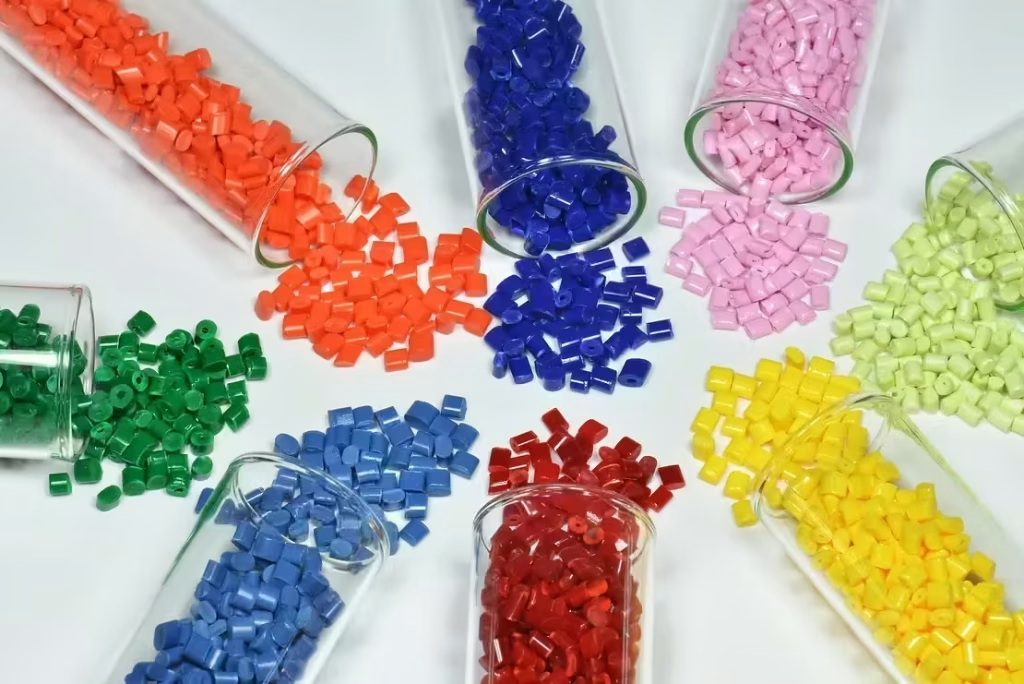
TPU generally exhibits good tensile strength, oil resistance, chemical resistance, and a wide operating temperature range. In recent years, this material has begun to enter the field of robotic structural components, particularly in parts requiring soft contact and deformable structures, where TPU is increasingly becoming an important choice.
Advantages Of Thermoplastic Polyurethane (TPU)
| Excellent Mechanical Properties: TPU provides high tensile strength and elongation. Depending on its chemical structure and hardness, the tensile strength of TPU typically ranges from 25 to 75 MPa. The stress-strain curve of TPU is influenced by factors such as the ratio of hard segments to soft segments, soft segment length, hard segment crystallinity, and the sensitivity of hard segments to reorientation and arrangement.
| Wide Hardness Range: The hardness of TPU is primarily determined by the hard segment content in its structure — the higher the hard segment content, the greater the hardness. The hardness, modulus, load-bearing capacity (compressive stress), tear strength, and density of TPU generally increase with higher hard segment content. By adjusting the formulation, hardness can meet both soft, flexible requirements and high-hardness rigid performance, while maintaining elasticity even at high hardness levels.
| Excellent Abrasion Resistance: TPU offers superior abrasion resistance compared to many traditional materials such as natural rubber, nylon, and PVC. In standard abrasion tests (e.g., Taber abrasion test), TPU typically exhibits low wear loss. For example: TPU wear loss is approximately 0.5–3.5 mg (test conditions: CS17 wheel, 1000 g/wheel, 5000 r/min, 23°C); natural rubber wear loss is approximately 146 mg; nylon 610 wear loss is approximately 16 mg. TPU demonstrates significantly better abrasion resistance.
Abrasion Resistance of Different Polymers
| Material | Weight Loss (mg) | Material | Weight Loss (mg) |
| TPU | 0.4–3.2 | Nylon 6 | 104 |
| Nylon 610 | 16 | Natural Rubber | 146 |
| Nylon 66 | 58 | SBR Tread | 181 |
| Impact-resistant PVC | 89 | High-impact PS | 545 |
| Good Processability: TPU can be processed using common techniques such as injection molding, extrusion, and blow molding, enabling efficient production of various shapes to meet different needs. Moreover, scrap material can be recycled, aligning with environmental requirements.
Disadvantages of Thermoplastic Polyurethane (TPU)
| Higher Price: Due to the cost of raw material synthesis and high production process requirements, the market price of TPU is higher than that of common plastics. Large-scale applications increase production costs, limiting its use in cost-sensitive industries.
| UV Sensitivity: TPU based on aromatic isocyanates exhibits loss of mechanical properties and discoloration (yellowing) when exposed to sunlight. The discoloration is caused by photo-oxidation of the aromatic dicarbamate bridge bonds. TPU based on aliphatic diisocyanates (e.g., HDI or H12MDI) does not show discoloration. UV stability can be improved by adding UV stabilizers.
| High Mold Shrinkage: TPU exhibits significant shrinkage upon cooling after processing, posing challenges to dimensional precision control. This requires fine adjustments in mold design and processes, increasing production difficulty and cost.
Thermoplastic Polyurethane Price (Raw Material)
In 2025, the average price of TPU raw materials is approximately US$2,000/ton. For robotics-grade TPU, which must meet special requirements such as yellowing resistance, abrasion resistance, chemical resistance, and tear strength, special formulations (polyester-type, polyether-type, or polycaprolactone-type) are used, and the price in 2025 tends to be in the range of US$3,000–4,000/ton. The value increases after processing, as costs such as mold development and injection molding must be included. (Note: The data listed above refer to raw material prices. Robotics applications use TPU components, and due to the high processing complexity, the cost will increases significantly.)
Types of Thermoplastic Polyurethane (TPU) Used in Robots
| Polyester-type TPU: Offers high tensile strength, excellent abrasion resistance, and oil resistance. Commonly used in robotic structural parts, wear-resistant components, joint outer boots, foot cushioning pads, and protective housings — parts that bear mechanical loads and friction.
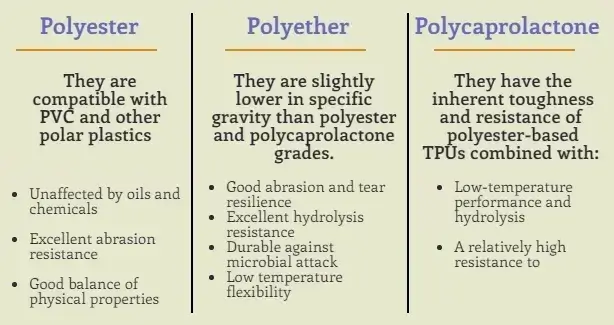
| Polyether-type TPU: Provides excellent low-temperature flexibility, hydrolysis resistance, and aging resistance. Commonly used in robotic components with high requirements for elasticity, cushioning, and sealing, such as joint sealing covers, cable sheaths, and soft impact energy absorbers.
| Polycaprolactone-type TPU: Combines the advantages of polyester and polyether types, offering both good hydrolysis resistance and abrasion resistance. Due to its higher cost, it is mainly used in high-end robotic components.
Applications of Thermoplastic Polyurethane (TPU) in Key Parts of Robots
| Protective Housing: As humanoid robots enter industrial and domestic environments, frequent human-robot contact places extremely high demands on safety. The high elasticity of Thermoplastic Polyurethane allows it to effectively cushion accidental impacts and protect internal precision components, while its abrasion and tear resistance ensure the durability of the housing. The iteration of Tesla’s Optimus from a metal shell to a full-body soft covering is a vivid example of this trend.
| Bionic Muscle Layer: The protective housing and bionic muscle made of Thermoplastic Polyurethane (TPU) resemble the human fat layer. In the event of collision or falling, they effectively absorb impact energy and reduce the overall momentum of the robot, thereby reducing the probability of damage to internal structural components caused by impact loads, providing comprehensive protection.
Additionally, by utilizing the anisotropic structure of Thermoplastic Polyurethane (TPU), tendon-driven artificial muscles of arbitrary shapes have been created, offering new ideas for building more complex and bionic robotic muscle systems — one of the most imaginative applications of TPU. In practical applications, the muscle layer of Xiaopeng’s IRON robot also uses a lattice structure printed with supercritical foaming TPU as a lightweight passive support system.
Recommended In-depth Reading from AI Robots Eidos
If readers are interested in the material composition of the Xiaopeng IRON Robot, please read this article on the material composition of the Xiaopeng IRON Robot.
| Electronic Skin Substrate Material: Compared to other materials, TPU offers a higher cost-performance ratio, along with excellent elasticity, processability, and biocompatibility, gradually penetrating applications such as electronic skin and flexible gloves. TPU films can withstand complex deformations, including bending, folding, and twisting, highly compatible with human joint movement and robotic grasping actions, ensuring that sensor components are not damaged during deformation. Its outstanding toughness and abrasion resistance guarantee the reliability of electronic skin under long-term, repeated use.
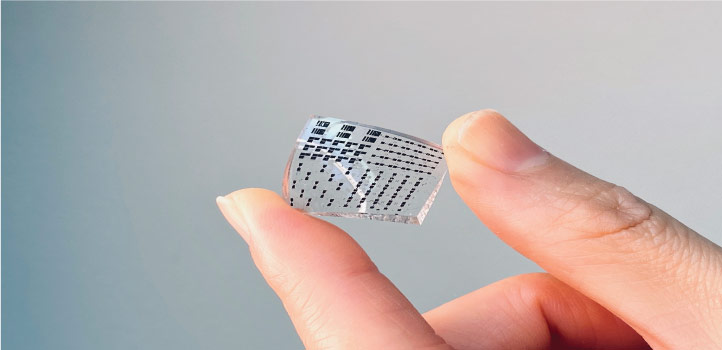
At the same time, the diverse processing techniques for TPU films allow the integration of functional nanomaterials such as carbon nanotubes, graphene, and silver nanowires, expanding sensing capabilities. Furthermore, high-grade TPU materials are non-irritating and non-toxic to human tissue, making them more suitable for close human-robot interaction scenarios, laying the foundation for the widespread adoption of electronic skin.
To avoid misleading readers, it should be noted that other substrate materials are also used for electronic skin. Commonly used substrate materials currently include polyimide (PI), polydimethylsiloxane (PDMS), polyethylene terephthalate (PET), and Thermoplastic Polyurethane (TPU)
.
| Material | Properties |
| Polyimide (PI) | Corrosion-resistant, wear-resistant, and high-temperature resistant. Good mechanical properties effectively protect internal sensing elements from external damage. Excellent electrical insulation properties can effectively weaken or eliminate low-frequency signal interference from the external environment, improving the effectiveness of signal collection at pressure sensing points, sensing sensitivity, and dynamic response characteristics. |
| Polydimethylsiloxane (PDMS) | Good biodegradability, chemical adhesion, corrosion resistance, soft and transparent, low elastic modulus, and high elasticity, good deformation resistance. |
| Polyethylene Terephthalate (PET) | Good wear resistance, impact resistance, electrical insulation, surface energy, temperature resistance, and dimensional stability, but has a high initial modulus (not easily deformed under small loads). |
| Thermoplastic Polyurethane (TPU) | High toughness and strong resistance to mechanical damage, more durable under external impact, and long-term use. |
| Protection and Sealing: TPU can be used in two major drive-related components: joint seals and protective boots, and cable sheaths.
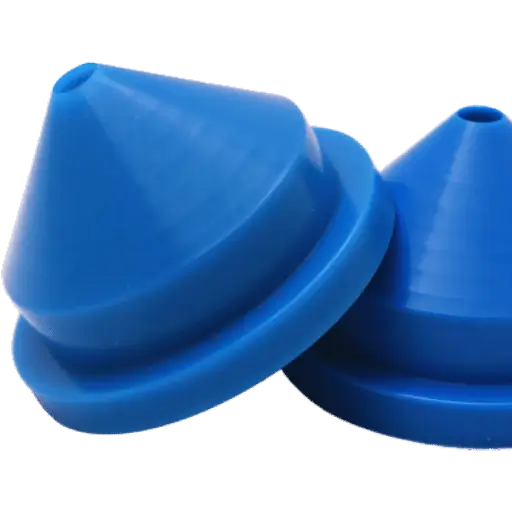
Joint Sealing: Robot joints are the most frequently moving parts and the most susceptible to wear and contamination. The abrasion resistance, flexibility, and chemical resistance of TPU make it perfectly suitable for joint sealing applications. Thermoplastic Polyurethane (TPU) can be made into flexible joint boots or sealing rings, effectively preventing external contaminants such as dust and liquids from entering the joint interior while not affecting the joint’s flexible movement, ensuring stable and reliable operation of the robot in various complex environments.
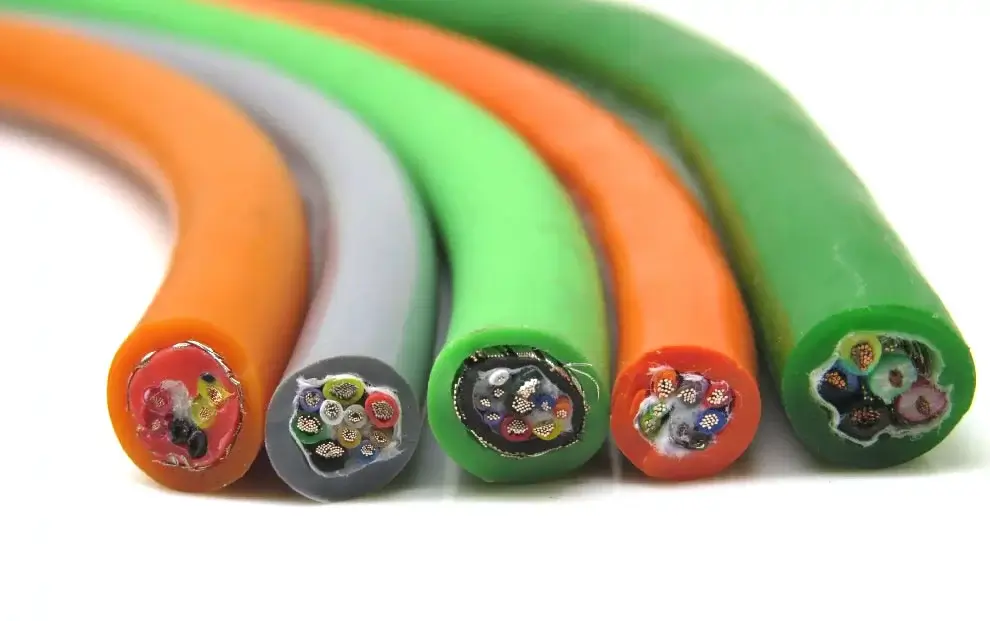
Cable Protection: Regarding cable protection, cables at robot joints need to be frequently followed by joint flexing movements. Using TPU sheaths effectively buffers flexing stress, reduces cable wear, and enhances the stability and safety of cables during long-term operation, avoiding robot malfunction due to cable damage.
Foot Cushioning Pads: When humanoid robots walk or run, the feet generate significant impact forces against the ground. TPU’s core advantages — high abrasion resistance and adjustable hardness — make it highly suitable for foot cushioning pad applications. This material not only significantly improves the friction performance and anti-slip effect of the foot sole but also maintains structural stability during repeated robot movement. At the same time, relying on the material’s elastic characteristics, it enables a more stable and quieter gait.
Robotics-Grade Thermoplastic Polyurethane (TPU) Demand Outlook and Trends
Given that Tesla’s robot uses TPU materials from companies such as BASF and Covestro, industry forecasts predict continued growth in demand for robotics-grade TPU in the future.
According to estimates by the China Petroleum and Chemical Industry Federation: If TPU is applied to various components of humanoid robots, it could cover approximately 40% of all parts, with a usage of 6–10 kg per robot. This value is worth anticipating (including raw material costs and various processing fees).
Safety protection components (including flexible joint boots, protective housings, anti-slip foot mats, etc.): approximately US$1,000 in value
Lightweight composite structures (for non-load-bearing joints or body parts, weight reduction while maintaining rigidity and toughness achieved through carbon fiber (e.g., T300, T400, 700) composites): approximately US$300 in value
Drive sealing systems (including joint sealing rings, dust covers, and other wear-resistant parts): approximately US$200 in value
Sensor and cable protection (for flexible sensor encapsulation and high-flex cable sheaths, addressing dynamic routing wear issues): approximately US$70 in value. (Note: the data listed are institutional forecasts, for reference only.)
According to Global Growth Insights, the global electronic skin market is expected to reach US$6.44 billion in 2025 and grow to US$111.53 billion by 2035, representing a ten-year CAGR of approximately 33%. According to their research, robotics applications account for approximately 42% of the electronic skin market, and many robotics laboratories are actively testing electronic skin to enhance robotic tactile sensing. TPU materials are expected to play a role in both the flexible substrate and sensing layer of electronic skin. (Note: the data listed are institutional forecasts, for reference only.)
Insight from AI Robots Eidos about Thermoplastic Polyurethane (TPU)
| In the future, TPU is expected not only to serve as a passive cushioning layer but also to integrate with sensors and actuators, forming an “active soft tissue” with perception and response capabilities. This will make robots safer and their movements more natural during human interactions. This concept of “rigid-flexible coupling” may become the standard architecture for the next generation of humanoid robots.
| TPU will no longer be just a passive substrate for electronic skin; it could become a functional layer integrating sensing, conductivity, and protection. For instance, through multilayer co-extrusion or in-situ polymerization technologies, a gradient conductive network can be constructed within TPU films, enabling distributed tactile sensing and providing full-surface tactile coverage for robots of any shape.
| As humanoid robots become more prevalent, upstream material suppliers may introduce specific TPU grades developed exclusively for humanoid robots, such as high-rebound long-lasting sealing TPU, high shock-absorbing supercritical foaming TPU, and highly wear-resistant anti-slip sole TPU.
Image Credits: Pnplastics & Hengningfilm & Team-mfg & Kaust & Zmscable