
Humanoid Robot Cost: Analysis and Outlook
Table of Contents
The humanoid robot cost is a significant constraint on its commercialization. This article focuses on the analysis and outlook of humanoid robot costs.
Humanoid Robot Cost Structure

Based on integrated data from Tesla and Morgan Stanley, the following table details the cost breakdown by module for humanoid robots.
| Module | Cost Proportion | Core Function | Technical Barrier |
| Linear Actuator (with joints) | 29.60% | Leg extension/retraction, arm push/pull (linear motion) | Extremely High |
| Rotary Actuator (with joints) | 26.50% | Waist, shoulder, wrist rotation | High |
| Control & Perception System | 14.60% | AI decision-making, vision, force sensing, speech | Medium-High |
| Dexterous Hand | 12.10% | Grasping, tool manipulation (5-finger, flexible) | Extremely High |
| Battery & Structural Components | 10.20% | Power source, carbon fiber frame, cabling | Medium |
| Software & R&D Amortization | 7.00% | OS, motion control algorithms | High |
Humanoid Robot Cost vs. Industrial Robot Cost
| Overall Cost Difference: In 2025, the unit cost for mainstream humanoid robot products typically ranges from $46,000 to $131,000 USD, with some high-end or customized models being even more expensive.
In 2025, collaborative robot (cobot) costs are relatively lower (approximately $15,000 – $30,000 USD), while some high-precision, high-payload industrial robots can exceed $70,000.
| Different Cost Distribution: The material cost for the mechanical body (frame, housing, etc.) of a humanoid robot generally accounts for around 15% of the total cost. In contrast, the mechanical body cost for industrial robots accounts for over 20%.
This difference arises because industrial robots prioritize rigidity and load capacity, often employing heavy materials like cast iron or high-strength steel for their structures. Humanoid robots, pursuing lightweight design to reduce drive load and improve endurance, predominantly use less dense materials such as aluminum alloys and carbon fiber composites.
Although these lightweight materials have a higher unit price, the overall usage of structural components in humanoid robots is significantly reduced because their load-bearing requirements are not primarily focused on moving heavy objects. Consequently, the proportion of mechanical body cost in the total cost is actually lower for humanoid robots than for industrial robots.
Furthermore, due to their greater number of degrees of freedom and sensors, humanoid robots allocate a higher cost proportion to perception and computation systems compared to industrial robots.
Recommended In-depth Reading from AI Robots Eidos
By comparing the data, you might have the following question:
There are already some very mature non-humanoid robots in the industrial field. For example, industrial robotic arms are used for assembly, painting, and handling processes; AGV logistics robots are used for material transportation and warehouse management within factories. These non-humanoid robots effectively improve production efficiency in factories.
In the home sector, there are also some non-humanoid robots, such as robotic vacuum cleaners and window cleaning robots, which free people from heavy household chores.
Since these non-humanoid robots are low-cost and have been well applied, is it necessary to develop high-cost humanoid robots? This is a good question. Please read this in-depth article.
Impact of Technical Pathways on Humanoid Robot Cost
The humanoid robot industry is currently in a phase of rapid development and change. Numerous companies are involved, often pursuing different technical pathways that are not yet standardized. These differing pathways significantly impact cost. It remains unknown whether the ultimately dominant pathway will increase or decrease humanoid robot costs; therefore, technical pathway is treated here as an unknown variable affecting cost.
To aid reader understanding, the joint actuator technical pathway is used as an illustration.
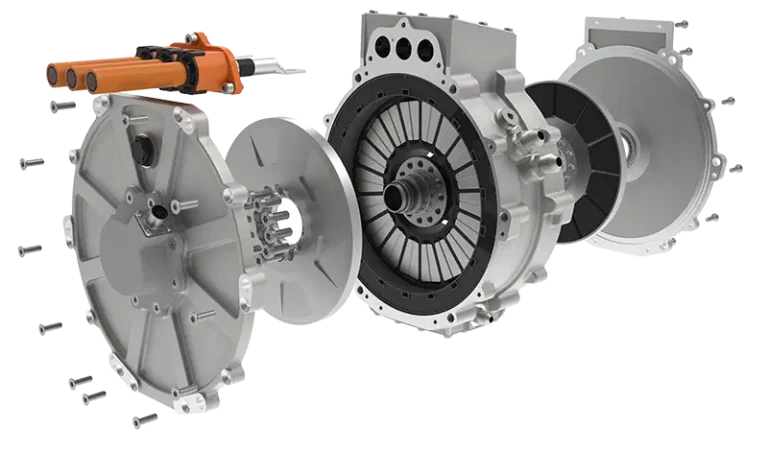
Joint actuator technology for humanoid robots has evolved from rigid drives to elastic drives and then to quasi-direct drives. Different technical paths have distinct impacts on the humanoid robot cost.
| Rigid Drive Actuator:
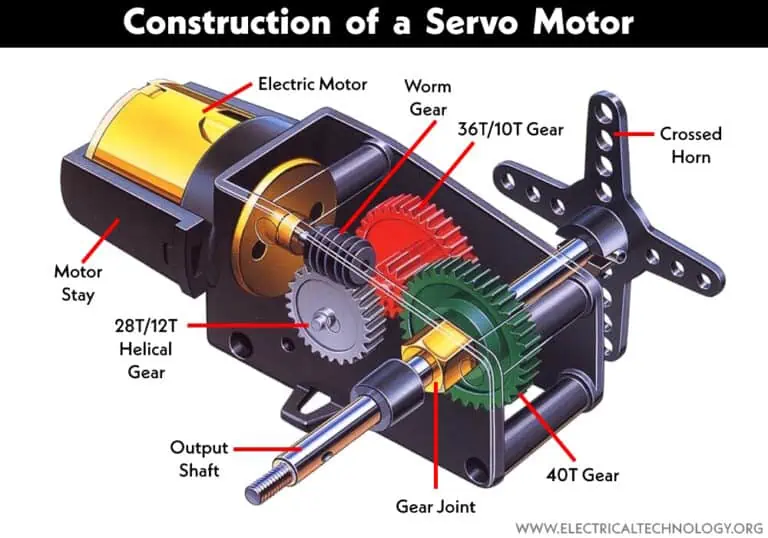
This scheme employs a conventional brushless motor combined with a high reduction ratio gearbox or harmonic drive reducer to directly actuate the joint. The pathway is technologically mature, offers simple control, and provides high precision. Its disadvantages include the need for high-precision, high-rigidity reducers and sometimes additional torque sensors, leading to higher humanoid robot cost, lower efficiency, and a lack of compliance. Due to the rigid connection between the motor and reducer, traditional rigid actuators have poorer safety and are prone to component damage under impact.

| Elastic Drive Actuator:
Elastic actuators simulate the stiffness and flexibility of muscles by incorporating elastic elements in series or parallel between the motor and reducer. This gives the joint compliance, making it safer and capable of storing and releasing energy, leading to higher energy efficiency. However, elastic drives are generally more complex in structure and control.
Introducing elasticity makes the system underactuated, increasing control difficulty and cost, while precision is relatively modest. Particularly in bipedal leg joint applications, elastic drives rely more heavily on control algorithms and sensors, increasing hardware and development costs. Currently, fully elastic drives are not yet widely adopted in engineering applications and mostly exist as local compliance units.
| Quasi-Direct Drive Actuator:
Quasi-direct drive actuators utilize a combination of a high torque-density motor and a low gear-ratio reducer, reducing the number of gear stages. Due to the low reduction ratio design, the joint exhibits lower output inertia and is back-drivable, relying on the motor itself to provide the required torque. This approach eliminates the need for expensive high-precision reducers or additional force sensors, lowering the per-joint hardware cost. Moreover, the system boasts high efficiency, a large controllable bandwidth, and offers good impact resistance and safety.
Control for quasi-direct drives is relatively simpler. However, quasi-direct drives also have their own drawbacks: the small reduction ratio results in slightly lower joint positioning accuracy compared to rigid schemes, necessitating compensation through high-resolution encoders and control algorithms.
Reasons for Humanoid Robot Cost Reduction
With supply chain maturation and technological breakthroughs, optimistic estimates from Bain & Company’s “Global Humanoid Robot Industry Trends Insight” report suggest that the Bill of Materials (BOM) cost for humanoid robots could drop significantly by 60%–70% over the next decade: from the current approximately $40,000–$50,000 per unit to $10,000–$20,000 by 2035.
| Economies of Scale from Mass Production Lower Unit Cost: Tesla plans to complete a dedicated production line with an annual capacity of one million units by 2026, targeting deliveries of 50,000–100,000 robots that year. Figure aims to achieve an annual production capacity of 12,000 units by 2026. Chinese companies like UBTech also target annual production scales in the tens of thousands.

Capacity expansion will dilute fixed R&D and manufacturing costs. Bulk purchasing will lead to significant price reductions for key components. For instance, through supplier collaboration, Tesla has reduced the unit procurement price for the planetary roller screw used in Optimus joints from approximately $3,000 to $800, a decrease of nearly 75%.
| Cross-Industry Technology Reuse: Humanoid robots are leveraging mature technologies from electric vehicles and autonomous driving to accelerate cost optimization. Tesla’s Optimus achieves cost-reduction breakthroughs precisely by reusing the automotive supply chain: joint motors adopt the mature design of EV permanent magnet motors; the vision system directly transplants Tesla’s automotive FSD camera modules and chips; the existing AutoPilot computing platform serves as the robot’s “brain,” saving the expense of redeveloping a dedicated AI system. This type of technology reuse leads to a significant reduction in the cost of the expensive AI computing portion.
| Chinese Supply Chain: China possesses cost advantages in supply chain segments such as electronic components, reducers, and motors, which hold promise for driving down global humanoid robot prices. According to the latest Morgan Stanley research, the Chinese supply chain already offers an overwhelming cost advantage. Data shows that in 2025, the BOM cost for robots utilizing the Chinese supply chain is approximately $46,000, whereas the cost for those relying on non-Chinese supply chains is as high as $131,000—a difference of nearly threefold.

This means that by using Chinese-produced components, there is an opportunity to reduce the humanoid robot cost by about two-thirds (potential differences in technical performance should be considered when selecting Chinese components). As more Chinese humanoid robot companies scale up production, the curve of humanoid robot cost will accelerate its downward trend.
As technology evolves—with improvements in motor power density, AI algorithm optimization—coupled with scale effects, the return on investment for humanoid robots in certain scenarios will surpass that of human labor, reaching an economic inflection point. This will guide humanoid robot costs to gradually approach $20,000 per unit or even lower.
Key Links in Reducing Overall Humanoid Robot Cost
To significantly reduce the overall cost of humanoid robots, lowering the cost of high-priced core components is the key breakthrough point.
| Joint Drive Module: The combination of motors and reducers is one of the most expensive parts of the whole machine. Tesla has reduced the joint actuator system cost from approximately $38,000 in traditional schemes to around $9,000 per robot through technology reuse and scale effects, jointly expanding planetary roller screw capacity with suppliers. Mass-producing custom reducers and increasing motor torque density can significantly dilute unit costs.

| Dexterous Hands and End-Effectors: The hand mechanisms of humanoid robots are precise and costly. Traditional five-fingered dexterous hands, containing numerous micro-motors and sensors, can cost up to the $15,000 range. Costs can be effectively reduced by simplifying the mechanism design and adopting high-cost-performance Chinese products—using tendon drives to replace some gears and bulk purchasing domestic hollow-cup motors. Domestic manufacturers are also attempting to simplify hand design by reducing degrees of freedom and lowering end-effector load requirements, thereby effectively controlling costs.
| High-Precision Reducers: Reducers, including harmonic drives and planetary roller screws, are the core of robot joints. They are expensive per unit and used in large quantities. For instance, new low-backlash transmission devices like planetary roller screws are considered a future mainstream solution due to their high precision and long life, but their current high price remains a key pain point for cost reduction. With R&D investment from Chinese enterprises, the cost of planetary roller screws is expected to drop by 70%–80%.

Challenges in Reducing Humanoid Robot Costs
| Technical Complexity and R&D Investment: Humanoid robots involve multidisciplinary technologies, including mechanical, electronic, control, and artificial intelligence, leading to long R&D cycles and substantial investment. For example, achieving high-precision motion control and natural language interaction requires significant R&D investment. Moreover, the fast pace of technological iteration necessitates continuous investment from companies to maintain competitiveness. According to public information, taking Tesla’s Optimus humanoid robot V3 version as an example, its AI chip cost is approximately $5,000-$6,000, and the current total hardware cost is $55,000, still showing a gap from the $5,000 target cost.

| Safety and Reliability: Ensuring safety during human-robot interaction imposes extremely high requirements on the safety of both hardware and software. For instance, pinch points at robot joints or rigid body parts could potentially cause harm to humans, necessitating additional safety guards and redundant design, which increases cost. Furthermore, to ensure robot reliability in complex environments, extensive testing and validation work is required, including durability tests and environmental adaptability tests. These testing costs also impact the overall cost.
| Ethical Risks: Examples include data collection and misuse. Humanoid robots need to collect vast amounts of personal data to function, such as home environment and behavioral habits. Inadequate data protection measures could lead to privacy breaches, data being used for commercial marketing or malicious purposes, triggering public trust crises. This could impact the mass production of humanoid robots, thereby affecting their cost.
Recommended In-depth Reading from AI Robots Eidos
Since humanoid robots face a series of issues, such as ethics, resolving these problems requires advancements in social awareness, technological progress, and legal regulations, which all take time. At the same time, readers also understand that the cost of humanoid robots is not low through reading the articles. So why should humanity continue to develop humanoid robots? If you want to learn more about this issue, please read this in-depth article.
Insight from AI Robots Eidos about Humanoid Robot Costs
| AI as a New Driver for Cost Reduction
Beyond scale, supply chain, and technology reuse, next-generation AI (particularly Generative AI and Physics AI) will become an “accelerator” and “multiplier” for cost reduction—an impact currently underestimated by mainstream analysis.
Generative Design: Leveraging AI to automatically generate optimal structural component designs under given constraints (weight, strength, cost) can drastically reduce material usage, simplify assembly, and directly lower the cost of structural parts and the robot body.
Intelligent Operations and Predictive Maintenance: AI models predicting component failures can significantly reduce lifecycle maintenance costs and losses from unexpected downtime, enhancing overall economic efficiency.
Algorithmic Efficiency Gains: More efficient AI algorithms can lower the requirements for computing hardware, thereby reducing the cost of core control and perception systems.
| Ethical and Safety Costs Become Design Prerequisites
Built-in privacy-preserving computing hardware (e.g., Trusted Execution Environments), behavioral decision algorithms compliant with ethical norms, and designs certified to international safety standards (e.g., UL, CE) will become standard features for high-end products. Products lacking sufficient investment in these areas will be unable to access mainstream markets or face substantial regulatory fines. In essence, compliance costs will become rigid, non-negotiable costs.
Image Credits: X & Escholarship & Precedence & Corerobotech & Aiptesting & AI