
The robot motors are the core component that drives robotic movement, playing a decisive role in the precision, speed, and flexibility of the robot’s motion. This is also the topic of discussion in this article.
Definition of Robotic Motors
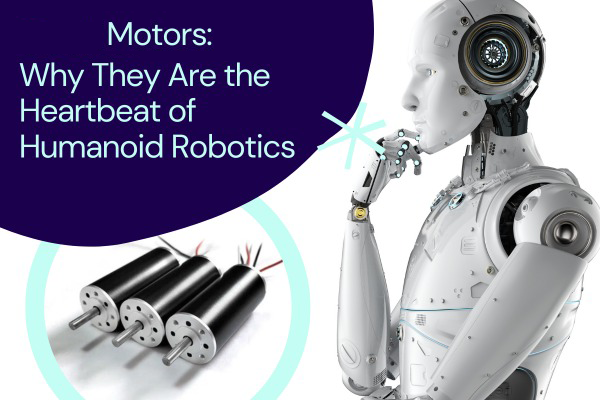
A robot motor is an electromagnetic device that converts or transmits electrical energy to generate driving torque, playing a crucial role in robots. It is regarded as the actuator of the robot, installed at various joints to control joint movement as needed, directly influencing the robot’s performance, and can be described as the “heart” of humanoid robot motion.
Characteristics of Robot Motors
Compared to traditional motors, robot motors have high material utilization, operate in complex conditions, and are subject to varying environments. The coupling effects resulting from multiple physical factors interacting within them lead to prominent issues of electromagnetic compatibility, heat dissipation, and mechanical strength, making traditional motor structures unsuitable. High-performance joint motors for robots must possess four core performance characteristics: high torque density, low torque ripple, strong overload capacity, and excellent heat dissipation performance, which are essential for accomplishing complex tasks.
| High Torque Density: This is a core performance indicator for robot motors. Robots need to execute tasks such as handling, grasping, and walking under complex working conditions, which typically require substantial driving torque. Additionally, with compact structural dimensions, joint motors must achieve higher torque output within a limited volume to satisfy the dual demands of miniaturized design and high power output.
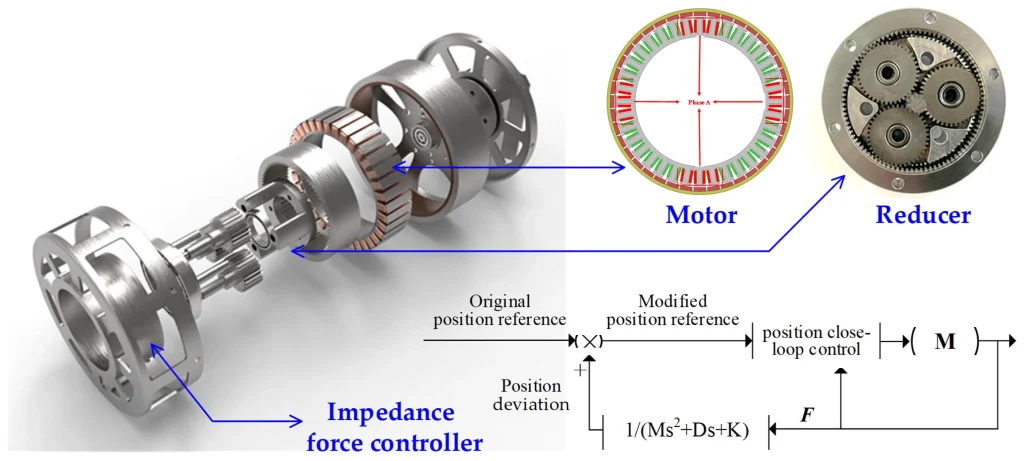
| Low Torque Ripple: This is a critical factor affecting motion precision. Torque ripple is primarily caused by cogging effects, magnetic circuit asymmetry, current harmonics, armature reaction, and control delays. Measures to suppress torque ripple include optimizing slot-pole match, adjusting permanent magnet parameters, implementing skewed pole slot designs, or adding auxiliary slots to enhance the operational precision of the robot.
| Strong Overload Capacity: This is vital for addressing sudden loads. Overload torque in permanent magnet motors is primarily caused by armature reaction and stator core saturation, which can be mitigated by optimizing pole-slot matching, tooth width, stator crack ratio, and thickness of permanent magnets to reduce magnetic saturation and minimize both direct and quadrature axis inductances. Moreover, high current-induced temperature rise in windings can limit overload capacity, necessitating a quantitative analysis of sustained working time under extreme thermal loads in conjunction with the copper loss coefficient.
| Efficient Heat Dissipation Design: Effective heat dissipation is crucial for ensuring reliable operation. In overload conditions, the windings of robotic joint servo motors accumulate significant heat rapidly due to high loss density. Given that robot motors are often designed with fully enclosed structures to adapt to complex working environments, their internal heat dissipation capacity is limited, leading to high temperature increases that seriously affect motor output performance and operational reliability.
Recommended Reading from AI Robots Eidos
Currently, mainstream cooling solutions for robot motors are still unable to meet the high torque density, low torque ripple, strong overload capacity, and heat dissipation requirements of robotic joints. This results in challenges in improving robotic movement performance and precision, and prolonged high-intensity operation could lead to motor damage due to excessive heat, severely impacting the overall reliability of robotic operations. Thus, excellent humanoid robot motor cooling technology is required.
If readers would like to learn more about cooling technologies for humanoid robots, please read on about
Role of Robot Motors
Provide Power and Motion
Drive joints and limbs to execute basic motion control: precisely adjust rotating angles.
Feedback on motion status: real-time information (e.g., walking, stretching, rotating) through encoders, achieving physical interactions. By coordinating multiple motors, complex action combinations (e.g., dance, fine operations) can be realized, expanding behavioral capabilities and application scenarios.
Achieve Precise Control
| Position Control: Accurately adjust rotating angles and positions to ensure task precision (e.g., precise positioning of the robotic arm during material sorting).
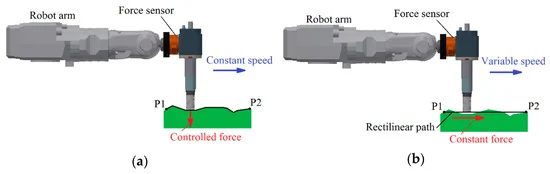
| Speed Control: Dynamically adjust rotation speed based on task requirements to adapt to different environments (e.g., flexibly switching walking speeds during navigation).
Ensure System Feedback and Stability
| Feedback on motion status: Real-time feedback on speed, position, and other information via encoders, assisting the controller in correcting deviations and enhancing motion accuracy.
| Maintain balance and posture: Dynamically adjust torque and speed to keep the robot stable (e.g., preventing falls while a humanoid robot is walking).
Classification of Robot Motors
Robot motors can be classified based on their topology into radial flux motors, axial flux motors, frameless torque motors, and hollow cup motors.
Radial Flux Motors
Robot radial flux motors include internal rotor radial flux permanent magnet motors, external rotor radial flux permanent magnet motors, and axial flux permanent magnet motors. Additionally, the hollow cup motor, as a special type of permanent magnet motor, is also commonly used in the micro joints of robot end effectors.
| Internal Rotor Radial Flux Motor: Internal rotor radial flux motors are mainstream permanent magnet motors, which can be divided into surface-mounted and embedded types based on the mounting method of the permanent magnets. Due to the simplicity of the surface-mounted structure and its low cost, combined with the low speed requirements for joint motors, surface-mounted structures have become the preferred option for robot joints. As robots’ load capacities and dynamic performance continue to improve, the torque output requirements for joint motors have correspondingly increased, leading to internal rotors gradually being replaced by other types of motors.
| External Rotor Radial Flux Motor: External rotor radial flux motors are gradually replacing internal rotor motors in specific applications due to their structural advantages. This type of motor can provide greater output torque under the same external diameter conditions while retaining the advantageous characteristics of flat internal rotor motors. It achieves higher peak torque density and speed ratio performance. Moreover, the increased air gap diameter of external rotor motors allows for a greater number of pole pairs, effectively suppressing torque ripple, making them better suited for low gear ratio joint actuators. Based on these advantages, external rotor motors are primarily used for directly driving robots or constituting QDD (Quasi-Direct Drive) for robots with collimation capabilities.
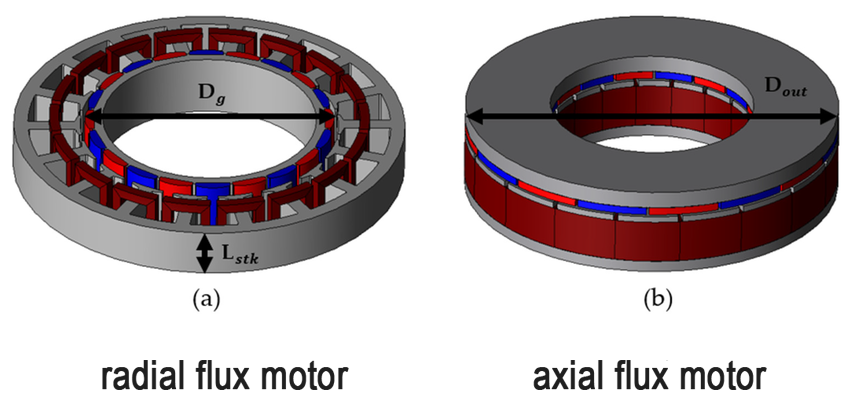
Axial Flux Motors
Axial flux motors offer advantages over traditional radial flux motors, including compact axial dimensions, high torque/power density, and high space utilization. Their structural characteristics enable them to have larger permanent magnet space and more magnetic poles under the same external diameter condition, making it easier to achieve low-speed, high-torque output. However, this type of motor still faces technical bottlenecks in practical applications.
Coreless Motors
Coreless motors, as a type of special permanent magnet servo motor, utilize a coreless cylindrical winding rotor structure, characterized by low rotor inertia, no iron losses, and minimal cogging torque. This design provides advantages such as low torque ripple, smooth operation, high efficiency, and rapid dynamic response, making it suitable for applications in robotic end effectors that require high volume, precision, and flexibility. However, due to the limited output torque of hollow cup motors, practical applications necessitate the use of high gear ratio reducers and other transmission mechanisms such as ball screws, worm gears, or tendon systems to form a cascaded flexible actuator system.
Frameless Torque Motors
Frameless torque motors consist of two parts: the stator and the rotor, lacking the traditional motor casing and bearings. This allows for compact design and efficient transmission by embedding them inside devices. They are characterized by low-speed, high torque output, eliminating intermediate mechanical transmission components to reduce energy loss and system inertia, thereby improving dynamic response and positioning accuracy. They are suitable for industrial automation, robotics, aerospace, and medical equipment fields.
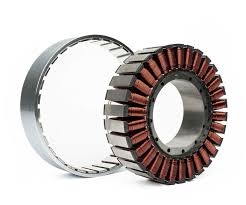
Frameless torque motors feature small volume, high power, and large torque output at low speeds, becoming the mainstream motors for humanoid robot joint drives. Compared to standard motors, frameless torque motors are more in line with the needs of humanoid robots. Their hollow design reduces the space occupied by the motor, facilitating lightweight development for robots. Additionally, they can output greater torque at low speeds, with performance unaffected by environmental factors such as high pressure and temperature, making them an ideal choice for humanoid robot joint drives.
Technical Parameters Reference for Robot Motors (Coreless Motors)
The development of the robotics industry has driven rapid growth in the market for three mainstream motors: internal rotor frameless torque motors, external rotor motors, and coreless motors.
| Manufacturer | Series | Features | D(mm) | L(mm) | Tn(Nm) | Tp(Nm) |
| Kollmorgen | KBM/TBM/TBM2G | Fractional-slot winding, Few poles & many slots, Integrated magnet | TBM: 60-129 | 13-55 | 0.413-10.3 | 1.37-39.4 |
| AEROTECH | S | Slotless stator, High pole count | 50-240 | 39-149 | 0.2-28.2 | 0.82-116.4 |
| Allied Motion | HT/Megaflux | Sinusoidal back-EMF, Compact size, High torque-to-inertia ratio | HT: 19.3-127 | 18.1-80.9 | 0.008-9 | 0.033-28.2 |
| TQ | ILM | Concentrated winding, Few poles & few slots, Modular stator | 25-115 | 10.8-68.4 | 0.032-9.51 | 0.105-31.4 |
Demand for Robot Motors from Different Joint Actuators
Various transmission components lead to differentiated characteristics in joint actuators, resulting in varying demands for joint motors.
| Name | Composition | Actuator Characteristics | Existing Issues |
| Flexible Actuator (FA) | Motor + High Reduction Ratio Gearbox |
High torque density; Low force transparency and poor backdrivability |
Motor torque requirement is low |
| Elastic Actuator (EA) | Adds elastic elements based on FA |
Strong impact resistance; |
Motor peak torque requirement is low, but the dynamic response performance of force control needs improvement |
| Quasi-direct Drive (QDD) | High torque density motor + Low reduction ratio gearbox | High force transparency and strong backdrivability; Strong impact resistance Low torque density. |
The motor can achieve relatively high-precision torque control based solely on the current loop, but the torque density needs improvement |
Applications of Robot Motors
By analyzing the relationship between peak torque density and dimensional parameters of robot motors, a typical application spectrum can be established.
| Hollow cup motors are suitable for mini joints with diameters ranging from 8 to 20 mm, primarily used in precision components such as robot hands for bending, extending, and grasping actions of fingers. Their compact size and high precision characteristics can meet the complex motion demands of finger joints, enabling fine operations such as object gripping and tool manipulation.
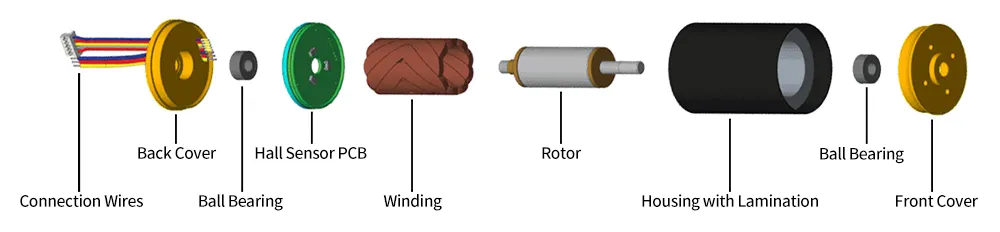
| Internal rotor motors dominate the medium diameter joints with diameters of 30 to 80 mm, mainly applied in upper limb systems like robotic arms.
| External rotor motors, on the other hand, are suitable for high-diameter joints ranging from 100 to 180 mm, fitting the needs of dynamically active lower limbs in legged robots.
| Axial flux motors exhibit high torque density characteristics; however, due to technological bottlenecks, their actual applications are currently limited.
| Frameless torque motors are primarily used in the rotational joints of humanoid robots, such as shoulders, elbows, hips, and knees. By integrating with components like reducers and encoders, they form joint actuators that achieve precise movement control, supporting actions such as walking, raising hands, and bending.

The development of the robot industry has driven rapid growth in the market for three mainstream motors: internal rotor frameless torque motors, external rotor motors, and hollow cup motors. For example, Tesla’s humanoid robots primarily use internal rotor frameless torque motors, while Yushu Technology’s joint modules adopt an external rotor motor with a planetary reducer in a collimation drive mode.
This is mainly due to the greater torque of external rotor motors compared to internal rotor motors, resulting in better anti-backlash properties and low mechanical impedance in the collimation drive actuators, enhancing the robot’s impact resistance and dynamic responsiveness.
Cost of Robot Motors
In terms of value proportion, motors account for as much as 25% of the value of core components in humanoid robots. For instance, Tesla’s humanoid robot has 28 actuators, with some using frameless torque motors while its dexterous hands employ hollow cup motors. Each robot is equipped with 12 hollow cup motors (6 in each hand).
Market for Robot Motors
The exponential growth of the global humanoid robot market has directly driven the expansion of demand for motor drive systems. By 2025, the global humanoid robot market is expected to exceed $50 billion, with China accounting for over 50% of this market. As core components, motor drive systems have become a high-value segment in the industrial chain.
| Key Robot Categories | Common Device Examples | Common Motor Types | Number of Motors per Robot |
| Industrial Robot | Five-axis robotic arm | Servo Motor | 4-6 |
| Domestic Service Robot | Robotic vacuum cleaner | Brushless DC Motor | 3-5 |
| Transport Robot | Load-carrying robotic dog | Servo Motor, Frameless Torque Motor, Stepper Motor, etc. | 10-15 |
| Food Service Robot | Hotel delivery robot | Brushless DC Motor | 2-3 |
| Other Robots | Humanoid robot | Frameless Torque Motor, Coreless Motor, Servo Motor, etc. | 25-45 |
The continuous advancement of motor technology is also promoting the development of humanoid robot technology. Innovations from brushed motors to brushless motors, and from standard motors to hollow cup motors, not only enhance motor performance but also make humanoid robot movement more precise, flexible, and efficient. With the development of artificial intelligence and supportive policies, the humanoid robot market is poised for significant growth potential, bringing expansive development opportunities for the robot motor market.
Insight from AI Robots Eidos about Robot Motors
| Frameless torque motors will continuously enhance torque density and reduce costs through magnetic circuit optimization.
| AI algorithms will be deeply integrated into controllers, with motor drive systems incorporating edge computing chips to achieve localized real-time decision-making.
| Integrated joint motors (motor + reducer + drive in one) are becoming a trend, and in thermal management, the collaborative application of topological optimization, high thermal conductivity materials, and phase change media will improve heat dissipation efficiency.
Image Credits: Lammotor & MDPI & Ozrobotics & Researchgate & Magneticinnovations & X-teamrc