Robotics as a Service (RaaS): Pay-As-You-Grow
Table of Contents
The Robotics as a Service (RaaS) model provides enterprises with more flexible, low-cost automation solutions, promoting the adoption of robotics technology across a wider range of fields and helping companies achieve automation and intelligence upgrades in their business processes.
Definition of Robotics as a Service (RaaS)
Robotics as a Service (RaaS) is a new type of service business model that integrates and consolidates robot hardware, software, system operations, and upstream/downstream service chains. It provides users with robots and related services through flexible payment options, such as leasing and subscriptions. Users do not need to purchase robot equipment upfront but pay service fees on-demand to gain access to robot equipment, along with complementary operational maintenance, upgrades, and technical support services.
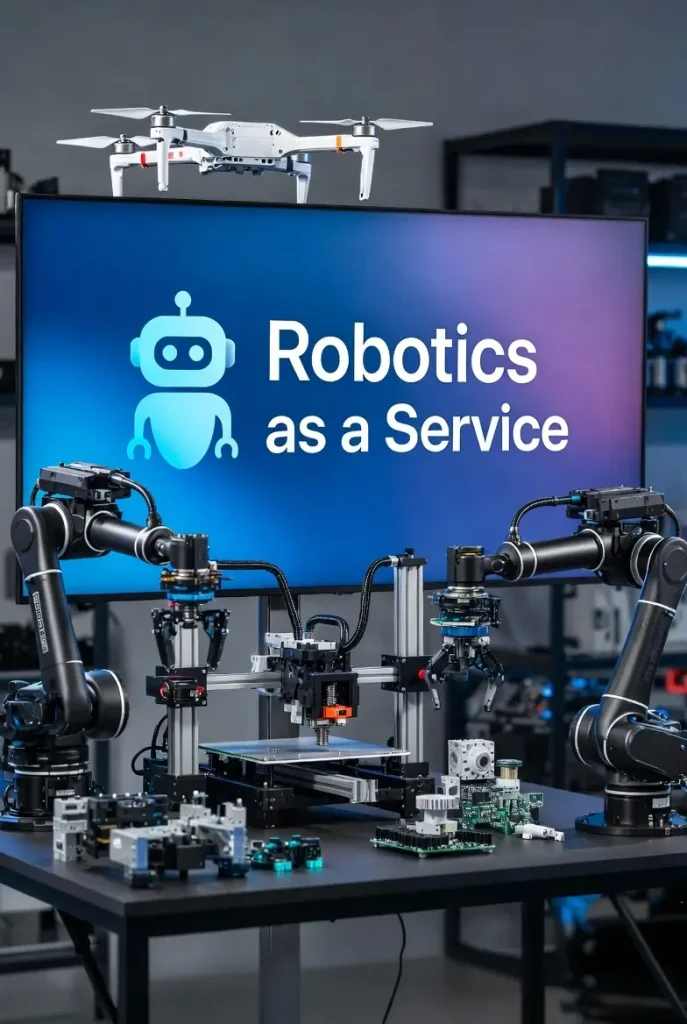
RaaS shifts robotics from the previous era of purchasing (asset-heavy) to an era of usage (asset-light). The RaaS product model not only solves the high trial-and-error costs enterprises face in the early stages of automation but also addresses the high and complex maintenance and replacement costs in later stages, opening up automation to a broader customer base.
Advantages of Robotics as a Service (RaaS)
The Robotics as a Service (RaaS) model has garnered significant attention due to its multiple notable advantages compared to traditional robot application models.
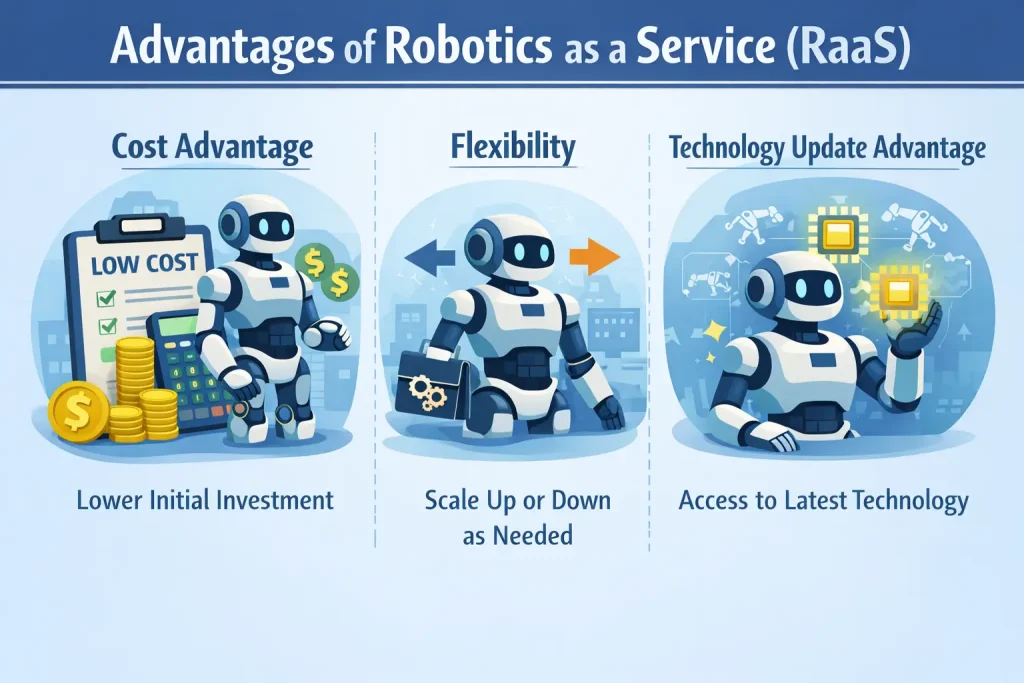
Cost Advantage
Under the traditional robot purchasing model, enterprises incur high upfront costs, including robot hardware procurement, custom software development, installation, and commissioning, followed by ongoing maintenance, upkeep, and potential upgrade expenses.
In contrast, the pay-per-use model of RaaS allows companies to pay only based on actual usage volume or duration, significantly lowering the initial investment barrier. For example, a small e-commerce company purchasing a basic warehouse logistics robot system might face upfront costs of several hundred thousand dollars, plus tens of thousands of dollars annually in maintenance fees. Adopting the RaaS model, they might only need to pay a few thousand dollars per month in usage fees, drastically reducing costs. The following comparison illustrates the differences more intuitively:
| Initial Investment: Traditional Purchase Model: Purchasing hardware, software, installation, commissioning, etc., involves high costs, potentially requiring a one-time investment of hundreds of thousands to millions (RMB/USD equivalent). RaaS Model: Only requires a small deposit or initial startup fee, resulting in low financial pressure.
| Operational Costs: Traditional Purchase Model: Bears costs for equipment maintenance, upkeep, energy consumption, etc., amounting to tens of thousands or more annually. RaaS Model: Billed based on usage, with no idle costs, and expenses are controllable.
| Upgrade Costs: Traditional Purchase Model: Each upgrade requires paying high fees for software updates and hardware modifications. RaaS Model: Included in the service, handled by the provider, with no additional cost to the enterprise.
Flexibility
In a rapidly changing business environment, enterprise needs constantly evolve. The RaaS model grants companies high flexibility, allowing them to adjust the scale and functionality of robots based on business seasonality or project-specific needs. Taking an e-commerce company as an example, during peak sales seasons with surging orders, they can quickly increase the number of robots to enhance warehouse sorting and order processing efficiency; after the peak season, they can reduce robot usage to avoid idle resource waste.
Technology Update Advantage
Robotics technology advances rapidly, with new algorithms and features constantly emerging. Under the RaaS model, the service provider is responsible for continuous research and development and upgrades, so enterprises don’t need to invest heavily in their own research and development to always have access to the latest and most advanced robotics technology. For instance, a logistics company using the RaaS model for automated sorting robots benefits from the provider regularly upgrading the robots’ visual recognition and path planning algorithms, enabling faster and more accurate sorting. The company can thus quickly adopt new technologies to enhance competitiveness and seize market opportunities.
Disadvantages of Robotics as a Service (RaaS)
Technological Bottlenecks
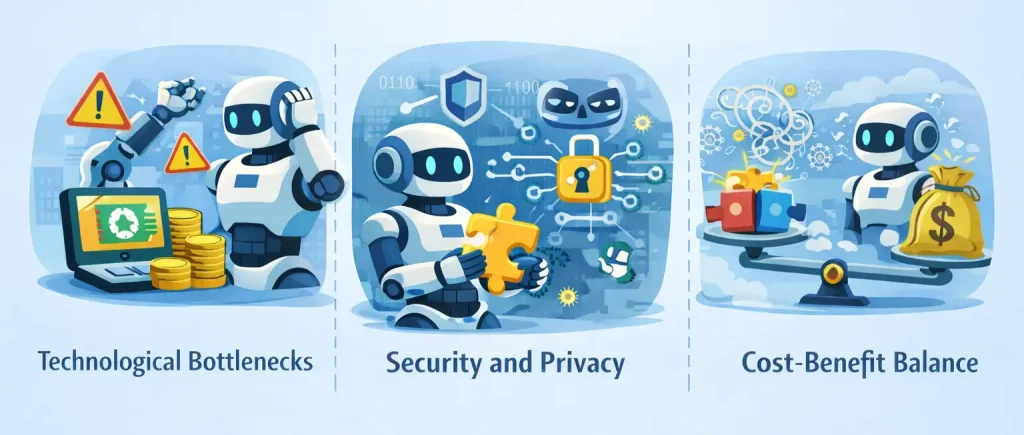
The current level of robot intelligence still needs improvement, with significant deficiencies in handling complex tasks. Taking service robots as an example, in complex and changing service scenarios, such as a restaurant needing to simultaneously handle different requests from multiple tables, robots struggle to respond flexibly and accurately understand customer intent like a human waiter. In certain high-precision, high-complexity manufacturing processes, robot operational accuracy and flexibility lag behind those of skilled workers. These technical shortcomings limit the application of the RaaS model in more complex scenarios.
Security and Privacy
During operation, robots collect and process large amounts of data, involving sensitive information such as corporate trade secrets and users’ personal privacy, posing serious challenges to data security and privacy protection. A data breach could cause significant losses for enterprises and users, trigger a crisis of trust, and affect market acceptance of the RaaS model.
System Integration
For enterprises with extensive existing IT systems and legacy equipment, seamlessly integrating RaaS robots with current Enterprise Resource Planning (ERP) systems or Warehouse Management Systems (WMS) is a real and complex challenge. This involves not only the compatibility of technical interfaces (APIs) but also the smooth flow of data and the reorganization of business processes. For example, the issue of how to achieve seamless integration with existing IT/OT systems (such as WMS) is critical.
Cost-Benefit Balance
Although the RaaS model reduces upfront one-time investment costs, the long-term usage costs still need careful consideration. Over time, accumulated leasing fees can become a significant expense. Enterprises need to accurately assess their business needs to ensure that the benefits gained from robot usage, such as efficiency improvements and cost reductions, cover the long-term leasing costs. Furthermore, business scenarios vary greatly across different industries and companies, leading to different robot application effects and returns. For companies in traditional industries, choosing the right RaaS solution based on their specific situation to achieve an optimal cost-benefit balance is a challenge.
Robotics as a Service Business Models
Leasing Model
Users pay a fee periodically (e.g., monthly, yearly) to lease the robot hardware. During the lease period, the service provider is responsible for equipment maintenance, repairs, and software updates, freeing the user from hardware acquisition costs and post-purchase maintenance pressure. For example, a warehousing and logistics company could lease Autonomous Mobile Robots (AMRs) monthly, adjusting the number of robots as needed to cope with business fluctuations.
Subscription Model
Users pay a fixed fee for ongoing access to robot services, including software upgrades, database updates, and technical support. Subscription content may cover basic functions and value-added services, such as storytelling or educational feature updates for elderly companion robots, or algorithm optimization services for industrial robots.
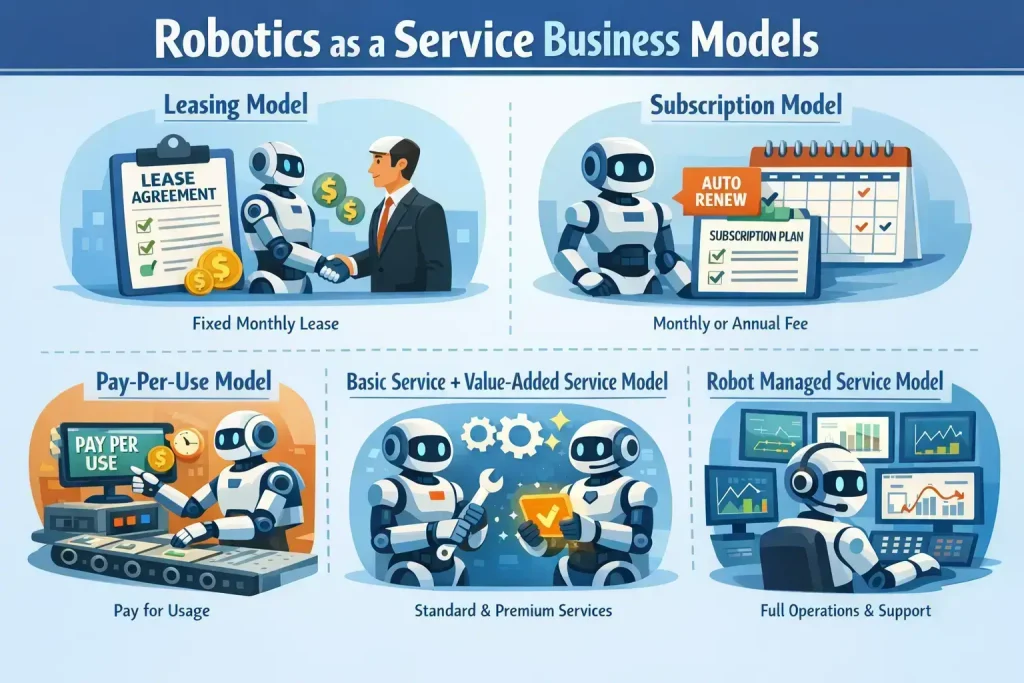
Pay-Per-Use Model
Charges are based on the actual number of uses, duration, or tasks completed by the robot. For instance, picking robots might be charged per item picked, while service robots might be charged by usage time. This model suits scenarios with fluctuating demand, as users only pay for the resources they actually consume.
Basic Service + Value-Added Service Model
Users pay a base fee for core robot functionalities (e.g., basic mobility, manipulation capabilities) and then choose additional value-added services as needed, such as advanced data analytics, custom feature development, or exclusive training. Service content is modular, allowing users to flexibly combine options based on their needs.
Robot Managed Service Model
The service provider is fully responsible for the deployment, operation, monitoring, and management of the robots. Users remotely operate and manage the robots via a cloud platform. This model is suitable for users who require high technical operations capabilities but wish to focus on their core business. The provider offers a one-stop managed service solution, ensuring stable robot operation.
It is important to note that these models are often used in combination in practice. For example, an RaaS contract might include: Base monthly fee (Subscription/Lease) + Overage fee (Pay-per-use) + Optional advanced analytics package (Value-Added Service)
Robotics as a Service Companies
As the Robotics as a Service (RaaS) model continues to develop, more and more robotics companies are beginning to offer RaaS services.
| Fetch Robotics: The company provides on-demand automation for various payloads, facilities, and workflows. Its RaaS model enables customers to scale their robot fleets on demand, quickly meeting peak period requirements without investing in equipment that would sit idle during lower-demand periods.
| Locus Robotics: Locus’s Autonomous Mobile Robots (AMRs) are widely used in warehouse and logistics environments. Their RaaS model offers subscription services, timely technical support, and software/hardware updates, helping customers achieve efficient and flexible automated operations.
| Vecna Robotics: The company offers RaaS services applied across multiple industries. Through the RaaS model, Vecna strengthens collaboration with customers, jointly setting operational goals and making adjustments and optimizations based on real-world conditions, resulting in significant productivity improvements.
Robotics as a Service Applications
Manufacturing
In manufacturing, Robotics as a Service (RaaS) helps companies achieve production automation and intelligent upgrades. German automotive parts giant Schaeffler Group partnered with Agility Robotics, adopting the RaaS service for its Digit humanoid robots for material handling and equipment operation tasks within factories. By leasing robots by the hour and paying software management fees, Schaeffler reduced initial investment costs by 60% while improving production efficiency.
Logistics and Warehousing
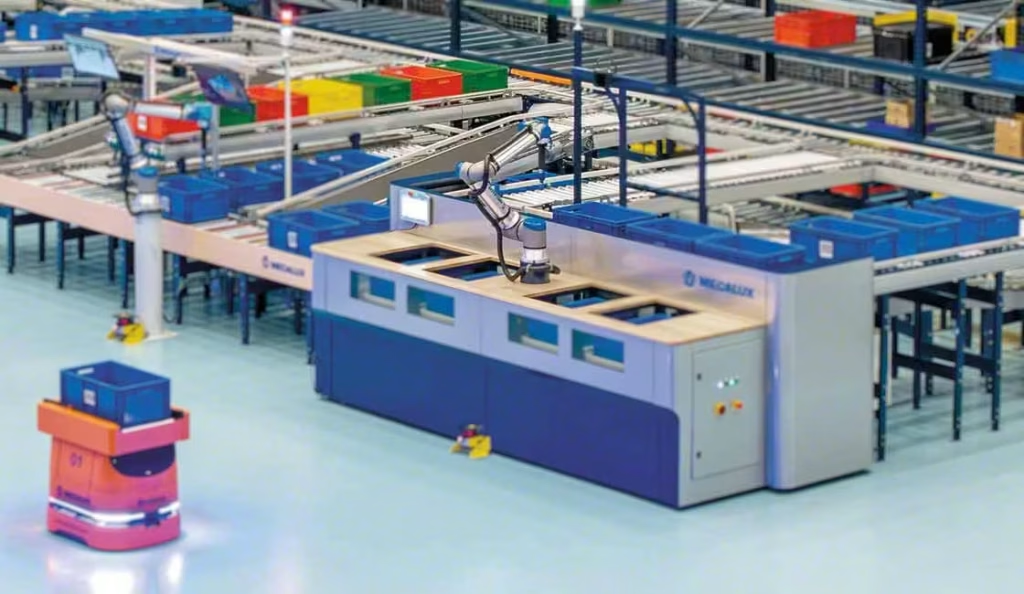
The logistics industry is a key application area for RaaS. In warehousing, Automated Guided Vehicles (AGVs) and automated sorting robots are widely used. Global logistics service provider ARVATO adopted the RaaS model to deploy hundreds of automated sorting robots, building an intelligent sorting system. These robots use advanced visual recognition technology to quickly and accurately identify package information and follow path-planning algorithms to efficiently complete sorting tasks.
Retail
RaaS also plays an important role in the retail industry. In warehousing and logistics, robots utilizing the RaaS model enhance cargo handling and sorting efficiency. In-store operations, some retailers introduce intelligent shopping assistant robots to provide customers with product information queries and recommendations, improving the shopping experience. For example, major US food retailer Kroger Co. partnered with Microsoft to create a “Retail as a Service” cloud platform, introducing robotics technology for scenarios like self-checkout, inventory management, and shelf scanning, leveraging the Internet of Things and AI to boost operational efficiency.

Robotics as a Service (RaaS) Model Performance Across Different Robot Types
| Industrial Robots: Categorized by robot type, industrial robots currently dominate the global Robotics as a Service (RaaS) market, with primary application scenarios concentrated in traditional manufacturing processes such as welding, material handling, and assembly. In terms of business models, industrial robots tend to adopt the leasing model, characterized by long-term commitments and a trend toward servitization.
| Humanoid Robots: The humanoid robot leasing market is transitioning from model exploration to large-scale commercial application. The rapid decline in pricing has become a defining feature of the humanoid robot Robotics as a Service (RaaS) market. The RaaS model provides real-world scenario testing and data feedback for the technological development of humanoid robots, with robot users effectively assuming the dual role of technology validators and market educators.
| Industrial Robots | Humanoid Robots | |
| Core Value | Efficiency improvement and quality assurance | Technology demonstration, brand marketing, innovation exploration |
| Duration | Long-term (primarily 12+ months) | Flexible (from 1 day to several months) |
| Service Focus | Technical support, maintenance, and training services | Operation training, safety assurance, and content development |
| Market Maturity | High | Low |
| Growth Drivers | Automation demand, cost control, and technology upgrades | Technological breakthroughs, brand effect, scenario expansion
|
Recommended In-depth Reading from AI Robots Eidos
The varying degrees of RAAS application in industrial robots and humanoid robots are mainly influenced by a combination of factors such as technology maturity, application scenarios, cost structure, and market acceptance.
If readers wish to further understand the differences between industrial robots and humanoid robots, please read in-depth articles on industrial robots and humanoid robots.
Robotics as a Service Market
A research report from Grand View Research indicates that the Robotics as a Service (RaaS) market could grow from $1.33 billion in 2023 to $4.12 billion in 2030, achieving a Compound Annual Growth Rate (CAGR) of 17.5%.
A report from MarketsandMarkets estimates that the global RaaS market is projected to grow from $1.8 billion in 2023 to $4.0 billion by 2028, with a CAGR of 17.4%.
(Note: The data in the reports are institutional forecasts and are for reference only.)
The Future of Robotics as a Service (RaaS)
The future of the Robotics as a Service (RaaS) model holds immense possibilities. With continuous technological advancement, the level of robot intelligence will keep rising, potentially overcoming existing technical bottlenecks and making the application of the RaaS model feasible in more complex scenarios. Simultaneously, as the market places increasing importance on data security and privacy protection, related technologies and regulations will gradually improve, bringing security risks under effective control. Furthermore, as the RaaS market expands, service providers optimizing operations and reducing costs are expected to offer enterprises more cost-effective services, better addressing the cost-benefit balance issue. From these perspectives, it is certainly possible that the RaaS model could become mainstream in the future.
It is important to note that RaaS does not completely replace purchasing; rather, it offers enterprises a new choice. The traditional robot purchasing model still holds irreplaceable advantages in certain specific scenarios. For instance, for large enterprises with extremely high robot usage frequency, special customization needs, substantial financial resources, and strong research and development capabilities, purchasing robots and performing in-depth customization and maintenance themselves might better meet their long-term strategic development needs. In such cases, the RaaS model serves as a supplement, providing enterprises with a more flexible option.
Insight from AI Eidos Robots about Robotics as a Service (RaaS)
To further lower the threshold, a new type of RaaS model of ‘zero subscription fee and revenue sharing’ may emerge in the future. Service providers will deploy robots for enterprises at no cost, but will share part of the efficiency gains brought by the robots as stipulated in the contract. This deep-binding model will motivate service providers to continuously optimize robot performance, achieving a win-win for both parties.
As robotic hardware becomes standardized and low-cost, the core value of RaaS will no longer lie in the hardware itself, but rather in the algorithms and data behind it. Enterprises will pay for continuously optimized operational algorithms—service providers will analyze vast operational data to continuously enhance the decision-making capabilities of robots. In this context, RaaS will not only be about renting robots but also about renting ‘intelligence.’
With RaaS lowering the barriers to automation and the flexible deployment of robots, a trend towards decentralization will emerge in the manufacturing sector. Companies can set up micro-factories close to the consumer end, quickly renting robots for small-batch, customized production, thus achieving ‘local production, local consumption.’ This not only reduces logistics costs but also enhances the resilience of the supply chain.”
Image Credits: Mecalux & Manlybattery & AI