Robots And Cars: Automakers Are Flooding Into The Humanoid Robot Field
Table of Contents
The integration of robots and cars is sweeping across the entire automotive industry. In 2025, Tesla CEO Elon Musk announced the mass production target for humanoid robots, planning to increase production capacity to 500,000 units within three years. From manufacturing cars to creating robots, an increasing number of automotive companies are entering the field of humanoid robotics.
Reasons for the Integration of Robots and Cars: Why Are Automotive Companies Entering the Humanoid Robot Field?
Technology Homology
Current smart cars are akin to “wheeled robots,” while humanoid robots represent a different form. The two are very similar in terms of algorithms, computational power requirements, and underlying hardware.
| At the perception level, both robots and cars need to rely on technologies like LiDAR and computer vision for accurate environmental perception. LiDAR is regarded as the “eyes” of a car, constructing spatial information of the environment by emitting laser beams and measuring reflected signals to judge the distance and position of surrounding vehicles, pedestrians, and obstacles in real-time.
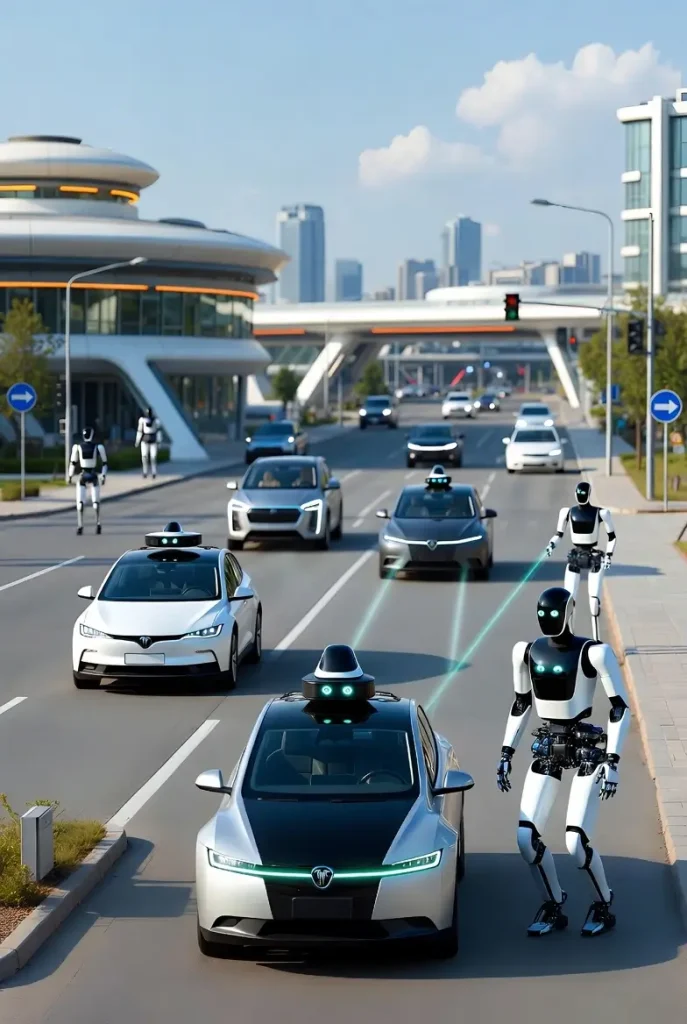
With computer vision technology, cars can also recognize traffic signs, signals, lane markings, and understand the intentions of other vehicles and pedestrians, providing a basis for planning driving speed and routes. Similarly, robots also need LiDAR and computer vision technology to “understand” the world and efficiently perform various tasks. In special scenarios, robots also require fusion perception technology to acquire information such as temperature, humidity, sound, and gas.
| At the decision-making level, both robots and cars rely on advanced algorithms and models to process and analyze environmental data, ultimately outputting optimal solutions. Autonomous driving decisions for cars mainly include path planning, behavior selection, motion planning, and control, relying on vast amounts of driving data to improve learning and enhance decision-making accuracy and adaptability. Robots follow similar logic, relying on algorithms such as reinforcement learning, supported by extensive simulated training and practical feedback to optimize decision-making models.
| At the execution level, both robots and cars can rely on motor drives to complete set tasks. For instance, electric vehicles rely on advanced motor drive and control technologies to meet driving needs under different road conditions. Similarly, robots achieve flexible grasping and motion control through precise control of motors. Additionally, there are extensive commonalities between cars and robots in key areas such as information communication and system architecture. This technological commonality is not coincidental but an inevitable result of the continuous iterative evolution of both industries toward intelligence. This breaks down technical barriers for the integration and development of cars and robots, creating prerequisite conditions.
| Technical Area | Automotive Application | Robot Application |
| Power System | Motor, Reducer | Joint Drive Module |
| Sensors | Millimeter-Wave Radar | Environmental Perception System |
| Control System | Autonomous Driving Algorithms | Motion Control Algorithms |
Seeking New Growth Points
Currently, the competition in the new energy vehicle market is intense, leading to a decline in corporate gross margins. Taking the Chinese automotive industry as an example, according to 2024 data from China’s Ministry of Industry and Information Technology, the capacity utilization rate of China’s automotive parts industry is less than 65%, and intensified industry competition has led to an average gross margin of only 20%-25%. In contrast, the gross margin of core components for humanoid robots is as high as 45%-60%, making them a new profit engine.
Furthermore, humanoid robots represent an immensely imaginative new market worth trillions. It is predicted that by 2035, global sales of humanoid robots will exceed 5 million units, with the market size expected to exceed 400 billion yuan. For automotive companies, this is a key means to enhance their market capitalization in the capital markets.
Car Manufacturing Robots Promote the Application of Humanoid Robots
Automotive companies have a high demand for labor, and car manufacturing robots (humanoid robots) can, to some extent, replace manual labor and reduce labor costs. In reality, the pressure from labor costs on automotive companies does exist and is particularly prominent in the increasingly competitive market landscape.
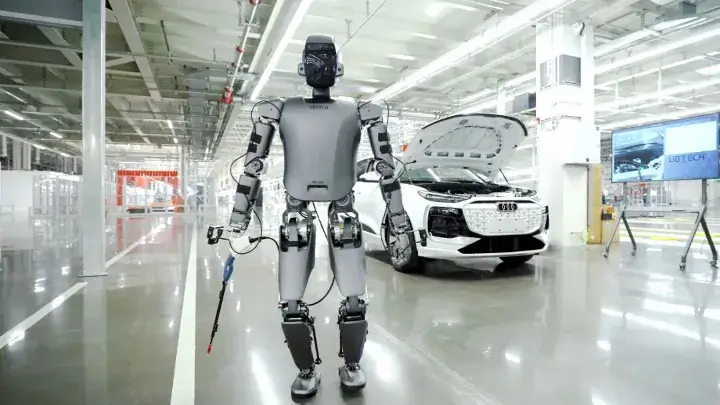
Compared to human workers, the advantages of car manufacturing robots promote the integration of robots and cars.
More precise operation and higher execution efficiency. For example, when dealing with high-precision, complex components like car engines, humanoid robots can use dexterous hands to achieve precise and stable operations, reducing product defect rates and saving production costs. Additionally, the application of humanoid robots can further improve collaborative efficiency, enabling more efficient scheduling and coordination.
Humanoid robots possess the inherent advantage of human-like morphology, allowing them to be compatible with existing factory environments. They can achieve flexible applications without the need for production line modifications or upgrades, replacing manual operation of mechanical equipment, significantly reducing factory cost investments, and alleviating the transformation burden on enterprises.
Automotive-grade Components
Automotive manufacturers provide components that meet automotive standards, capable of operating in environments ranging from -40°C to 40°C, with resistance to vibration, impact, and electromagnetic interference. These are precisely the qualities required for high-quality robots. From the perspective of mass production, the hardware and software standards for robots largely need to align with “automotive-grade” requirements, and in some aspects, even exceed them, to ultimately achieve the production of high-performance robots. It has promoted the integration of robots and cars.
Automotive Company Brand Promotion
Automotive companies entering the humanoid robot field enhance their brand awareness and influence. At this stage, consumers, especially younger demographic groups, consider not only performance and appearance when choosing vehicles but also brand image. By introducing humanoid robots, automotive companies can further demonstrate a proactive stance in adapting to industrial changes and embracing technological innovation, sending a strong signal to the market that they focus on quality improvement and intelligent upgrades. This solidifies the brand’s soft power for further market expansion. That is another reason for the integration of robots and cars.
Participants in the Integration of Robots and Cars: Which Automotive Companies Have Entered the Field of Humanoid Robots?
| Automaker | Robotics Development |
| Xiaomi | CyberOne, the third-generation humanoid robot |
| XPeng | Iron humanoid robot |
| Tesla | Optimus |
| Mercedes-Benz | Apollo robot |
| BMW | Figure 01 robot |
Progress in the Integration of Robots and Cars: The R. &D. of Automotive Companies in the Humanoid Robot Field
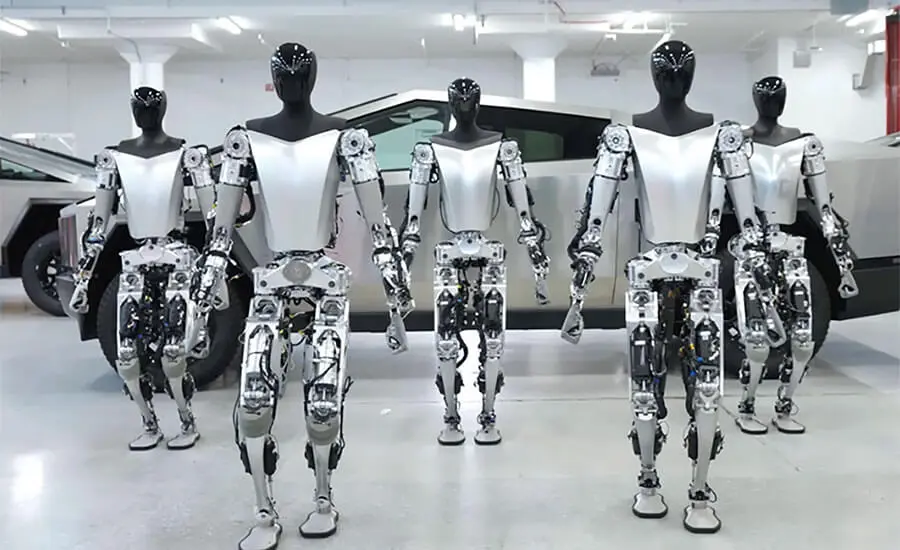
| Tesla: Tesla has always viewed the Optimus robot as a core product for the company’s future, planning to start mass production of Optimus by the end of 2026, with a long-term goal of producing one million units annually. Elon Musk has repeatedly stated in public that humanoid robots are “the greatest product ever.” Tesla has already deployed Optimus for testing in some factories. The latest videos show that Optimus can perform delicate tasks such as sorting batteries and inserting trays, and it possesses self-error-correction capabilities.
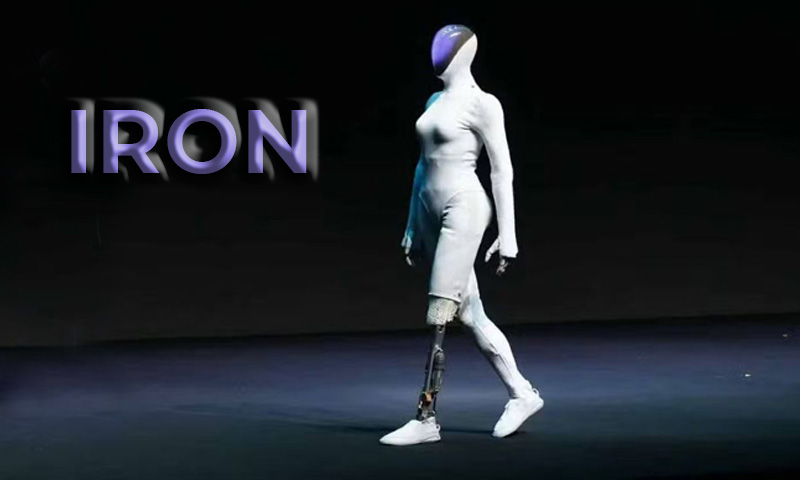
|XPeng Motors: XPeng Motors released its new-generation humanoid robot, IRON, for the first time, equipped with 82 joint degrees of freedom and all-solid-state batteries. Compared to the first-generation product, IRON has achieved significant breakthroughs in bionic design and intelligent interaction.
Xpeng IRON Robotics features a human-like spine, bionic muscles, and fully enclosed flexible skin, supporting customization for different body types; its 82 degrees of freedom enable it to perform challenging human-like movements such as “catwalk”; it has 1:1 human hand dimensions with 22 degrees of freedom, capable of performing delicate grasping actions; it is equipped with three Turing AI chips, providing an effective computational power of 2250 TOPS.
Recommended In-depth Reading from AI Robots Eidos
Xpeng Iron Robotics has already entered mass production, marking a technological breakthrough for automotive companies in the field of humanoid robotics. By leveraging the automotive industry supply chain, it has effectively reduced costs and promoted collaborative innovation across the entire industrial chain. Its development path provides a pragmatic reference for other automotive enterprises.
However, after mass production, challenges related to cost, data, and ethics still need to be addressed.
Please read this article to learn more about Xpeng Iron Robotics.
| Xiaomi: Xiaomi recently released the CyberOne full-size humanoid bionic robot. This robot stands 177 cm tall, weighs 52 kg, and can distinguish 85 types of environmental semantics and 6 categories of 45 human emotions. Officially, it is referred to as “a robot that is more like a human.”
Challenges in the Integration of Robots and Cars: Difficulties Faced by Automotive Companies
| Technical Maturity: Most companies have not yet achieved real profitability; many are still in the technical pre-research or small-scale testing phase.
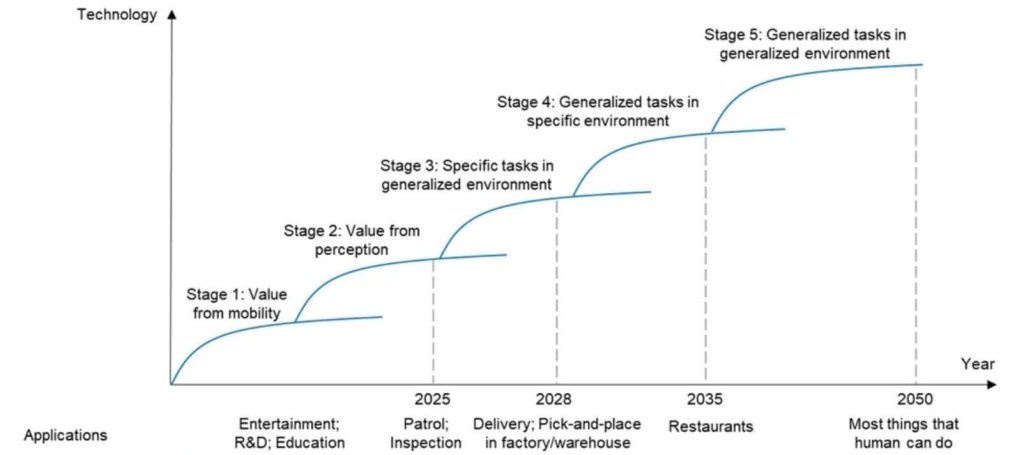
After all, robots need to achieve dynamic balance, delicate operations, and human-machine interaction in unstructured environments, placing higher demands on the system’s real-time performance, robustness, and intelligence. For example, both Tesla’s Optimus and XPeng’s IRON are continuously iterating in areas such as humanoid motion and dexterous hand operations, but there is still a distance from widespread commercial use. Integrating robots and cars is not easy.
| Data Scarcity: Humanoid robots need the ability for autonomous thinking and decision-making—essentially, they need to “develop a brain.” Only with such capabilities can robots replace humans in performing repetitive tasks. Achieving these functions requires massive amounts of data for training. Otherwise, no matter how powerful the computational capabilities of large models are, without sufficient data for training, they cannot reach the level of intelligence required for large-scale deployment.
| Cost: The research and development of humanoid robots involves multidisciplinary technologies, requiring substantial investment in hardware development, software algorithm optimization, and testing verification.
Simultaneously, high process precision requirements during production lead to high per-unit robot costs. Due to high product prices and limited market demand, companies need a relatively long time to recoup R&D and production costs. Taking automotive manufacturing companies as an example, replacing human labor with humanoid robots requires 29 to 40 months to achieve cost recovery, resulting in a low return on investment.
Insight from AI Robots Eidos about Robots And Cars
From “product sales” to “labor as a service,” automotive companies may transform into “productivity output platforms.” Once automotive companies master the ability to manufacture high-performance humanoid robots at scale, their business models may undergo a fundamental shift. They might no longer just sell robots but instead offer “standardized labor units” to other industries through a “robot as a service” model. By leveraging their global supply chains and operational networks, automotive companies are expected to become core suppliers for the next generation of physical world infrastructure, with their revenue models shifting from one-time hardware sales to ongoing subscription services, task commissions, and data services.
Image Credits: Tesla & Thetruthaboutcars & AI & Xpeng & Linkedin