
The Humanoid Robot Head: Seeing, Connecting, Balancing
Table of Contents
The significance of the AI humanoid robot head becomes evident when we delve into the technical logic, application scenarios, and the essence of interaction with human society. The head is not merely an optional component; rather, humanoid robots need to achieve core functions and integrate into human society, representing a dual necessity of technological rationality and humanistic demand.
Definition of a Humanoid Robot Head
The humanoid robot head is a crucial component that mimics the external structure of a human being. Typically located at the top of the robot’s body, it is a comprehensive module integrating functions such as sensing, interaction, and control.
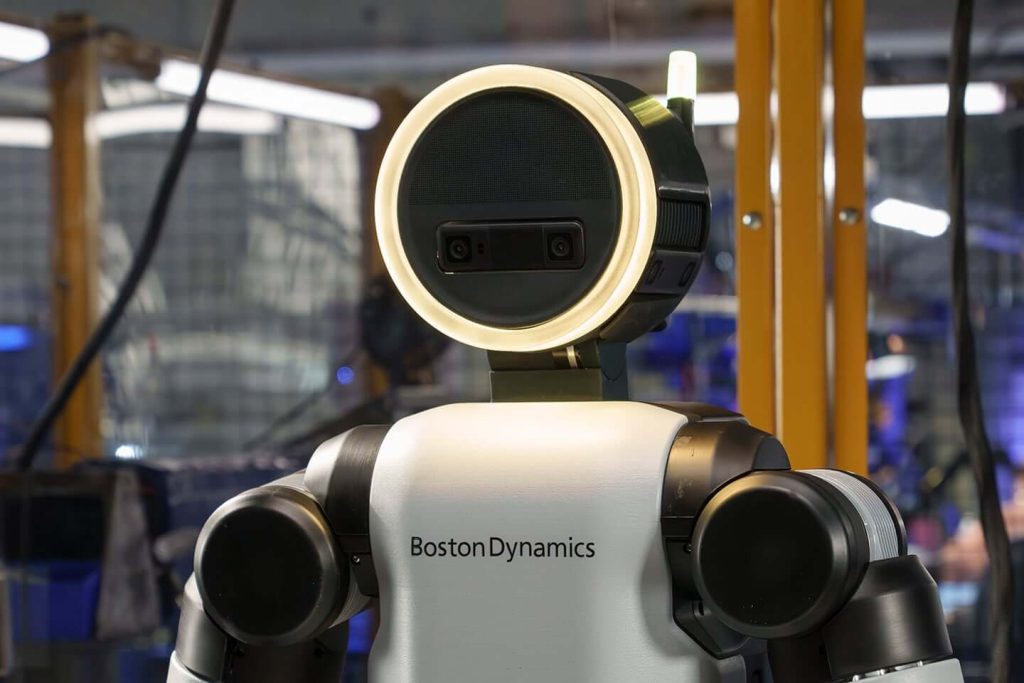
The humanoid robot head is not only a biomimetic design in terms of appearance, but also a key functional module for achieving intelligence, interactivity, and stable operation of the robot. It is one of the important features that distinguishes humanoid robots from other types of robots.
The Importance of The Humanoid Robot Head
The Humanoid Robot Head Determines the “Perceptual” Limit of the Robot
For humanoid robots to operate effectively in human environments, the primary prerequisite is accurate perception of the surrounding world. The head of a humanoid robot serves as the optimal platform for its perception system, and its design directly dictates the precision, range, and efficiency of the robot’s sensing capabilities.
All designs in human society are fundamentally constructed around being human-centric. The physical spaces and environmental information inherent to human society are naturally suited to be captured from a “humanoid perspective.”
The spaces in which humans operate—from the distance of tool operation to the range of social interaction—are designed based on human height and viewpoint. The height of a robot’s head is typically aligned with human eye level (approximately 1.5 to 1.7 meters), maximizing the recreation of human perceptual perspectives and minimizing visual and auditory blind spots.
Without a head to serve as a carrier, if sensors like cameras and microphones were installed randomly on other parts of the body, they would either be too low to capture information from higher locations or suffer from angular deviations, leading to a decrease in recognition accuracy, such as an inability to capture facial expressions during communication. In industrial settings, while mechanical arms may perform precise tasks, they lack a humanoid perspective sensor system and cannot adapt flexibly to non-standardized tasks; wheeled robots, despite being efficient movers, struggle to quickly identify details like table clutter or floor stains in a home environment through visual recognition.
The support provided by the head to the perception system is also reflected in the dual logic of hardware installation and performance optimization. Currently, mainstream humanoid robot heads integrate multiple core perception devices: for instance, Tesla’s Optimus features three cameras employing a purely visual solution for environmental recognition.
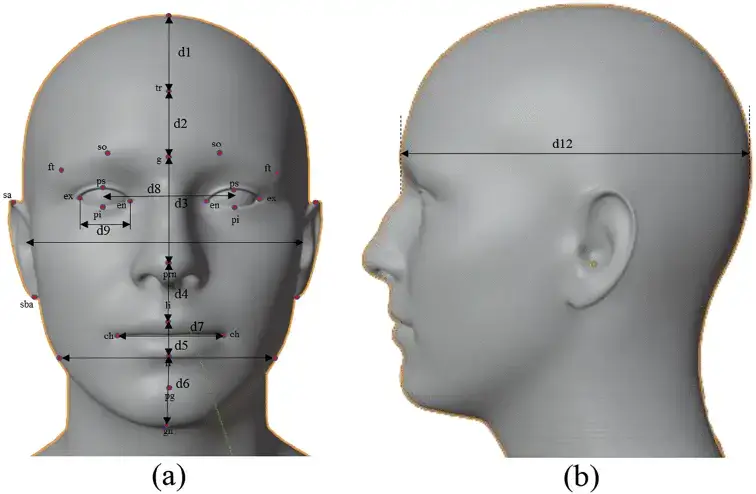
The arrangement of these devices is not arbitrary; cameras require proper height and angle alignment to cover a wide field of view, microphone arrays need to be close to the sound field center for effective voice recognition, and radar must avoid obstructions to ensure signal transmission. The head, as a relatively independent and flexible component, can provide stable and optimized installation positions for these sensors while using modular design to address device compatibility issues.
More crucially, the head’s seemingly redundant but functionally critical structural design directly impacts the performance of the sensing equipment. The independent wiring design of the head can optimize circuit layouts, reduce signal interference between different modules, and enhance the efficiency of sensor data processing. If external sensors are used, their selection is strictly limited by size and weight; too heavy or large units would increase the robot’s overall burden, affecting mobility balance and endurance. However, a single-wiring head design can strike a balance between lightweight and functionality without affecting the overall center of gravity, and a transparent or non-metallic head can ensure that visual sensors maintain their imaging capabilities.
Additionally, the head’s ability to rotate allows perception devices to capture dynamic information effectively. For example, if a robot hears a sound source, it can turn towards it within 0.3 seconds, and this kind of flexible adjustment significantly enhances perception efficiency in dynamic environments, a distinct advantage that fixed sensors cannot achieve.
For humanoid robots operating in complex human environments, comprehensive and precise perceptual capabilities are essential. The head serves as the core carrier of this perceptual ability; without its “central lookout” function, even with flexible limbs, it cannot efficiently accomplish complex tasks.
The Humanoid Robot Head Helps The Robot Integrate Into Human Society.
The ultimate goal of humanoid robots is to integrate into human society, where interaction plays a central role in this integration. The importance of emotional connections and interactive experiences is as crucial as functional realization, and the humanoid robot head is key to establishing these connections.
Human social interactions inherently revolve around the “face,” with facial expressions and head movements serving as vital carriers of emotion and intent. When a robot has a head, especially one designed to resemble a human face with flexible movement capabilities, it can significantly reduce psychological barriers between humans and robots.

For instance, service robots displaying smiles or nodding on the head’s screen can make elderly individuals and children more willing to accept their assistance. In contrast, without a head, a robot that merely uses speakers on its side or indicator lights on its base lacks emotional resonance in interactions, making it difficult to establish trust. This explains why purely mechanical arms or wheeled robots can complete some service tasks but struggle to become “members of the family.”
The interactive value of the humanoid robot head is also reflected in the rational layout of interfaces. Robots’ interactive devices, such as speakers, displays, and indicator lights, must follow human interaction habits in their arrangement. Speakers positioned on either side of the head mimic human auditory experience, making voice feedback sound more natural; displays situated in the head’s “face” area align with human visual focusing habits during face-to-face communication; indicator lights placed at the top of the head allow humans to quickly identify the robot’s operational status from various angles. These layout details, though seemingly minor, directly impact interaction efficiency.
For example, when a robot converses with a user, the head’s rotation combined with voice responses allows the user to clearly perceive that the robot is “actively listening.” This interactive experience is unattainable with a headless design.
Major humanoid robots in practice have also demonstrated the head’s core role in interaction. Xiaomi’s CyberOne features a flexible head and neck design paired with a voice interaction system, achieving human-like interaction scenarios such as “turning towards sound” and “eye contact.” These designs are not mere “aesthetic enhancements” but rational choices based on human social psychology. The inherent affinity humans feel towards similar forms ensures that robots with heads can be more quickly accepted and more efficiently complete interaction tasks.
Recommended Related Reading from AI Robots Eidos
Ai Robots Eidos believes that, in a sense, the human-like head of a humanoid robot facilitates emotional communication between the robot and humans, and this is an important reason why humans pursue the human-like appearance of intelligent robots. If you are interested in this topic, please read this article.
The Humanoid Robot Head Is The “Optimizing Core” of Structure and Control
A well-designed humanoid robot head does not detract from a robot’s flexibility; instead, it enhances overall operational efficiency.
| Structure: From a structural balance perspective, humanoid robots must mimic human proportions for stable movement. The weight of a human head is about 6% of total body weight, which helps maintain the stability of the body’s center of gravity. Most humanoid robots follow this logic in head design, using lightweight materials and modular integration to keep weight within reasonable limits, ensuring that the robot’s center of gravity does not shift during actions like walking, turning, or bending. Without a head, the upper body weight distribution of the robot would be unbalanced, potentially leading to decreased stability during movement, especially on complex terrains or in rapid turning scenarios, increasing the risk of falling.
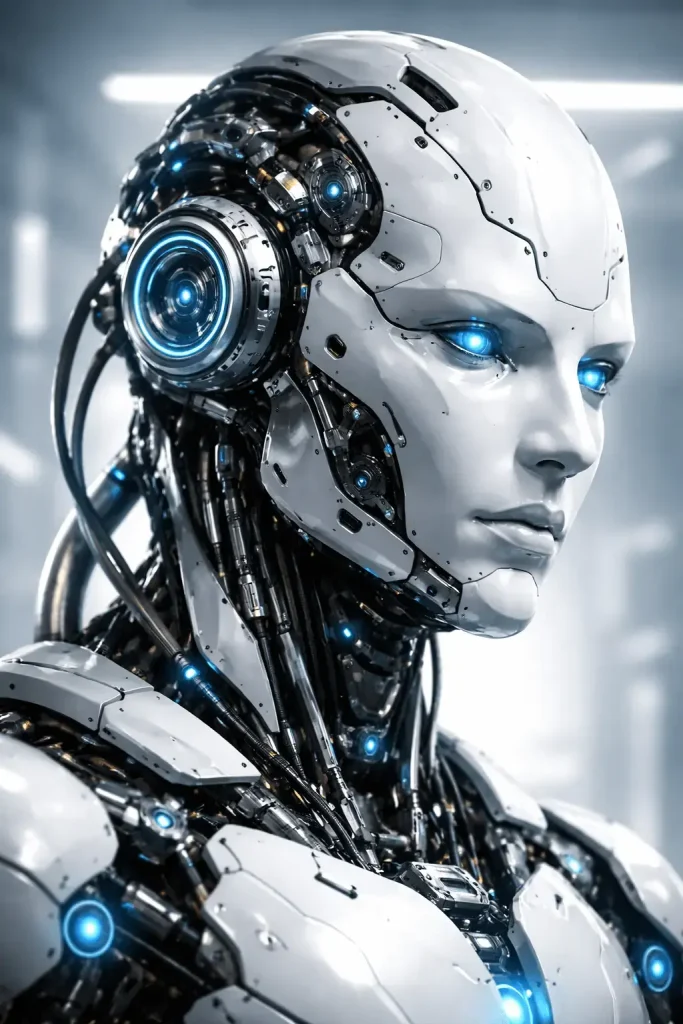
| Control: In terms of integrating control modules, the head serves as an ideal installation position for core control units. Some humanoid robots place processing chips and sensor data fusion units within the head. This arrangement shortens the signal transmission distance between sensors and control modules, increasing response speed. For example, when a robot’s camera captures obstacle information, the head’s control module can process data instantaneously and issue avoidance commands, greatly reducing collision risks and enhancing operational safety.
Recent designs from companies like Boston Dynamics further emphasize the structural value of the head through multi-degree-of-freedom neck designs in their robots. Most mainstream humanoid robots employ a 2-degree-of-freedom (2-DOF) neck. For example, Tesla’s Optimus can rotate its neck ±75° horizontally and ±45° vertically. Some research robots even utilize a 3-degree-of-freedom (3-DOF) neck to add tilting functions, making movements closer to human behavior. The damping adjustment features in the neck and the optimized joint transmission ratios allow for smoother head movements, which are unattainable with fixed structures.
The Development Direction of Humanoid Robot Heads
Early models of humanoid robot heads may have prioritized aesthetic similarities, leading to low functional integration and minimal practical value. However, as technology advances, modern humanoid robot heads adopt the design logic of “function priority, with biomimicry as a supplement.” The practices of companies like Boston Dynamics and Yushen illustrate that head design is evolving toward “lightweight, high integration, and strong functionality,” gradually resolving practicality issues faced by earlier models.
Head design also requires continuous optimization during technological iterations. Questions arise regarding how to integrate more sensors within a smaller headspace, how to further reduce head weight for better endurance, and how to optimize algorithms for more precise and natural perception and interactions. These are issues that the industry needs to address.
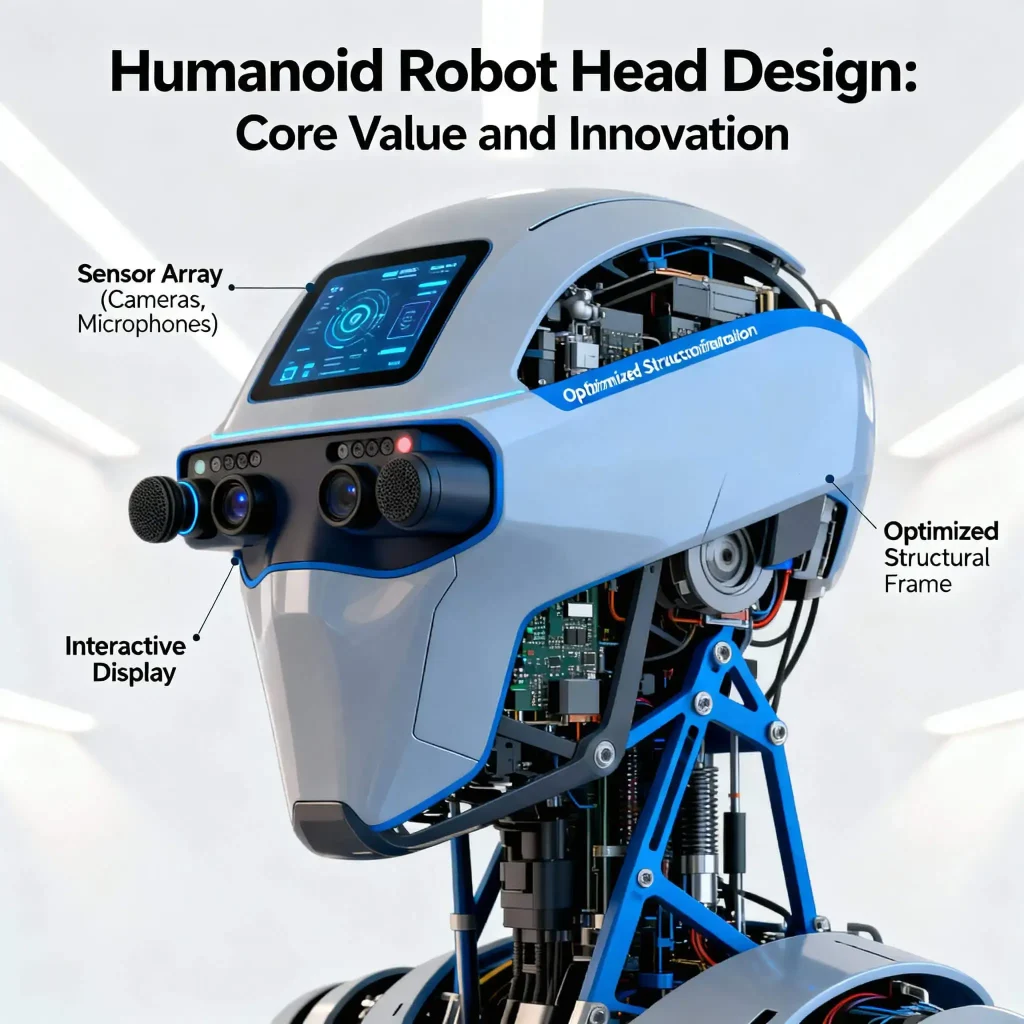
| From a technological trend, the structural design of the head is continuously being optimized. For example, a multi-sensor fusion layout allows stereoscopic cameras and lidar to be installed in a staggered manner, achieving 360° perception. Sensor selection is matched with scene depth, prioritizing high-precision scenarios with miniaturized, low-power devices to avoid excessive weight in the head caused by an overemphasis on parameters. The collaborative control algorithms between the head and body are also continuously upgraded, enabling precise coordination between head movements, bodily actions, and voice responses, which enhances overall operational synergy. These technological breakthroughs demonstrate that the head is not a structural burden but rather a carefully designed “optimizing core,” essential for ensuring the stable and efficient operation of robots.
| From industry trends, the importance of humanoid robot head design has reached a consensus. Leading humanoid robot manufacturers like Tesla are investing significant research and development resources in sensor layout, interactive design, and structural optimization of robot heads. The products they release further validate the core value of the head.
Moreover, head design drives the synergistic development of related technologies. The miniaturization and low-power upgrades of sensor technology are driven by the needs of head design; the optimization of human-robot interaction algorithms relies on head-based interaction scenarios; advances in materials science also find applications in the lightweight, high-strength designs of heads. Thus, head design is the “engine” of the humanoid robot technology ecosystem, advancing the technological upgrades across the entire industry chain.
The head of humanoid robots acts as the “central lookout” for the perception system, enabling robots to accurately capture the world; it serves as the “emotional bridge” for human-robot interaction, fostering warm connections with humans; it acts as the “optimizing core” for structural control, allowing robots to operate stably and efficiently; and it serves as the “adaptation key” for human society, enabling robots to truly integrate into everyday life. The head is not an unnecessary “decoration,” but a perfect union of technical rationality and humanistic demands—this is the core distinction that sets humanoid robots apart from other forms of robots.
Insight from AI Eidos Robots about The Humanoid Robot Head
| As technology matures, the humanoid robot head will evolve from a standardized functional platform into the core carrier of a robot’s personalized identity. Just as the human face symbolizes identity, the robot’s head (including customizable “facial” displays, unique voiceprints and tones, and distinctive interactive micro-movements) will serve as its identification, distinguishing it from other individuals. This will be crucial in contexts like service and companionship, allowing for the establishment of long-term, exclusive emotional connections and trust between humans and robots.
| Humanoid robot head design may give rise to an interdisciplinary field—”Social Robotics,” which integrates engineering, psychology, sociology, and design. Future head designers will not only be engineers but also “behavior designers” and “social interpreters.” They will delve into studies such as: What kind of head movements can convey empathy? What kind of eye contact expresses focus? This will lead to a comprehensive body of research on the expressive capabilities of robot heads.
Image Credits: Notebookcheck & AI & Boston Dynamics & Els-cdn