Top 5 New Technologies in Humanoid Robots
Table of Contents
This article will focus on the top 5 new technologies in humanoid robots, namely sensor gloves, new motors, gallium nitride drives, new reducers, and lightweighting.
Sensor Gloves & Electronic Skin: Redefining Robotic Tactile Perception
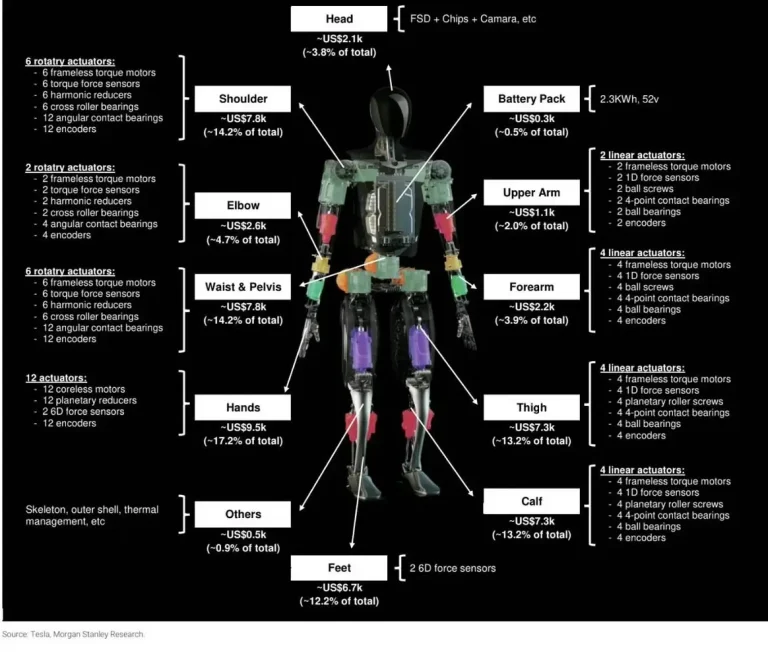
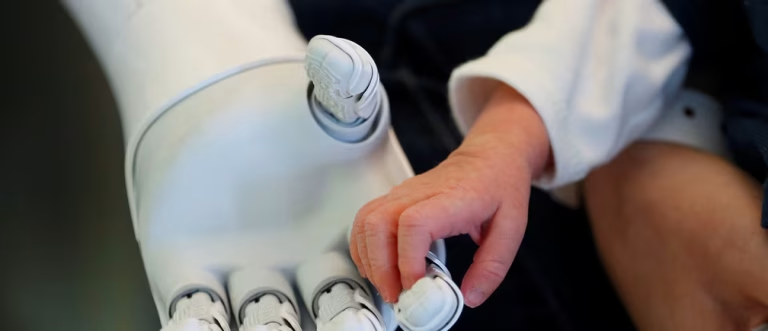
On December 3, 2025, Tesla’s Optimus v2.5 made its debut at the NeurIPS 2025 conference, with its sensor gloves, as one of the new technologies in humanoid robots, becoming an industry focal point. Traditional dexterous hand sensors are prone to damage under working conditions, and replacing entire hands is costly. This has spurred the emergence of sensor gloves as an incremental market. Jay, founder of the North American humanoid robotics company Proception, noted that equipping robots with bionic gloves/skins is set to become an industry norm.
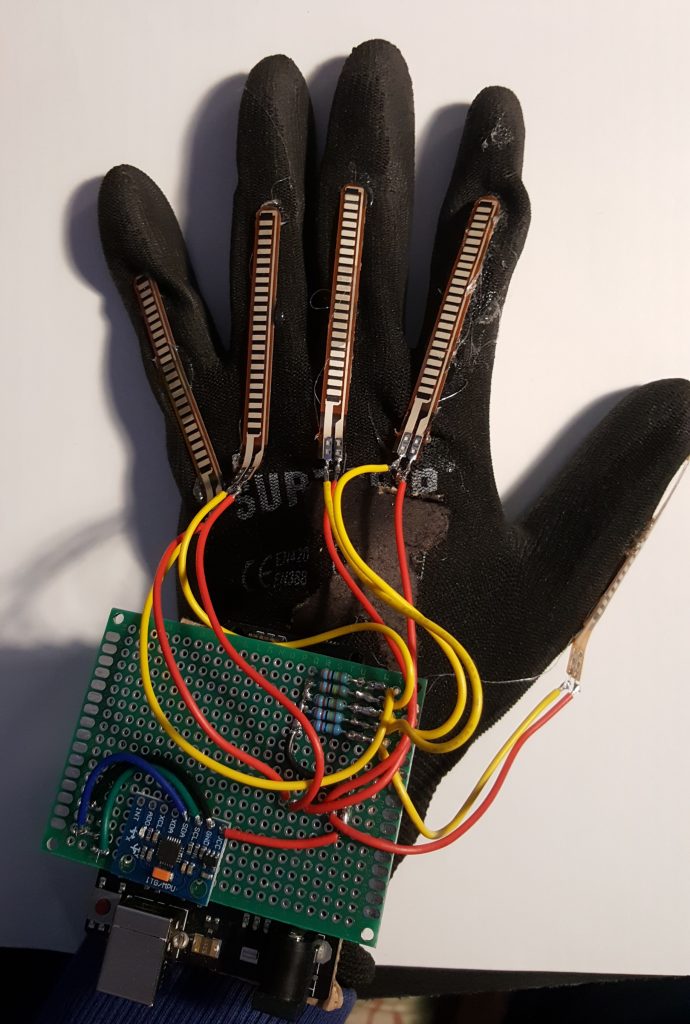
Sensor Gloves
The core function is to accurately capture subtle movements such as finger bending, extension, and rotation, as well as multi-dimensional information like palm orientation and movement speed. For example, the mHand Pro motion capture data gloves integrate 16 nine-axis inertial sensors across both hands, achieving sub-millimeter-level motion capture precision.
Electronic Skin
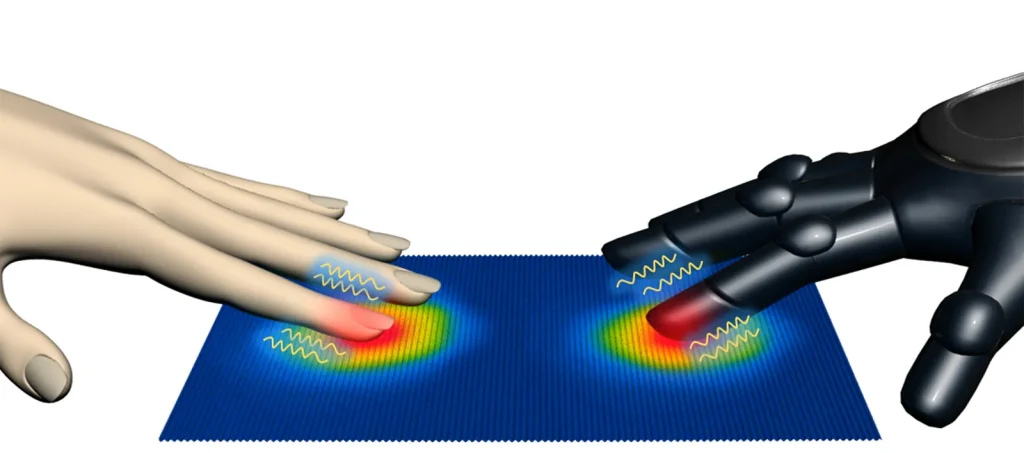
Electronic skin is a kind of new technologies in humanoid robots that is constantly making progress. It is a flexible bionic sensor that simulates the functions of human skin (an advanced application form of flexible sensors). It primarily relies on principles such as pressure-resistance conversion and the piezoelectric effect for environmental perception. The upstream supply chain encompasses conductive materials, flexible substrates, and packaging materials, while the downstream focuses on system integration and application development. Tesla’s Optimus uses Interlink piezoresistive sensors, which, with their mature pressure-resistance conversion mechanism, are expected to become a mainstream technological path in the industry.
New Motors: Dual Breakthroughs in Torque Density and Lightweighting
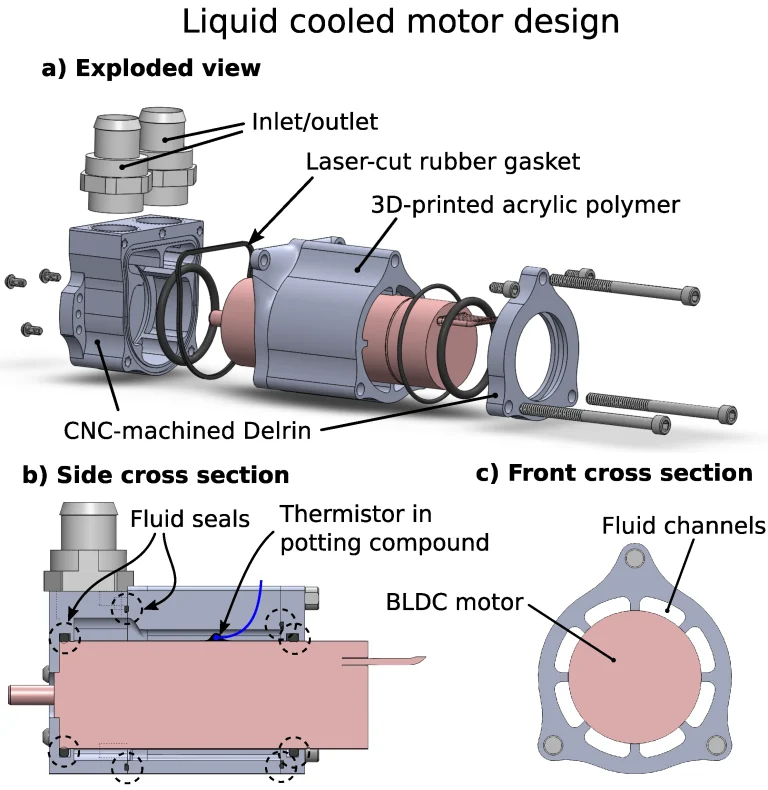
Currently, as new technologies in humanoid robots continue to emerge, technological pathways for humanoid robots have yet to converge. As core power units, motors face critical challenges in improving torque density and reducing weight. The industry has seen two innovative approaches: harmonic magnetic field motors and axial flux motors.
Harmonic Magnetic Field Motors
By leveraging magnetic field modulation effects and the application of high magnetic energy-grade materials, these motors address the pain points of traditional motors, such as temperature rise and weight. They significantly enhance output power within the same volume, achieving a power density exceeding 10 kW/kg (an improvement of over 50% compared to traditional motors). A typical application is the Zhiyuan Expedition A2 Max robot, whose joint peak torque reaches 450 Nm, largely due to the implementation of this motor technology.
Axial Flux Motors
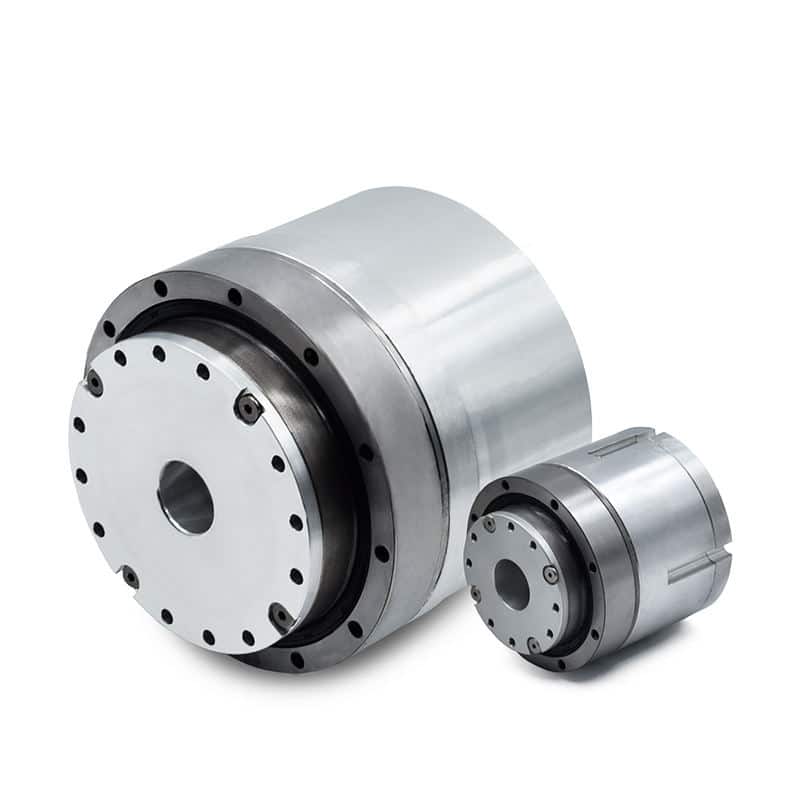
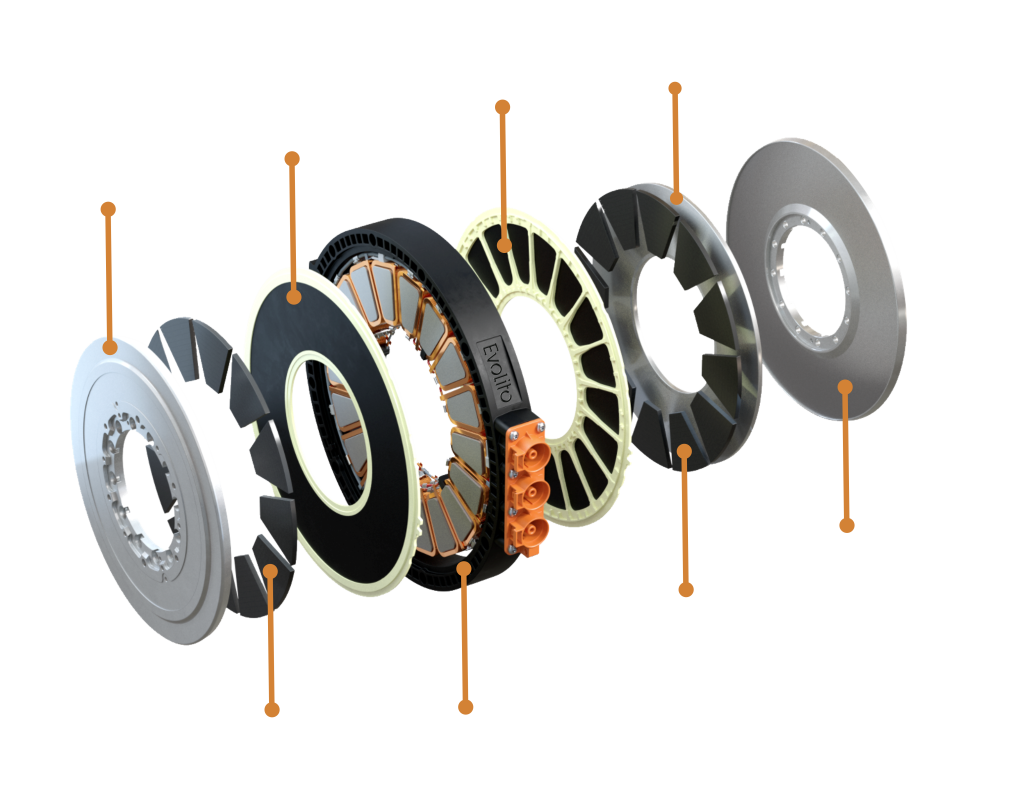
Also known as “pancake motors,” these feature a flat structural design with effective magnetic areas concentrated on the rotor surface. They offer the core advantages of high torque and lightweight, making them more suitable for the lower limb joints of robots.
Industry tests show that their weight is only half that of traditional radial motors, with iron losses reduced by 20%, copper winding utilization increased to 85%, continuous power output capability improved by 45%, axial length shortened by 80% at the same power level, and power density reaching 8–28 kW/kg (5.6 times that of top-tier radial motors). They also solve heat dissipation challenges associated with high power density.
Gallium Nitride (GaN)Device Drive Solutions: Revolutionary Upgrades in Power Control
In the transition from Optimus 2.5 to 3.0, Tesla validated the feasibility of a new-generation GaN (gallium nitride) drive solution, directly contributing to significant improvements in robot motion capabilities, gait smoothness, and dexterous hand operation precision.
GaN devices feature high frequency, high efficiency, and high-temperature resistance. Although single-device costs are higher, overall BOM costs can be balanced through optimization. Their motor current response speed is over three times faster than traditional IGBTs, with energy consumption reduced by 30%.
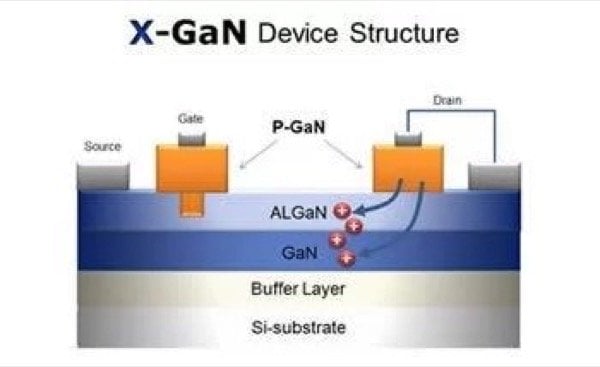
Currently, a single humanoid robot contains 30–40 joint motors. Small joints require 3–6 GaN devices, while large joints may require up to 24 GaN devices, totaling around 300 devices per robot. It has become one of the new technologies in humanoid robots with broad market prospects.
As degrees of freedom and power density increase, the use of GaN devices in motor drives, GPU power supplies, and BMS is expected to exceed 1,000 devices per robot.
New Reducers: Cycloidal Drives as a New Choice for Heavy-Load Scenarios
Reducers, as core components for power transmission, play a key role in enhancing transmission precision and load capacity. They are divided into rigid types (RV, cycloidal, and planetary reducers) and flexible types (harmonic reducers). Currently, harmonic and planetary reducers dominate the humanoid robot market. However, cycloidal pinwheel reducers are emerging as a new trend for heavy-load areas like the waist and hips due to their balanced performance advantages.

Cycloidal pinwheel reducers combine high torque, impact resistance, and high precision. They operate through the meshing transmission of an internal gear ring and a cycloidal wheel (using gear tooth differences and eccentric motion to increase reduction ratios). This effectively addresses the impact resistance limitations of harmonic reducers, making them suitable for heavy-load joints.
Humanoid Robot Lightweighting: New Technologies in Humanoid Robots by Dual Drivers
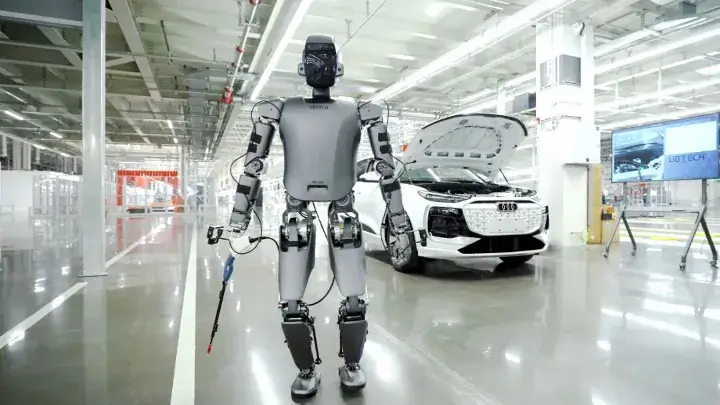
Lightweighting is a core measure to improve robot endurance and movement flexibility. Leading manufacturers continue to advance weight reduction iterations. For example, Tesla’s Optimus reduced its weight from 73 kg in Gen 1 to 63 kg in Gen 2. Structural components and skeletons account for 20–50% of a robot’s total weight, and lightweighting is primarily achieved through three approaches:
Structural Lightweighting:
Weight reduction is achieved by optimizing structural topology design and integrating components, without material changes. Tesla employs automotive-grade supply chain technologies, such as integrated die-cast bodies and AI algorithms to optimize motion control, reducing unnecessary structural weight.
Material Lightweighting
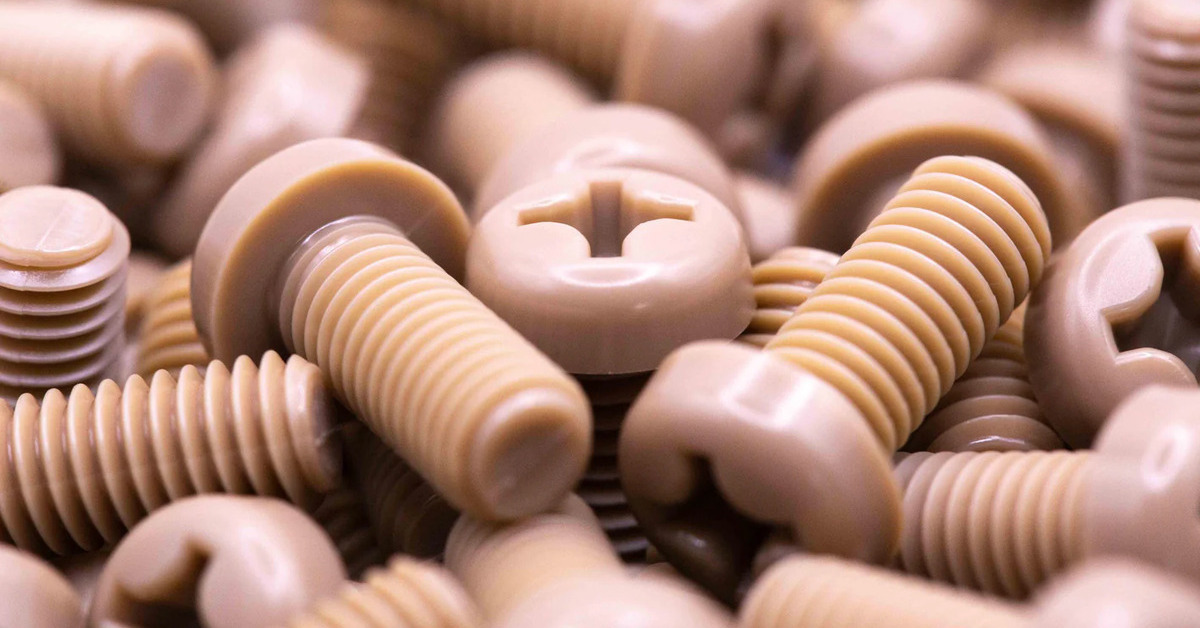
Traditional metals are replaced with high-strength, lightweight materials. Core materials include PEEK, carbon fiber composites, and magnesium-aluminum alloys, which reduce energy consumption while maintaining strength.

These new technologies in humanoid robots work synergistically to advance humanoid robots toward higher performance, more natural interaction, and broader applications.
These new technologies in humanoid robots will also be a key enabler of the industry’s transition from laboratory research to commercial applications.
Insight from AI Eidos Robots about Top 5 New Technologies in Humanoid Robots
Technological Synergy
These new technologies in humanoid robotsare not evolving in isolation; they are converging into a tightly integrated closed-loop system:
Electronic skin provides environmental input →Gallium nitride (GaN) drives enable ultra-fast response →New motors and reducers ensure high-efficiency execution →Lightweighted structures guarantee dynamic agility.
This new technologies in humanoid robots will shift robotic systems from the traditional “perception → planning → action” serial paradigm to a new, highly coupled “perception-action” real-time interaction paradigm. This makes them far better adapted to open and dynamic environments.
Breaking the Cost Paradox
Although individual new technologies (such as GaN) may carry higher initial costs, the system-level advantages they deliver—including improved energy efficiency, simplified structures, and enhanced reliability—can lead to an overall reduction in total system cost.
The future competitive focus will shift from “component cost” to the “total lifecycle cost of the system,” encompassing energy consumption, maintenance frequency, and operational lifespan.
Image Credits: Faradyi & Wired & Ubc & Evolito & Eepower & Stepbystep-robotics & At-machining