What Materials Are Used in Xiaopeng’s IRON Humanoid Robot?
Table of Contents
Xiaopeng’s IRON humanoid robot has attracted widespread attention due to its highly biomimetic gait. Subsequently, Xiaopeng unveiled the internal structure of the IRON humanoid robot’s back and legs, revealing the material innovations behind its high performance. From the carbon fiber spine to liquid metal actuation, these materials are not just component choices but represent a systematic application of Xiaopeng’s technological expertise transferred to a general-purpose robotics platform.
IRON Humanoid Robot’s Surface Layer
The E-Skin flexible composite material covering the IRON humanoid robot’s entire body is key to its human-like appearance. Its design goes far beyond traditional decorative layers, integrating protection, sensing, and interaction functions.
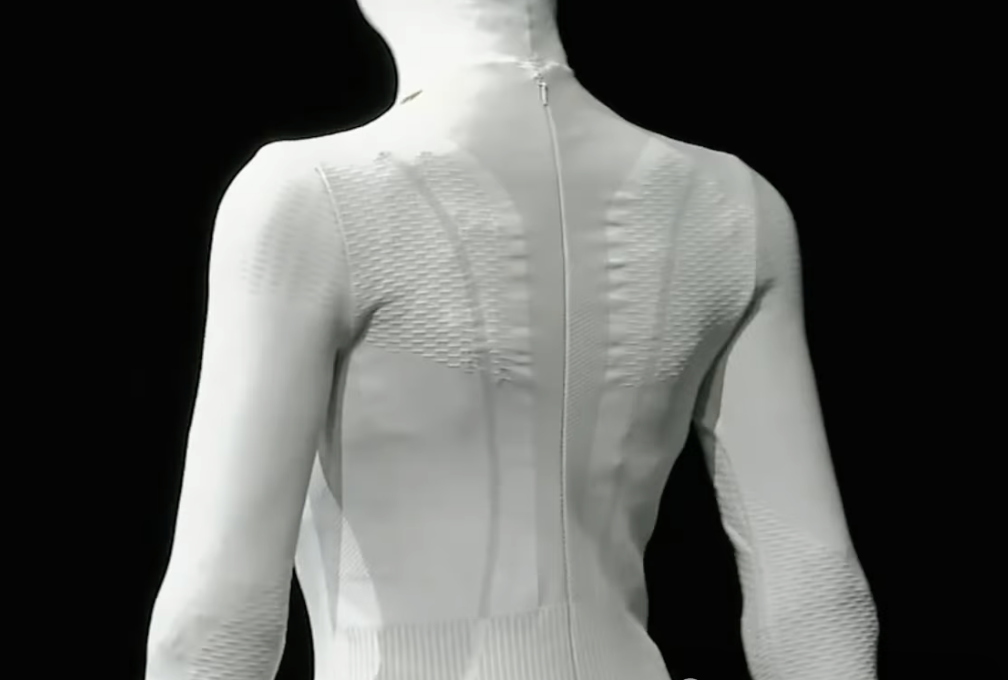
IRON’s full-body covering uses Xiaopeng’s self-developed E-Skin flexible composite material, which consists of a multi-layer structure:
| Outer layer: A 0.3mm thick translucent silicone coating achieves a human-like skin tone gradient through laser direct imaging technology. Under 4000K standard lighting, it exhibits natural diffuse reflection and a texture close to human skin.
| Middle layer: A 0.8mm thick honeycomb elastomer skeleton provides structural support while forming natural wrinkles during joint movement, mimicking skin stretching properties.
| Base layer: A 0.1mm thick nanofiber fabric substrate integrates sensor arrays and temperature control systems. With a total thickness of just 1.2mm, the material still maintains IP67-rated dust and water resistance.
This integrated “skin-structure-function” design achieves both protection and biomimicry within a 1.2mm total thickness. Additionally, this composite design addresses issues like easy wear and poor shaping in traditional fabrics while retaining flexibility. For example, in -10°C low-temperature tests, E-Skin maintains 95% of its elastic modulus, whereas ordinary fabrics tend to harden and become brittle.
IRON Humanoid Robot’s Muscle Layer
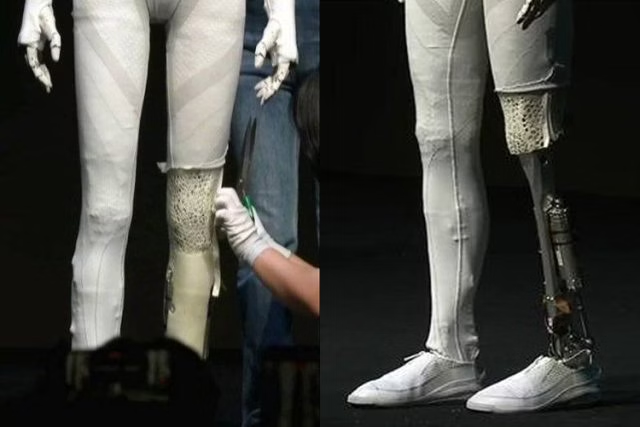
IRON humanoid robot’s “muscle system” is not a simple morphological imitation but a functional biomimicry. The lattice structure formed by TPU provides controllable passive stiffness and energy buffering, while its embedded channels integrate “structural force transmission” with “signal/energy transmission.” The liquid metal (presumed to be gallium-based alloy) electroactive actuation used in major joints like shoulders and elbows represents a novel actuation approach. The volume change of this material under an electric field enables millisecond-level, silent, and linear force output, which is crucial for achieving compliant and precise operations.
IRON Humanoid Robot’s Head Display
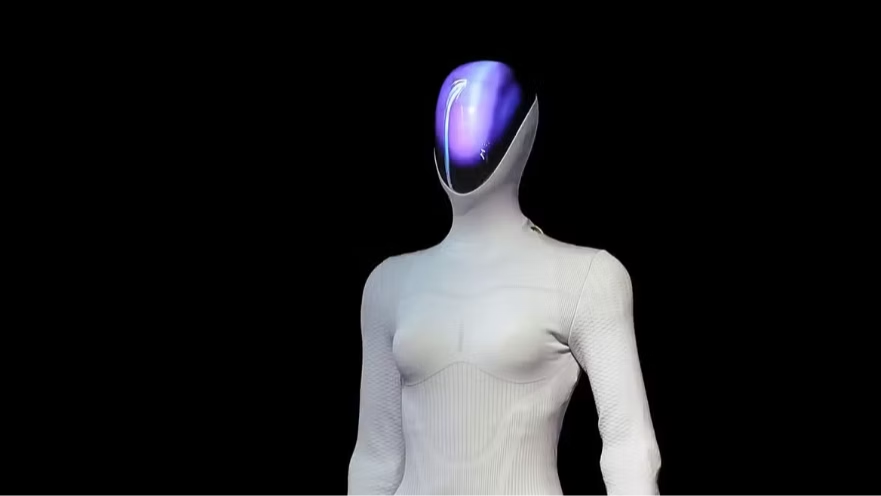
PC/ABS materials are primarily used for the IRON humanoid robot’s head casing. This is because PC/ABS alloy offers high strength and rigidity, providing stable structural support for the head casing and protecting the internal curved display and other electronic components from external impacts. Additionally, PC/ABS materials are easy to process and shape, allowing for complex head casing designs via injection molding, meeting the biomimetic design requirements of humanoid robots and achieving natural, smooth exterior lines.
Recommended In-depth Reading from AI Robots Eidos
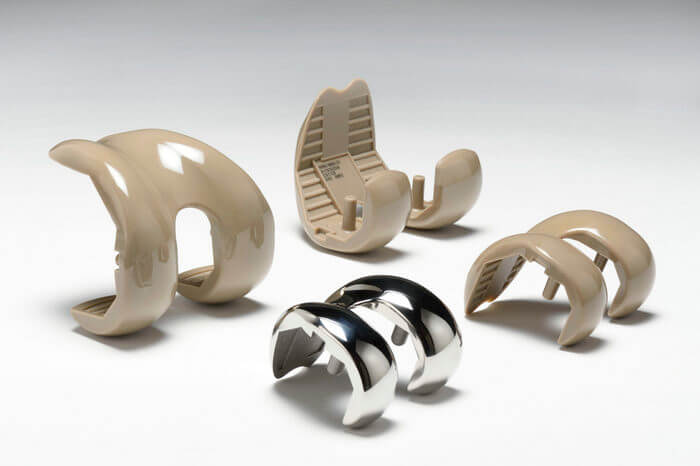
PC/ABS (Polycarbonate/Acrylonitrile Butadiene Styrene), a high-performance engineering plastic used in humanoid robots, is emerging as a crucial solution for structural components due to its balanced advantages in “strength, toughness, and processability.
If you are interested in PC/ABS, please read this article about PC/ABS in humanoid robots.
IRON Humanoid Robot’s Spine
According to Xiaopeng’s official data, the spine module uses aerospace-grade carbon fiber composite material. Through prepreg molding, 21 vertebrae are manufactured, with an overall weight of only 4.2kg—”60% lighter than equivalent metal materials”—increasing the robot’s overall load-bearing ratio to 1:5.
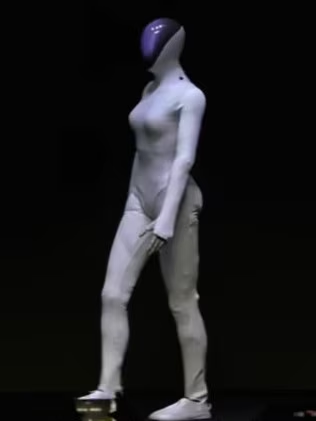
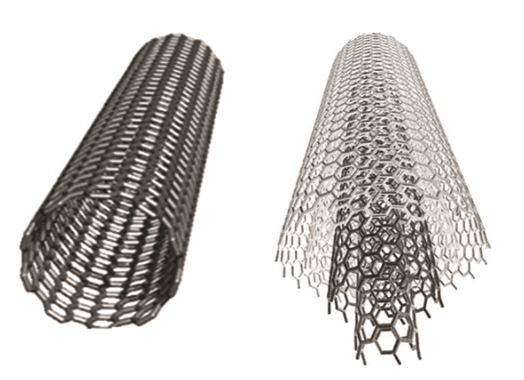
Carbon fiber composites effectively reduce motion inertia and energy consumption. The anisotropic properties of carbon fiber are utilized to precisely control stiffness and torsional degrees of freedom in different directions. For instance, carbon fiber composites grant the spine exceptional mobility, supporting 360° rotation and a waist twist angle of ±45°, far exceeding the average 20°–30° of similar products. This enables the robot to perform complex actions like bending to pick up objects or kneeling for repairs with ease.
IRON Humanoid Robot’s Joints
Hand joints use carbon fiber-reinforced PEEK (CF/PEEK) gears, significantly reducing the friction coefficient, extending lifespan by three times, and supporting 20,000 hours of maintenance-free operation while achieving a 30%–50% weight reduction.
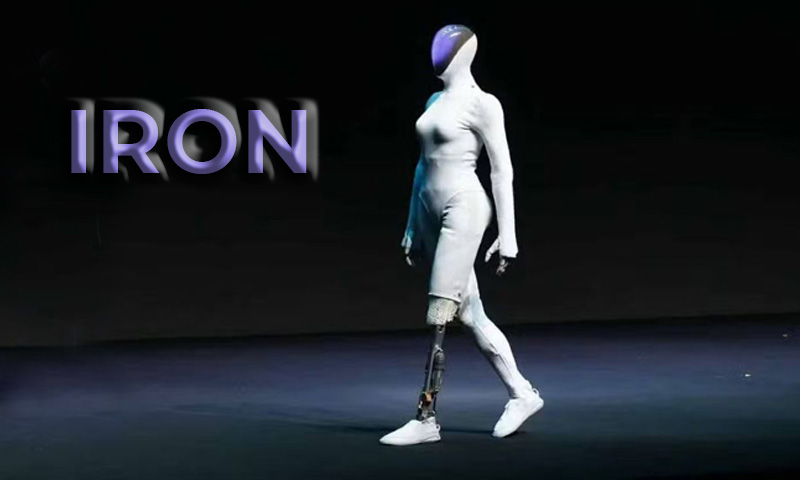
High-frequency leg joints incorporate PEEK composites, which have a density of only 1.3g/cm³ while offering strength close to aluminum alloy. This substantially reduces motion inertia, making the IRON humanoid robot more agile and efficient during “catwalk” stride transitions and center-of-gravity shifts.
For load-bearing joints like the hip and knee, carbon fiber materials are used to reinforce connection shafts and frame structures. These areas must withstand the robot’s weight and dynamic loads during movement. With a bending stiffness exceeding 350GPa, carbon fiber’s high strength and lightweight properties make it an ideal choice.
IRON Humanoid Robot’s Skeleton
Magnesium-aluminum alloy has a density of only 2.7g/cm³, reducing weight by approximately 30% compared to traditional steel, while offering a tensile strength of 350MPa. It can withstand dynamic stresses during gait transitions (peak loads up to 1200N). This enables the IRON humanoid robot, with a self-weight of 70kg, to perform challenging actions like single-leg standing and lateral shuffling.
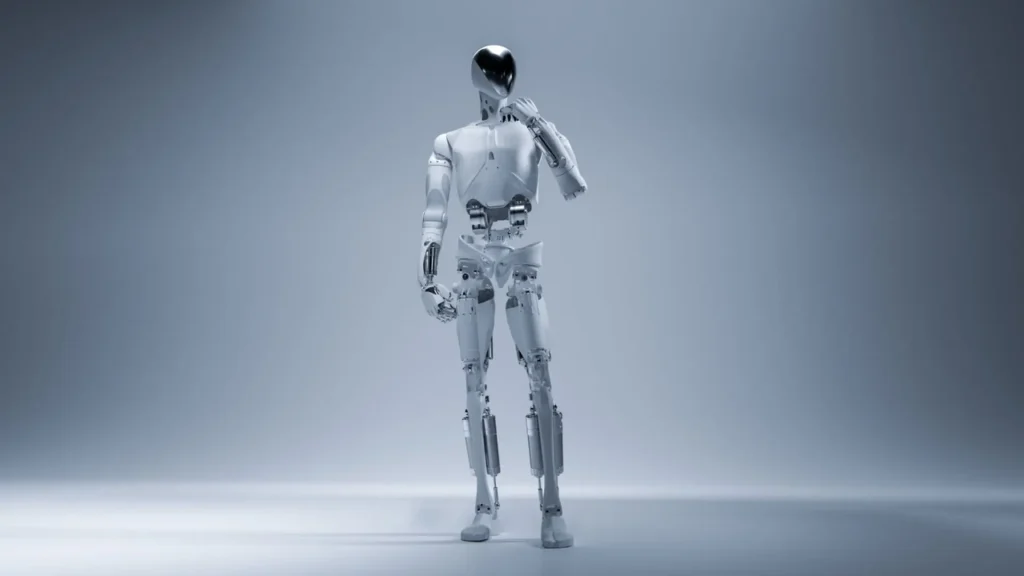
Key structural components such as the spine, pelvis, and leg frames are made of magnesium-aluminum alloy through integrated die-casting, reducing part count by over 50% and significantly enhancing structural rigidity. Magnesium-aluminum alloy has a density only one-third that of steel, yet boasts excellent specific strength (strength-to-density ratio), enabling it to withstand dynamic peak loads of 1200N and ensuring stability during dynamic gaits like running and jumping.
IRON Humanoid Robot’s Energy System
Xiaopeng’s IRON adopts all-solid-state battery technology, another highlight of its material innovation. The industrial application of solid-state batteries in robotics is a first. The energy density of these solid-state batteries reaches 450Wh/kg, 1.8 times that of traditional lithium batteries, supporting 8 hours of continuous high-intensity operation and significantly enhancing the robot’s endurance.
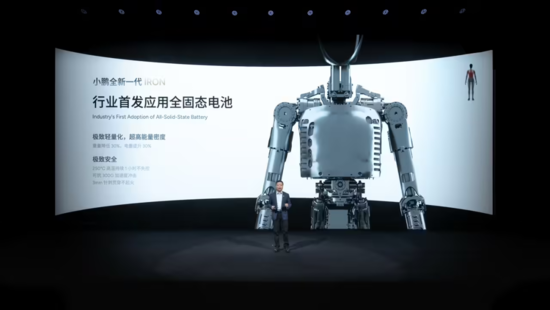
Compared to traditional batteries of the same class, Xiaopeng’s solid-state batteries achieve a 30% weight reduction and a 30% increase in capacity. For humanoid robots, every 1kg reduction in weight reduces joint motor load by 15%, significantly improving movement flexibility.
News Analysis from AI Robots Eidos
The highly biomimetic “catwalk” of Xiaopeng’s IRON humanoid robot marks the entry of the humanoid robotics industry into an era of “material refinement.” Breakthroughs in carbon fiber and specialty composite applications are enabling robots to evolve from “being able to walk” to “walking skillfully and gracefully.” With advancements in materials science and bionics, humanoid robots will achieve more complex movements and truly integrate into people’s daily lives.
Image credits: XPENG & Humenglish & Tech360 & Voxelmatters & News & Interestingengineering & Web