Humanoid Robot Motor Cooling Technology
Table of Contents
The humanoid robot motor cooling technology has continually progressed with the development of the humanoid robot industry. This is because motors, as the core power source, play a crucial role in joint actuation and precise control.
Compared to traditional industrial robots, humanoid robots impose stricter requirements on the power density, cooling capability, and long-term stability of motors. Due to the limited space in robotic joints, the difficulty of motor cooling significantly increases, making the optimization of humanoid robot motor cooling an important factor affecting robot performance and longevity.
Major Challenges in Humanoid Robot Motor Cooling
Heat Dissipation Pressure from High Power Density
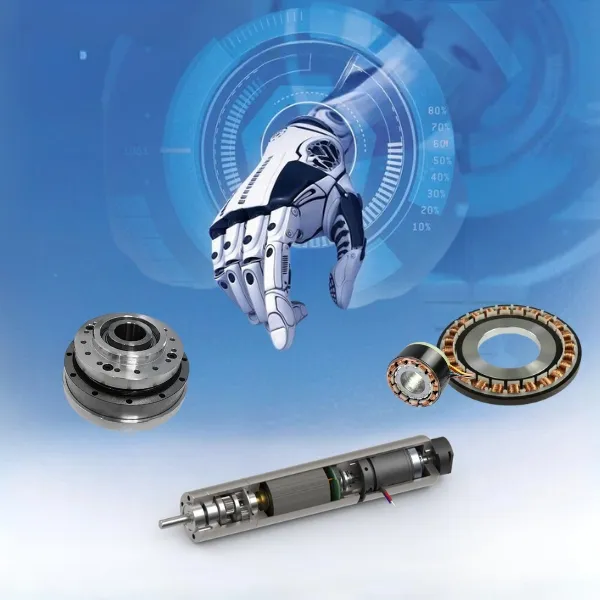
The joint motors of humanoid robots typically use frameless torque motors or axial flux motors, which require high torque output in very limited spaces, leading to concentrated heat generation. Although the flat coil design of axial flux motors helps improve power density, it also increases cooling difficulties; these motors generate a large amount of heat under high load, and the internal joints often lack sufficient air circulation, making traditional cooling methods inadequate.
Structural Limitations
In contrast to the large servo motors used in industrial robots, the compact interiors of humanoid robot joints prevent the design of large heat sinks, making it difficult for heat to be released promptly. Additionally, the tight integration of motors with gearboxes, high-voltage batteries, and other components further limits effective cooling design.
Heat Accumulation from Extended Continuous Operation
Humanoid robots need to perform high-load tasks for extended periods, such as walking like a human or handling objects, which leads to continuous heat accumulation in the motors. Insufficient cooling can adversely affect motor performance, causing magnetic steel demagnetization, insulation aging, increased winding resistance, and ultimately affecting service life.
In-depth Reading
The importance of robot motor cooling technology lies in the fact that motors are the foundation for humanoid robots to achieve movement functions. Their performance directly determines the robot’s mobility, operational precision, and adaptability, making it an essential support for the development of humanoid robot technology.
Robot motor cooling technology helps the motors maintain good dynamic performance, enhancing response speed and control accuracy. Overheating can lead to changes in the mechanical and electrical characteristics of the motor, impacting its response speed and accuracy to control signals. Effective cooling can mitigate these effects, allowing the motor to execute commands more precisely and achieve accurate motion control in humanoid robots.
For readers who wish to learn more about robot motors, please refer to the linked content in this article. Robot Motors: Unlocking Motion
Mainstream Solutions for Humanoid Robot Motor Cooling
Air Cooling
Air cooling is the most common cooling method for traditional motors, typically achieved by attaching heat sinks to the motor housing or using fans for forced cooling. However, the application of air cooling in humanoid robots is limited by two factors:
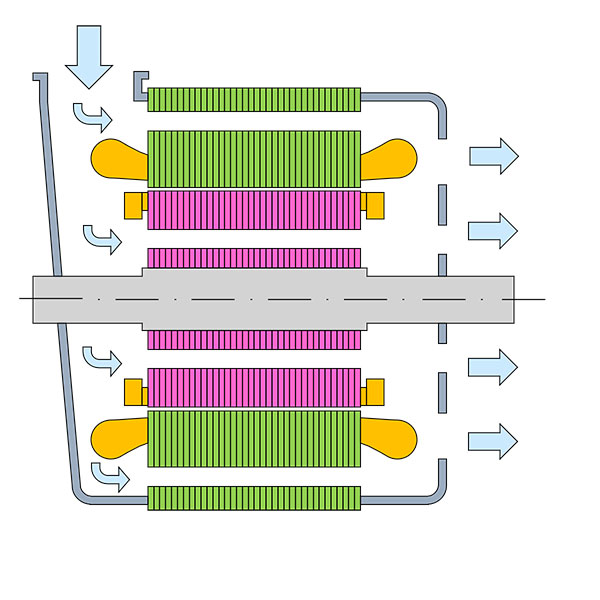
| Insufficient Space: There is a lack of space inside the joints for fan installation.
| Limited Airflow: The closed design of robotic housings results in poor air circulation.
Nevertheless, some robots still utilize micro-fans or passive convection cooling designs to enhance cooling effectiveness.
Liquid Cooling
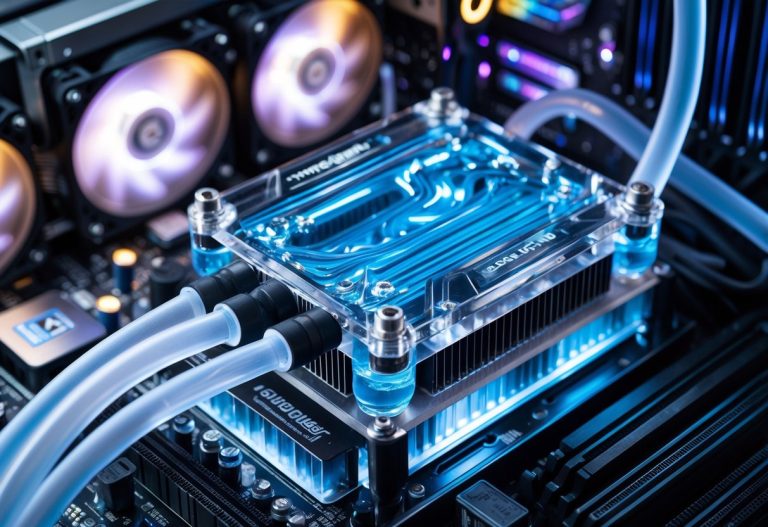
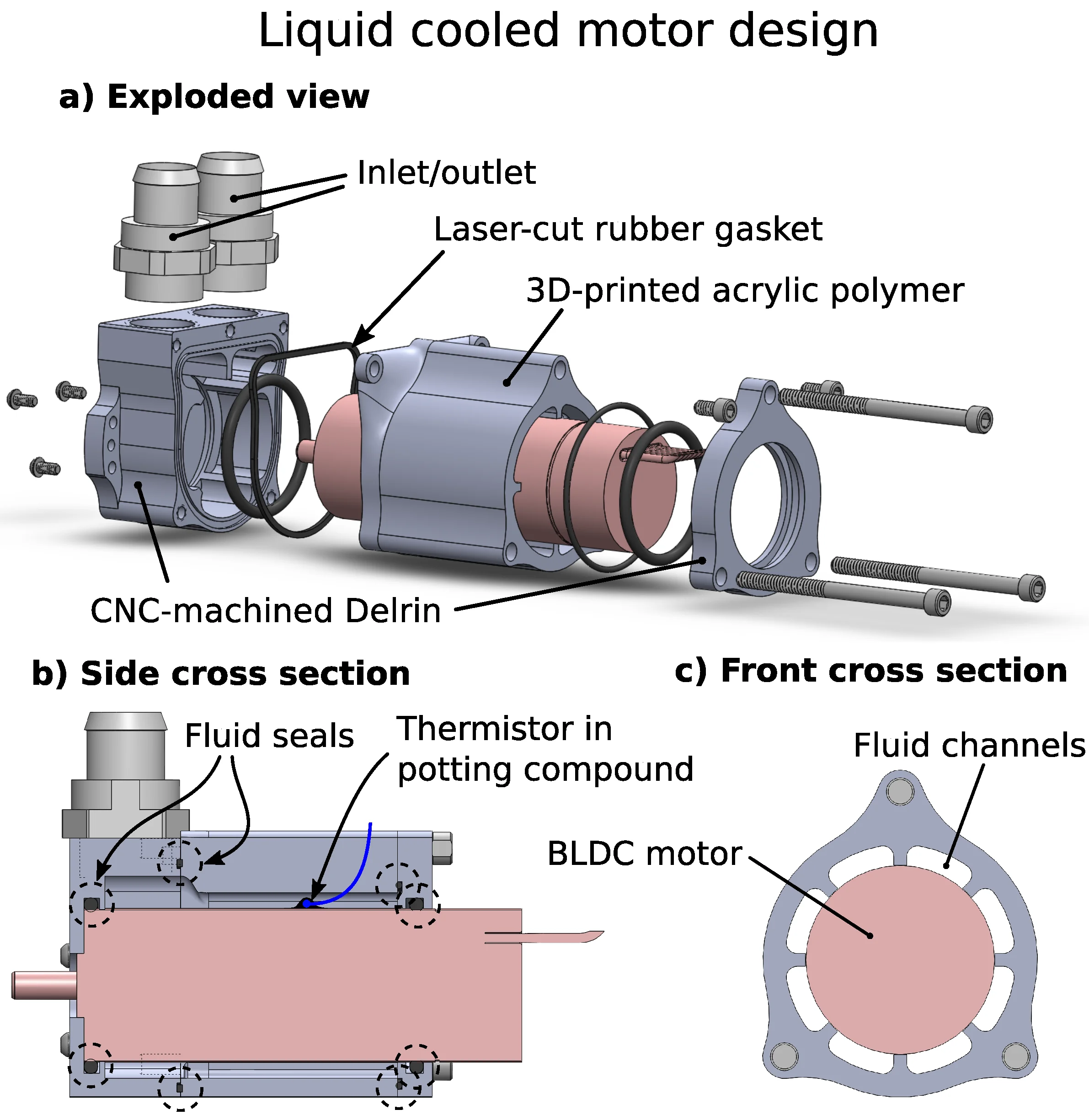
Liquid cooling is efficient but technically complex. Liquid cooling (such as water and oil cooling) is widely applied in high-performance motor fields due to its effective heat exchange capability. In humanoid robots, liquid cooling offers the following advantages:
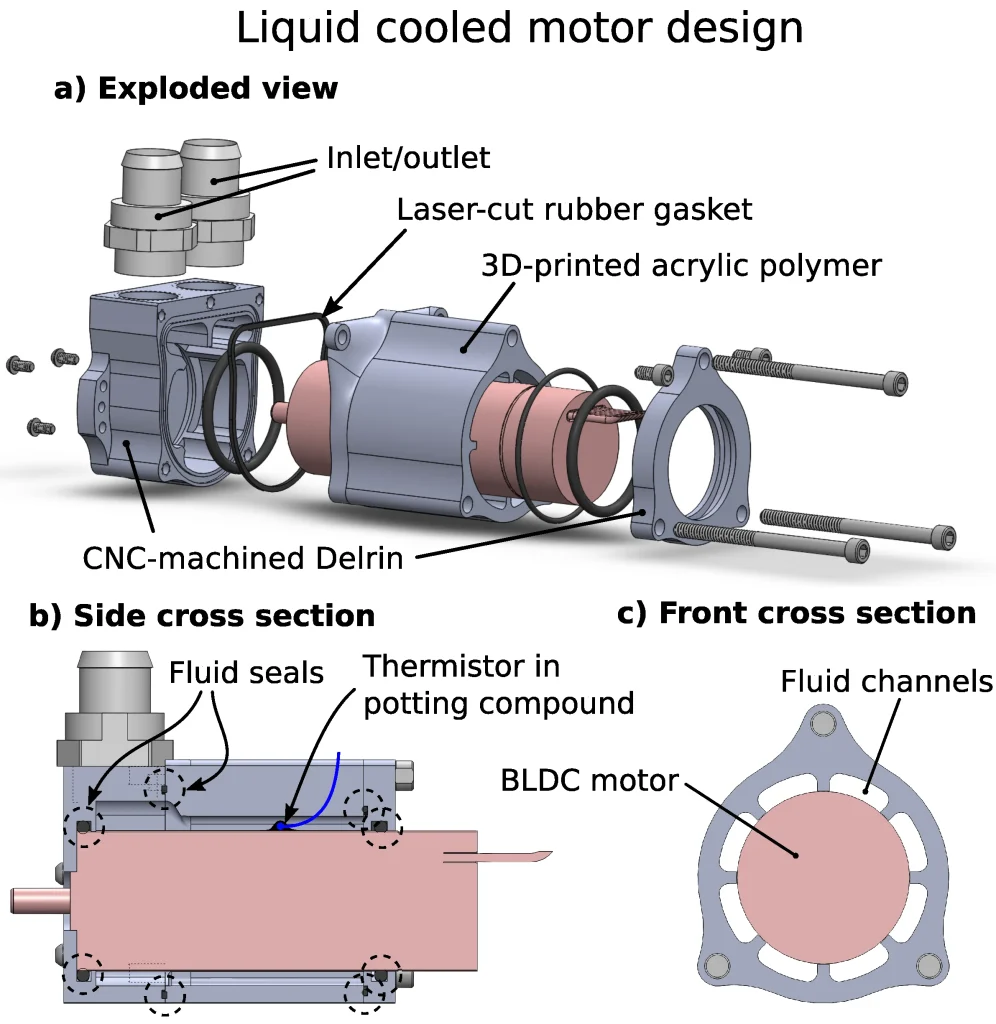
| Higher Thermal Conductivity, which can quickly dissipate motor heat.
| Shorter Cooling Path, making it more efficient than air cooling.
However, liquid cooling systems also face challenges:
| High Sealing Requirements, with limited space in joints, making installation and maintenance difficult.
| Increased System Complexity, requiring additional components like liquid pumps and heat exchangers.
Currently, some high-end robot manufacturers are exploring microchannel liquid cooling technology to reduce the volume of liquid cooling systems and optimize cooling paths.
Recommended Related Reading from AI Robots Eidos
Liquid cooling systems can achieve a heat dissipation density of up to 800W/L, which is 4–8 times higher than that of air cooling. They can stabilize the core joint temperature below 40°C, and the thickness of the piping can be compressed to less than 3mm—thinner than a credit card. These systems are capable of meeting the cooling requirements of high-power-density components in humanoid robots, providing the technical support needed for robots to achieve more advanced functionalities (such as high-speed movement and complex task processing). If you wish to gain an in-depth understanding of humanoid robot liquid cooling systems, please read this article in detail.
Structural Cooling
Structural cooling is another type of humanoid robot motor cooling technologies, primarily involves material optimization and thermal path design. This method is one of the most promising directions in the current field of humanoid robot motor cooling, enhancing cooling efficiency through optimized motor materials and overall structural design:
| High Conductivity Composite Materials: Using graphene coatings, aluminum alloy matrices, and carbon nanotube-reinforced materials to improve the thermal conduction properties of motor housings.
| Thermal Path Optimization: Combining simulation calculations to optimize the heat dissipation channels of the motor stator and rotor, reducing localized hotspots.
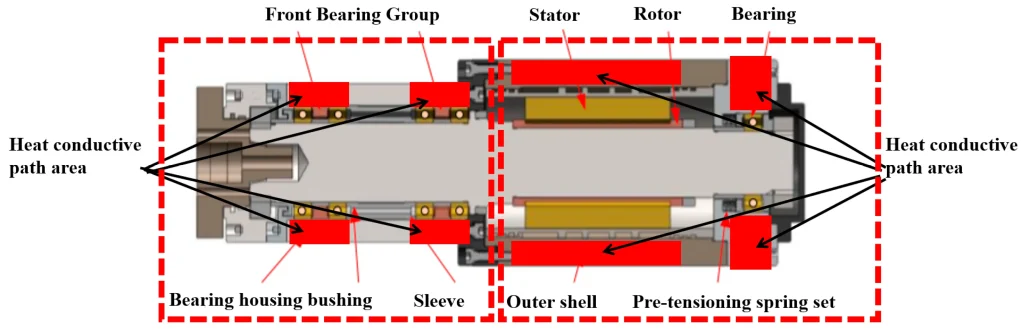
| Integrated Cooling Casings: Designing the motor, gearbox, and joint structure as a unified system to facilitate quicker heat transfer to the external environment.
Cutting-Edge Explorations in Humanoid Robot Motor Cooling Technology
Phase Change Material (PCM) Applications
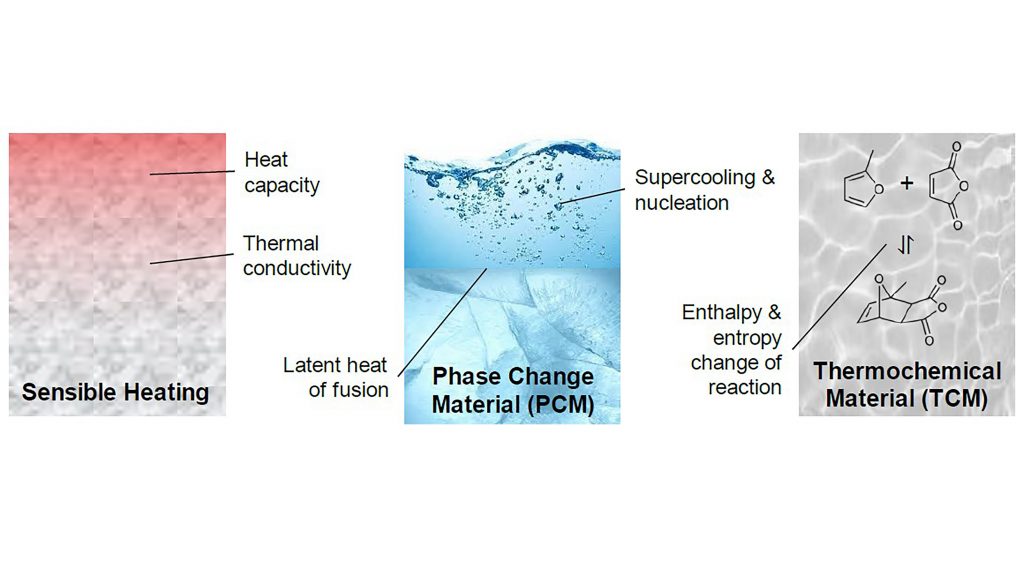
Phase change materials (such as paraffin and metal-organic frameworks) can absorb heat when the motor temperature rises and release heat at lower temperatures, achieving passive temperature control and enhancing cooling efficiency.
Thermoelectric Cooling Technology (Peltier Effect)
Some research teams are exploring the use of semiconductor thermoelectric cooling technology, utilizing electric current to achieve rapid cooling, suitable for small high-power-density motors.
Intelligent Thermal Management Systems
By combining AI algorithms with thermal sensors, these systems can monitor motor temperatures in real-time and dynamically adjust power output to optimize energy consumption and cooling efficiency.
Optimizing humanoid robot motor cooling is crucial for enhancing performance, stability, and lifespan. Currently, air cooling, liquid cooling, and structural cooling each have their advantages and disadvantages. Future developments will likely focus more on several trends:
The application of efficient thermal conductive materials (such as graphene coatings and high thermal conductivity aluminum alloys)
Integrated cooling structures that reduce the space occupied by traditional heat exchangers
Intelligent temperature control systems that dynamically optimize cooling based on real-time temperature monitoring.
Insights about AI Robots Eidos about Humanoid Robot Motor Cooling
Bionic Collaborative Cooling System
Current humanoid robot motor cooling technologies often focus on “how to quickly dissipate heat.” However, the motion of humanoid robots exhibits characteristics of intermittent activity and dynamic load changes. This allows for the adaptation of biological temperature regulation mechanisms to construct a dynamic thermal distribution system:
Bionic Vascular Microcirculation Liquid Cooling: Design a bionic microchannel network within the joints, employing smart pumps and valves to dynamically control coolant flow between “high heat generation areas” and “low heat generation areas,” redistributing heat rather than relying solely on external dissipation.
Integrated Design of “Structure-Function-Thermal”
Viewing cooling as an endogenous variable in the drive system rather than an independent “add-on module.” Future explorations could include:
Motor Windings Serving as Cooling Channels: Embed microchannels within flat coils or PCB stators to integrate the current pathway with the coolant flow path, achieving simultaneous electrical conduction and cooling.
Magnetothermal Synergistic Optimization: Incorporate thermal management into the electromagnetic design phase of the motor, for instance, by selecting materials (such as low eddy-loss magnetic steel) and employing topology optimization (like segmented stators) to reduce heat sources rather than just enhancing heat dissipation afterward.
Image Credits: Mdpi & Tsa & Aip & Engineeringdesignshow & Web