RGBD Cameras: From Color to Distance
Table of Contents
RGBD cameras can not only capture vibrant, colorful images but also perceive how far or near objects are, giving machines true stereo vision. That’s why RGBD cameras enable robots to precisely grasp a cup without bumping into a table leg.
What is an RGBD Camera?
In an RGBD camera, RGB refers to the color camera, i.e., the RGB camera. Color cameras are called RGB cameras because they synthesize full-color images by capturing the three basic color lights: Red, Green, and Blue. These three colors represent the spectral bands to which the cone cells in the human retina are most sensitive. When mixed, they can reproduce the vast majority of colors visible to the human eye.
The D in RGBD refers to the Depth Camera. Depth cameras based on different principles use various methods to measure the depth (i.e., distance) of an object from the camera. In the depth map generated by a depth camera, every point contains depth information.
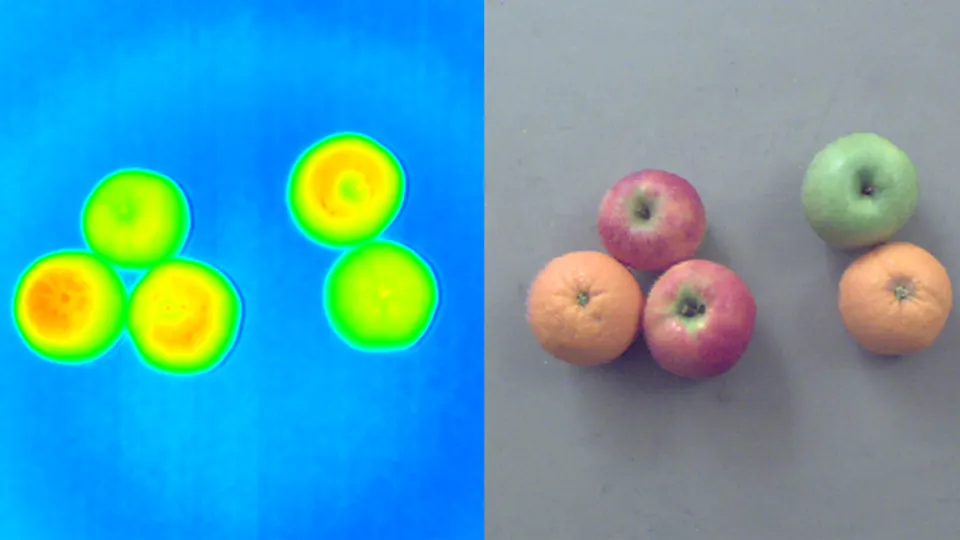
The “color images (RGB)” and “depth maps (Depth)” captured by RGBD cameras serve as the fundamental input for RTG-SLAM to perform environment reconstruction. The system analyzes both types of data: on one hand, it uses depth information to fit the geometric surface of the scene; on the other hand, it uses color information to restore the appearance details of the scene. Ultimately, it achieves real-time environment reconstruction that is both “geometrically accurate” and “realistic in appearance.”
How Do RGBD Cameras Work?
The working principles vary depending on the depth-sensing technology adopted by different RGBD cameras. This article elaborates on each approach.
Structured Light
Structured light solutions project specially encoded patterns, spots, or stripes onto a target. When these patterns encounter height variations on the object’s surface, they become distorted. This method calculates the object’s three-dimensional structure by recognizing the degree of deformation in the projected pattern.
Structured light systems generally come in two types: monocular structured light and binocular structured light. A monocular structured light system consists of one projector and one camera. It is low-cost but also has lower performance, which is why it is less commonly used today.
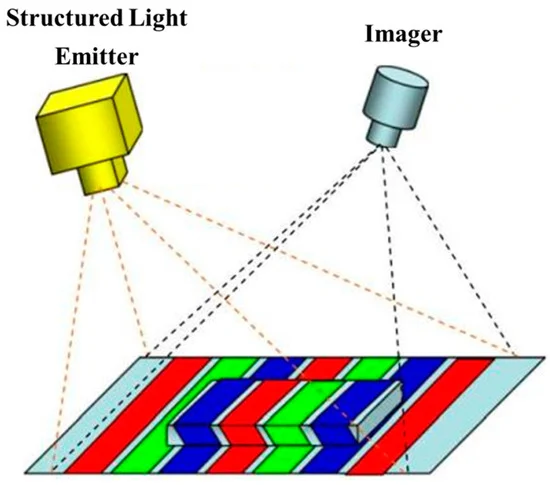
Binocular structured light consists of one projector and two cameras. It calculates depth by analyzing the disparity of corresponding feature points in the images captured by the left and right cameras. Binocular structured light can be regarded as a binocular system with a built-in “texture generator,” capable of overcoming the matching difficulties encountered by RGB binocular solutions in textureless areas. By combining the advantages of binocular stereo vision and active structured light, it is currently more widely used.
Like RGB binocular systems, structured light solutions also perform ranging using the triangulation principle. This method offers high accuracy at close range but poor accuracy over long distances. Moreover, in high-ambient-light environments, the projected structured light can be easily disrupted.
Binocular Stereo Vision
When two cameras capture the same scene simultaneously, the difference in camera perspectives causes the same point in space to appear at different locations in the left and right images. This difference is called disparity. Disparity is directly related to the distance of an object: nearby objects exhibit large disparity, while distant objects exhibit small disparity. The RGB binocular stereo solution obtains depth information precisely through this disparity. As a passive measurement method (without actively emitting light), RGB binocular stereo vision offers low power consumption and relatively low hardware costs.
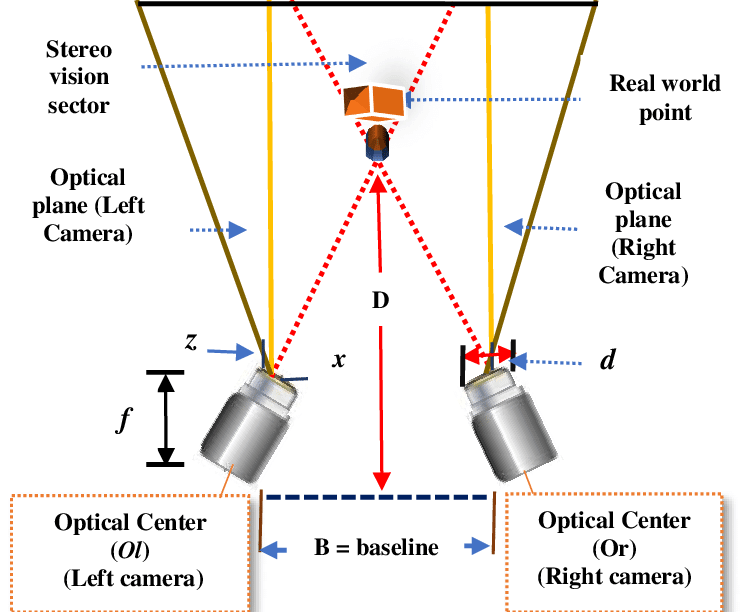
However, the algorithmic complexity of RGB binocular stereo vision is relatively high, placing significant demands on computational resources and presenting considerable challenges for real-time performance. Furthermore, this solution only achieves high accuracy at close range, with poor accuracy at long distances. Depth measurement in RGB binocular stereo vision is highly dependent on scene texture. In areas such as solid-colored walls, dark regions, or textureless surfaces, where matching points are difficult to find, the resulting depth map may exhibit numerous holes. Additionally, performance degrades significantly in low-light environments.
Time-of-Flight (ToF)
ToF solutions obtain distance information based on the time of flight. They can be categorized into two types: iToF (Indirect Time-of-Flight) and dToF (Direct Time-of-Flight).
dToF cameras emit short laser pulses toward the target. They perform a direct distance calculation by precisely measuring the time-of-flight from the emission of the light pulse to its return. The dToF solution offers a long measurement range, reaching tens or even hundreds of meters, and its measurement accuracy does not degrade significantly with increasing distance. It also features strong resistance to interference and can operate in high-ambient-light environments. However, dToF solutions generally have lower resolution. They also impose high requirements on chip design and manufacturing processes, making the technology challenging.
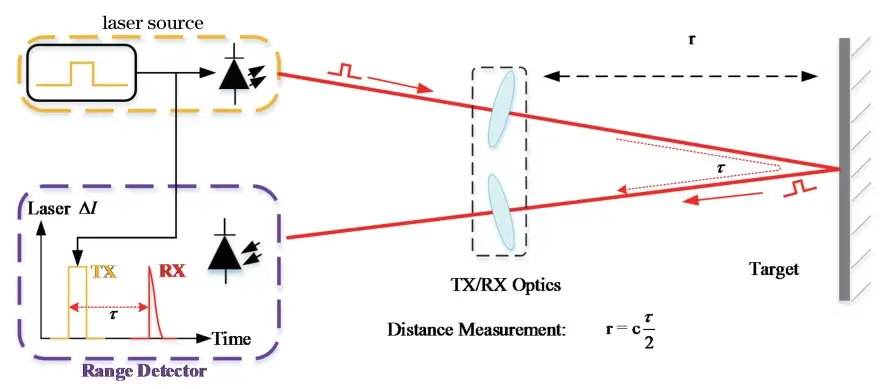
iToF cameras emit a modulated continuous light wave and indirectly calculate the distance by measuring the phase difference between the reflected light and the emitted light. iToF technology is mature, offers high resolution, benefits from a well-established industrial chain, has relatively low costs, and provides high measurement accuracy at close range (typically within 5 meters). However, its accuracy decreases over long distances. It is also susceptible to interference from ambient light, with performance degrading significantly in strong light conditions.
Key Specifications of RGBD Cameras
–Spatial Resolution: The number of pixels in the depth image, i.e., the width and height of the depth map, determining the level of detail in the depth image (e.g., 640×480, 1280×720).
–Field of View (FOV): The range of the scene that the RGBD camera can capture, including the horizontal FOV and vertical FOV (e.g., 87°×58°, 110°×70°). A larger FOV covers a wider scene range but may compromise some edge accuracy.
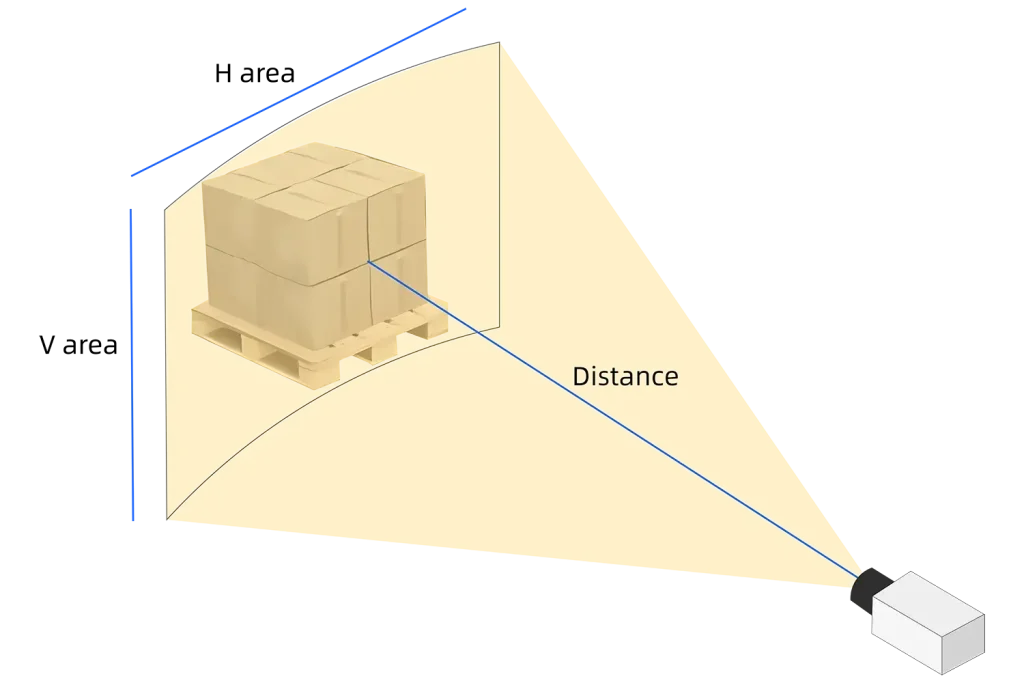
–Depth Range: The closest and farthest distances the camera can accurately capture, typically expressed in meters (m). Depth measurement ranges vary considerably depending on the depth-sensing technology employed. For example, structured light RGBD cameras generally have a range of 0.1–2m, while ToF RGBD cameras can achieve ranges from 0.1m to 70m or even further.
–Depth Accuracy: The measurement accuracy of the RGBD camera in the depth direction, typically expressed in millimeters (mm) (e.g., ±1mm, ±5mm). Higher accuracy leads to more precise measurement results.
–Frame Rate: The number of depth maps and color images captured per second by the RGBD camera, expressed in Frames Per Second (FPS). Common frame rates include 30fps, 60fps, 90fps, etc. High frame rates are suitable for dynamic scene capture and real-time applications.
–Power Consumption: The electrical power consumed by the camera during operation, expressed in Watts (W). Low power consumption extends battery life, a particularly important feature for applications such as robotics.
–Synchronization Accuracy: For RGBD cameras, the temporal-spatial synchronization accuracy between the color image and the depth image affects the precision of image fusion and 3D reconstruction. Hardware-level synchronization can typically achieve microsecond accuracy, while software synchronization generally achieves millisecond accuracy.
Representative Products of RGBD Cameras
| Type | Product | Resolution | Frame Rate (FPS) |
| Structured Light | Microsoft Kinect v2 | 1920×1080 | 30 |
| Intel RealSense D415 | 1920×1080 | 30 | |
| Apple PrimeSense | 1280×960 | 60 | |
| Xtion PRO LIVE | 1280×1024 | 60 | |
| Optonic ensneso | 1280×1024 | 10 | |
| Stereo Vision | STEREOLABS ZED | 3840×1080 | 100 |
| FLIR Bumblebee | 1280×960 | 16/20/48 | |
| DUO 3D | 640×480 | 98 | |
| Rubedes Viper | 1280×720 | 40 | |
| Time-of-Flight (ToF) | PMD CamCube 3.0 | – | 40/60/80 |
| Mesa Swiss Ranger | 176×144 | 50 | |
| Sony DepthSense 525 | 320×240 | – | |
| Terabee 3Dcam | 640×480 | 30 | |
| Google Phab2 Pro | 640×480 | – |
Advantages of RGBD Cameras
| Advantage | Description |
| Directly outputs a dense depth map | No algorithmic estimation needed; directly obtains physical distance per pixel |
| High close-range accuracy | Millimeter-level depth accuracy within a <4m range, far superior to monocular depth estimation |
| Active sensing is usable in low light | Built-in infrared light source; can obtain a depth map even in darkness |
| Simple and efficient point cloud generation | Depth map + intrinsics direct back-projection; generate point cloud with one line of code |
| Color + depth fusion | Natural integration of semantic recognition and spatial localization, comprehensive perception capability |
| Supports 3-Dimensional reconstruction | Algorithms such as KinectFusion and NeRF can directly use RGBD data |
Limitations of RGBD Cameras
| Limitation | Description |
| Higher cost than RGB cameras | Consumer-grade RGBD cameras typically cost above $70 USD. |
| Limited measurement range | Typically 0.2–6 m; depth accuracy drops sharply at longer distances. |
| Outdoor sunlight interference | For structured light and iToF solutions, the infrared signal is overwhelmed under strong sunlight, causing depth failure. |
| Blind spots for specular/transparent materials | Specular reflections and transparent materials prevent correct depth acquisition. |
| Relatively high power consumption | Requires continuous IR emission; typical power consumption is 2–5 W. |
| Depth maps contain holes | Depth missing in occluded areas, black materials, and specular surfaces; post-processing required. |
| Lower depth resolution than color | Typically 640×480 or 640×576, lower than that of comparable RGB cameras. |
RGBD Camera Price (For Reference Only)
| Price in USD (approx.) | |
| Entry-level | 60–100 |
| Mid-range | 100–300 |
| High-end | 300–700 |
| Professional | Above 700 |
| Component | Cost Percentage | Major Manufacturers |
| Image Sensor | 28-32% | Sony |
| VCSEL Laser | 15-20% | Lumentum, II-VI |
| Depth Computing SoC | 18-22% | TI |
| Optical Lens | 8-10% | Sunny Optical |
| Near-infrared LED | 4-6% | Luminus |
Applications of RGBD Cameras
–Hand-Eye Coordination in Humanoid Robots: Humanoid robots represent the application scenario where the value of RGBD cameras is most evident. RGBD cameras integrated into the wrist or head of humanoid robots (e.g., Figure 01, Boston Dynamics’ Atlas) serve two purposes: the RGB image is responsible for identifying object type and pose (“this is a glass”), while the depth map provides the precise 3D position of the object (“the glass is 0.32m from the gripper with a height difference of 0.05m”). After fusing this information, the motion planner outputs an accurate 6-DOF grasping trajectory.
Compared to solutions using ordinary RGB cameras, where robots must estimate depth from images (monocular depth estimation) with errors typically ranging from centimeters to tens of centimeters — an accuracy level that is meaningless for grasping actions — RGBD cameras directly compress the positional error to <5mm, fundamentally solving the problem of “seeing but not reaching.”
–Obstacle Avoidance and Navigation in Service Robots: Mid-to-high-end service robots feature a forward-facing RGBD camera. The advantage over pure LiDAR solutions lies in the fact that LiDAR only scans a single horizontal plane (typically about 15–20cm from the ground), leaving obstacles above that plane invisible. In contrast, RGBD cameras cover the entire 3-Dimensional space within their field-of-view cone — table legs, chair backs, low-hanging banners, and the arms of walking people can all be detected. In practical products, RGBD cameras are often used in conjunction with LiDAR: LiDAR is responsible for long-range 2-Dimensional map building and localization, while the RGBD camera handles fine-grained 3-Dimensional obstacle perception at close range (<4m).
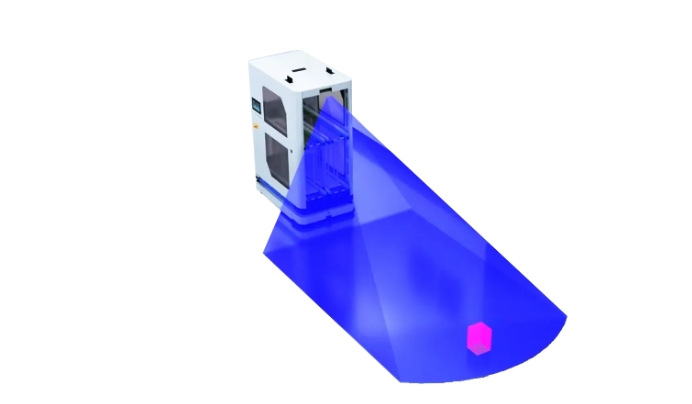
–Fine-Grained Close-Range Perception in AGVs: Warehouse AGVs (Automated Guided Vehicles) navigating between shelves require precise perception of: the 3D contour of shelf heights and goods, to plan forklift height; the 3D shape of scattered objects like pallets and boxes on the floor, to plan detour paths; and the precise location of barcodes/QR codes on goods (combined with RGB), to guide alignment for loading. RGBD cameras offer higher accuracy than pure 2D vision and richer semantic information than LiDAR, making them the standard choice for such close-range, fine-grained perception scenarios.
Recommended In-depth Reading from AI Robots Eidos
RGBD cameras integrate color (RGB) cameras and depth (D) sensors to simultaneously capture the color, texture, and three-dimensional spatial information of objects. In industrial scenarios, this enables machine vision systems to not only recognize the category of objects but also accurately locate their position, orientation, and size.
For readers interested in further understanding RGBD cameras, they can refer to this article on machine vision.
Market Size of RGBD Cameras
The data represents institutional forecasts and is provided solely for the reader’s reference.
| Data | Source | |
| Global RGBD camera market (2024) | $ 0.7B–1.1B | Yole Group |
| Global RGBD camera market (2025) | $1.2B | IDC 2024 |
| 2030 Robotics 3-Dimensional perception market | $ 2.5B–3.5B | Yole Group |
Insight from AI Robots Eidos about RGBD Cameras
—Currently, structured light, binocular stereo, and Time-of-Flight (ToF) each have their advantages and disadvantages, but in complex scenarios (such as semi-outdoor environments, highly reflective objects, and both long-range and short-range detection), a single solution struggles to meet all needs. In the next 2 to 3 years, we will see a significant emergence of RGBD cameras utilizing “structured light + dToF” dual-mode integration or “binocular + active texture projection” hybrid architectures. These systems will automatically switch or merge multi-modal depth data through algorithms, achieving millimeter-level precision at close range and usable depth over long distances (>10m), effectively bridging indoor and outdoor barriers.
—Currently, the voids in depth maps (caused by black materials, occlusion edges, and specular surfaces) require backend processors for completion, which results in high latency and unstable outcomes. In the next 1 to 2 years, depth computation SoCs with lightweight AI completion networks will be directly integrated into modules. These will utilize temporal information from adjacent frames or color images to guide real-time filling of holes and repairing flying points at the hardware level. This will significantly lower the algorithmic barrier, allowing small and medium-sized developers to easily obtain high-quality depth maps with plug-and-play capabilities.
—In the future, miniaturized RGBD sensors will be integrated into the internal structure of robotic two or three-finger grippers (with fingertip size and a resolution of 320×240). This will enable macro-level depth perception for the last centimeter before grasping, allowing for precise detection of object surface curvature, grasping slip, and flexible deformation, thereby completely solving the challenges of grasping soft objects (such as fruits) or thin sheets (such as paper).
Image Credits: Baslerweb & Loshield & Mdpi& Researchgate & Mrdvs
Articles about other Industrial Cameras
TDI Cameras: Sharper, Faster, Brighter