Repeatability: The Hidden Anchor of Reliability
Table of Contents
Repeatability is not only a key indicator for measuring equipment performance but also a core element ensuring product quality, production efficiency, and system reliability. It holds significant importance for modern manufacturing and high-precision technology fields.
Repeatability Definition
Repeatability refers to having the same robot repeatedly move to the same position and recording the actual reached position data. If the actual positions reached each time are scattered in space, it indicates poor repeatability. Conversely, if the actual positions reached each time are clustered closely in space, it indicates good repeatability.
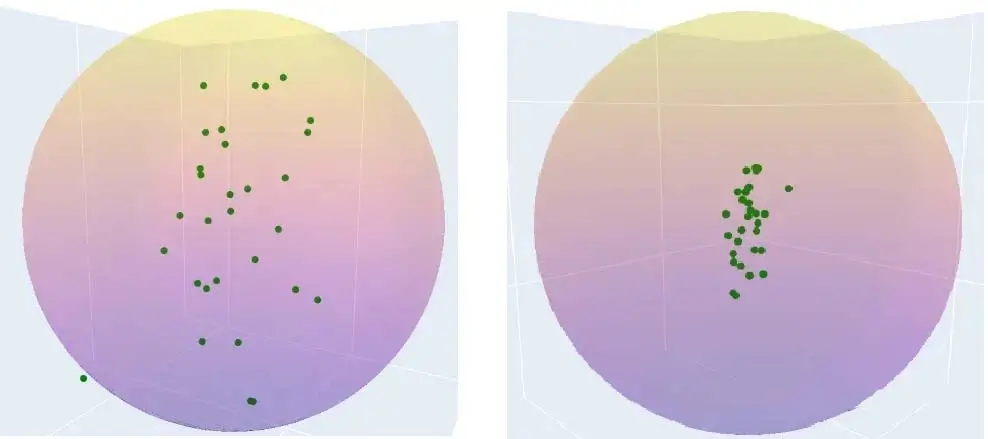
For example, when “repeatability” is 0.02 mm, it means that for a target position P of the corresponding robot, a sphere with a radius of 0.02 mm can be identified in space, “ensuring” that each time the robot runs to point P, it will fall within this sphere.
Factors Affecting Repeatability and Solutions
Motors
Improving motor precision. Motor precision is strongly correlated with the encoder’s resolution. Generally, mainstream robots use motor encoders with resolutions around 17 to 19 bits. A higher encoder resolution means higher motor resolution, which theoretically leads to higher repeatability. The repeatability of general industrial robots is ±0.05 mm, while that of precision assembly robots is ±0.01 mm.
Reducers
Once motor precision reaches a certain level, the reducer becomes the bottleneck affecting repeatability. A reducer is not a completely rigid body; a typical example is a harmonic drive. Its transmission principle relies on the deformation of the flexspline to achieve speed reduction. When a high-precision motor rotates by a very small angle, the reducer output may not respond. This is because when the motor’s action is applied to the reducer, the angle is so small that it is absorbed by the elastic deformation of the flexspline itself, resulting in no reaction at the output.
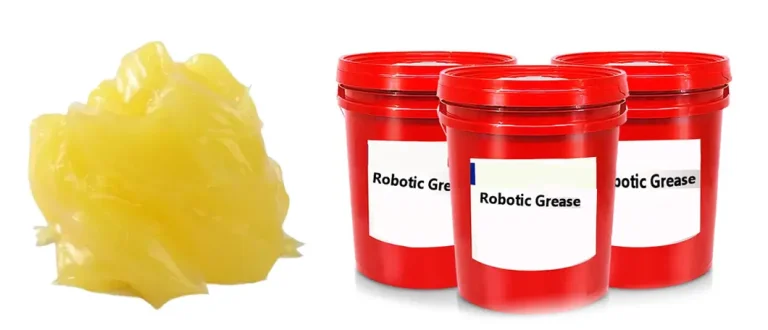
For planetary reducers and RV reducers, the most significant impact comes from backlash. The driving wheel can stop accurately due to motor control, but the driven wheel, due to backlash, can stop randomly at any position within the backlash range, thus affecting repeatability. A key challenge is minimizing backlash without compromising gear lubrication.
Links (Arms/Linkages)
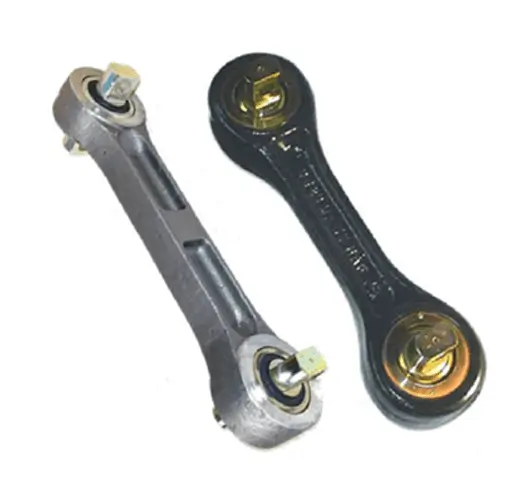
If the links experience resonance (common in industrial six-axis robots and almost inevitable), the robot’s motor side may have stopped, but the end-effector may still be slightly vibrating. Collaborative robots also exhibit this phenomenon. This likewise affects the robot’s repeatability. To improve it, measures can be taken, such as increasing component rigidity and avoiding resonance frequencies. Some high-end robots feature end-effector vibration suppression functions to stabilize the end-effector as quickly as possible.
Acceleration and Speed
The higher the speed and the greater the acceleration, the longer it takes for the robot’s end-effector to settle, and the greater the impact on repeatability. To mitigate the effects of acceleration and speed on repeatability, different methods can be employed. For instance, when moving from point A to point B, if a fast and relatively precise arrival at point B is required, acceleration can be high, but deceleration needs to be slower. Alternatively, an intermediate point C can be added near point B; the path from A to C can use the highest possible acceleration and deceleration, while the path from C to B uses slower speeds, thereby improving repeatability.
Mechanical Structure
Errors in the mechanical structure are also among the factors affecting repeatability. Optimization methods include: using high-precision guide rails, ball screws, and transmission systems to enhance the precision and rigidity of the mechanical structure, ensuring motion accuracy; optimizing structural design and using preloading devices to reduce transmission system backlash; optimizing lubrication systems to minimize the adverse effects of friction on repeatability.
Temperature
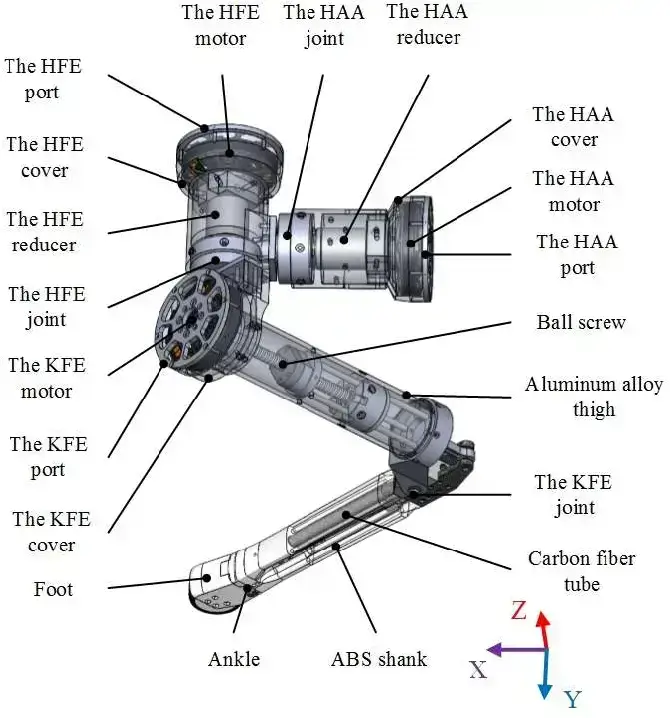
Robots have two main heat sources: motors and reducers. The phenomenon of thermal expansion and contraction affects both the links and the reducers. Link lengths can change, and the reduction ratio of reducers can also be affected. These factors influence decoupling, leading to accuracy drift and affecting repeatability. When a robot starts operating from a cold state, the motors and reducers begin to heat up. Since the repetitive actions are cyclical, after a certain period, the temperature of various components stabilizes. At this point, the robot’s overall temperature reaches equilibrium, and its precision stabilizes.
Methods to improve repeatability include: implementing effective thermal compensation strategies to mitigate the effects of temperature changes on mechanical structures; using temperature sensors to monitor the ambient temperature in real-time, and employing software algorithms for temperature compensation of grating measurement results, all of which contribute to enhanced repeatability.
Dwell Time
Dwell time also impacts the results. Dwell time refers to the waiting time from when the robot reaches the target position to when the position data is collected. A longer dwell time generally yields higher precision results. This is primarily because the robot requires a settling time after reaching the target; allowing the robot to come to a complete stop results in higher measured repeatability.
Importance of Repeatability in Industrial Production
| Production Stability: The production line needs to ensure that there is no difference in the robotic operations between the first part produced and the one-millionth part produced. The working mode for the vast majority of industrial robots is “teach and playback” or “offline programming with on-site fine-tuning.” Based on the “teaching” method, in actual production, we typically use a teach pendant to manually move the robot to a target position, such as a welding point or a gripping point, and then record this point.
The robot’s subsequent task is to return to these recorded points precisely, time after time. In this process, the robot does not need to know the absolute mathematical coordinates of the point. It only needs to be able to “remember” and precisely reproduce this point. As long as repeatability is sufficiently high, it can perfectly perform tasks such as welding, painting, and assembly.
The “teach-playback” process compensates for absolute accuracy by effectively converting the concept of “absolute coordinates” into the recording of “robot joint angles.” Therefore, even if a robot’s absolute accuracy is not high, as long as it can reproduce the taught points with extreme precision, product quality can be guaranteed. Repeatability directly ensures the stability of this kind of long-term, high-volume production.
Recommended In-depth Reading from AI Robots Eidos
Absolute accuracy is a key indicator of whether a system can achieve ‘accurate execution,’ especially in fields such as high-end manufacturing and automation, where high absolute accuracy is an important technical parameter for ensuring product quality.
Absolute accuracy and repeatability are interrelated and mutually constrained indicators that must be considered in conjunction with the specific application requirements. If readers want to gain further insight into absolute accuracy, please refer to this article on absolute accuracy.
| Simplifies Calibration Process: When repeatability is good, calibration efforts can focus on correcting systematic, regular deviations (such as geometric parameter errors) rather than dealing with random, large-scale position fluctuations. This allows for simpler calibration algorithms, reduces the amount of measurement data and computation required, shortens calibration time, and lowers the complexity and cost of calibration.
| Reduces Maintenance Difficulty and Cost: High repeatability indicates that the robot’s mechanical structure and transmission system (such as reducers, joints, etc.) are operating stably, with a lower probability of issues like component wear or loosening. Even if a fault occurs, it is easier to locate and repair, reducing the need for major overhauls or component replacements due to precision problems, thereby lowering maintenance costs.
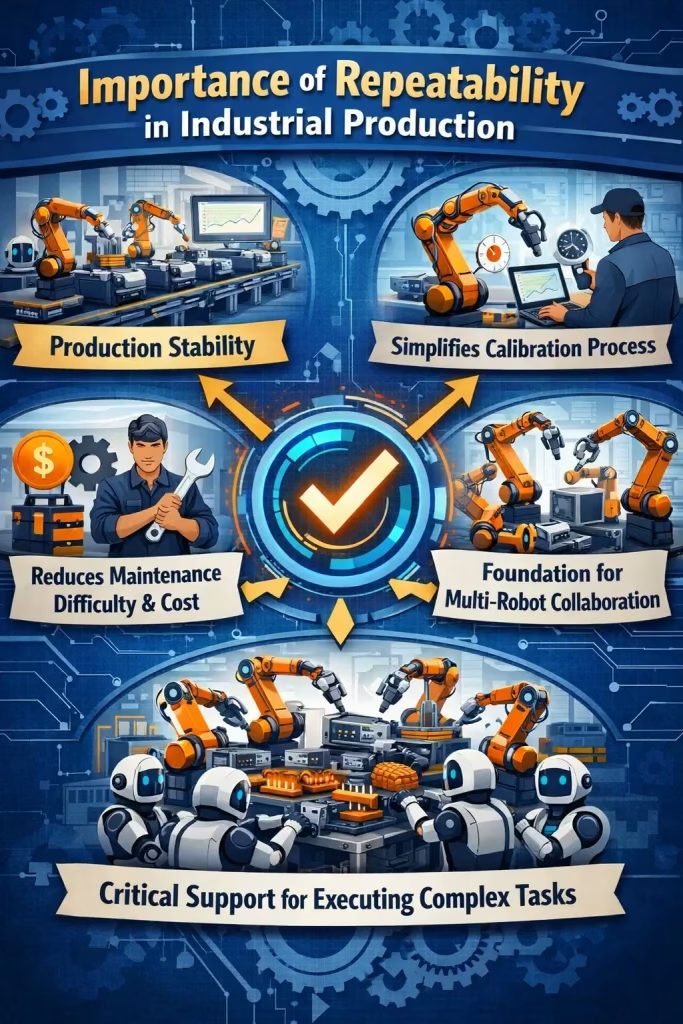
| Foundation for Multi-Robot Collaboration: Positional Consistency: In multi-robot collaborative operations, such as multiple robots jointly handling, assembling large components, or executing complex processes, each robot needs to precisely reach designated positions and maintain relative positional relationships. High repeatability ensures that each robot can consistently return to the same positions when performing the same task repeatedly, avoiding part misalignment, collisions, or collaboration failures caused by positional deviations.
| Temporal Synchronization: Multi-robot collaboration often requires strict time synchronization and motion coordination. Robots with high repeatability can execute actions more accurately according to predetermined time schedules, reducing timing errors caused by position or posture deviations, thereby ensuring smooth and efficient collaborative workflows.
| Critical Support for Executing Complex Tasks: Complex tasks often face environmental changes or minor fluctuations in workpiece positions. Robots with high repeatability can more reliably adjust their actions based on sensor feedback or preset strategies, quickly converging to target positions or postures, adapting to environmental changes, and completing complex tasks.
Insight from AI Robots Eidos
| With the widespread adoption of high-precision encoders and the maturity of servo drive algorithms, achieving a repeatability of ±0.02mm or even ±0.01mm will no longer be exclusive to high-end robots; rather, it will become standard for industrial robots. In the future, the focus of competition will shift from static repeatability to dynamic accuracy retention. For instance, in terms of fatigue resistance and wear resistance, will the repeatability diminish after continuous operation for 20,000 hours? After the wear of the flexible gears in the gearbox, can the accuracy dispersion still be controlled within twice the nominal value?
| With the application of generative AI and reinforcement learning in robot control, future robots may no longer rely on “teaching.” They will dynamically generate trajectories based on real-time perception. In this paradigm, the importance of “absolute accuracy in a single execution” will surpass that of “repeatability in multiple executions.” If the workpiece position and environmental conditions change with each execution (such as in unstructured scenarios), the robot does not need to “return to the same point” but rather needs to “accurately find that dynamically changing point each time.” Hence, the metrics may shift from Repeatability to Adaptability or First-Time Accuracy.
Image Credits: Mosrac & Web & Gmtrubber & Semanticscholar & AI