Robot Obstacle Avoidance: The Invisible Guardian
Table of Contents
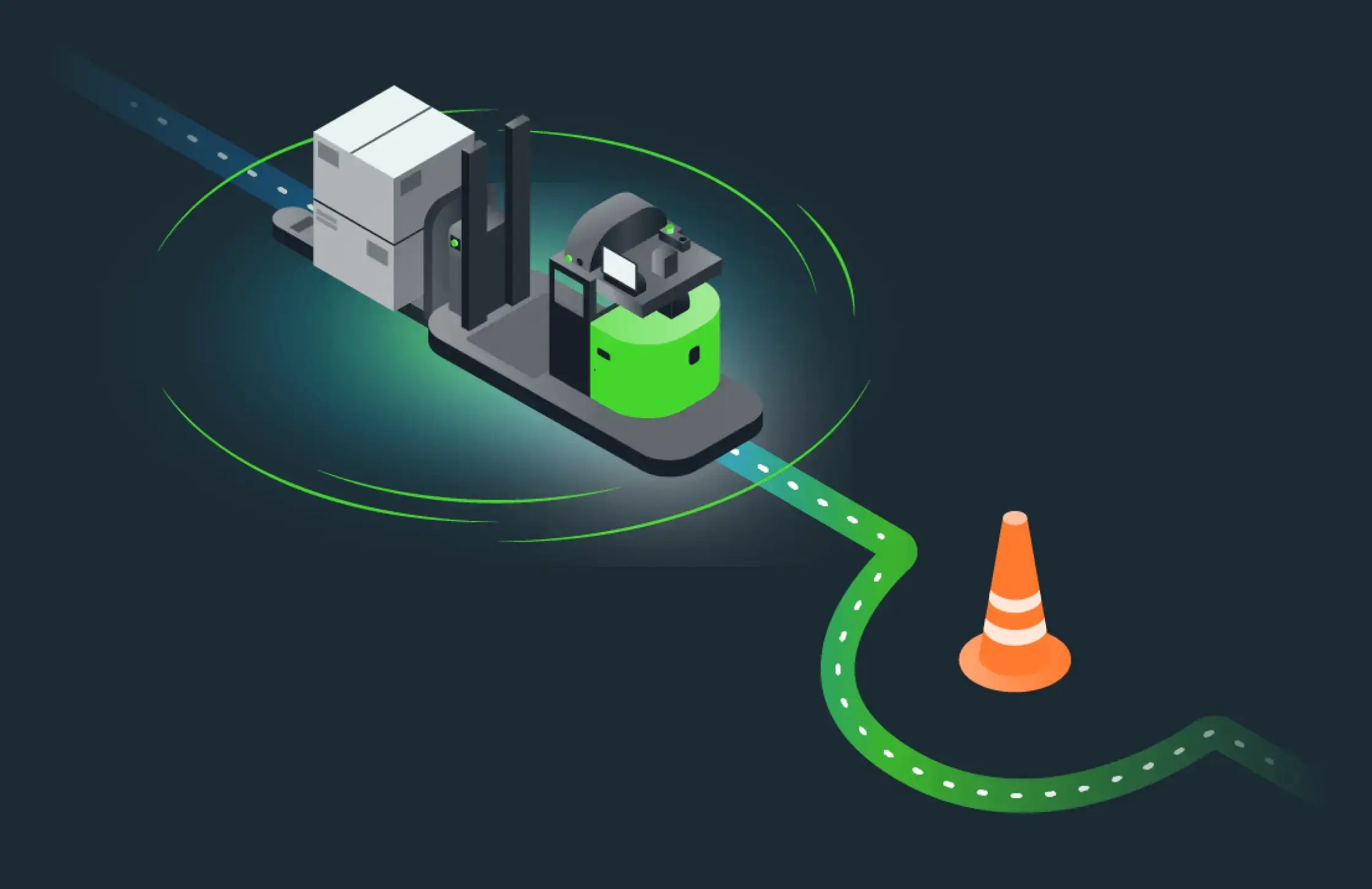
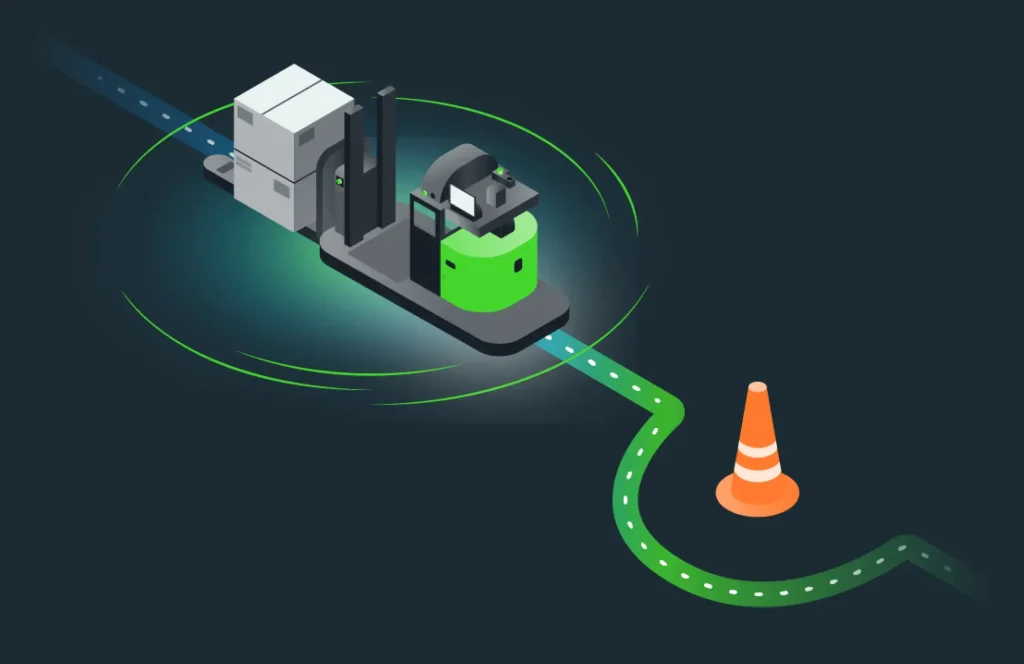
Robot obstacle avoidance technology is not only key to enabling autonomous navigation but also an important support for ensuring safe operation. Imagine if there were no precise obstacle avoidance technology; a floor-cleaning robot would run into objects in the home. A reliable obstacle avoidance system allows robots to perceive obstacles in unknown environments in real-time and make quick decisions, thereby achieving efficient and safe autonomous movement.
Definition of Robot Obstacle Avoidance
Robot obstacle avoidance refers to the technology whereby a robot uses visual sensors (such as cameras and depth cameras) to identify the position, shape, and size of static or dynamic obstacles. Based on predefined algorithms and strategies, it then adjusts its movement trajectory or speed in real-time to avoid collisions with obstacles, allowing it to safely complete its designated tasks.
Common Sensors Used in Robot Obstacle Avoidance
From the definition of robot obstacle avoidance, we can see that perceiving surrounding environmental information is the first step in obstacle avoidance. For mobile robots, sensors are required to acquire real-time information about nearby obstacles, including size, shape, and position. Various sensors with different principles and characteristics are used in obstacle avoidance, including visual sensors, laser sensors, infrared sensors, and ultrasonic sensors.
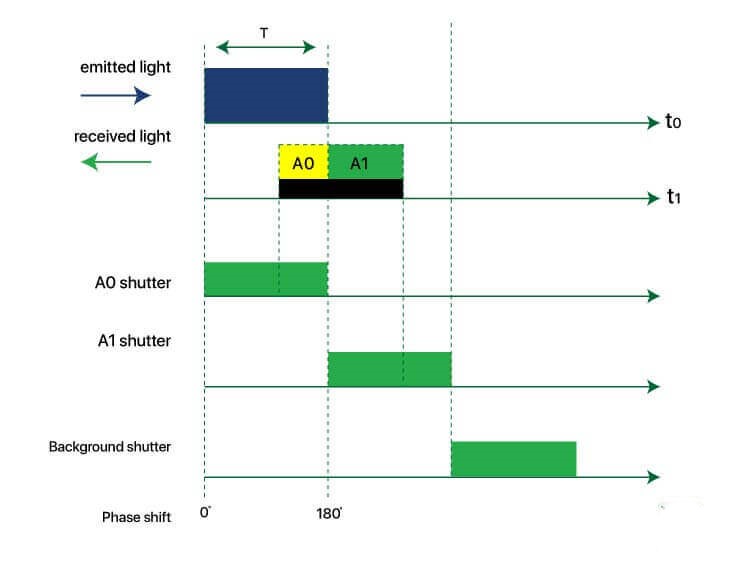
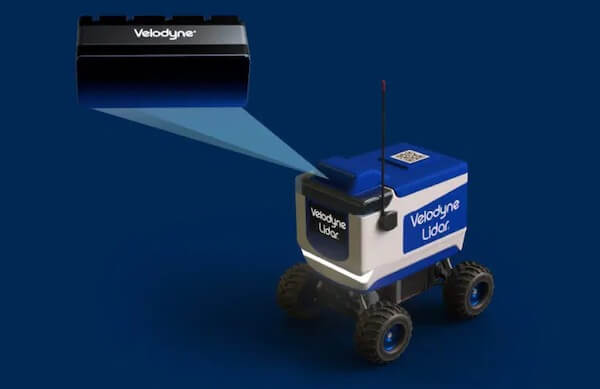
| LiDAR Sensors: It determines the distance to a target by emitting laser beams and measuring the reflection time, generating a high-precision 3D model of the environment. It provides extremely accurate depth information and is one of the most crucial pieces of obstacle detection data. During obstacle avoidance algorithm execution, LiDAR data is often given high weight as it quickly and accurately outlines the surrounding environment and the positions of obstacles.
| Visual Sensors: Visual sensors can be classified by principle into:
Active Visual Sensors: These actively emit signals such as light or lasers and receive reflected signals to acquire target information. For example, a depth camera based on structured light emits light that creates a relatively random but fixed pattern of spots. These spots, when falling on objects, are captured by a camera based on their differing distances, leading to different captured positions.

Passive Visual Sensors: These rely solely on receiving natural light from the environment or light emitted by the target itself for imaging. For instance, stereo vision essentially employs triangulation, where two cameras positioned differently view the same object, allowing for distance calculations based on differing pixel positions captured.
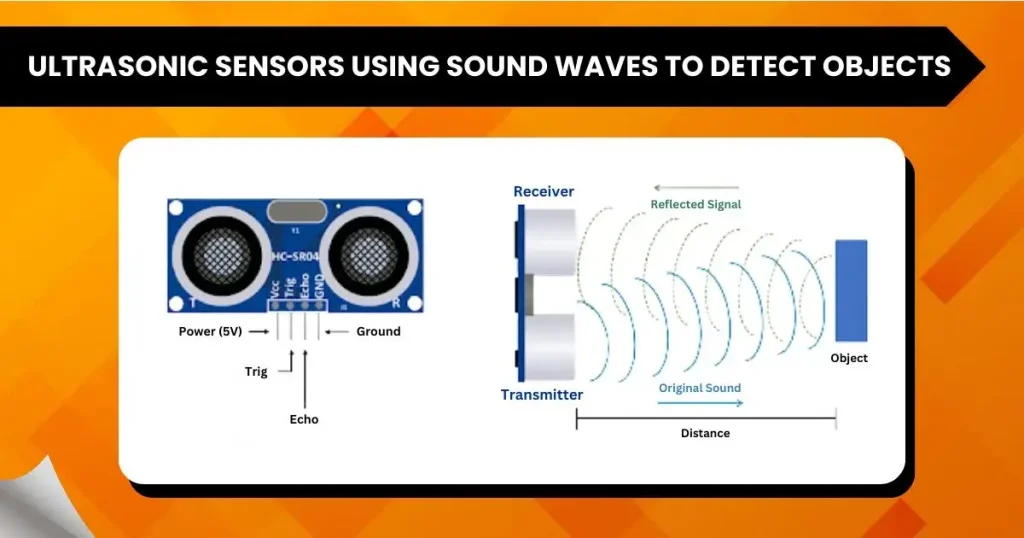
| Ultrasonic Sensors: Commonly used for detecting nearby obstacles, these sensors emit and receive sound waves to identify objects in proximity. They are low-cost and simple, serving as a budget-friendly alternative to LiDAR in many cases. Typically, agents equipped with such sensors only need to avoid obstacles when approaching them, making ultrasonic sensors valuable for applications like reverse radar.
| Infrared Sensors: These determine the presence of obstacles by detecting infrared radiation emitted by objects, suitable for close-range detection. They provide relatively precise distance information at a low cost and are generally used to measure distance in a fixed direction as auxiliary sensors.
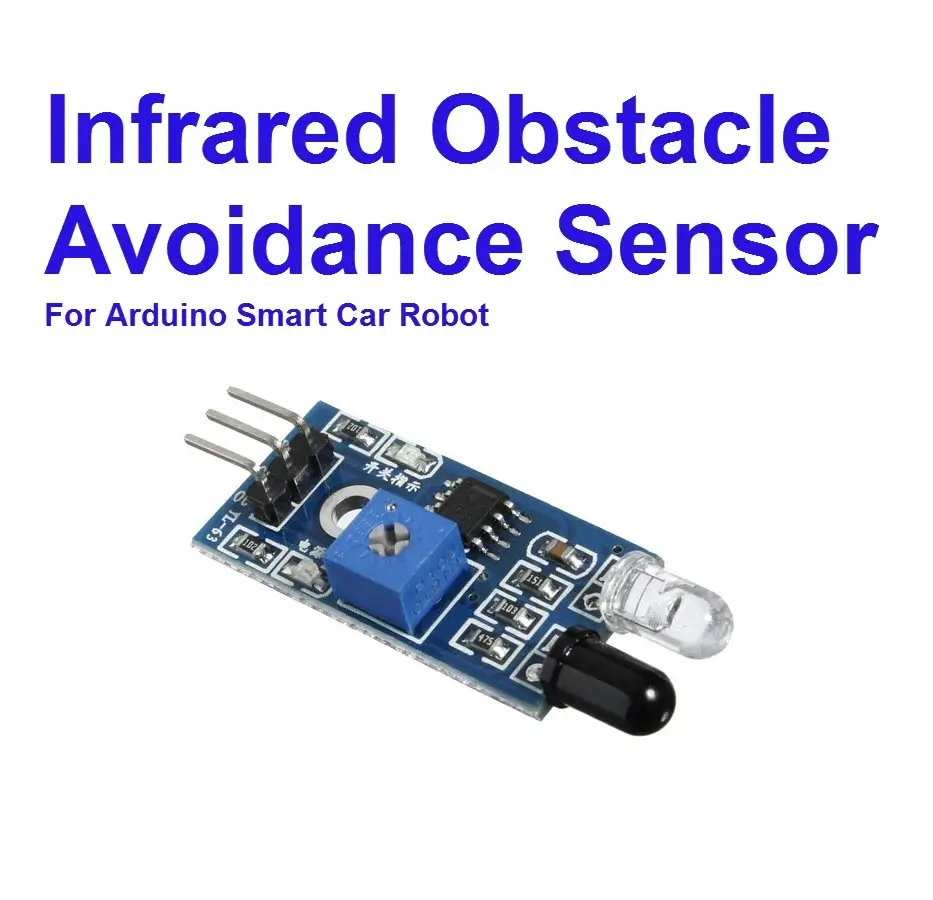
The above sensors are some of the most commonly used, each with its advantages and disadvantages. In practical applications, various sensors are usually used in combination to maximize the ability of robots to correctly perceive obstacle information under different applications and environmental conditions.
Obstacle Avoidance Process Framework
The basic process of obstacle avoidance includes four main steps: perceiving the environment, analyzing environmental data, planning paths, and controlling execution.
| Perceiving the Environment: In this phase, robots use various sensors to collect information about their surrounding environment. Common sensors include LiDAR, cameras, ultrasonic sensors, and infrared sensors. For example, LiDAR measures the distance to objects by emitting laser beams and receiving reflected laser light, while cameras provide visual information to help the robot identify objects and textures.
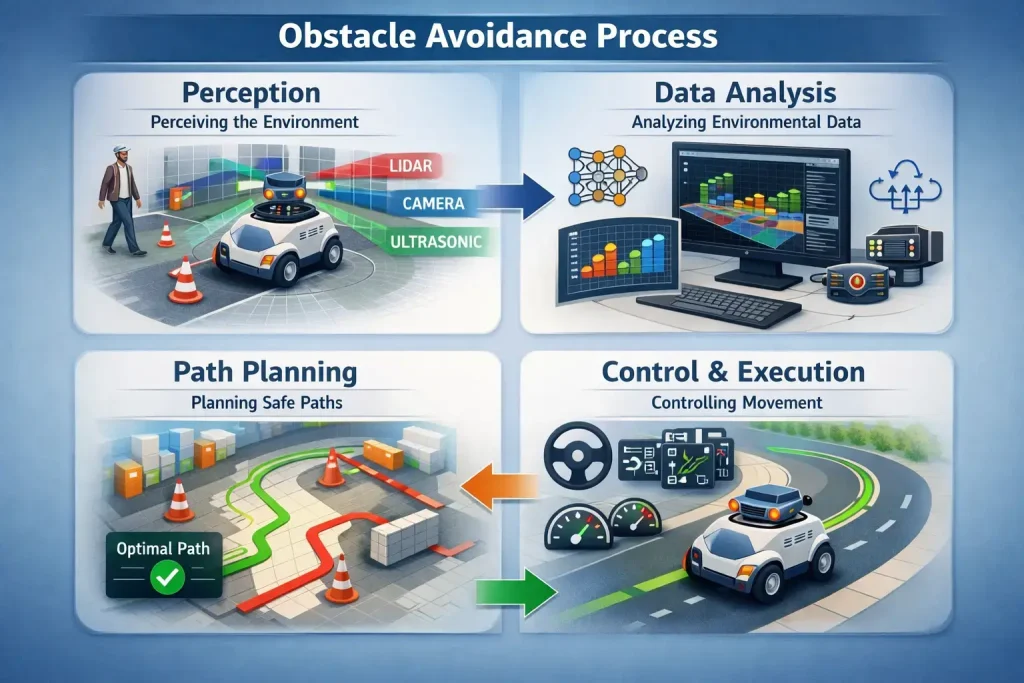
| Analyzing Environmental Data: The collected data needs to be processed and analyzed for the robot to understand its surroundings. For instance, object detection algorithms can help the robot identify obstacles from camera images, while point cloud processing can convert LiDAR data into 3D maps. This step typically includes data pre-processing, feature extraction, and data interpretation. Through this processing, the robot learns which areas are passable and which are obstacles.
| Planning the Path: In this phase, the robot must decide how to move from its current position to its destination while avoiding collisions with obstacles. Path planning is usually divided into two categories: global path planning and local path planning. Global path planning entails creating a path from start to finish based on known environmental information. Local path planning, on the other hand, adjusts the path based on real-time environmental information during robot movement.
| Controlling Execution: After path planning is complete, the robot must follow the planned path. This requires control algorithms to adjust the robot’s motion. Control algorithms must consider the robot’s dynamic model and generate control commands for its actuators (e.g., motors).
It is important to note that these four steps are cyclical. During robot movement, it continuously perceives the environment, analyzes data, plans paths, and executes control to adapt to dynamically changing environments and to avoid obstacles in real-time. Additionally, the robot needs to possess sufficient real-time capabilities and robustness to reliably perform tasks in complex environments.
Common Algorithms Used in Robot Obstacle Avoidance: Specific Technical Implementation
Obstacle avoidance algorithms are a core component of robot navigation algorithms, ensuring that robots can effectively monitor surrounding obstacles during movement and plan a path that avoids various obstacles to safely reach the destination. The complexity of this process lies in the robot’s need to handle multiple uncertainties in real time, including dynamic environmental changes and nonlinear motion.
| Bug Algorithm: The Bug algorithm is one of the simplest obstacle avoidance algorithms. Its basic idea is to walk around the detected obstacle’s contour to avoid it. There are many variants of the Bug algorithm, such as Bug1, where the robot completely circles an object before separating from it at the point closest to the target. While Bug1 is inefficient, it guarantees that the robot reaches its goal. In the improved Bug2 algorithm, the robot starts tracking the object’s contour but does not completely circle it, allowing it to directly move toward the target when possible, resulting in a shorter overall path for the robot.
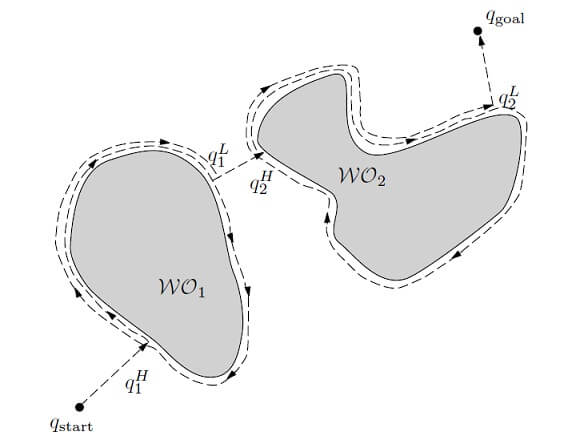
In addition to Bug algorithms, there are many other variants, such as Tangent Bug algorithms. While Bug algorithms are relatively easy and convenient to implement in simpler scenarios, they do not account for the dynamic constraints of the robot, making them less reliable in more complex situations.
| Potential Field Method (PFM): The potential field method can be used not only for obstacle avoidance but also for path planning. It treats each point the robot processes under a potential field, moving according to the field. The goal is represented as a low point (attraction), while obstacles represent peaks (repulsion). All these forces combine to smoothly guide the robot toward the goal while avoiding collisions with known obstacles. When new obstacles are detected during robot movement, the potential field must be updated, and re-planning is required.
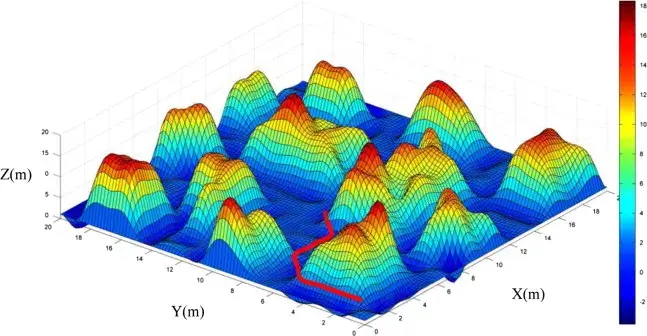
In an extended version, additional potential fields—such as transportation and task potential fields—consider the dynamics of the robot’s movement direction and speed and the interactions with obstacles.
The rotational potential field increases the repulsion when moving toward an obstacle and decreases it when the robot is moving parallel to an object, since the threat of collision is low. Task potential fields exclude obstacles that do not affect immediate motion due to robot speed, allowing for a smoother trajectory.
Other improvements, such as harmonic potential field methods, exist. While potential field methods have theoretical limitations, such as local minima problems, they perform well in real-world applications and are relatively easy to implement.
| Vector Field Histogram (VFH): This algorithm creates a local map based on polar coordinates of the robot’s current surroundings. The local map is updated using recent sensor data. The VFH algorithm generates a polar histogram that shows the probability of obstacles in various angles relative to the robot.
In practical applications, the histogram is used to identify all sufficiently large gaps for the robot to pass through. The cost function for each gap is computed, and the path with the lowest cost function is selected. The cost function is influenced by three factors: the target direction, the robot’s current direction, and the previously chosen direction, which create a weighted value. Adjusting these weights can influence the robot’s path selection preferences.
VFH has variations and improvements, such as VFH+, that account for kinematic constraints. Depending on the physical structure, there might be motion limitations, like a car structure unable to turn on the spot, which VFH+ accommodates by masking routes that are not practically reachable.
| Neural Network Algorithms: Recent developments in obstacle recognition and detection methods based on deep learning, particularly Convolutional Neural Networks (CNNs), have achieved significant advancements. With more obstacle samples provided by datasets like ImageNet, deep learning methods for obstacle detection have shown remarkable effectiveness.
Common algorithms include the YOLO series, with the latest YOLOv8 optimizing detection speed and model robustness, improving efficiency in complex scenes. Additionally, image processing techniques based on semantic segmentation can separate obstacles from backgrounds, further enhancing recognition accuracy. However, the major drawback of deep learning approaches is their heavy reliance on data, requiring extensive training datasets and significant computational resources, with a less interpretable decision-making process.
| Fuzzy Logic Algorithms: Fuzzy algorithms convert environmental information obtained from the robot’s visual sensors into fuzzy linguistic variables. For instance, distances may be divided into fuzzy sets such as “near,” “medium,” and “far,” described by membership functions reflecting each variable’s fuzziness. Then, based on a predefined fuzzy rule base, the fuzzy inputs are inferred. These rules are often based on human experience or expert knowledge, such as “if the obstacle is near in front and there is no obstacle to the left, turn left.” Finally, the fuzzy outcome is converted into specific control actions (such as turning angles, speed adjustments, etc.) to enable the robot to perform obstacle avoidance.
Challenges in Robot Obstacle Avoidance
| Limitations of Sensors:
Detection of Transparent or Special Material Obstacles: Transparent obstacles like glass may elude detection using infrared, laser, or visual methods, requiring ultrasonic sensors for effective detection.
Crosstalk Between Sensors: For instance, ultrasonic distance measurements often require sensor arrays. If sensors within an array work simultaneously, interference may occur, leading to measurement errors. Sequential activation can slow the entire data acquisition speed due to the long sampling period of ultrasonic sensors, impacting real-time obstacle avoidance.
Compatibility Issues with Components: Robots needing motion often require core components like motors and drivers. Compatibility issues may arise, potentially leading to errors in sensor data acquisition. To maintain system functionality, it is essential to isolate components like motors from data-acquisition sensors and power communication parts.
Limitations of Algorithms:
Balancing Computational Resources and Response Speed: Complex algorithms (like deep learning and global path planning) require substantial computational resources, potentially affecting real-time obstacle avoidance performance; hence, there may be a need for algorithm optimization or hardware acceleration.
Conflicts Between Local and Global Optima: Some algorithms may become trapped in local minima (like the potential field method), resulting in suboptimal obstacle avoidance paths or failure to reach the target, necessitating a combination of global planning and local adjustments.
Development Directions for Robot Obstacle Avoidance
“End-to-end” obstacle avoidance methods integrate environmental perception, obstacle recognition, path planning, and avoidance decision-making into one system. This approach simplifies system architecture and enhances real-time adaptability. Some of the latest end-to-end obstacle avoidance methods include:
| HEIGHT: Aims to address navigation challenges for robots in crowded and constrained environments. It dissects different components in the environment and proposes a heterogeneous temporal-spatial graph to model the varied interactions between humans, robots, and obstacles. Utilizing attention mechanisms and recurrent networks, HEIGHT captures spatial and temporal heterogeneous interactions and encourages robots to adaptively avoid collisions.
| CrowdNav++: This research explores safe navigation and intent perception for robots in dense and interactive crowds. It introduces a novel Recurrent Graph Neural Network (RGNN) augmented with attention mechanisms, capturing agents’ heterogeneous interactions within spatiotemporal contexts. To enhance the robot’s foresight, it predicts the future trajectory of dynamic agents and integrates these predictions into a model-free reinforcement learning framework to prevent the robot from infringing on the expected paths of other agents. This method achieves better navigation performance and non-intrusiveness in complex crowd navigation scenarios.
| FAPP: Focuses on obstacle avoidance for drones in dynamic and complex environments, where dynamic objects pose significant challenges. Multiple dynamic objects exhibit different motion patterns, making it difficult to estimate and predict their movements with a single motion model. Efficient planning is essential to navigate around densely packed dynamic obstacles. FAPP proposes a novel and efficient point cloud segmentation strategy to distinguish between static and dynamic objects. Its trajectory optimization algorithm demonstrates high efficiency in avoiding rapidly moving objects and includes an adaptive replanning strategy to address cases where trajectory optimization cannot find feasible solutions, which is common in dynamic complex environments.
Recommended In-depth Reading from AI Robots Eidos
Mastering obstacle avoidance makes robots “smarter.” However, a systematic understanding is needed to fully grasp how robots have become the cornerstone of modern industry.
If readers would like to learn more about humanoid and industrial robots, please read in-depth articles on these topics.
Insight from AI Robots Eidos about Robot Obstacle Avoidance
| The robots of the future will need to not only understand the physical properties of objects (such as position and shape) but also their social attributes (such as human intentions, behavior patterns, and social rules). For instance, when navigating through a crowd, a robot must determine whether pedestrians are rushing to commute or pausing for a chat, thereby adopting different evasion strategies (quickly bypassing or politely waiting). Obstacle avoidance will upgrade to social navigation.
| Traditional obstacle avoidance aims for “zero contact.” In contrast, the next generation of robots may be equipped with “tactile intelligence” and “flexible exteriors.” Through distributed tactile sensors and compliant control, robots will be able to safely engage in manageable, proactive light-contact interactions, such as gently pushing a box in a cluttered warehouse to clear a path instead of being immobilized. This requires redefining the boundaries of “obstacle avoidance,” evolving from the absolute “avoiding collisions” to “managing contact.”
| In the future, collective obstacle avoidance will not solely rely on the independent global computations of each robot. Instead, by designing simple local interaction rules (such as maintaining distance, speed matching, and flow following), efficient, smooth, and collision-free collective motion patterns will emerge at the group level. This necessitates a deep integration of collective dynamics and distributed AI to realize a decentralized and highly robust group obstacle avoidance, where the core is the emergence of macro order rather than the precise planning of microscopic paths.
Image Credits: Vecnarobotics & Robotics247 & Cvlibs & Vayuyaan & Matogbar & AI & Factorio & Medium & Analytixlabs