
AI Hallucinations In Industry: Causes And Solutions
Table of Contents
The AI hallucinations in industry bring a series of negative impacts. It may cause production lines to stall due to incorrect parameters, increase product rejection rates, and lead enterprises astray on their digital transformation journey.
Definition of Industrial Large Models
Industrial large models are a system of large-scale parameter deep learning models oriented towards the application throughout the entire lifecycle of industrial products. They encompass different levels and categories such as industrial foundation models, industrial task-oriented models, and industrial domain-specific models.
They possess core characteristics, including data-mechanism fusion driving, generation of industry-specific professional content, high-confidence and high-reliability output, multi-scenario cross-domain adaptability, multi-modal fusion interaction, human-agent-industrial system collaboration, and flexible adaptation of computing power and efficiency. They have six core capabilities: intelligent Q&A, scenario cognition, process decision-making, terminal control, content generation, and scientific discovery. They can be adapted to both discrete and process industries, providing a new paradigm and method for intelligent upgrading across all business domains.
What are AI hallucinations in Industry?
AI hallucinations in industry refer to content generated by the industrial large models that, although linguistically fluent and seemingly logically coherent, contain significant deviations in factual accuracy and logical rigor, or even outright fabricate information, data, or professional standards. This hallucination is not the model “deliberately making mistakes.” Still, an inevitable product of its underlying “probabilistic prediction” mechanism – the model excels at imitating the statistical patterns of human language but lacks true “thinking” and “truth-seeking” abilities. In essence, it is “imitation by memory, not judgment by logic.” Industrial scenarios have an extremely low error tolerance; a single set of incorrect process parameters can lead to product scrapping.

Classification of AI Hallucinations in Industry
AI hallucinations in industry manifest in various types.
Intrinsic hallucination involves directly altering true information from the input, for example, changing “equipment maintenance cycle of 7 days” to “30 days.”
Extrinsic hallucination involves fabricating information not present in the input and not logically deducible from it, such as falsifying industry standards or inventing equipment failure reasons.
Beyond these, there are other forms like factual hallucination (conflicting with objective facts) and logical hallucination (contradictory reasoning). Moreover, as model parameters increase, AI hallucinations in industry become more insidious, shifting from easily detectable common sense errors to hard-to-notice forms like inventing technical jargon or falsifying document reference numbers.
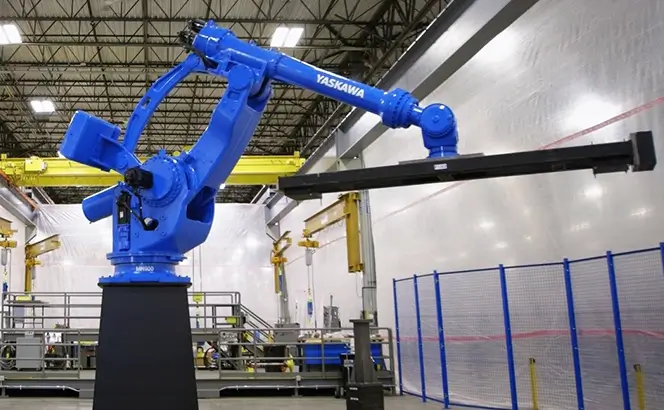
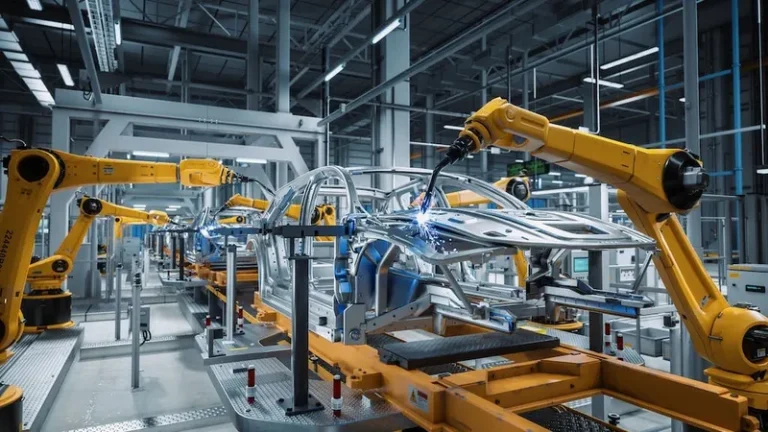
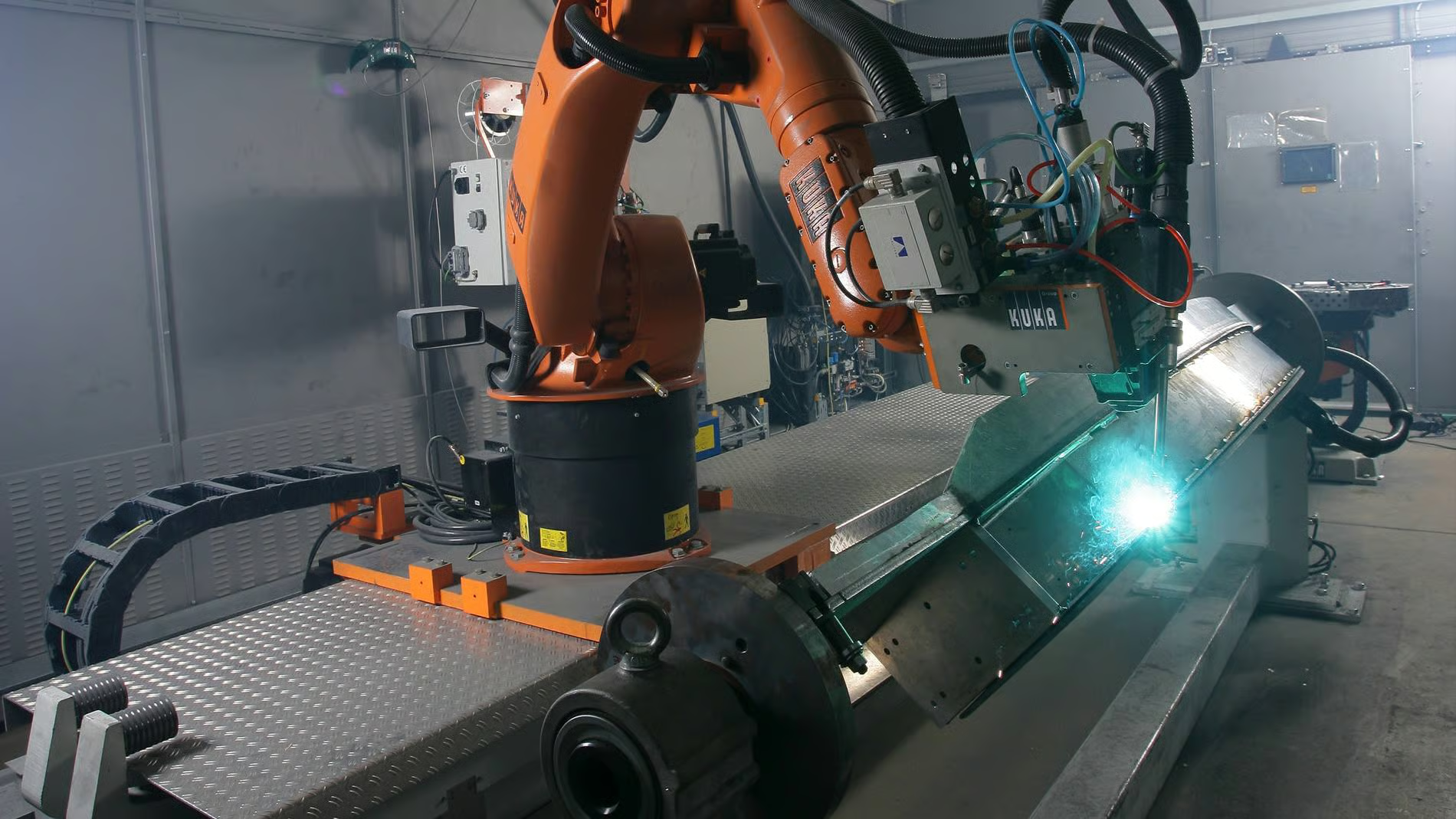
Regardless of the type of AI hallucinations, the harm it causes cannot be ignored. For example, in autonomous robotics scenarios, if a large industrial model imagines a non-existent obstacle and these erroneous commands are directly issued to the industrial robot, it may cause the robot to stop abruptly, resulting in a production line shutdown.
Recommended In-depth Reading from AI Robots Eidos
If readers would like to learn more about industrial robots, please read this in-depth article on industrial robots.
What Causes AI Hallucinations in Industry?
Data
Data is the root cause of AI hallucinations in industry. The quality, quantity, and completeness of data directly determine the industrial large model’s output effectiveness and the incidence of hallucinations.
| Data Completeness: Industrial data is characterized by “data scarcity and fragmentation.” It differs completely from consumer-level data. Consumer data (like browsing history) can easily yield massive samples, but industrial data is highly scenario-specific – each factory has different equipment models, production processes, and operational procedures, making data non-generalizable. Many small and medium-sized enterprises (SMEs) lack proper data collection equipment on their production lines, preventing data from being converted into trainable formats. Even in large enterprises, data is scattered across different equipment and departments, with inconsistent formats and non-uniform interfaces, forming “data silos” that hinder integration into effective training samples.
| Data Quality: The complexity of industrial environments, with factors like temperature and humidity affecting data collection accuracy, leads to significant amounts of invalid data. Furthermore, annotating industrial data is extremely challenging – it requires manual annotation by professionals who understand the industrial scenario. The high cost and long cycles of annotation mean that many companies, to save costs, either skip annotation or perform it non-standardly. This prevents the industrial large model from accurately identifying core patterns in the data, thereby inducing AI hallucinations in industry.
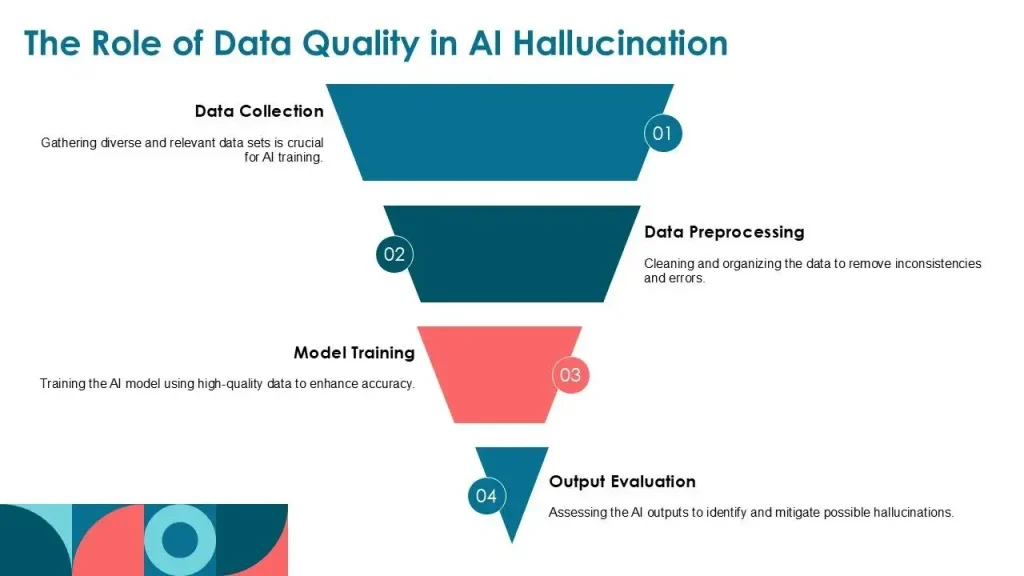
| Data Quantity: The quantity issue primarily refers to the “dilemma between data security and sharing.” Most industrial data involves core corporate secrets, such as production processes, equipment parameters, and customer orders. Leakage could cause significant losses. This creates a dilemma: without opening core data, the large model lacks sufficient high-quality data support, leading to inadequate training and an inability to accurately learn industrial scenario patterns, thus causing AI hallucinations in industry; opening the data risks compromising confidentiality.
Scenario
Many enterprises fall into a common pitfall with industrial large models: blindly pursuing “large parameters and high-tech,” copying the approach of consumer-grade models, while ignoring the “practicality” and “specificity” of industrial scenarios. This ultimately leads to “scenario mismatch,” resulting in AI hallucinations.
The core need of industrial scenarios is to “solve practical problems,” such as improving production efficiency or optimizing quality inspection. These needs are highly “concrete” and “personalized.” However, most current industrial large models are “general-purpose” – trained on general data, not deeply adapted to specific industrial contexts, thus weakening their applicability.
For instance, Samsung Electronics reportedly spent tens of millions building a supply chain optimization model to predict parts shortage risks. The result was that each prediction took over 6 hours to run; by the time results were ready, procurement decisions were already made, completely failing to meet the core need for “real-time response” in supply chains.
The impact of the specificity of industrial products on hallucinations: Some companies introduced general-purpose vision large models for industrial quality inspection, ignoring the “specificities” of their products – some surfaces are reflective, some have subtle defects. Without targeted training, the general models could not accurately identify defects, leading to missed detections or false positives. This is essentially a hallucination caused by scenario mismatch.
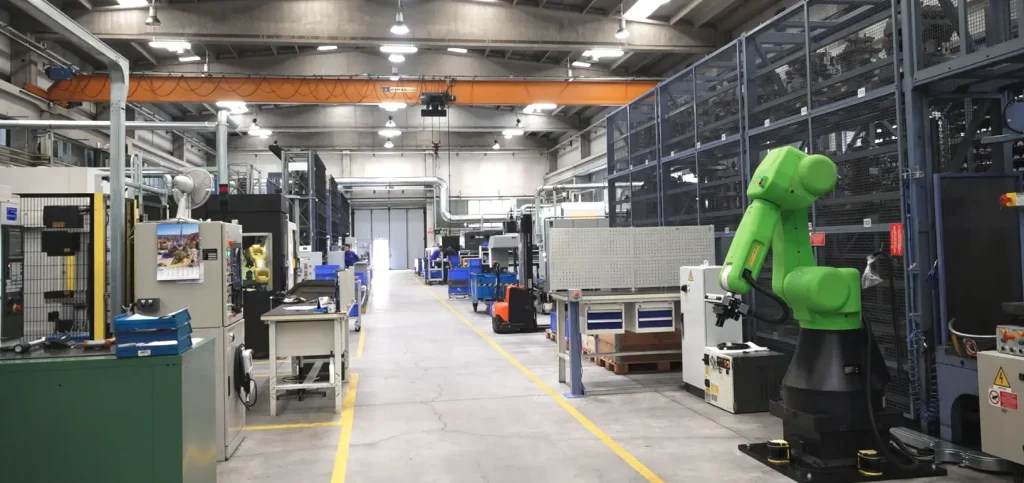
The “dynamism” of industrial scenarios further exacerbates the hallucination problem: production line processes, equipment, and raw materials adjust to market demands. If the model cannot adapt to these changes in real-time, it develops “outdated cognition,” leading to AI hallucinations in industry.
Computing Power
Without sufficient computing power, no amount of high-quality data can train a high-performance industrial large model; instead, it can exacerbate the AI hallucination in industry.
The training and inference demands of industrial large models far exceed those of consumer-grade models. Industrial data is massive and complex; a complete production log or equipment operation data can easily reach terabyte or petabyte levels. Extracting patterns and training models from this data requires substantial GPU and CPU support.

Industrial scenarios demand high “real-time” performance from models – for example, equipment fault alerts need results in milliseconds, otherwise, the optimal maintenance window is missed. This places high demands on “inference speed.” However, the reality is that the “high cost” and “uneven distribution” of computing resources deter most enterprises.
Currently, mainstream GPUs are expensive. A set of computing equipment capable of supporting industrial large model training can cost millions or tens of millions, unaffordable for many SMEs. Even large enterprises face computing power shortages – global shortages of high-performance GPU chips mean long waits for hardware, prolonging model training cycles and hindering timely adaptation to scenario changes.
More insidiously, the “inference cost” of industrial large models is far higher than the training cost. Many companies only consider the computing investment during the training phase, overlooking the hidden costs of inference – after deployment, models must process massive real-time production line data, with inference costs often three times higher than training costs. If inference is slow, the model cannot process dynamically changing data in real-time, basing suggestions on “outdated data.”
For example, if the equipment develops a minor fault, but the model, lacking sufficient computing power for timely identification, outputs an incorrect “equipment normal” judgment. This type of hallucination can be termed a “lag hallucination.”
Talent
Industrial large models fundamentally represent the fusion of “technology + industry,” and the scarcest resource currently is “composite talent” – individuals who understand both large model technology and industrial scenarios.
Implementing an industrial large model can be understood as “installing an intelligent brain in a factory.” Technical R&D personnel are responsible for “building the brain” (model development and training), while the enterprise’s technical experts are responsible for “teaching the brain” (scenario adaptation and requirement decomposition). Only through deep integration can the industrial large model “understand technology and industry,” reducing AI hallucinations in industry.
However, the reality is that technical personnel proficient in large model R&D mostly come from computer science or AI backgrounds, lacking a deep understanding of production processes, equipment principles, and operational procedures in industrial settings. Consequently, the models they develop often fail to adapt well to industrial needs. Conversely, enterprise technical experts, typically from mechanical, chemical, or manufacturing backgrounds, are often unfamiliar with the technical principles, training methods, and optimization logic of large models. They cannot clearly communicate requirements to technical personnel nor identify and correct model hallucinations.
Because composite talents must master both AI technology and industrial technology, their cultivation cycle is long. Currently, the supply of such talent falls far short of enterprise demand. Large companies lure them with high salaries, while SMEs, constrained by limited funds, cannot afford the high cost and may abandon large model applications altogether. This talent gap affects the breadth and depth of large model applications in industrial scenarios, preventing them from realizing their true value.
How to Prevent AI Hallucinations in Industry?
| Optimizing the Data Foundation: Enterprises should prioritize building an industrial data middle platform to unify data formats, break down data silos, and achieve centralized data management and sharing. Simultaneously, balance data security and openness by using encryption and anonymization to protect core data. For SMEs, instead of pursuing “big and complete” data, they can focus on core scenarios (e.g., single equipment fault prediction), collect high-quality segmented data, and fine-tune models with small samples to reduce data costs and the incidence of AI hallucinations in industry.
| Deepening Scenario Adaptation: When applying industrial large models, enterprises must abandon the misconception of “blindly pursuing large parameters.” Focus on “high-value, high-pain-point” segmented scenarios (like quality inspection) and develop “scenario-specific” models rather than “general-purpose” ones. Crucially, involve industrial scenario experts throughout the model training and optimization process to identify and correct hallucinations promptly, ensuring the model truly “understands the industry.”
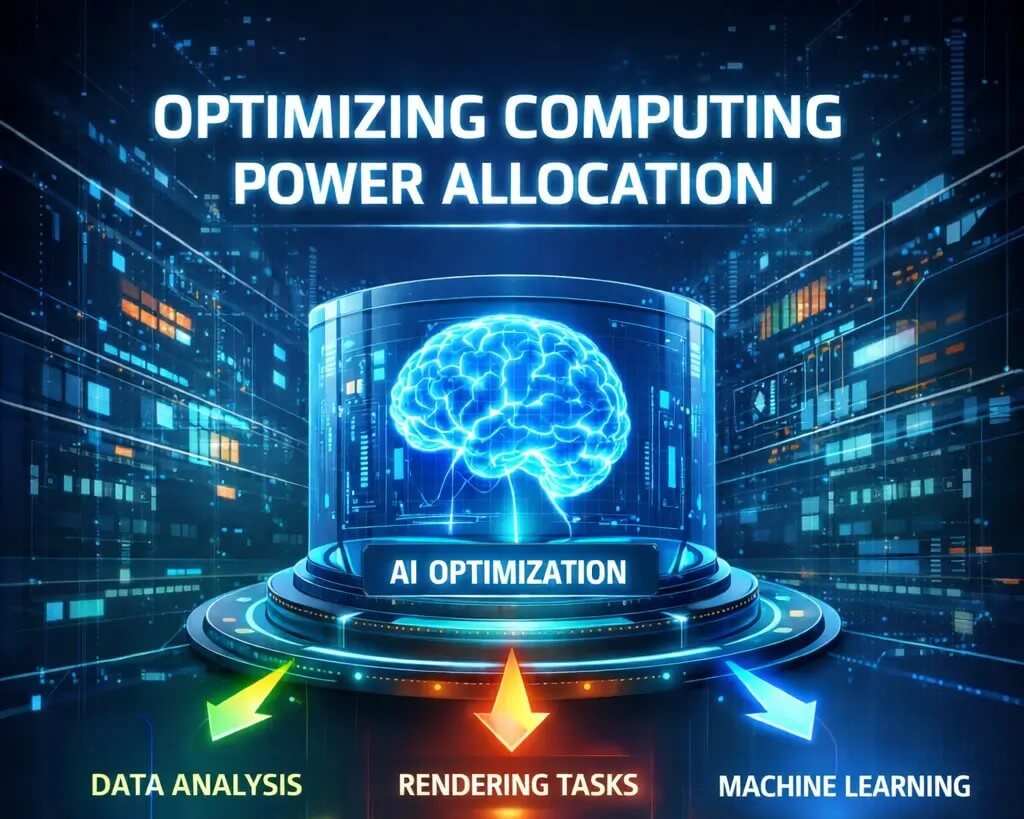
|Optimizing Computing Power Allocation: For SMEs, avoid blindly purchasing high-end computing equipment. Instead, leverage industrial internet platforms to share computing resources and reduce investment. Simultaneously, optimize model structures by adopting lightweight models to cut inference costs. Large enterprises can build dedicated computing clusters based on their needs to improve utilization and balance performance and cost.
| Cultivating Composite Talent: Enterprises can cultivate composite talents through a combination of “internal training and external introduction” – provide large model technology training to internal industrial experts, and industrial scenario training to internal technical staff. Strengthen cooperation with research institutions for joint talent development. For SMEs, leveraging third-party service organizations can provide access to external talent and reduce costs.
| Technological Progress: Various technical methods can mitigate AI hallucinations in industry. For example, using Retrieval-Augmented Generation (RAG) technology builds factual anchors, enabling the model to rely on verified evidence for output, potentially reducing hallucination rates by 42%-68%. (RAG introduces an external knowledge base to provide real-time, accurate reference information for the large model. It allows the model to generate answers based on specifically retrieved information, reducing the possibility of fabrication, especially when dealing with professional fields or time-sensitive issues, providing more reliable answers.)
Employing Chain-of-Thought reasoning techniques makes the model explicitly show intermediate reasoning steps, alleviating logical hallucinations. Introducing a “reward skepticism” mechanism encourages the model to answer “I don’t know” when facts cannot be ascertained, avoiding fabrication. (Due to space limitations and technical complexity, this article will not elaborate on technical details.)
Huawei’s Comprehensive Governance Solution – External Knowledge Base (RAG): Vectorize authoritative internal knowledge sources (such as product manuals, contract templates, code specifications, case studies) to form an external knowledge base. When the large model needs to answer a question, it first retrieves the most relevant information from this knowledge base and then generates an answer by combining this information, ensuring the response is evidence-based.
The emergence of the “Intelligent Hallucination” problem in industrial large models offers a meaningful insight: competition in the industrial large model arena is not just a technological contest, but also a battle of application scenarios. Only large model developers who deeply cultivate specific scenarios can better achieve the promotion and application of industrial large models. Only those rational and pragmatic enterprises can truly leverage the power of large models to realize their digital transformation.
Insight from AI Robots Eidos about AI Hallucinations in Industry
| The fragmentation of industrial data and the uniqueness of scenarios determine that there cannot be a universal large model to solve all problems. Future industrial intelligence units may resemble a “micro-federation”: a lightweight foundational model acting as the “cortex,” responsible for understanding and interaction, while the actual storage of facts, logic, and experience resides in a real-time updated, encrypted, and traceable industrial knowledge graph. When the model outputs results, they are generated not through “recall” but by “real-time querying” the industrial knowledge graph to compute the results. In this way, the essence of “AI hallucinations” changes from “misremembering” to “miscalculating,” the latter being easier to verify and correct through engineering methods.
| Industrial practitioners have an inherent distrust of “black boxes.” Therefore, in the future, the outputs of industrial large models must be accompanied by a complete “decision path.” This not only serves as a technical chain of reasoning but also embodies a “transparency” that aligns with human industrial aesthetics. A model should not only state, “the equipment parameters should be set to X,” but also demonstrate, “I derived the value X based on the operational data from a specific machine at a certain point in time, combined with a specific processing standard.
Image Credits: Novotek & Vectara & Slideteam & Sharework-project & Databank & AI