
Table of Contents
RGV operating frequency is often overlooked by enterprises in comparison with load capacity and travel speed. Yet it plays a critical role in RGV systems—particularly in continuous-takt production lines such as those in the new energy and automotive body-in-white (BIW) welding sectors, where RGV operating frequency has a significant impact on production line stability.
What Is RGV ?
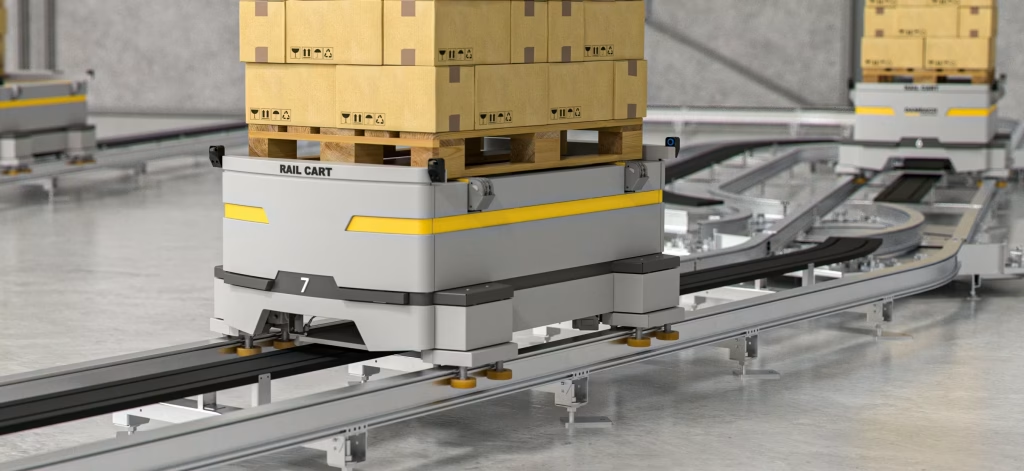
RGV stands for Rail Guided Vehicle. Together with AGVs and AMRs, RGVs are all classified as mobile robots used in the warehousing and logistics industry.
RGVs are commonly used in high-density storage automated warehouses (AS/RS). The track paths can be designed to any length as needed, and during the handling and movement of goods, no additional equipment needs to enter the aisle—offering high speed and strong safety performance, which effectively improves the operational efficiency of the warehouse system. RGVs are also used for connection and transfer between parallel multi-segment conveyor lines, enabling logistical connectivity between conveyors. Their main characteristic is the presence of physical ground rails, along which they travel on fixed paths, resulting in relatively single-route operations.
What Is RGV Operating Frequency?
In engineering design, RGV operating frequency generally refers to the number of complete transport cycles completed per unit time, including picking action, travel process, positioning and docking, and unloading and return. A complete cycle is defined as: Transport cycle T = t1 (picking) + t2 (traveling) + t3 (docking) + t4 (returning).
The theoretical RGV operating frequency is F = 3600 / T (cycles/hour). (1 hour = 3600 seconds)
If an RGV completes one full operating cycle in T = 60 seconds, its operating frequency is 3600 / 60 = 60 cycles/hour.
Importance of RGV Operating Frequency
Impact on Takt Time
In actual engineering practice, real systems must also account for the acceleration/deceleration time ratio, scheduling wait time, workstation blocking time, multi-vehicle collision-avoidance time, and control-system response latency. Therefore, the practical engineering correction model is typically: Effective operating frequency Fe = 3600 / (T + Tw), where Tw represents the system waiting time.
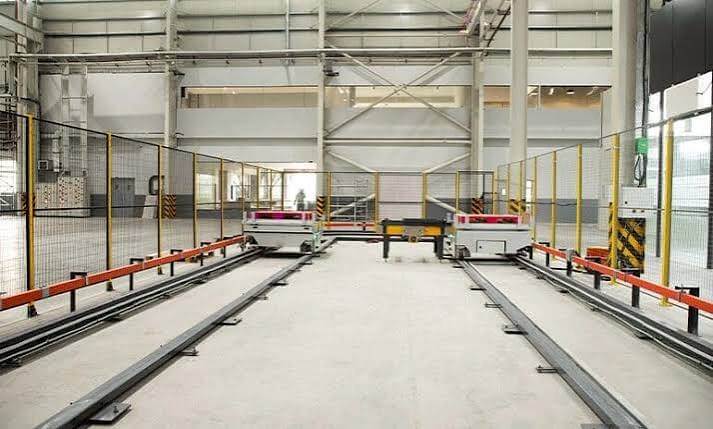
Project Analysis (No specific companies are mentioned in any project analyses within this article): In an automated warehouse project, the theoretical RGV operating frequency was calculated as 69 cycles/hour. However, due to queuing at the inbound/outbound stations, the actual stable RGV operating frequency was only 56 cycles/hour. The queuing caused a significant deviation between the actual frequency and the theoretical frequency, with the magnitude of deviation sufficient to cause takt time mismatch across the entire line.
Impact on Equipment Reliability
Under unreasonable RGV operating frequencies, especially during high-frequency start-stop conditions, the RGV motor does not operate continuously and steadily but frequently enters acceleration and braking phases. This causes the motor winding temperature rise to accumulate incrementally in a stepped pattern. If this exceeds the motor’s thermal equilibrium range, it can lead to motor overheating and insulation aging.
Project Analysis: In a new energy vehicle PACK workshop project, the preliminary design was planned based on a single RGV meeting a 3-ton load capacity and 1.8 m/s travel speed, but the production line takt was not broken down in detail. After project commissioning, although every single transport fully met requirements, the workstation takt of 50 seconds per cycle forced the RGV into a “high-frequency, short-distance shuttle mode,” reaching 72 cycles per hour. After a period of operation, the temperature rise exceeded the tolerance margin of the motor’s thermal equilibrium range, placing the system into an insulation class derating risk zone.
Impact on System Efficiency
When the operating frequency exceeds the system’s scheduling capability or workstation processing capacity, the RGV’s waiting time at stations increases significantly, leading to an overall decline in efficiency, such as queuing phenomena.
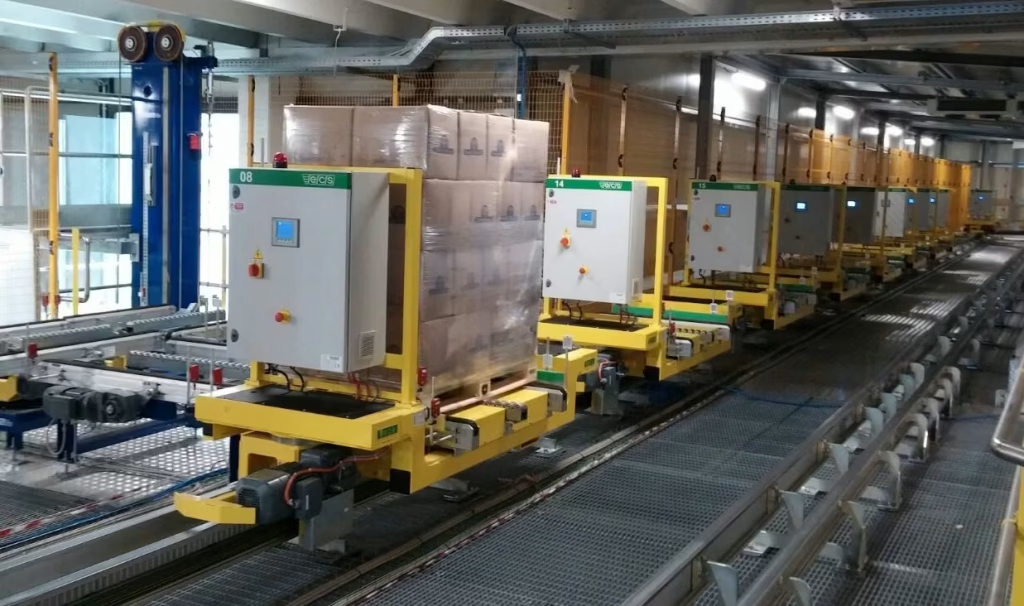
Project Analysis: In an automated warehousing project, the design frequency was 45 cycles/hour. However, due to later SKU increases, scheduling tasks increased to 70 cycles/hour. During peak periods, the system experienced significant queuing, with RGV station dwell time exceeding travel time itself, resulting in an efficiency reversal where benefits turned into losses.
Impact on Equipment Precision
Significantly exceeding the design RGV operating frequency imposes higher demands on the control system response speed. If the control system (e.g., PLC) has response latency (10–20 ms) or the servo drive system exhibits overshoot during emergency stop/start, position errors can be magnified and accumulate under high-speed, high-frequency operation.
Project Analysis: In a cold-chain warehousing project, the RGV system was initially designed for 32 cycles/hour. However, due to order fluctuations in actual operations, the peak frequency reached 69 cycles/hour. After one month of operation, noticeable problems began to appear. The impact of high-frequency operation caused the RGV’s positioning errors to accumulate gradually, eventually leading to docking failures. The root cause was not the control system but the RGV operating frequency exceeding the system’s stable operating range.
Impact on Maintenance Costs
RGV operating frequency also affects the overall system maintenance costs. Especially in heavy-load, high-frequency usage scenarios, uneven wheel pressure distribution can lead to localized rail system wear over prolonged RGV operation, such as corrugated wear. Additionally, high-frequency heavy-load operation accelerates pitting on gear tooth surfaces.
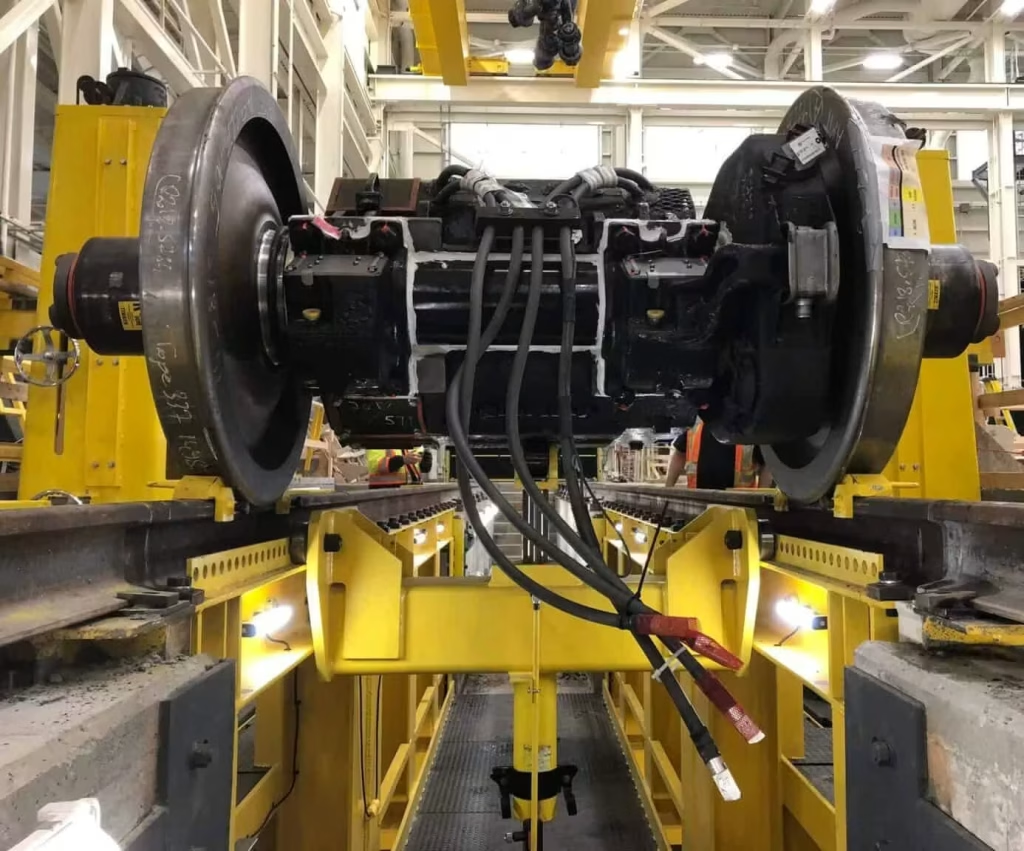
Project Analysis: In a steel coil handling project, the RGV design operating frequency was 35 cycles/hour. However, due to later capacity increases, the actual operating frequency rose to 60 cycles/hour. After approximately six months of operation, significant stepped wear appeared at rail joints, and periodic indentation marks developed on the outer wheel rims, ultimately requiring comprehensive rail reinforcement and retrofitting. The issue was not due to exceeding load capacity but because the RGV operating frequency exceeded the rail’s fatigue design limits.
Classic Calculation Formula for RGV Wheel-Rail Contact Stress :
σH = √[F·E / (2π·(1−ν²)·b·R)]
Where the number of stress cycles per unit time = RGV operating frequency × number of wheel pairs passing through the same rail node per cycle. When the frequency increases from 35 cycles/hour to 60 cycles/hour, the number of stress cycles increases by approximately 71% simultaneously. Even if the load remains unchanged, the fatigue accumulation damage rate of the rail will accelerate significantly.
How Enterprises Should Properly Understand RGV Operating Frequency
A Reasonable Understanding of Operating Frequency Ranges
–RGV operating frequency (0–30 cycles/hour): Low-frequency operation, suitable for heavy loads or long-distance transport, with low risk and minimal equipment wear.
–RGV operating frequency (30–60 cycles/hour): Medium-frequency operation, the standard industrial takt range. Systems can generally maintain good stability, suitable for most conventional production lines.
–RGV operating frequency (above 60 cycles/hour): High-frequency operation, suitable for continuous production takt systems. Any minor takt fluctuations will be amplified, leading to scheduling congestion or equipment overload. Motors, reducers, and rails require a specially reinforced design, along with stringent temperature rise monitoring.
Understand the RGV operating frequency in Your Industry
The demands for RGV operating frequency vary significantly across different industrial sectors, and this variation often directly determines the system architecture.
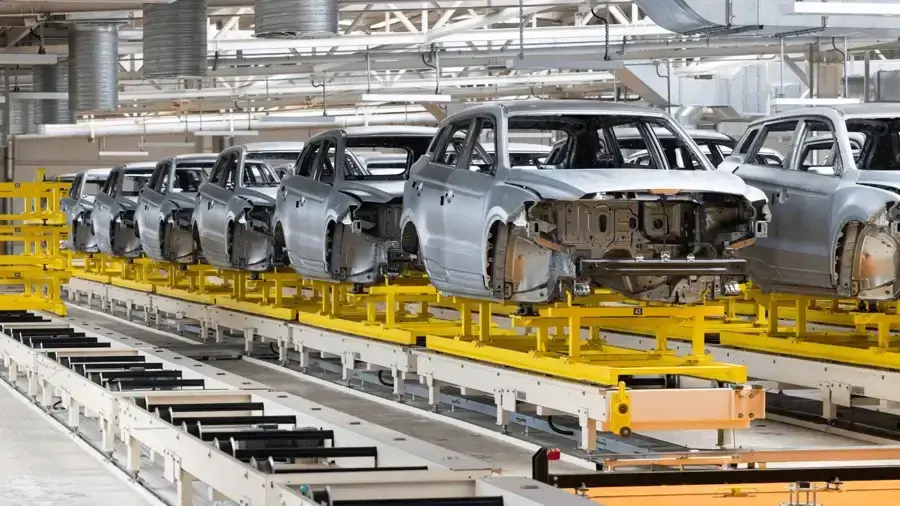
–In the automotive manufacturing industry, welding and final assembly lines typically adopt high-frequency, short-takt modes, with RGV operating frequencies often between 50 and 90 cycles/hour. However, with fixed paths and simple scheduling, pressure can be alleviated through multi-vehicle parallel operation.
–In the new energy lithium battery industry, workstation takt times are extremely tight—some module assembly lines even reach 30 seconds per takt—so RGV frequencies may exceed 80 cycles/hour. However, positioning accuracy requirements are extremely high; once the docking error exceeds ±2 mm, workstation congestion occurs.
–In the steel and metallurgy industry, operating frequencies are typically lower, but single-cycle loads are larger, and impact loads are higher, imposing stricter requirements on equipment structural rigidity.
–Automated warehouse systems represent a classic combination of “high frequency + stability.” The core concern here is not the efficiency of a single RGV but the system-wide scheduling efficiency.
Conduct Multi-Dimensional Assessments of RGV Operating Frequency Based on Actual Enterprise Conditions
Enterprises must evaluate RGV operating frequency across multiple dimensions rather than relying on a single calculation.
It is necessary to break down the production line takt and determine the true output cycle of each workstation, rather than relying solely on design takt. System waiting time must be considered, including scheduling delays, signal response times, and workstation occupancy rates. Additionally, a thermal equilibrium model of the equipment must be introduced to avoid treating short-term peak frequencies as long-term operating standards. In actual projects, it is recommended to adopt a three-tier evaluation model consisting of “peak frequency + steady-state frequency + average load frequency” to accurately reflect the system’s true operating condition.
Note: The project data cited in this document are illustrative examples of typical operating conditions in engineering practice, intended to demonstrate the mechanisms of impact and the trend in RGV operating frequency on the system. All numerical values have been anonymized and do not refer to any specific enterprise, project, or equipment model, and shall not serve as a basis for fault attribution or performance commitment. For specific engineering applications, verification should be conducted in conjunction with on-site measured data.
Insight from AI Robots Eidos about RGV Operating Frequency
—The future RGV operating frequency should not only be viewed as a design parameter but should be defined as the dynamic health fingerprint of the production line. By continuously monitoring the actual operating frequency of the RGV and its fluctuations, implicit failures in the production line can be inferred. For example, small periodic fluctuations in frequency may indicate that the cycle of a specific welding machine is experiencing creep; a sudden drop in frequency may not be an issue with the RGV itself but rather a batch delay in upstream materials.
—Future process planners, when designing workstations, should not first calculate cycle time; instead, they should reference efficient RGV operating frequencies (such as 45-55 instances per hour) and then adjust the number of parallel work fixtures or the sequence of operations so that the workstation demand cycles move towards the efficient operating frequency of the RGV.
Image Credits: Dambach-lagersysteme & Ecsitalia & Addverb & Handling & Cyngn