
Table of Contents
Conductor Bar Powered RGV vs Battery Powered RGV? This is a common technical question faced by many enterprises when selecting a Rail Guided Vehicle (RGV). Depending on the power supply method, RGVs are mainly divided into conductor‑bar‑powered and battery‑powered types. The power supply method not only affects the equipment’s operational stability but also directly impacts the logistics system’s operating efficiency, maintenance costs, and workshop layout flexibility.
By comparing the two, this article helps enterprises better understand their differences and provides some assistance for purchasing Rail Guided Vehicles.
Conductor Bar Powered RGV vs Battery Powered RGV: Definition
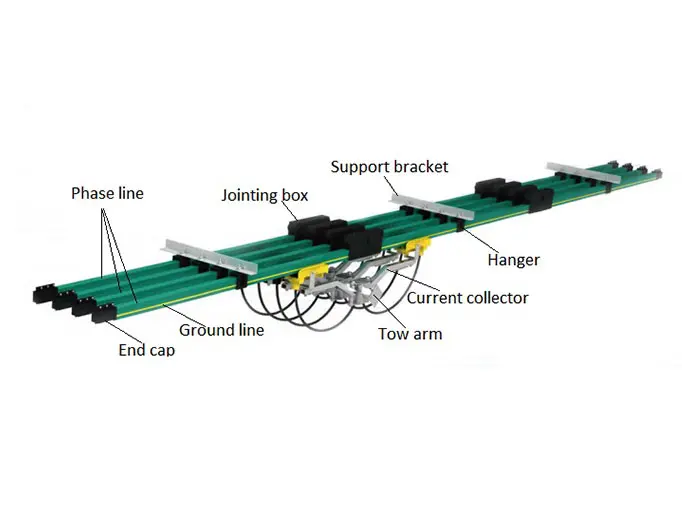
—A Conductor Bar Powered RGV is a rail‑guided vehicle that runs along fixed ground tracks and receives continuous power through a sliding contact line (conductor bar). The conductor bar power supply system typically uses 3‑phase, 5‑wire 220V or 380V AC as the power source, and draws electricity from the sliding rail via a current collector. Conductor‑bar‑powered RGVs feature high travelling speed, high positioning accuracy, large load‑carrying capacity, stable operation, and strong resistance to external environmental interference.
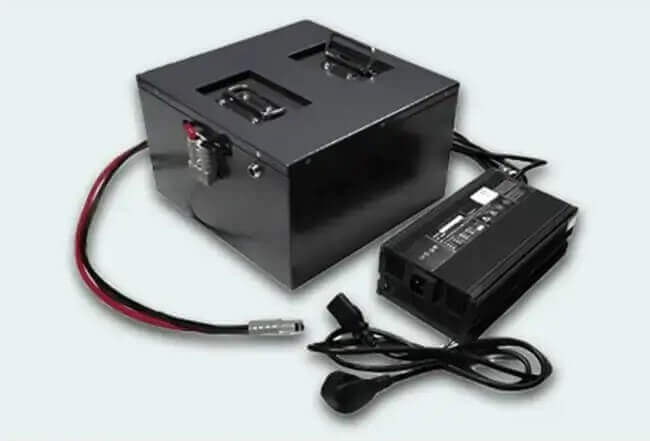
—A Battery Powered RGV is an automated guided rail vehicle that uses rechargeable batteries (e.g., lithium‑ion or lead‑acid) as its power source and runs on fixed tracks. Battery power frees the vehicle from cable constraints on the track, offering greater mobility, no limitation by track power supply distance, and relatively lower requirements for the track area floor. It is suitable for scenarios that require flexible adjustment of working areas or where conductor bars cannot be installed.
Recommended Related Reading from AI Robots Eidos
To avoid misleading readers, AI Robots Eidos points out that this article only conducts a comparative analysis of Rail Guided Vehicles (RGVs) from the perspective of the power supply method. The selection of an RGV also involves many core elements such as vehicle structure, navigation method, control systems, and wheel configuration. If you wish to gain a comprehensive understanding of RGV knowledge, it is recommended to read this article about the overall knowledge of Rail Guided Vehicles, which can help you build a knowledge system for RGVs from a systems perspective.
Conductor Bar Powered RGV vs Battery Powered RGV: Power Supply Principle
Conductor Bar Power Supply Principle
A conductor bar power supply works by installing conductive sliding contact lines along one side of the track. The RGV body continuously draws electricity from the contact line through a current collector.
Working logic:
Factory power supply→ Conductor bar rail→ RGV current collector→ Control system and drive motor
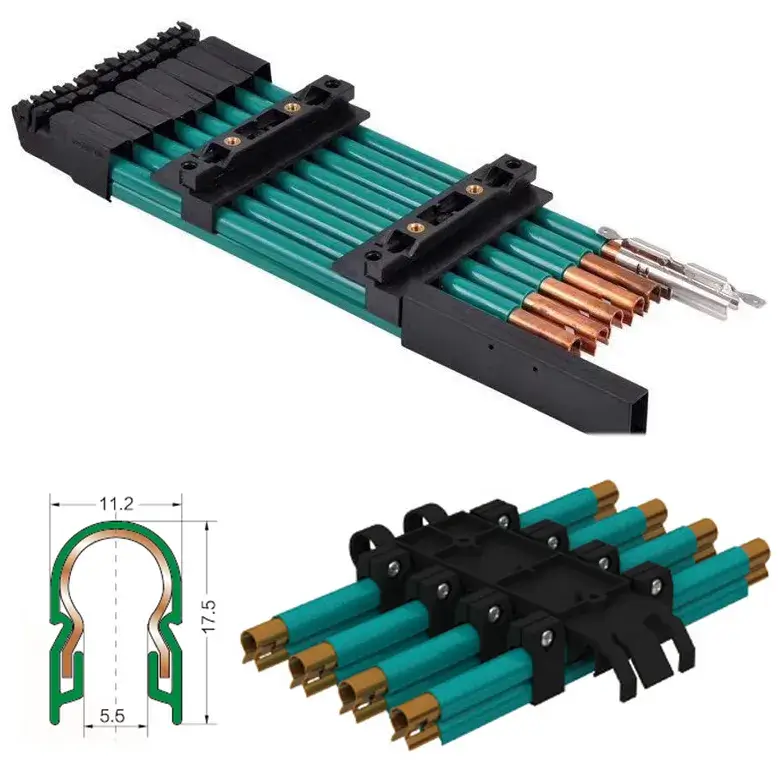
Advantage: It enables a continuous power supply, with no need to stop for recharging during operation, making it suitable for logistics systems that require long‑duration, continuous operation.
Battery Power Supply Principle
A battery‑powered RGV is equipped with an industrial‑grade lithium battery pack housed within the vehicle body, along with a Battery Management System (BMS) for power monitoring and charge control.
Typical operation flow:
Battery energy storage→ Battery Management System (BMS)→ Drive controller→ Drive motor
Features: When the battery level drops to a preset threshold, the RGV can automatically travel to a charging station for recharging. Some systems also support automatic fast‑charging or battery‑swap systems.
Conductor Bar Powered RGV vs Battery Powered RGV: Performance Comparison
| Conductor Bar Power | Lithium Battery Power | |
| Rated load capacity | > 30 tons | 1–10 tons |
| Maximum speed | 2.0 m/s | 1.5 m/s |
| Maintenance requirements | Conductor bars require periodic cleaning | Batteries need replacement every 3–5 years |
| Layout flexibility | Fixed route | More suitable for flexible production |
| Initial investment | Slightly higher (requires installation of conductor bars) | Higher equipment cost |
Conductor Bar Powered RGV vs Battery Powered RGV: Cost Analysis
Initial Investment
–Battery powered RGV: The vehicle body cost is roughly comparable to that of a conductor‑bar RGV, but it additionally requires a power battery pack (lead‑acid or lithium), increasing the cost by about 15‑25%. Charging piles or stations add another 5‑10%. The advantage is that no conductor‑bar power supply system is needed, saving costs for the conductor bars, collectors, power cabinets, etc., along the track. In short‑distance, simple‑layout scenarios, the initial investment for battery‑powered RGVs may be slightly lower.
–Conductor bar powered RGV: The vehicle body cost is similar to the battery‑powered type, but conductor bars, collectors, power cabinets, etc., must be installed along the track, increasing costs by about 20‑30%. The advantage is that the vehicle itself does not need batteries and charging facilities, saving those costs. In long‑distance, complex‑layout scenarios, the track power system cost may be spread out and become more advantageous. However, in short‑distance scenarios, the fixed investment for the track power system may be less economical.
Operating Costs
–Battery power RGV: Electricity costs are low, but battery replacement is a long‑term burden. Electricity costs for battery‑powered RGVs, based on industrial electricity rates, are relatively low. However, batteries have a finite charge‑discharge cycle life and need periodic replacement. Lead‑acid batteries have a cycle life of about 500‑800 cycles, requiring replacement every 2‑3 years; lithium batteries offer about 2000‑3000 cycles, lasting 5‑8 years. In addition, charging downtime affects equipment utilisation, and energy conversion efficiency is about 85‑90%. For high‑frequency, continuous operation, charging downtime can significantly reduce production efficiency.
–Conductor bar power RGV: Conductor‑bar RGVs draw power directly, with electricity costs comparable to battery‑powered types. Their greatest advantage is no battery replacement cost and high equipment utilisation. Power supply efficiency is over 95%, with low energy conversion losses. However, mechanical wear exists between the collector and the conductor bar, requiring periodic replacement of conductor bar sections and carbon brushes. For high‑frequency, continuous operation, conductor‑bar RGVs have a clear operating cost advantage; for low‑frequency, intermittent operation, the advantage is less evident.
Maintenance Costs
–Battery powered RGV:
Lead‑acid batteries: regular water topping, terminal cleaning, and specific gravity checks.
Lithium batteries: BMS monitoring, relatively simple maintenance.
Charging facilities: regular inspection and maintenance of charging piles.
–Conductor‑bar‑powered RGV:
Conductor bars: regular wear inspection, cleaning of oxide layers and dust, and replacement of worn sections.
Collector: checking carbon brush wear, adjusting contact pressure, replacing brushes.
Power cabinet: regular inspection of electrical components.
Maintenance costs for battery‑powered RGVs mainly centre on batteries and charging facilities. Lead‑acid batteries require more labour‑intensive maintenance, while lithium batteries are simpler but depend on BMS monitoring and require higher technical skills from maintenance personnel.
For conductor‑bar RGVs, maintenance focuses on the conductor bars and collectors. Overall, the maintenance costs of the two power supply methods are comparable, but the specific tasks and technical requirements differ.
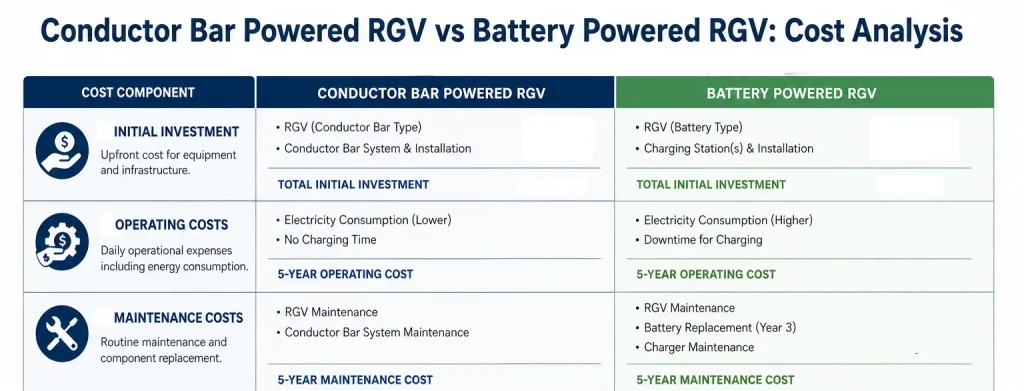
Five‑Year Total Cost of Ownership (estimated for 10 RGVs over 5 years):
–Battery powered RGV (lead‑acid): initial investment $138,900 + battery replacement $41,700 + electricity $34,700 + maintenance $20,800 + downtime loss $13,900 = $250,000
–Battery powered RGV (lithium): initial investment $152,800 + battery replacement $13,900 + electricity $34,700 + maintenance $16,700 + downtime loss $11,100 = $229,200
–Conductor bar powered RGV: initial investment $145,800 + conductor bar replacement $20,800 + electricity $31,900 + maintenance $25,000 + downtime loss $4,200 = $227,700
Note: The above figures are estimates; actual costs vary depending on working conditions, brand, region, etc.
From a five‑year total cost perspective, conductor‑bar RGV and lithium‑battery RGV are economically close, while lead‑acid battery RGVs have higher total costs due to frequent battery replacement. However, it should be noted that these estimates are based on specific hypothetical operating conditions. Actual costs will vary significantly with operating frequency, path length, environmental conditions, etc. For instance, in high‑frequency, continuous operation, the downtime loss of conductor‑bar RGVs is much lower than that of battery‑powered ones, making the cost advantage more pronounced. In low‑frequency, intermittent scenarios, the charging downtime of battery RGVs is not significant, and the value of flexibility may outweigh the cost difference.
Conductor Bar Powered RGV vs Battery Powered RGV: Selection Guidelines
–Scenarios where battery‑powered RGV should be given priority consideration:
The operating path is complex, with branches and intersections. The travel path needs to be changed frequently. High cleanliness or explosion‑proof requirements. Short‑distance, intermittent operation; plans for path adjustments.
–Scenarios where conductor‑bar‑powered RGV should be given priority consideration:
Long‑distance, straight or simple paths; High‑frequency, continuous operation; Heavy‑load and high‑speed requirements; Extremely high equipment utilisation demands; Fixed paths with few changes.
–Hybrid solution scenarios:
Use conductor‑bar RGVs on the main line to ensure efficiency, and battery‑powered RGVs on branch lines or flexible zones to ensure flexibility.
During the planning phase of an automated logistics system, the power supply scheme should be evaluated based on the following factors:
| Scenario | Power Supply Method |
| Long‑distance continuous transport | Conductor bar power |
| Heavy‑load transport | Conductor bar power |
| Frequent production line adjustments | Lithium battery power |
| Multi‑station flexible production | Lithium battery power |
| High‑takt logistics system | Conductor bar power |
Insight from AI Robots Eidos about Conductor Bar Powered RGV vs Battery Powered RGV
—The future RGV power supply system will no longer be an either-or choice; instead, it will evolve into a “dynamic hybrid architecture.” Vehicles can be equipped with small battery packs as buffers, allowing them to travel at high speeds on main roads with installed conductor rails while simultaneously charging. When entering branch lines or flexible areas without conductor rails, they will automatically switch to battery power mode. This “charge-and-use” approach will thoroughly integrate the advantages of both solutions, maximizing efficiency and flexibility.
—To address the high uncertainty in future production, the RGV power supply system will develop towards standardization and modularization. Both conductor rail tracks and battery packs will become standardized interface modules. Companies can quickly adjust track layouts like building blocks or swap out battery packs of different capacities based on their production plans for the month, achieving high flexibility in logistics systems.
—In the future, especially in heavy RGVs, energy recovery systems will be commonly equipped. During deceleration or downhill movement, the drive motors will turn into generators to recharge the batteries or feed back into the grid. This is significant for logistics scenarios that involve frequent starts and stops, as it can significantly enhance energy utilization efficiency.
Image Credits: Kinocranes & Komayglobal & Manlybatteries & AI & Leadortech