The New Atlas Robot Takes a Major Step Towards Commercialization
Table of Contents
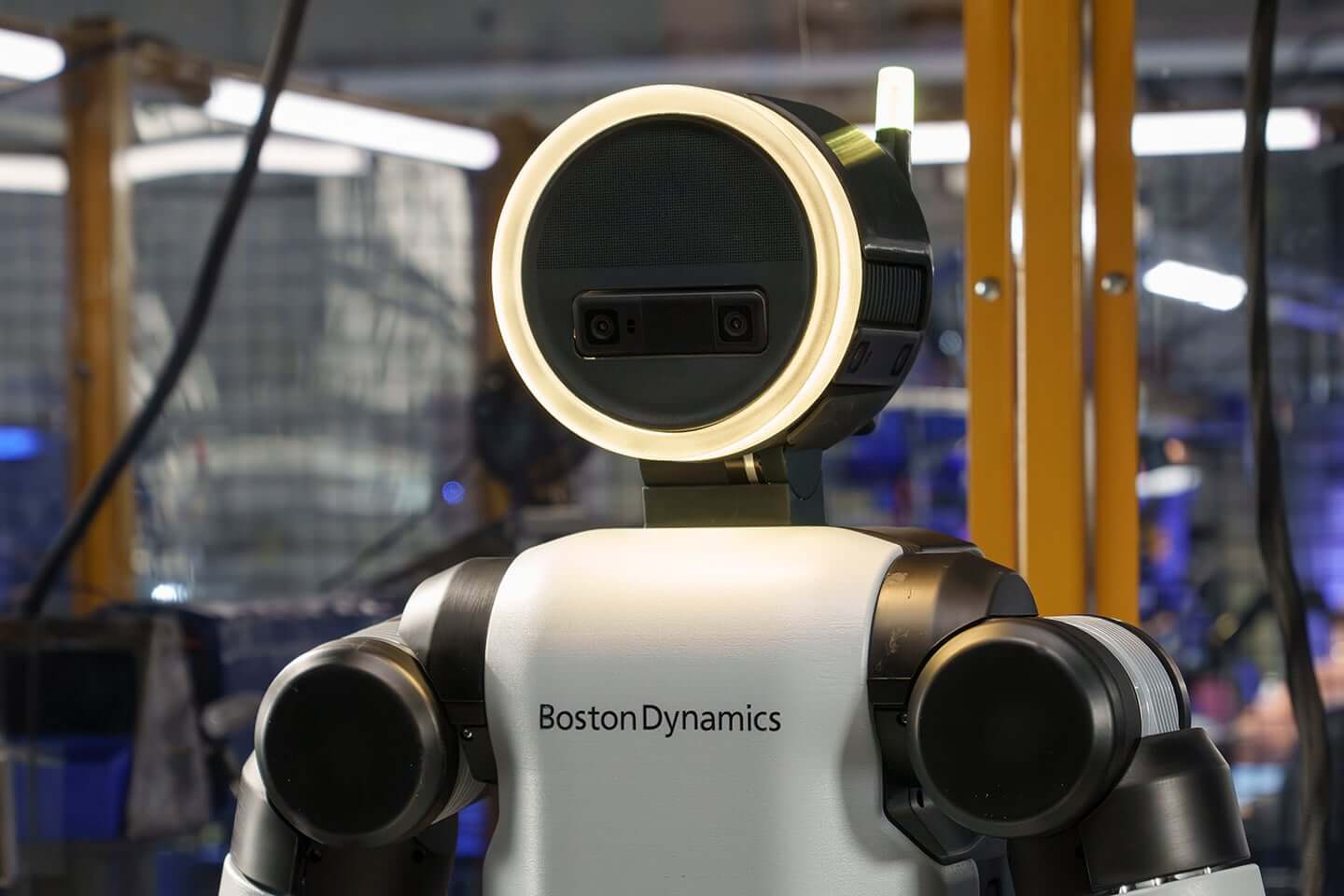
After a demonstration of the new Atlas robot in an industrial setting, Boston Dynamics CEO Robert Playter confidently stated beside it: “We believe this is the finest robot we have ever built.”
Why Would A Factory With Numerous Automated Devices Still Need The New Atlas Robot?
| Flexible Task Execution: The multi-degree-of-freedom joints and dexterous hand design of humanoid robots enable them to mimic complex human actions such as grasping, Handling, assembly, and tool operation. With 56 degrees of freedom and flexible finger joints capable of precise force control, Atlas can adapt to objects of different shapes, sizes, and weights, performing delicate manipulation tasks. This flexibility allows for rapid switching between different processes, effectively meeting the diverse needs of factory production. This offers advantages over existing mature, specialized automation equipment (like robotic arms, AGVs).
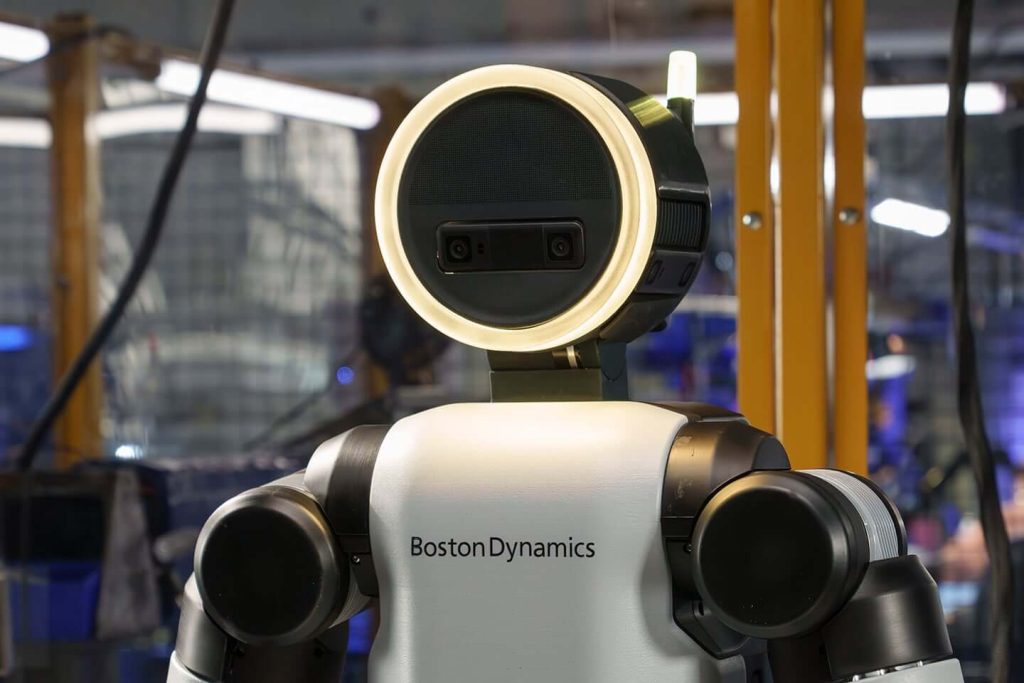
| Adaptation to Existing Factory Environments: Factory production processes, equipment layouts, and workspaces are typically designed around the physical dimensions and range of motion of human workers. The new Atlas humanoid robot, with its human-like height, limb structure, and joint range of motion, can directly adapt to existing factory facilities without requiring large-scale modifications to production lines.
Recommended Related Reading from AI Robots Eidos
To avoid misunderstandings regarding the shapes of the robots, AI Robots Eidos provides the following explanation.
Whether embodied intelligence should be humanoid depends on factors such as tasks, environments, interaction objectives, and cost-effectiveness. In many practical applications, non-humanoid designs may be simpler, more reliable, more economical, and better tailored to meet needs.
If you are interested in this topic, please read the article below.
Technical Specifications of the New Atlas Robot
| The new Atlas stands at a height close to that of an adult male—1.9 meters—with a working radius of up to 2.3 meters, enabling it to operate within physical spaces similar to those used by humans.
| The robot is equipped with 56 degrees of freedom from omnidirectional rotational joints throughout its body. This allows it to perform movements like standing up using reverse-joint articulation. In a factory setting, this is intended to shorten path planning and effectively improve execution efficiency.
| The new Atlas robot can lift objects weighing up to 110 pounds and extend its arms to a reach of 7.5 feet.
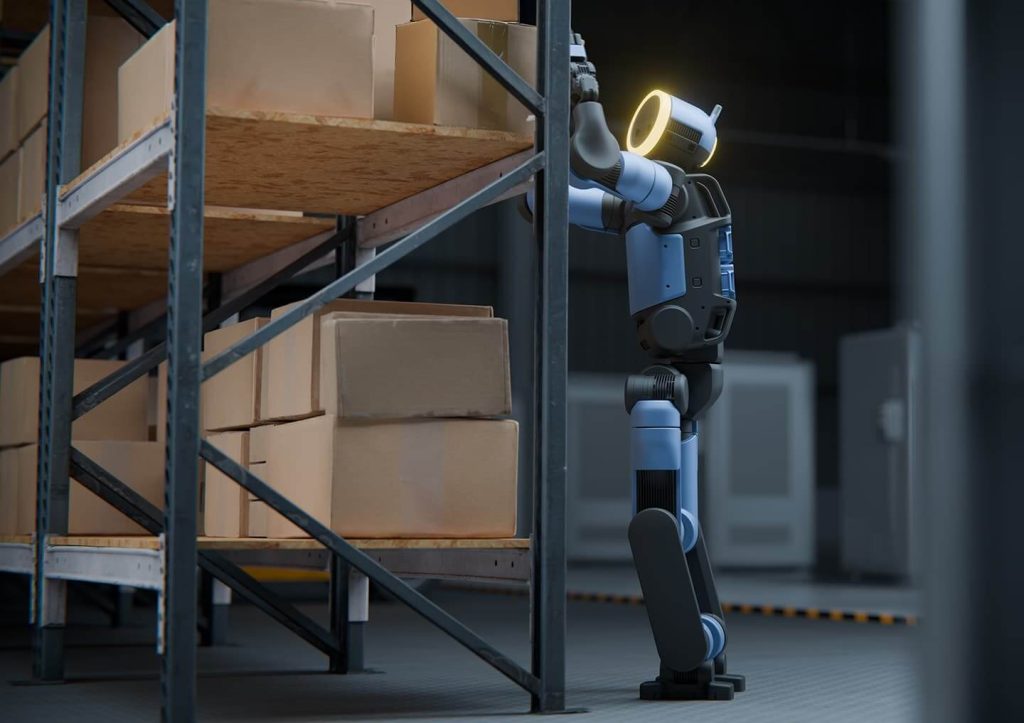
| It is outfitted with hands that have human-like dimensions and tactile sensing capabilities, enabling fine grasping and manipulation tasks.
| The new Atlas robot is fully waterproof and can operate in temperatures as low as -4°F (-20°C) and as high as 104°F (40°C).
The Practicality of the New Atlas Robot
Unlike previous versions, the new Atlas has a more refined appearance, with a design that reduces exposed wiring, significantly enhancing its durability and adaptability in industrial environments. Its debut also marks the robot’s official transition from a laboratory prototype to a “production-ready” product.
| The new Atlas robot boasts an IP67 protection rating, allowing it to withstand harsh industrial environments like automotive manufacturing, resisting splashes and even brief immersion.
| It can operate stably within an extreme temperature range of -20°C to 40°C. This wide temperature adaptability enables it to work in various scenarios, from cold storage areas to high-temperature welding workshops, without the need for expensive environmental modifications.
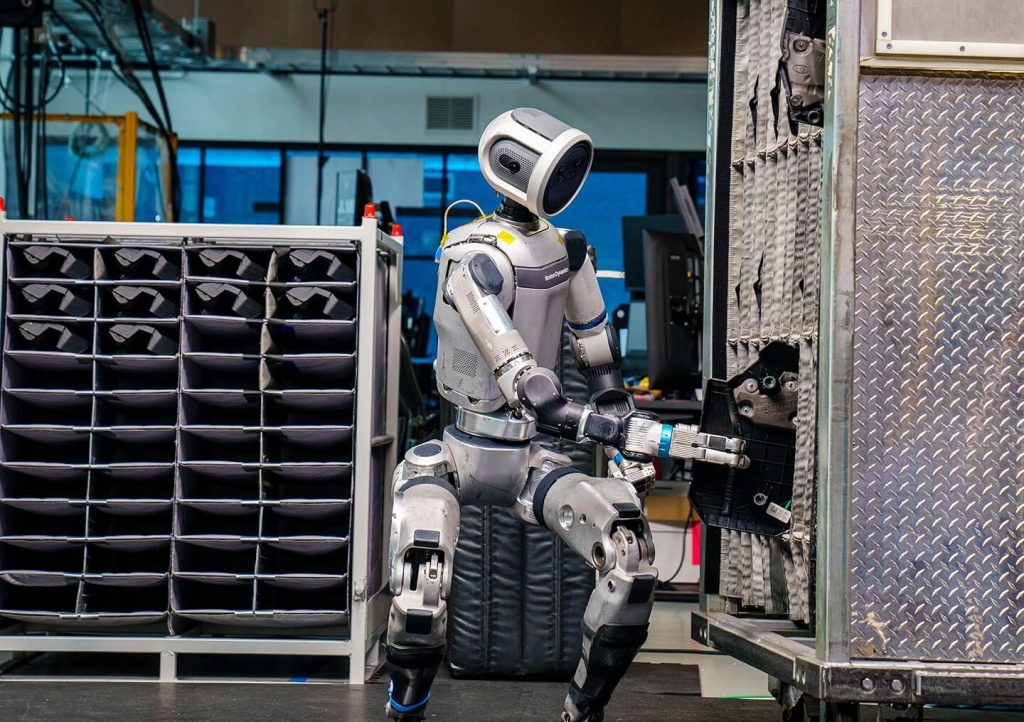
| The new Atlas robot can quickly learn new tasks and immediately share this knowledge with other Atlas robots.
| The Atlas robot’s battery pack can last for up to four hours of continuous use. When the battery begins to deplete, the Atlas robot can autonomously return to a charging station and replace its battery pack.
| The head of the new Atlas robot is deliberately designed to look different from a human head. This is to clearly signal to workers that it is a collaborative tool, not a person, fully considering workers’ psychological safety while also meeting practical engineering needs.
Core Value of the New Atlas Robot
| Its ability to truly integrate into existing factories. The robot can operate in three modes: fully autonomous, remote-controlled via a VR headset, or guided using a tablet computer, facilitating human operation.
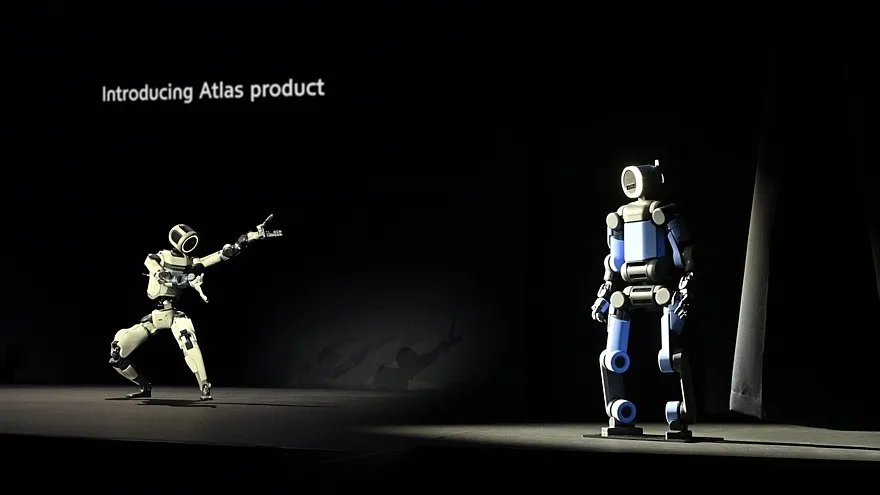
| The new Atlas can connect directly with a company’s existing Manufacturing Execution Systems (MES) and Warehouse Management Systems (WMS) through Boston Dynamics’ Orbit™ software platform, achieving deep integration with the factory’s digital ecosystem.
| Regarding safety, Atlas is equipped with a 360-degree panoramic camera, allowing it to see if anyone is approaching without turning its head. It also features personnel detection systems and fenceless safeguarding technology. When it detects someone entering its working radius, it will automatically pause and resume work after the person leaves.
“Network-wide Synchronization” technology means that once a single Atlas robot learns a new task, that skill can be instantly replicated across the entire robot fleet.
Boston Dynamics believes most customers will achieve a return on investment (ROI) within the first two years of adopting the new Atlas. This is based not only on the robot hardware itself but also on the global deployment experience accumulated from thousands of Spot and Stretch robots, along with a complete software, service, and training support system. However, as the price and leasing fees for the new Atlas have not yet been announced, the ROI claims remain subject to market validation.
Applications of the New Atlas Robot
Boston Dynamics has initiated production of the new Atlas robots at its Boston headquarters. According to official sources, the entire production schedule for 2026 has already been fully booked by customers.
The first fleet of robots is planned to be delivered to two core customers in the coming months: Hyundai Motor’s Robotics Meta-Factory Application Center and Google DeepMind. The company plans to add more customers in early 2027.
| Hyundai Motor: In the initial phase, Hyundai Motor and Boston Dynamics will train and test the Atlas robots for specific production tasks. Subsequently, the first robots will be deployed at the HMGMA factory in Georgia to perform basic operations such as fetching/delivering items and parts sorting. After several years of integration, the robots are planned to learn complex operations on assembly lines, including component assembly, repetitive actions, and heavy load handling. Hyundai Motor hopes that deploying the new Atlas robots will enhance automation levels, optimize costs, and thereby achieve structural improvement in its own profits.
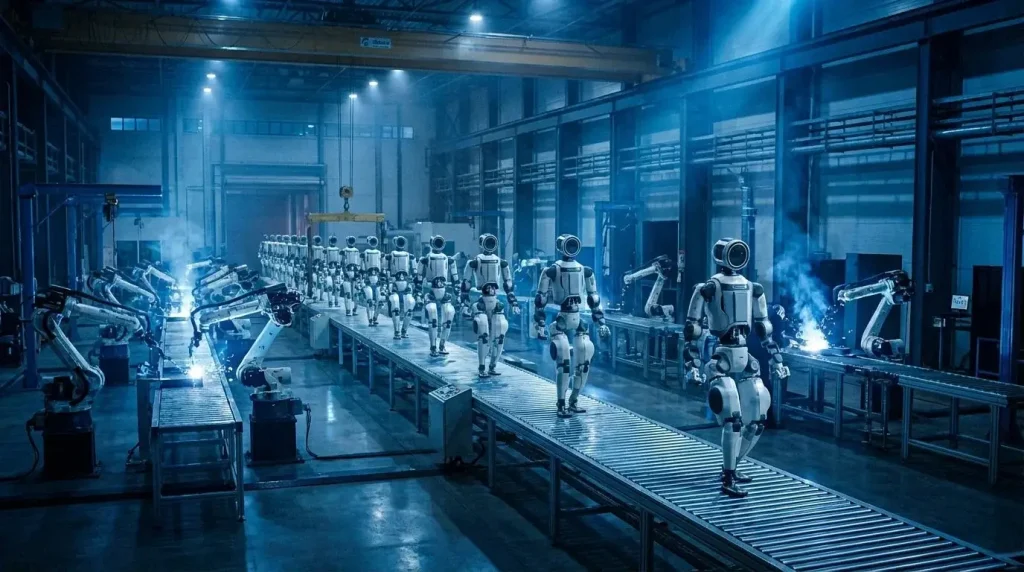
| Google DeepMind: Boston Dynamics and Google DeepMind announced a new partnership aimed at integrating Google’s cutting-edge foundation models into Atlas to endow the robot with stronger cognitive capabilities. This collaboration marks a stage where humanoid robots are transitioning from “pre-set instructions” to “autonomous reasoning.” The Gemini model will grant the robot multimodal perception abilities, enabling it to understand natural language instructions, recognize complex tool usage, and perform rapid task transfer by observing human actions.
| OEM: In addition, the new Atlas robot will also target the OEM market, supplying robots to external customers and providing subsequent training, technical support, and regular software update services.
Challenges in Deploying the New Atlas Robot
| Data Security and System Risk: How to protect the core factory process data collected by the robots? Furthermore, if the network-wide synchronization technology is attacked or malfunctions, it could lead to fleet-wide failures. How will such issues be handled? These are matters of great concern to industrial customers.
| Cost: According to analyses by McKinsey and Goldman Sachs, the mass production cost of humanoid robots remains high. Although some R&D teams have managed to lower prices to below $20,000, this has come at the expense of some industrial safety and load capacity.
Insight from AI Eidos Robots
| Robotics-as-a-Service” (RaaS) Model May Become Mainstream: Boston Dynamics not only sells robots but also provides training, support, and software updates. In the future, companies may prefer subscription or leasing models for using robots, lowering initial investment and continuously receiving upgrade services.
| The “Cost-Capability-Safety” Trilemma is the Core Contradiction of Industrialization: While some teams have reduced costs to below $20,000, they sacrificed safety and load capacity. This reveals the fundamental trade-off triangle in humanoid robot industrialization. Boston Dynamics has chosen a high-safety, high-capability route, meaning its initial costs are inevitably high. The future competition in the industry will be about who can first break through this triangle and find the optimal solution.
Image Credits: Boston Dynamics & Web & Whatthenstudio