
Table of Contents
Rail guided vehicles in low-temperature environments require targeted design and optimization in multiple aspects such as materials, electrical systems, and batteries, thereby promoting their application in scenarios like cold chain logistics and automated low-temperature warehousing.
Definition of Rail Guided Vehicles
Rail Guided Vehicles (RGVs), also known as “track-guided vehicles” or “rail-guided shuttles,” are commonly used in various automated warehouses. The shuttle aisles can be designed to any length as needed. When handling and moving goods, no other equipment needs to enter the roadway. RGVs offer high speed and safety, effectively improving the operational efficiency of warehouse systems.
Recommended In-depth Reading from AI Robots Eidos
This article, AI Robots Eidos, focuses on the challenges and solutions of low-temperature environments for Rail Guided Vehicles (RGV). Before reading this article, if you are not familiar with this type of rail-guided vehicle, such as its common types and operating methods, it is recommended to first read this introductory article on Rail Guided Vehicles, and then proceed to the one on Rail Guided Vehicles in low-temperature environments.
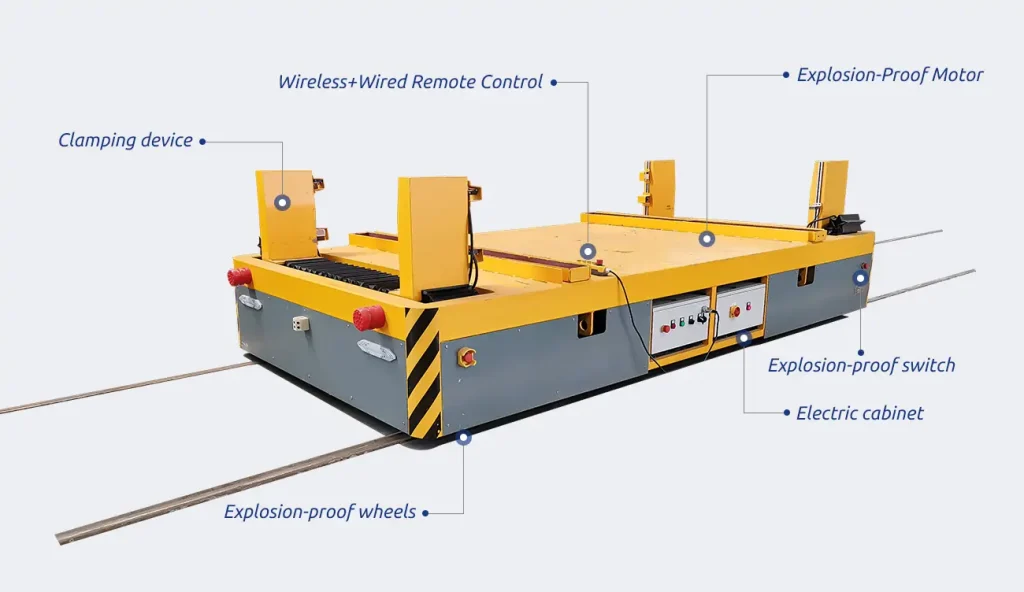
Because RGVs run on rails, their application scenarios are relatively straightforward. Common classification methods include: by function, they can be divided into assembly RGVs and transport RGVs, mainly used for material conveying and workshop assembly; by motion mode, they can be divided into loop-track type and linear reciprocating type. Loop-track RGV systems are highly efficient and allow multiple vehicles to operate simultaneously. Linear reciprocating systems generally use a single RGV moving back and forth along a straight line, making them less efficient than loop-track systems.
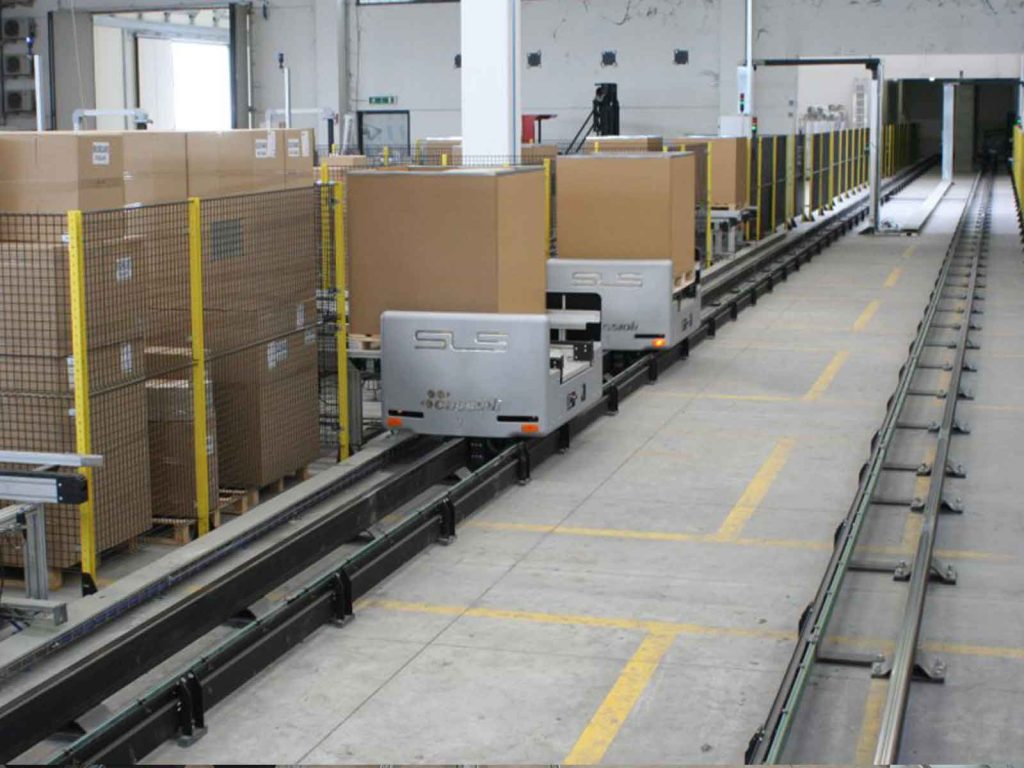
With the upgrade of cold chain logistics systems, rail guided vehicles also face certain challenges in low-temperature environments.
Effects of Low-Temperature Environments on Rail Guided Vehicles
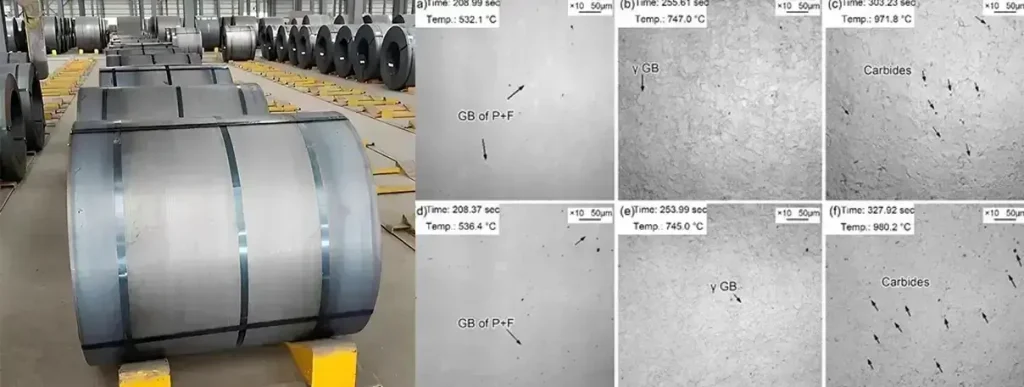
–Mechanical structure: Steel exhibits reduced toughness and increased brittleness at low temperatures, potentially leading to cracks. Conventional lubricating greases become more viscous or even solidify at low temperatures, causing increased wear on transmission components. Rubber seals accelerate hardening and embrittlement at low temperatures, compromising sealing performance. Temperature changes may also alter the clearance between the rail and the vehicle body. In low-temperature environments, the mechanical aspect is the primary issue that needs to be addressed.
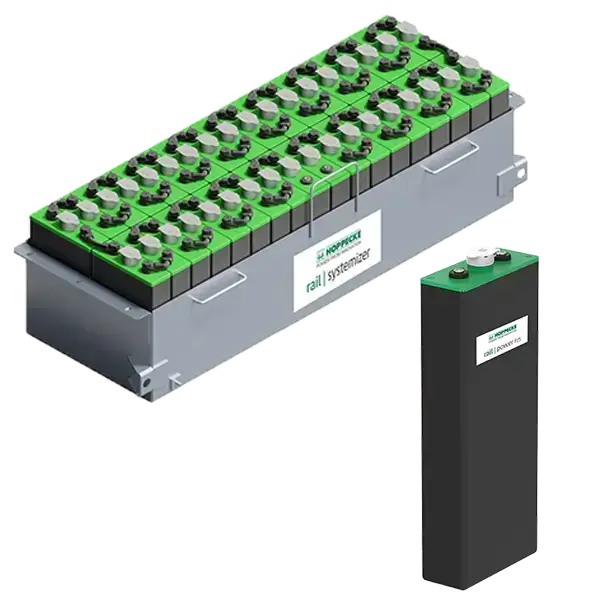
–Battery performance: At -20°C, the capacity of lead-acid batteries drops by approximately 50% – here referring to traditional flooded lead-acid batteries or ordinary valve-regulated sealed lead-acid batteries. Lithium batteries drop by about 20-30%, referring to ternary lithium batteries. At low temperatures, battery internal resistance increases and charge acceptance decreases. High-current discharge can cause sudden voltage drops, potentially triggering equipment protective shutdown. Prolonged charging and discharging in low-temperature environments also accelerates battery aging. For battery-powered RGVs, low temperature poses a dual challenge to range and service life.
–Electrical system: Ordinary cables become stiff and brittle at low temperatures, making them prone to cracking. Electromagnetic mechanisms operate sluggishly, leading to poor contact. Photoelectric sensors, encoders, etc., may produce false signals at low temperatures. Control components such as PLCs and variable frequency drives operate unstably at low temperatures. Reduced reliability of the electrical system is a major reason for increased RGV failure rates in low-temperature environments.
Solutions for Rail Guided Vehicles to Cope with Low-Temperature Environments
Low-Temperature Adaptive Design
–Mechanical structure optimization:
Use low-temperature-resistant steel for the vehicle body (e.g., Q345D, Q355NE, etc.). The gearbox can use 20CrMnTi carburized steel (hardness HRC58-62). If necessary, critical components and the vehicle body need to undergo low-temperature impact test verification. Cover the vehicle body with an aerogel insulation layer (thermal conductivity ≤0.023 W/m·K) combined with an electric heating defrosting device to eliminate surface icing.
–Lubrication system: Use low-temperature grease (remains fluid at -40°C). For critical bearings, use solid lubrication or self-lubricating materials.
–Sealing design: Use low-temperature-resistant fluororubber seals (-40°C to -60°C). Adopt double-seal structures at critical locations.
–Rail design: Coat rail wheels with polyurethane (Shore hardness 85A±3) for impact resistance and anti-slip performance. Reserve clearance in the rail for thermal expansion/contraction, and use low-temperature-resistant rail materials and connection methods.
Key Points for Electrical System Protection
–Cable selection: Use low-temperature-resistant cables (silicone rubber or fluoroplastic insulation). Leave expansion allowance during cable laying.
–Control cabinet protection: Use a sealed and insulated structure for the control cabinet. Equip the cabinet with heating devices (e.g., heating tapes, heating plates). Install temperature monitoring to automatically activate heating when below a set value.
–Component selection: Select industrial-grade wide-temperature components (-40°C to +70°C). For critical sensors, use low-temperature-resistant models.
–Circuit protection: Apply conformal coating to PCBs (moisture-proof, mold-proof, salt-spray-proof). Use connectors with gold plating thickness ≥1.27 μm.
Battery System
–Battery selection: Prioritize lithium iron phosphate batteries with good low-temperature performance, or use low-temperature lead-acid batteries (with electrolyte additives).
–Battery thermal insulation: Adopt an insulated design for the battery box. Equip with a battery heating system (PTC heating or liquid heating). Preheat the battery to a suitable temperature before charging.
–Charging strategy optimization: Use low-current charging in low-temperature environments. Implement a temperature-compensated charging curve. Set up a heated charging room in the charging area.
Optimizing System Operation
–Operation management: RGV operation in low-temperature environments requires establishing a preheating mechanism and an environmental monitoring system. Critical components should be preheated before equipment startup. Maintain a minimum operating temperature during standby to avoid abrupt temperature drops from prolonged shutdowns. Task scheduling should arrange reasonable intervals to keep equipment running and reduce the frequency of cold starts. Multi-point temperature monitoring should cover key areas such as the vehicle body, control cabinet, and battery box, with real-time temperature data uploaded to the monitoring system. Issue early warnings for temperature anomalies and activate automatic protective shutdown when limits are exceeded.
–Maintenance: Regularly inspect the clearance between guide wheels and rails, the condition of seals, lubricating grease/oil, and cable sheaths. Replace aged components promptly (low temperatures may accelerate wheel wear; ensure wear does not exceed 15% of the original thickness). Stock critical spare parts in advance.
Exploring the Practical Significance of Rail Guided Vehicles Coping with Low-Temperature Environments
With the automated upgrade of cold chain logistics, there is essentially a new demand for the reliability of rail guided vehicles in low-temperature environments.
Properly handling the stable operation of rail guided vehicles in low-temperature environments can avoid large temperature fluctuations in the cold chain system while improving handling efficiency and safety. For example, in a multi-temperature zone cold storage, RGVs can accurately transport goods to storage locations in the corresponding temperature zone based on the temperature requirements of the goods. In the sorting area of a cold chain logistics center, RGVs can work with the sorting system to classify and transport cold chain goods from different sources by destination or temperature zone, enabling rapid sorting and distribution.
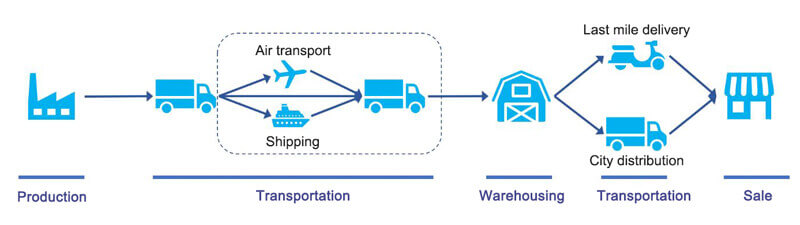
The operation and maintenance strategy for low-temperature RGVs differs significantly from that for room-temperature equipment. Shortening maintenance cycles, strengthening preventive maintenance, and stocking critical spare parts are necessary measures to ensure long-term stable operation. Through the coordinated integration of technology, management, and maintenance, rail guided vehicles can play a greater role in cold chain logistics systems.
Relationship Between Low-Temperature Grades and Selection of Rail Guided Vehicles
When selecting rail guided vehicles, enterprises should fully evaluate factors such as the temperature grade of the operating environment and reliability requirements to choose RGVs that suit their own needs.
Different temperature grades correspond to different types of rail guided vehicles
-18°C to -25°C (conventional cold storage): Standard low-temperature RGVs. Conventional low-temperature adaptive design is sufficient.
-25°C to -40°C (deep-freeze cold storage): Deep-freeze RGVs. Requires special material selection and enhanced insulation and heating design.
Below -40°C (ultra-low temperature): Customized solutions. Requires comprehensive redesign and validation.
Different temperature grades correspond to different RGV power supply methods
Sliding contact line (conductor rail) power supply: Suitable for fixed paths; no battery low-temperature issues, but icing on the contact line must be considered.
Battery power supply: Suitable for flexible paths; low-temperature battery performance issues must be addressed.
Hybrid power supply: Mainline sliding contact + branch battery; balances efficiency and flexibility.
| Power Supply Method | Advantages | Disadvantages |
| Battery power supply | Low requirements for track laying; unlimited travel distance. | Not suitable for frequent use; batteries require regular charging and maintenance. |
| Sliding contact line (conductor rail) power supply | Low environmental requirements; long service life; unlimited travel distance; multiple vehicles can share the same track. | Installation of the sliding contact line must consider more safety factors. |
| Hybrid power supply | Combines continuous power supply with flexibility; reduces battery consumption; adapts to complex scenarios. | High system complexity; high installation requirements for the sliding contact line; complex battery management. |
Insight from AI Robots Eidos about Rail Guided Vehicles in Low-Temperature Environments
–Phase change material thermal battery: A thermal battery is made using high-latent-heat phase change materials (e.g., paraffin/expanded graphite composite phase change material with a phase change point designed between -10°C and 0°C). During RGV standby or charging, off-peak electricity or waste heat is used to store thermal energy. During operation, the stored heat is released to maintain the temperature of the battery box and control cabinet. Compared with continuous electric heating, this method is more energy-efficient and avoids local overheating.
–Adaptive rail with shape memory alloy: Shape-memory alloy or carbon-fiber heating wires are embedded in the rail, working with temperature sensors to form a closed-loop control system. When a section of the rail experiences a sudden temperature drop that causes contraction, deformation, or icing, the system automatically heats to a preset deformation-compensation point, maintaining the optimal clearance between the rail and the wheels. Combined with a superhydrophobic coating, this enables “on-demand ice melting.”
–Carbon nanotube supercapacitors: Carbon nanotube supercapacitors can retain over 90% of their capacity at -70°C and have a charge-discharge cycle life exceeding 100,000 cycles. If their energy density can be further improved in the future (targeting 50% of that of lithium batteries), they could become an ideal energy storage unit for low-temperature RGVs, eliminating the low-temperature battery pain point while reducing charging time to the order of seconds.
Image Credits: Cassioli & Hoppecke & Krobosteel & Mdpi & Renkeer & Rmktransfercart
Other Articles about Rail Guided Vehicles
Level B (Intermediate)