
Table of Contents
DISCLAIMER:
This document is provided for informational and training purposes only. All technical data, parameters, and troubleshooting steps are based on typical Rail Guided Vehicle (RGV) configurations and industry practices as of the date of publication. Actual equipment may vary.
Not a substitute for official manuals – Always refer to the original manufacturer’s operation and maintenance manuals.
Qualified personnel only – Fault diagnosis and repair must be performed by trained and authorized technicians.
User responsibility – The user assumes all risks and liabilities arising from the use of this document. The author and the publisher shall not be held liable for any damage, injury, or loss resulting from following or misinterpreting the information herein.
Verify parameters – Critical values (e.g., current, voltage, dimensions) should be verified against on‑site equipment and supplier specifications.
Safety first – Always comply with the “Precautions for the Troubleshooting of Rail Guided Vehicle Faults” section before any maintenance activity.
For the latest updates or specific equipment support, please contact the equipment manufacturer.
Rail Guided Vehicle Faults – their timely troubleshooting is a critical link in ensuring production safety, improving equipment reliability, enhancing operational efficiency and accuracy, avoiding production interruptions, ensuring that production plans are completed on time, and reducing economic losses.
During long-term operation, Rail Guided Vehicle equipment may experience various faults due to multiple factors, affecting production continuity. Timely resolution of Rail Guided Vehicle faults is therefore very important. Based on industry experience and technical data, we have summarized common fault types and troubleshooting methods for RGVs, helping maintenance personnel quickly identify issues and implement effective solutions.
Rail Guided Vehicle Definition
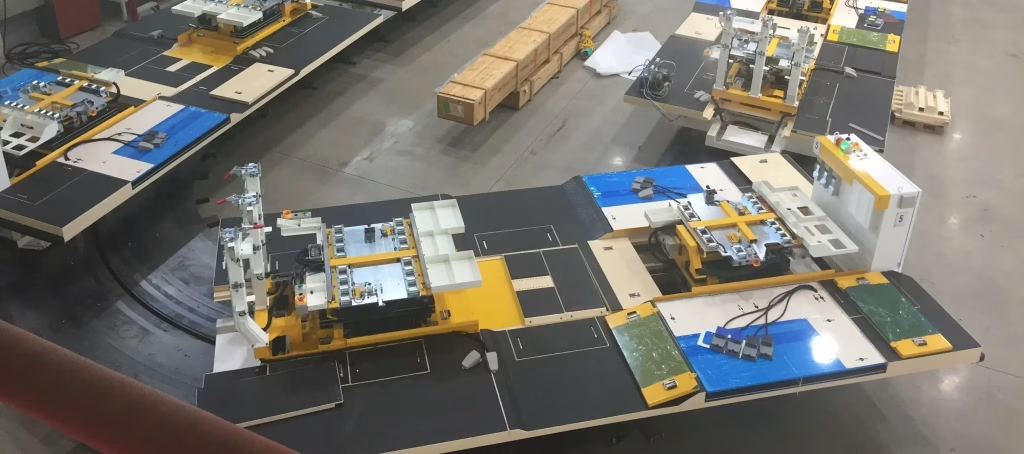
RGV, full name Rail Guided Vehicle, is an automated handling device that runs on fixed tracks. The vehicle can usually be designed according to needs, and when handling or moving goods, no other equipment needs to enter the aisle. It offers high speed and high safety, and effectively improves operational efficiency and accuracy. It has been widely used in manufacturing, warehousing, and logistics centers.
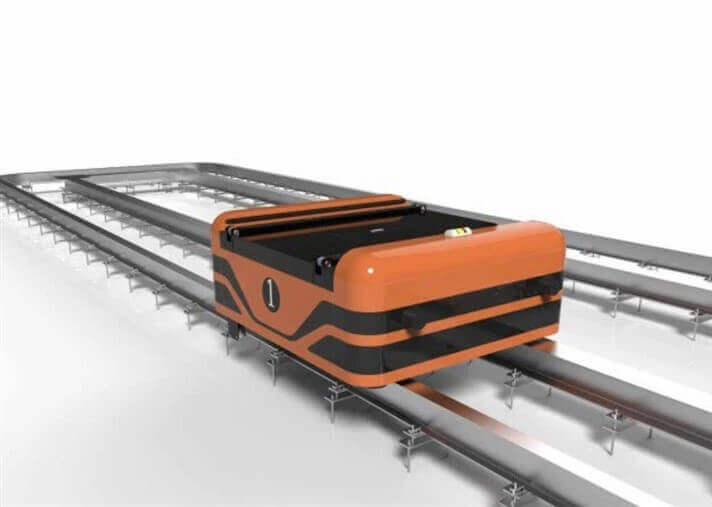
Recommended In-depth Reading from AI Robots Eidos
The Rail Guided Vehicle consists of several components, including the body, drive system, positioning mechanism, power supply system, and control system, which are all interrelated. A thorough understanding of its structure and principles helps maintenance personnel quickly identify RGV faults. For example, if the RGV experiences positioning deviation, aspects such as the positioning sensors, track flatness, and drive wheel wear can be checked in sequence.
Readers can refer to this article about Rail Guided Vehicles for a comprehensive understanding of RGVs.
Common Rail Guided Vehicle Faults
Mechanical Structure Faults
Mechanical structure problems of RGVs are often caused by rail wear and wheel assembly abnormalities.
–Common issues and solutions
Dust accumulation or wear on rails leads to positioning errors.
Solution: Clean debris from the rail surface and check rail straightness. If the positioning error exceeds ±0.5 mm, rail correction or replacement is required. For example, in steel billet conveying during steel production, rails are significantly affected by thermal expansion. Through temperature compensation and regular rail inspection, rail deviation can be controlled within ±1 mm, thereby promptly eliminating Rail Guided Vehicle faults and ensuring safe and efficient transport.
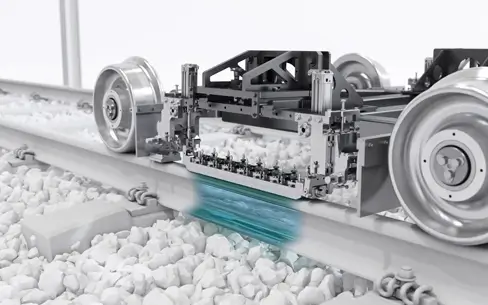
Wheel assembly wear or loosening – manifests as jerky operation or deviation.
Solution: Regularly lubricate roller bearings (e.g., grease type: SKF LGEP 2, provided here for reader reference only). Replace worn wheel assemblies. For RGV models with a wheel diameter of 150 mm and a load capacity above 500 kg, wheel assemblies must be replaced in time. For example, on automotive production lines, RGVs frequently handle 1–1.5 t components; wheel wear directly affects assembly cycle times. To ensure precise scheduling of more than 20 handling tasks per day, daily inspection of Rail Guided Vehicle faults is particularly important.
Electrical System Faults
RGVs rely on an electrical control system to achieve collision‑free operation, automatic stopping, and high‑precision heavy‑load transport. Therefore, maintenance focus needs to shift from mechanical wear to electrical system inspection. Electrical system faults are often caused by sensor and drive anomalies.
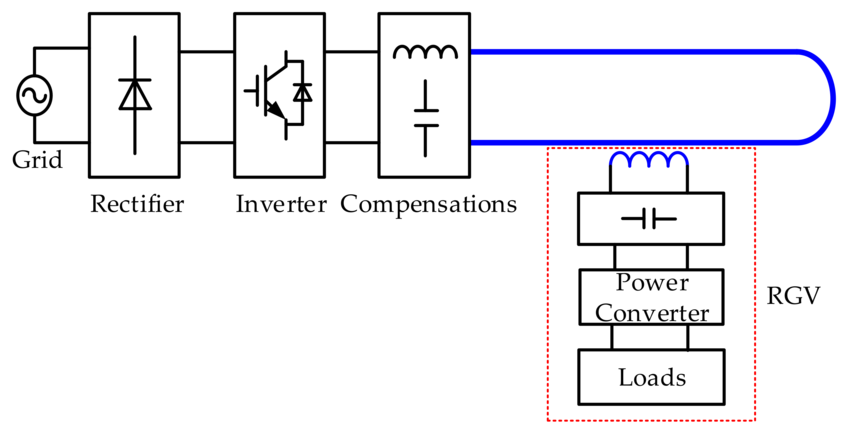
–Common issues and solutions
Sensor failure or drift can cause the RGV to stop or deviate from the track.
Solution: Use a handheld oscilloscope or the controller’s self‑diagnostic function to check sensor signals. If continuous deviation > 2 mm occurs, replace the sensor or recalibrate it.
Drive overheating or abnormal output – typical symptoms are slow start‑up and unstable operation.
Solution: Check whether the motor current exceeds the rated value (e.g., for a motor with rated power 2.5 kW, the rated current is 6.8 A). Clean ventilation openings, re‑tighten terminals, and replace the drive module if necessary.
Control System Faults
Unlike traditional manual trolleys that rely on human operation, RGVs use a central dispatching system to achieve high‑precision task management and automatic path optimization. Therefore, maintenance focuses on communication links and control logic to prevent software and communication faults.
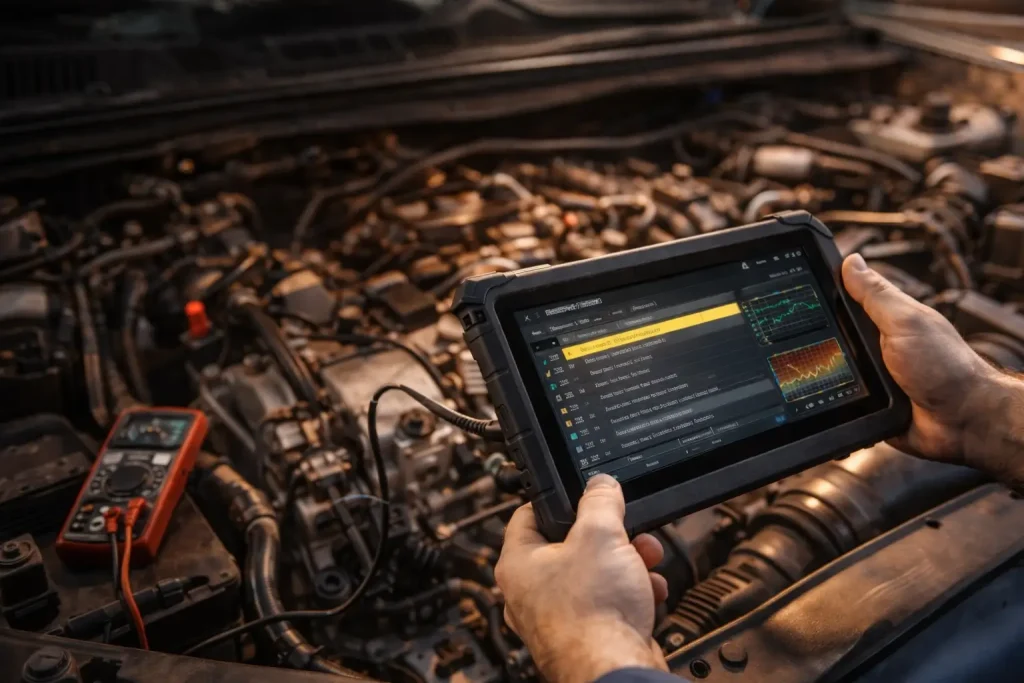
–Common issues and solutions
PLC communication interruption or delay – causes task backlog or misalignment.
Solution: Check the status indicators on the communication module. Use test software to ping the controller IP and confirm that the delay is < 20 ms.
Task scheduling anomalies – may be caused by abnormal data from MES/WMS.
Solution: Verify the task queue and ensure that path planning parameters are consistent with the actual track layout.
Battery and Power System Faults
For electric RGVs, power system faults mainly include battery aging, voltage fluctuation, and braking system abnormalities.
—Common issues and solutions:
If battery capacity drops by more than 20%, it should be replaced in time to ensure a range of 8–12 hours. For example, in electronic warehousing and logistics applications, because RGVs need to start and stop frequently over short distances, battery health directly affects the continuity of automated operations. Through regular capacity testing and replacement strategies, stable execution of 200 loading/unloading tasks per day can be guaranteed when the RGV is fault‑free.
If the drive voltage fluctuation exceeds 5%, check the rectifier module and terminals. If the brake response is sluggish, adjust the brake voltage or replace the brake pads.
Troubleshooting Process of Rail Guided Vehicle Faults
Through a standardized RGV fault troubleshooting process, maintenance personnel can quickly identify and resolve some common problems during RGV operation, effectively reducing production line downtime.
| Fault Type | Troubleshooting Tools | Troubleshooting Steps | Reference Parameters |
|---|---|---|---|
| Electrical Fault | Oscilloscope, Multimeter | Check sensor signal → drive current → controller alarm | Current ≤ 6.8 A, signal deviation ≤ 2 mm |
| Mechanical Wear | Micrometer, Level gauge | Clean rails → inspect wheel assemblies → lubricate | Rail straightness ±0.5 mm, wheel diameter 150 mm |
| Control System | PLC test software | Check communication → task scheduling → system restart | Latency < 20 ms |
| Battery / Power | Battery capacity tester | Check voltage → replace battery → adjust brake | Battery capacity ≥ 80%, voltage fluctuation < 5% |
Rail Guided Vehicle Faults – Parameter Table
| Maintenance Component | Maintenance Standard | Period | Allowable Limit |
| Wheel | Wear check | Monthly | Flange thickness ≥ 23 mm, height ≥ 28 mm |
| Repeatability of positioning | Laser measurement / encoder calibration | Weekly | Error ≤ ±5 mm |
| Chain elongation rate | Tension check | Monthly | Replace if elongation exceeds 2% of original length |
| Gear tooth thickness wear | Thickness measurement | Annually | Replace if wear exceeds 10% of tooth thickness |
| Bearing operating temperature | Infrared temperature measurement | Daily inspection | Continuous operating temperature ≤ 70°C |
| Motor insulation resistance | Megger measurement | Annually | ≥ 5 MΩ |
Priority Levels For The Troubleshooting of Rail Guided Vehicle Faults
| Priority | Fault Type / Symptom | Troubleshooting / Action |
|---|---|---|
| Highest | Emergency stop button triggered – RGV stops immediately | Check the button status, reset it, and identify the trigger cause |
| Highest | Anti‑collision device failure – may lead to a vehicle collision | Inspect sensors, protective covers, and connecting wires; ensure the anti‑collision function is normal |
| High | Stuck goods or motor faults are causing transport timeout | Check pallet position, motor operation status, inverter wiring, and parameter settings |
| High | Task scheduling anomalies (e.g., task queue errors, path planning conflicts, or communication interruptions) – the vehicle cannot execute tasks | Verify task data, communication modules, and control system logic |
| Medium | Vehicle exceeding track limits or excessive positioning errors – may cause collisions or task failure | Check limit switches, photoelectric sensors, barcode positioning systems, and track flatness |
| Medium | Vehicle travel direction or speed not matching program settings | Inspect encoders, sensor signals, and control system parameters |
| Medium‑Low | Rail wear or dust accumulation – increases positioning errors | Clean debris from the rail surface; check rail straightness |
| Medium‑Low | Wheel assembly wear or loosening | Inspect wheel assembly wear; replace worn assemblies; tighten loose components |
| Low | Battery aging or voltage fluctuations | Check power connections, battery capacity, and rectifier module |
Precautions for The Troubleshooting of Rail Guided Vehicle Faults
–Power‑off and isolation: Before troubleshooting, be sure to cut off the power supply to the RGV and lock the power switch to prevent accidental startup. If the electrical system is involved, use insulated tools to avoid electric shock. If the vehicle is connected to a host computer or control system, disconnect the communication link to ensure that no remote commands are received during troubleshooting.
–Set up protection and warnings: Place warning signs around the vehicle, such as “Do not operate”, “Troubleshooting in progress”, etc., to alert others not to approach. If working on the tracks, place wheel stoppers at both ends of the track or set up protective signals to prevent other vehicles from entering the work area.
–Personnel qualifications and protective equipment: Troubleshooting personnel must have relevant qualifications and training experience, and be familiar with the structure, principles, and fault troubleshooting procedures of the RGV. Wear personal protective equipment, such as a hard hat, protective gloves, non‑slip shoes, etc., to ensure all parts of the body are protected.
Insight from AI Robots Eidos about Rail Guided Vehicle Faults
The future of rail guided vehicle faults and troubleshooting will no longer rely solely on fixed checks on a monthly or weekly basis (such as “weekly calibration of positioning accuracy” as mentioned in the article). Instead, it will construct a virtual model fully synchronized with physical equipment through digital twins and real-time sensor data. The system will be able to predict gear wear, bearing temperature trends, or sensor drift hours or even days in advance, automatically triggering maintenance instructions.
Maintenance personnel in the future will no longer need to browse through tables or memorize parameters, but will be able to ask questions via voice or text to large language models. These models will not only provide existing steps outlined in the article (such as checking the drive), but will also recommend optimal solutions by integrating the Rail Guided Vehicle fault database, examples from similar equipment, and real-time telemetry data.
In the future, RGVs will adopt a modular design: all vulnerable components will have a unified communication interface and mechanical quick-lock mechanisms. When the system detects that a certain module’s parameters exceed limits, the RGV will automatically drive to a maintenance station, where a robot will automatically replace the faulty module, eliminating the rail guided vehicle faults.
Image Credits: Demark-filling & Snellautomotive & Mermecgroup & Researchgate & Foriauto