
Table of Contents
Automated guided vehicle costs and prices vary widely, from $15,000 for basic models to over $200,000 for high-end units. For example, some simple magnetic-tape-guided AGVs used for light-material handling on fixed routes within a factory can be purchased for just a few tens of thousands of dollars. These are particularly suitable for small and medium-sized enterprises with limited budgets and simple requirements. On the other hand, AGVs equipped with laser SLAM navigation, designed for heavy loads and high-precision special scenarios, can cost over $200,000. Understanding automated guided vehicle costs and prices is the first step toward making a smart purchasing decision.
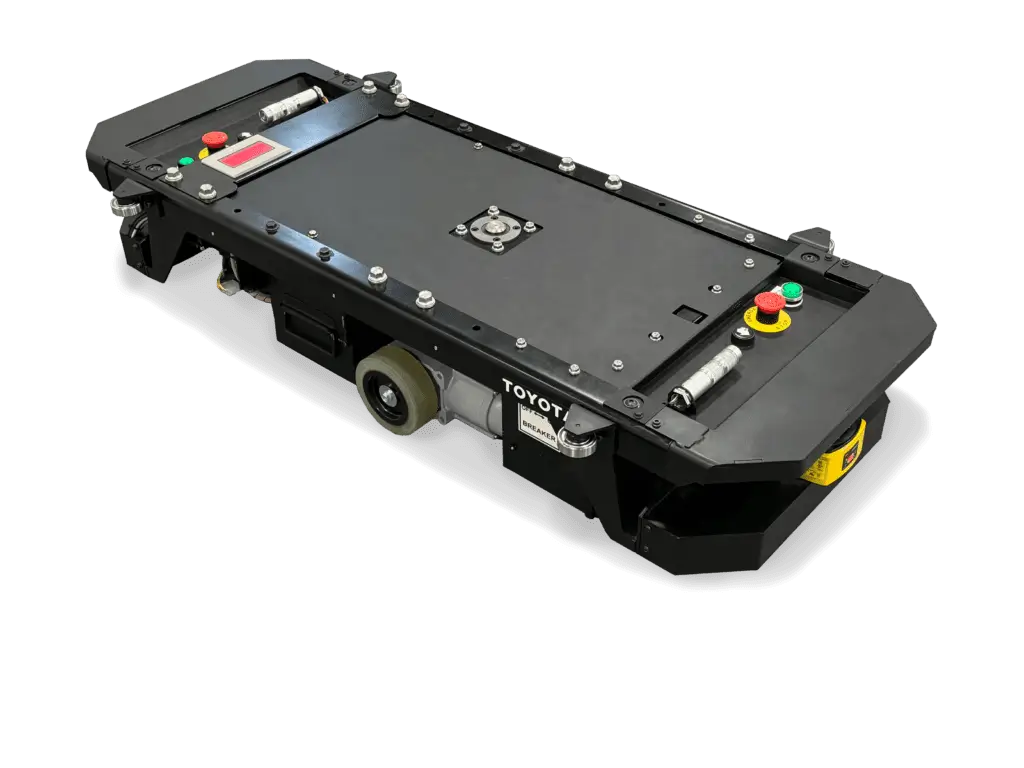
Factors Influencing Automated Guided Vehicle Costs And Prices
Navigation Technology
Traditional Navigation: AGVs that rely on traditional navigation methods (such as magnetic tape navigation and QR code navigation) are like trains running on fixed tracks. Once the route is determined, it is difficult to change, but the advantage lies in mature technology and relatively low cost. Magnetic tape-guided AGVs require magnetic tape to be laid on the floor, while QR code-guided AGVs require QR codes to be pasted on the ground. Although initial deployment is somewhat cumbersome, they are stable and reliable, suitable for orderly environments with fixed routes. Automated guided vehicle costs and prices are generally in the range of a few tens of thousands of dollars.
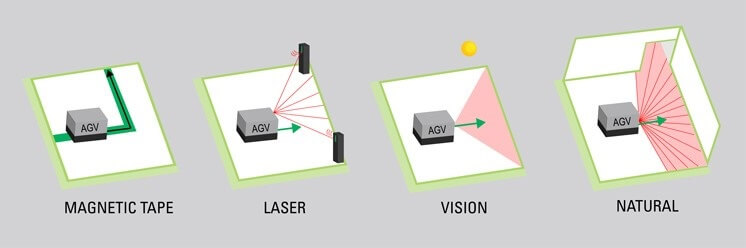
Laser SLAM Navigation: Laser SLAM navigation is like equipping the AGV with a pair of “smart eyes.” The AGV does not need to rely on ground markers and can autonomously perceive its surrounding environment, planning paths in real time. Even in a busy workshop with people moving around, it can handle the situation with ease. However, this navigation technology is relatively costly. AGVs equipped with laser SLAM navigation are typically $10,000 to $20,000 more expensive than magnetic tape-guided AGVs. This significant difference in automated guided vehicle costs and prices reflects the trade-off between upfront savings and long-term operational flexibility.
Visual Navigation: Visual navigation uses cameras and image recognition technology for navigation. It also offers good flexibility, with prices falling between those of magnetic tape navigation and laser SLAM navigation.
Load Capacity
Load capacity is also a key factor affecting AGV prices. The cost and price of an AGV that can only carry a few hundred kilograms of materials are completely different from those of an AGV that can carry several tons or even dozens of tons of heavy loads.
Light-load AGVs are mainly responsible for handling small parts, boxes, and other light goods. Their structure is relatively simple, so the price is naturally lower. AGVs typically used for lightweight tasks cost around $20,000.
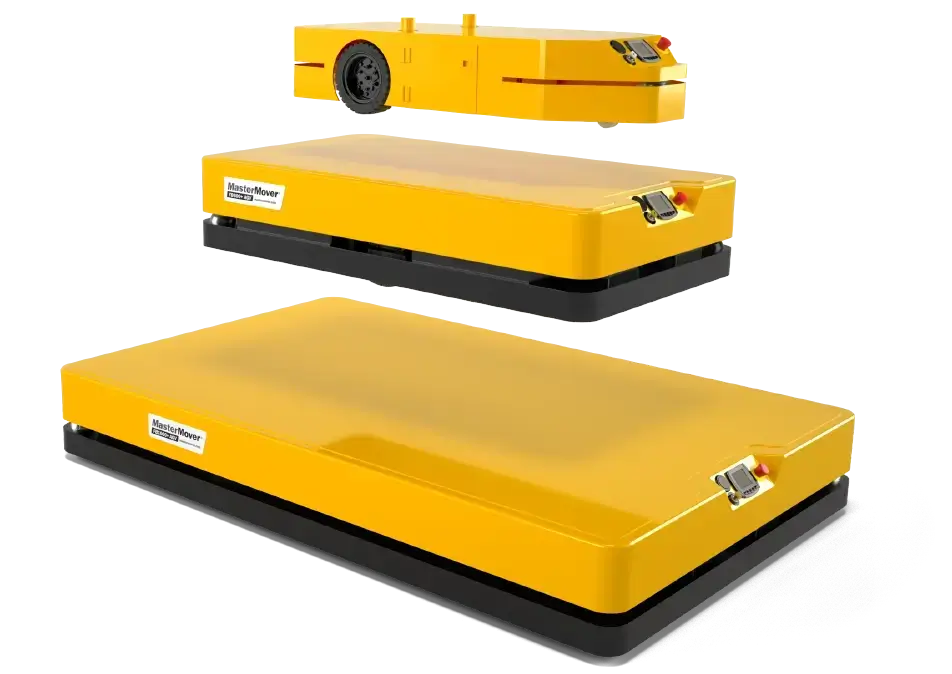
Heavy-load AGVs, such as those used in ports and mines, require stronger mechanical structures and more powerful drive systems, and are therefore more expensive. Heavy-duty AGVs (e.g., 30-ton class) can even cost more than $200,000. As these numbers show, automated guided vehicle costs and prices scale rapidly with load capacity, making it critical for buyers to accurately assess their actual payload requirements.
Recommended In-depth Reading from AI Robots Eidos
The high cost of heavy-duty AGVs is primarily influenced by their extremely high technical barriers, complex customization attributes, and substantial operational and maintenance costs. For instance, heavy-duty AGVs often need to be customized for specific scenarios (such as aerospace, steel metallurgy, and port mining), including features like automatic towing connections, outdoor waterproof and dustproof designs, and special transfer fixtures. They cannot be mass-produced on an assembly line like standard products, which contributes to the heavy-duty automated guided vehicle costs, and prices are high.
If readers want to learn more about heavy-duty AGVs, please read this article about heavy-duty AGVs.
Customization Requirements
A company’s customization requirements will affect the functional configuration of the AGV, which in turn affects the AGV price.
If only a basic AGV with simple transport functions is needed, the purchase price is usually relatively low. If a company needs features such as automatic charging, automatic obstacle avoidance, and multi-vehicle coordinated scheduling, the purchase price of the AGV will increase accordingly.
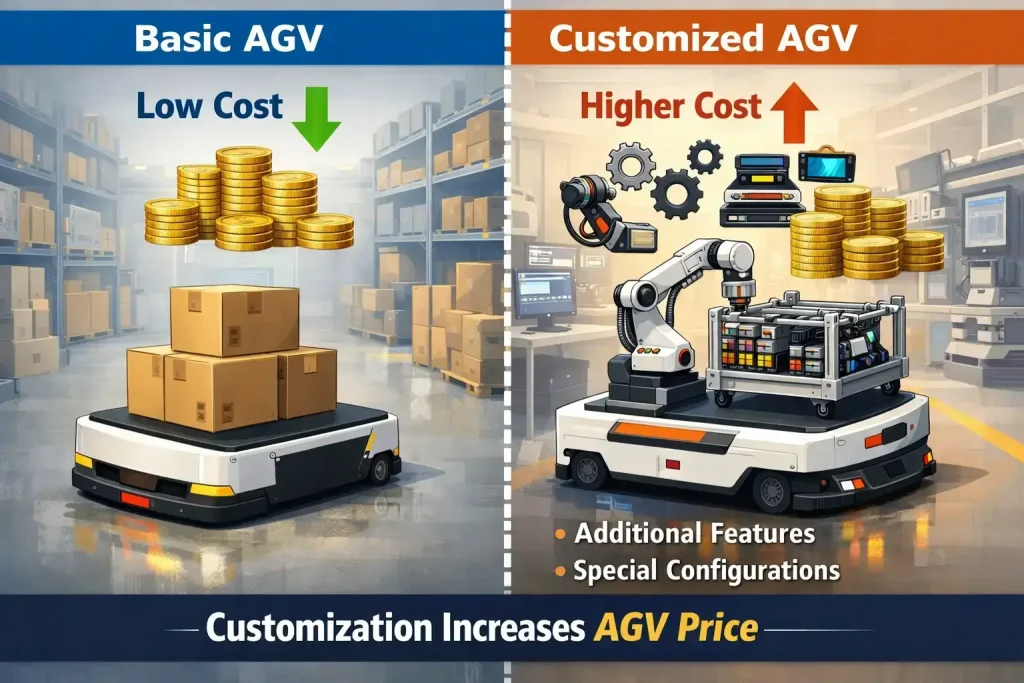
If a company needs deep integration with its existing MES or WMS systems, this means higher customization costs, and the price will rise significantly. If a company requires AGVs to operate in high-cleanliness or high-explosion-proof environments, this will also increase the AGV procurement cost. For example, AGVs used in the semiconductor industry must meet dust-proof and explosion-proof requirements, and their prices are typically 50% higher than those of ordinary AGVs of the same class.
Brand and After-Sales Service
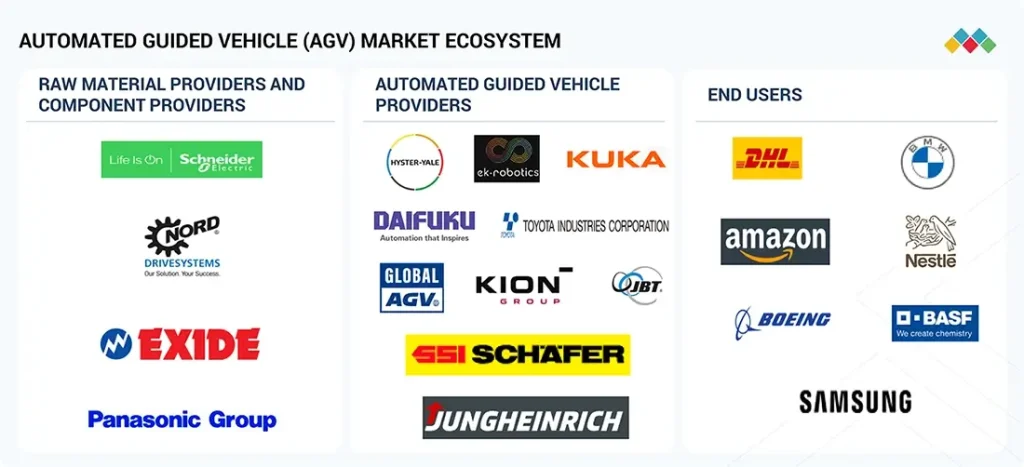
AGVs from internationally renowned brands, leveraging their advanced technology and good reputation, typically have prices that are significantly higher than those of ordinary brands, sometimes even twice as much. After-sales service also affects AGV prices, because excellent after-sales service means faster response times, thereby reducing a company’s maintenance costs.
Reference for Automated Guided Vehicle Costs And Prices
| Parameter / Manufacturer | AGV Systems (USA) | JBT Corporation (USA) | Siemens (Germany) | Dematic (Germany) | Murata Machinery (Japan) |
| Navigation Technology | Laser SLAM, Magnetic Tape (optional) | Laser Navigation, Visual Navigation | Laser SLAM, RFID Navigation | Laser Navigation, Magnetic Tape Navigation | Laser SLAM, Visual Navigation |
| Load Capacity | 500kg – 5,000kg | 1,000kg – 10,000kg | 500kg – 5,000kg | 1,000kg – 5,000kg | 500kg – 3,000kg |
| Operating Speed | 0.5 – 2 m/s | 1 – 3 m/s | 0.5 – 2 m/s | 1 – 2 m/s | 0.5 – 1.5 m/s |
| Battery Life | 4 – 8 hours | 6 – 10 hours | 5 – 8 hours | 6 – 8 hours | 4 – 6 hours |
| Positioning Accuracy | ±5 – ±15 mm | ±10 – ±20 mm | ±5 – ±10 mm | ±10 – ±15 mm | ±5 – ±10 mm |
| Price (USD) | Base: $15k – $20k | $20k – $70k | $30k – $50k | $20k – $50k | $20k – $30k |
| High-end custom: $50k – $80k | Heavy-load/custom: >$80k | Integrated/custom: $70k | Complex/custom: >$60k | High-end: >$50k |
In summary, automated guided vehicle costs and prices are determined by multiple factors, including navigation technology, load capacity, functional configuration, customization requirements, and brand. When purchasing an AGV, companies should not look at the price alone. Instead, they need to consider their actual needs and comprehensively evaluate performance, reliability, and long-term operating costs, so that they can select the most suitable AGV and truly make it a good helper for their production.
Automated Guided Vehicle Costs and Prices: TCO (Total Cost of Ownership) Analysis
TCO (Total Cost of Ownership) analysis for AGVs is an important tool for enterprises to make rational decisions and reduce total costs when purchasing AGVs. It helps enterprises avoid focusing only on the purchase price while ignoring subsequent hidden costs. In other words, automated guided vehicle costs and prices extend far beyond the initial invoice.
Initial Acquisition Cost
–Equipment Purchase Price: Includes AGV hardware, navigation system, sensors, etc. Prices vary significantly across different models and configurations, as has been discussed in detail in the article.
–Deployment and Integration Costs: Includes site modification (e.g., laying magnetic tape, installing QR code markers), system commissioning, and integration with existing production management systems (e.g., MES, WMS). These can account for 20%–50% of the equipment purchase price.
Operating Costs
–Energy Consumption: AGVs typically run on batteries. Costs for battery replacement or charging, as well as charging equipment maintenance, need to be considered. Annual energy costs account for approximately 5%–10% of the equipment purchase price.
–Maintenance and Repair: Includes regular servicing, parts replacement, and breakdown repairs. Annual maintenance costs are approximately 10%–15% of the equipment purchase price. If a leasing model is adopted, maintenance costs may be included in the rental fee.
–Labor Management Costs: Although AGVs do not require drivers, personnel are needed for loading/unloading, equipment monitoring, and handling simple faults. Monthly labor costs need to be included in the total cost based on the person-to-AGV ratio.
–Software and System Updates: AGV navigation and dispatching software require regular updates to adapt to new scenarios or fix vulnerabilities. Annual software update fees are approximately 5%–10% of the equipment purchase price.
Risks and Hidden Costs
–Downtime Losses: AGV failures or navigation anomalies can lead to production interruptions. Downtime costs need to be estimated, typically calculated based on the amount of production loss per hour.
–Technology Obsolescence Risk: AGV technology evolves rapidly. If equipment cannot adapt to new requirements within its lifecycle, early replacement may be necessary, incurring additional costs.
–Safety and Compliance Costs: Ensuring AGVs meet safety standards may involve safety training, insurance premiums, etc.
Retirement Costs
–Equipment Recycling and Disposal: When an AGV is retired, costs for dismantling, material recycling value, and environmentally friendly disposal need to be considered, typically accounting for 5%–10% of the equipment purchase price.
TCO Calculation Formula:
TCO = Initial Acquisition Cost + Operating Costs (Energy + Maintenance + Labor + Software) + Risk Costs + Retirement Costs
Illustrative Example:
The data below is for illustrative purposes only to help readers understand TCO calculation and does not represent actual figures.
Assume the purchase of one AGV with the following parameters:
Equipment purchase price: $200,000
Deployment cost: $50,000
Annual energy cost: $20,000
Annual maintenance cost: $30,000
Annual labor management cost: $6,000
Software update fee: $10,000 per year
Lifecycle: 5 years
Retirement cost: $20,000
Estimated risk cost: $50,000
Then:
TCO = 200,000 + 50,000 + (20,000 + 30,000 + 6,000 + 10,000) × 5 + 50,000 + 20,000
TCO = 250,000 + (66,000) × 5 + 70,000
TCO = 250,000 + 330,000 + 70,000
TCO = $650,000
Insight from AI Robots Eidos about Automated Guided Vehicle Costs and Prices
—With the maturity of laser SLAM and visual navigation technology, the costs of hardware will rapidly decline and become standardized. At that time, the initial purchase price of AGVs will no longer be the primary cost for enterprises. The real automated guided vehicle costs and price differences will shift to software algorithms and ongoing data services. In the future, AGV manufacturers may sell the basic models of AGVs close to cost price and profit by charging annual fees for path optimization algorithm updates, multi-vehicle scheduling systems (deep integration with MES/WMS), and high-precision behavioral strategy libraries for specific scenarios.
—The next generation of AGVs, closer to autonomous mobile robots (AMRs), will be able to “define the environment.” Through enhanced SLAM and edge computing, multiple AGVs can collaboratively construct and dynamically optimize a “digital twin map” of the entire factory in real time. This means that choosing an AGV will no longer be based solely on its ability to “avoid people,” but also on its capacity to use real-time data to proactively guide the flow of people and logistics, thereby reconstructing factory operations. Consequently, the automated guided vehicle costs and prices will be linked to the “environmental reconstruction capability” rather than just “navigation accuracy.”
—In the future, when enterprises evaluate automated guided vehicle costs and prices, the concept of “liquidity costs” will be introduced. As flexible manufacturing becomes mainstream, factory production lines may be adjusted every few months. The redeployment costs of traditional AGVs (such as magnetic strip navigation) can be very high. In contrast, the new generation of AGVs (visual/laser SLAM) can almost be “ready to use” immediately, with tasks altered freely. Therefore, even if the purchase price of the latter is twice that of the former, from the perspective of total lifecycle costs and liquidity costs associated with production line adjustments, the latter may actually be considered more “affordable.”
Image Credits: Atriainnovation & Mastermover & AI & Marketsandmarkets & Atlantaforklifts
Other Articles on The Topic of AGVs
Level A (Foundational )