Table of Contents
Cobot manufacturers leverage their innovative capabilities and professional expertise to not only enhance the performance of their products but also drive technological advancement in the industry. This article introduces readers to the world’s leading cobot manufacturers.
Recommended Reading from AI Robots Eidos
Collaborative robots are the core products of their manufacturers. Their performance, quality, functionality, and market performance directly determine the cobot manufacturers’ competitiveness and profitability. By continuously optimizing the technical parameters of collaborative robots and expanding their application scenarios, manufacturers enhance the market value of their products, thereby attracting customers and achieving commercial success.
For readers who wish to gain a deeper understanding of collaborative robots, please read this related article on collaborative robots.
Profiles of Top Cobot Manufacturers
Universal Robots (UR)
Universal Robots (UR) Overview
Universal Robots is one of the innovative cobot manufacturers originating from the island of Funen in Denmark. With over 1,000 employees, it is dedicated to providing safe, flexible, and easy-to-use 6-axis industrial robot arms for businesses of all sizes worldwide, developing industrial cobots that automate and simplify repetitive industrial processes. As a global pioneer in collaborative robotics, its products are known for ease of programming, light weight, and high safety, with cumulative sales exceeding 50,000 units.
Universal Robots (UR) Cobot Brands
To meet future industry demands on cobot manufacturers, Universal Robots collaborates with NVIDIA on AI accelerators, enabling its products to support dynamic path planning and autonomous decision-making for applications like complex assembly. Universal Robots’ collaborative robot brands are the UR series.
| UR3e Series: Lightweight desktop robot, weighing 11kg, with a 3kg payload and 500mm reach. Suitable for precision assembly, laboratory operations, and other accuracy-demanding scenarios. Wrist joints rotate 360°, and the end joint can rotate infinitely, offering high flexibility.
| UR5e Series: Medium-sized cobot, weighing 18kg with a 5kg payload and 850mm reach. Balances size and power, suitable for pick and place, testing, and assembly tasks. Simple programming and flexible deployment.
| UR10e Series: Large cobot, weighing 28.9kg, with a 10kg payload and 1300mm reach. Suitable for heavy-duty tasks like handling, palletizing, and assembly. Large working range and high accuracy.
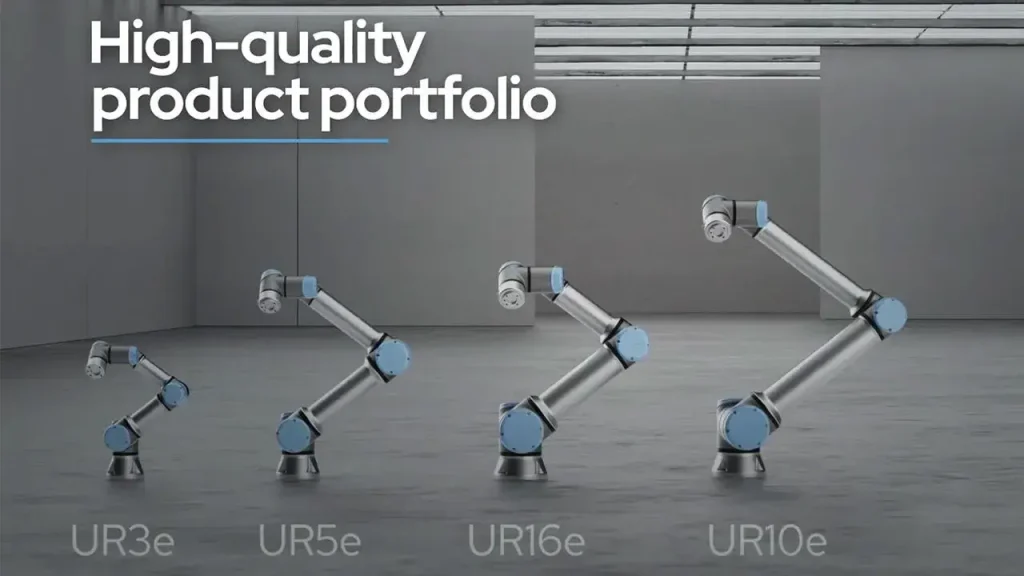
| UR16e Series: High-payload cobot, with a 16kg payload and 900mm reach. Suitable for heavy machinery tending and material handling. Supports multi-part handling with short cycle times.
| UR20 Series: Next-generation high-performance cobot, with a 20kg payload and 1750mm reach. Speed and torque increased by 30%, featuring enhanced motion control capabilities for complex industrial scenarios.
FANUC
FANUC Overview
Since successfully developing Japan’s first CNC system and servo device in 1956, FANUC has consistently focused on exploration and pursuit in the field of factory automation. It has gradually built a business structure supported by the FA Division, developed from its foundational CNC and servo technologies; the Robot Division, which applies these core technologies; and the Intelligent Machinery Division. In 2024, leveraging its leading innovation and R&D capabilities, FANUC was named to the “Global Top 100 Innovators” list for the fifth time.
FANUC Cobot Brands
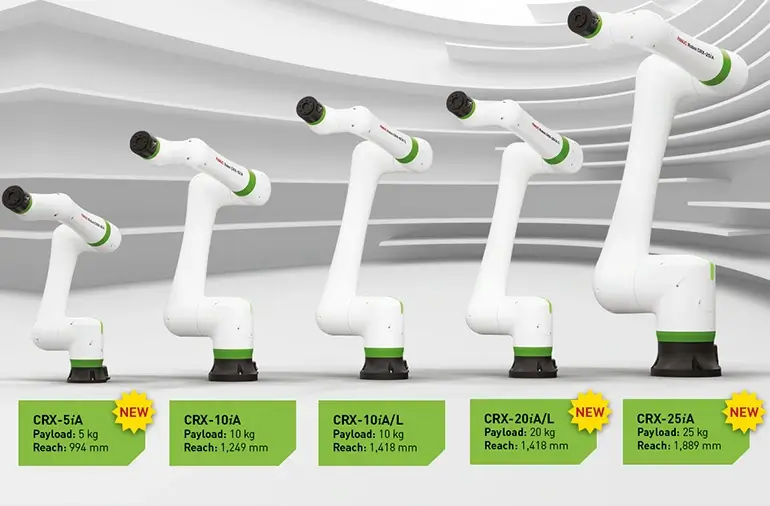
As one of the top cobot manufacturers in the world, FANUC’s cobot business represents a significant strategic initiative in the industrial automation sector, aiming to enhance production efficiency, flexibility, and safety through human-robot collaboration technology. FANUC’s main cobot brands are the CRX series and the CR series.
CRX Series
| High Precision & Stability: Achieves repeat positioning accuracy of 0.03mm-0.05mm, maintaining this high precision over the long term. Suitable for applications demanding high accuracy, such as precision assembly and welding.
Flexibility & Ease of Use: Supports graphical programming and lead-through teaching. Without the need for complex code writing, operators can directly grasp the arm to demonstrate movements, which the robot then learns and memorizes. This lowers the barrier to entry, allowing non-specialists to get started quickly.
Excellent Safety Performance: Integrated torque sensors in each joint enable more precise perception of external forces and faster safety response. Upon detecting contact with a person or object, it immediately stops motion to ensure personnel and equipment safety.
| High Protection Rating: The entire series comes standard with an IP67 protection rating, capable of handling harsh industrial environments like dust and water splashes, ensuring stable operation in various complex conditions.
| Superior Motion Performance: Utilizes AC servo motors and harmonic drives, resulting in quicker response times for starting, accelerating, and braking, along with stable operation. Maximum movement speed reaches 1000mm/s, enabling efficient task completion.
| High Scalability: Can quickly adapt to quick-connect devices and non-standard end effectors from multiple brands, meeting diverse application needs such as polishing, grinding, picking, and gluing.
CR Series
| High Payload Capacity: The CR series represents FANUC’s highest payload collaborative robot line. For example, the CR-35iA handles up to 35kg, suitable for moving heavy parts like automotive tires and large workpieces. It can collaborate with humans without safety fencing, reducing manual labor intensity.
| High Rigidity & Durability: Adapted from classic industrial robots, it retains their high rigidity and durability, capable of withstanding significant external force and impact. Suitable for high-intensity, high-frequency work environments.
| Safety & Reliability: Also features safety collision detection, automatically stopping upon contact. Its surface uses a soft cover to cushion impact, ensuring personnel safety. It has passed international safety certifications, complying with relevant standards.
| Rich Intelligent Functions: Can utilize various intelligent functions like IRVision (integrated vision) for smart identification, positioning, and inspection, improving production efficiency and quality.
| Wide Application Range: Applicable across multiple industries like automotive manufacturing, packaging, and logistics. Can collaborate with workers for heavy part handling and assembly, enhancing production system flexibility and efficiency.
ABB
ABB Overview
ABB (Asea Brown Boveri) is a global leader in electrical and automation technologies, formed in 1988 through the merger of Sweden’s ASEA (founded 1883) and Switzerland’s BBC Brown Boveri (founded 1891). ABB’s headquarters are located in Zurich, Switzerland. In 2025, ABB robot revenue growth was significant, with a leading market share in North America, primarily used in the automotive and electronics industries.
ABB Cobot Brands
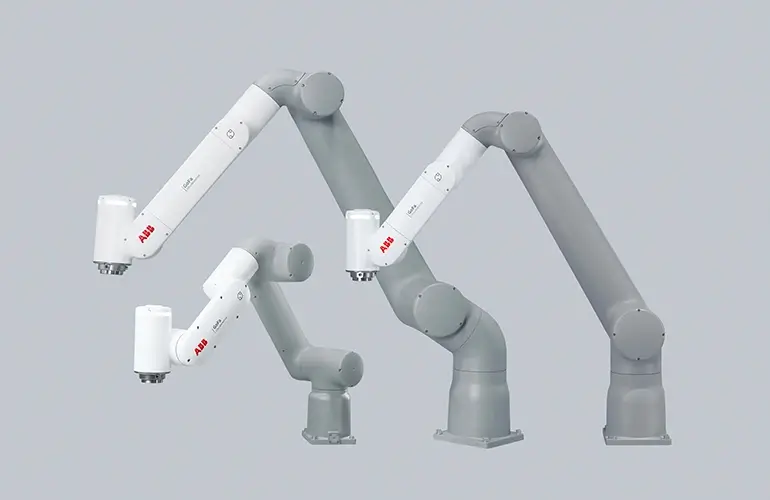
To stand out from the numerous cobot manufacturers, ABB cobots hold a technological advantage in high precision, with their accuracy relying on advanced control algorithms and force control technology. ABB’s main cobot brands include YuMi, GoFa, SwiftI, and PoWa.
| YuMi Series: The world’s first truly collaborative robot, available in single-arm and dual-arm versions. The single-arm YuMi has a 0.5kg payload and 0.56m reach; the dual-arm version has 0.5kg per arm with the same reach. Repeat positioning accuracy reaches 0.03mm, enabling precise assembly and manipulation of miniature components. Suitable for small parts assembly and electronic component assembly.
| GoFa™ Series: The GoFa™ CRB15000 handles payloads from 5-12 kg and integrates torque sensors in all six joints, providing excellent power and force-limiting performance. If GoFa™ detects any contact with a human worker, it immediately stops working to prevent injury risk. The GoFa™ CRB15000 achieves Tool Center Point (TCP) speeds up to 2.2 m/s, leading other cobots in its class, allowing it to perform more operations within a given time. With a reach of 1.62m, it covers a wide area, adapting to different workspace sizes and improving operational flexibility.
| SwiftI Series: The SwiftI series has a 4 kg payload and an operating range of 475mm or 580mm. Its TCP speed can reach up to 5 m/s, with repeat positioning accuracy of 10 micrometers. Characterized by a small footprint and light weight, it can be mounted in any orientation. The SwiftI series is equipped with the OmniCore™ controller and a teach pendant.
| PoWa Series: The PoWa series is a high-speed cobot line specially customized for the Chinese market. Designed by a Chinese team, it deeply aligns with Chinese market demands, offering full-cycle service support and adapting to local production environments. It focuses on the needs of the high-growth consumer goods and electronics manufacturing industries. The PoWa series enables no-code programming via Wizard software, simplifying operation, lowering the entry barrier, and supporting rapid deployment in small and medium-sized enterprises.
KUKA
KUKA Overview
German KUKA Robotics was formally founded by Johann Josef Keller and Jakob Knappich in 1898 in Augsburg, Bavaria, Germany. It is one of the world’s leading cobot manufacturers. Named “Keller und Knappich Augsburg,” abbreviated as KUKA, it developed its first industrial robot in 1973. Orange-yellow is KUKA’s signature color.
KUKA Cobot Brands
KUKA is one of the earliest cobot manufacturers globally to launch mass-produced collaborative robots. Its LBR iiwa series, as the first robot allowing direct human-robot collaboration, is widely regarded by the industry as a technological benchmark. The cobot business has driven KUKA’s R&D in core technologies like flexible control, force sensing, and safety interaction, becoming a key driver of its innovation and providing technological accumulation for subsequent product intelligent upgrades. KUKA cobot brands include:
| LBR iiwa Series
Features: LBR stands for “Lightweight Robot,” and iiwa stands for “intelligent industrial work assistant.” It features a 7-axis design enabling direct human-robot collaboration. LBR iiwa series robots support multi-axis dynamic compensation, achieving path accuracy of ±0.03mm. Suitable for high-precision, high-sensitivity tasks like precision assembly.
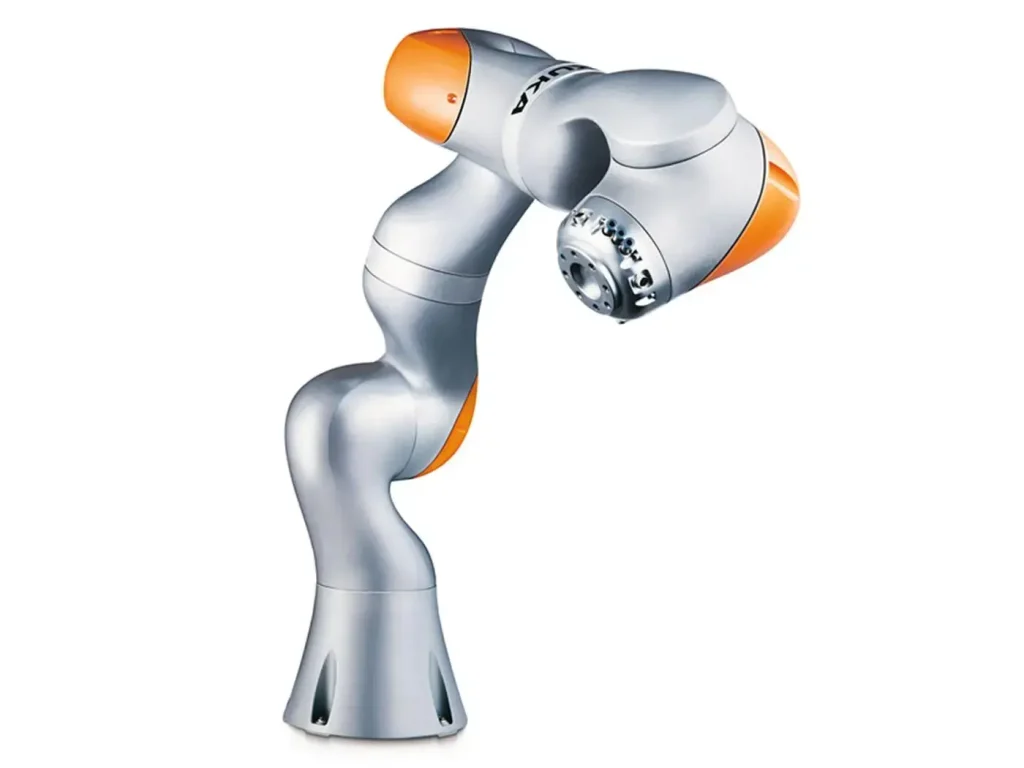
Representative Models: LBR iiwa 7 R800 (payload 7kg, reach 800mm), LBR iiwa 14 R820 (payload 14kg, reach 820mm).
| LBR iisy Series
Features: Lightweight collaborative robot supporting multiple installation methods, with a relatively high protection rating. Suitable for collaborative tasks in complex environments.
Representative Models: LBR iisy 3 R760 (payload 3kg, reach 760mm), LBR iisy 6 R1300 (payload 6kg, reach 1300mm).
| LBR iico Series
Features: Integrates KUKA’s AI vision system, supporting bin picking and autonomous recognition. Suitable for logistics, 3C electronics, and other industries.
Representative Models: LBR iico 7 R900 (payload 7kg, reach 900mm), LBR iico 12 R1260 (payload 12kg, reach 1260mm).
Yaskawa Electric Corporation
| Yaskawa Overview
Yaskawa Electric’s core businesses are motion control, robotics, and system engineering. It was listed on the Tokyo and Osaka securities markets in 1949. Currently, the Yaskawa Group has approximately 16,000 employees. Yaskawa’s main core businesses are these three segments: Motion Control, Robotics, and System Engineering. It is one of Japan’s most representative industrial robot companies and a member of the world’s “Big Four” industrial robot families. The four major industrial robot families are: Switzerland’s ABB, Germany’s KUKA, Japan’s FANUC, and Yaskawa.
| Yaskawa Cobot Brands
As one of the important cobot manufacturers in Japan, Yaskawa leverages its cobot business to provide customers with customized automation solutions. For example, in scenarios like lithium battery manufacturing, welding, and palletizing, it develops dedicated collaborative robot workstations tailored to customer needs, enhancing customer satisfaction and loyalty.
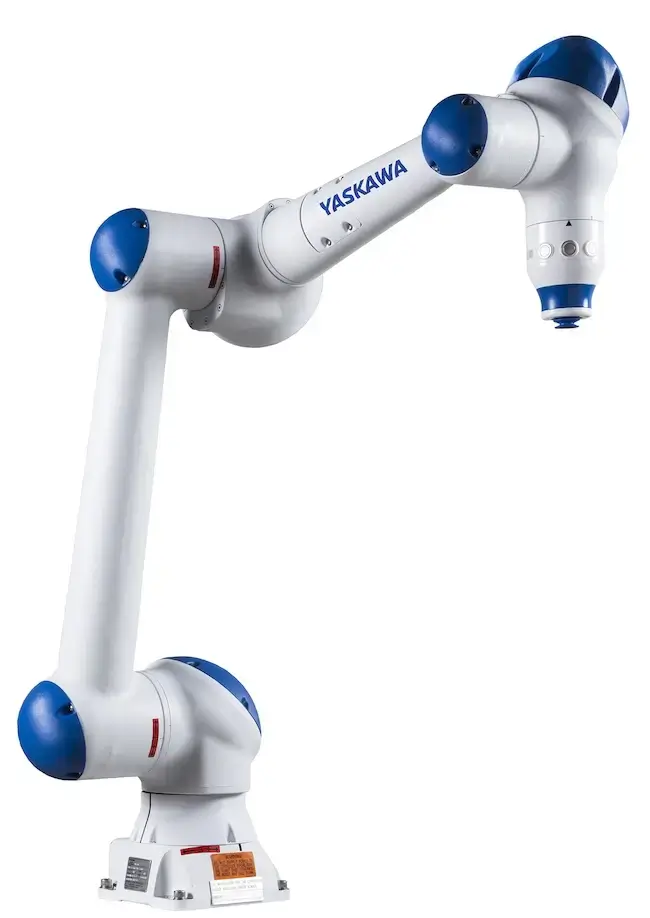
Yaskawa’s MotoMINI is a world-class, compact industrial 6-axis robot. The MotoMINI facilitates easy repositioning and enables high flexibility, like human-robot collaborative task sharing. It is used for small parts assembly, manipulation, and the kitting and insertion of electronic and electrical components. The MotoMINI features three main characteristics: compactness and light weight, high speed, and high precision. With a payload capacity of 500g, a maximum reach of 350mm, and a weight of approximately 7kg, this robot realizes the possibility of producing and processing small products using a small, portable robot.
F&P Robotics
| F&P Robotics Overview
F&P Robotics is a Swiss robotics company focused on the research, development, and manufacturing of lightweight 6-axis collaborative robot arms and providing overall solutions. Founded in 2014 in Zurich, Switzerland, it was previously Neuro & Partner, a spin-off from the Artificial Intelligence Laboratory at the University of Zurich. As one of the intelligent cobot manufacturers, its technical advantage lies in integrating deep learning algorithms to achieve functions like object recognition, posture analysis, and situational awareness, enhancing robot autonomous decision-making capabilities.
F&P Robotics Cobot Brands
To better compete with other cobot manufacturers, F&P has launched several collaborative robot models.
| P-Rob 2: Second-generation 6-axis collaborative arm, featuring a compact design with integrated hardware and software, eliminating the need for an external control cabinet. Characterized by high precision, quick installation, and practicality, it is well-suited to industrial production, laboratory research, and tasks such as precision assembly and material handling.
| P-Rob 3: Third-generation collaborative arm with further optimized performance, supporting higher joint speeds and larger payloads (3-5kg), achieving repeatability of ±0.1mm. Equipped with electronic skin and collision detection for enhanced safety in human-robot collaboration scenarios.
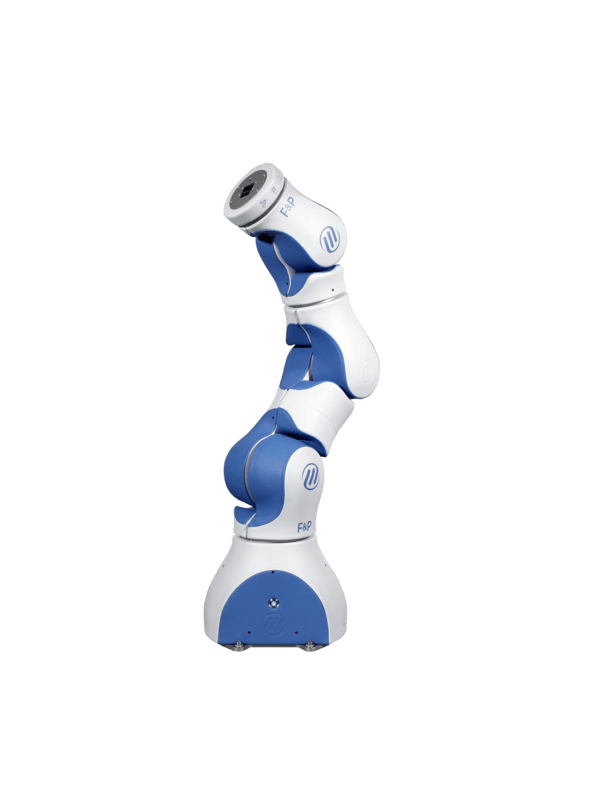
| Barney Series Intelligent Service Robots: Includes robots such as intelligent bartending and pizza-making robots, developed based on the P-Rob arm and focused on the food service industry. They enable full process automation from ordering and preparation to delivery, suitable for venues like restaurants, enhancing service efficiency and user experience.
The Rise of Chinese Cobot Manufacturers
| Technological Progress
Over the past decade, Chinese cobot manufacturers have achieved significant breakthroughs in core components such as reducers, servo motors, and controllers. For example, Leader Harmonious Drive has broken Japanese company HD’s monopoly, with domestic harmonic reducers achieving accuracy of ≤15 arc seconds and costs reduced by 40%.
Chinese Market: In 2024, the sales volume of China’s collaborative robot market reached 40,000 units, a year-on-year increase of 27.39%. In China, the market share of Chinese colbot manufacturers (based on sales volume of cobots with six or more axes) rose from 89.04% in 2023 to 90.25% in 2024.
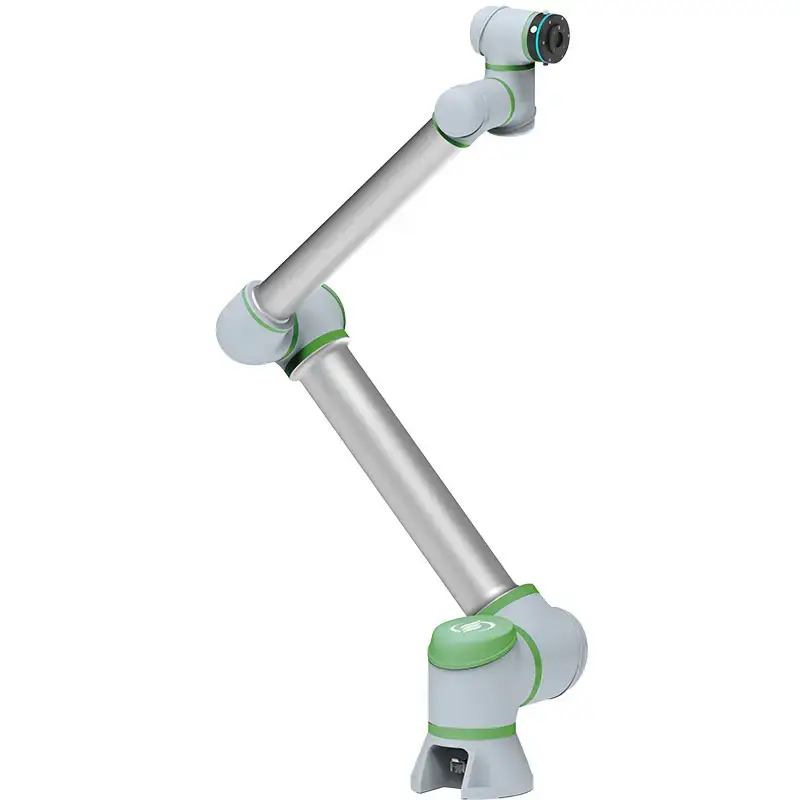
Overseas Markets: Chinese cobot manufacturers are actively expanding into overseas markets, entering Europe, Southeast Asia, North America, and other regions through a strategy of “localized service + high cost-performance ratio.” For instance, companies such as JAKA and Huayan have secured orders from European auto parts factories, while FÁO Robotics’ products now cover forty countries, including Japan, South Korea, Europe, ASEAN nations, and North America.
The rise of Chinese cobot manufacturers is the result of the combined effects of technological progress, market demand, and cost advantages. In the future, with the expansion of application scenarios, Chinese cobot manufacturers are expected to occupy a more important position in the global collaborative robot market.
List of 25 Cobot Manufacturers
| Cobot Manufacturers | Country | Main Brands | Degrees of Freedom | Single-Arm | Dual-Arm |
| Universal Robots | Denmark | UR3, UR5, and UR10 | 6-axis | √ | |
| Rethink Robotics | USA | Baxter, Sawyer | 7-axis | √ | √ |
| ABB | Switzerland | YuMi and Roberta | 7-axis | √ | √ |
| KUKA | Germany | LBR iiwa 7 and LBR iiwa 14 | 7-axis | √ | |
| FANUC | Japan | CR-35iA, CR-4iA, CR-7iA, and CR-7iA/L | 6-axis | √ | |
| Yaskawa Electric Corporation | Japan | MOTOMAN-HC10 and MotoMINI | √ | ||
| Bosch | Germany | APAS | √ | ||
| Bionic Robotics | Germany | BioRob | √ | ||
| F&P Robotics | Switzerland | P-Rob 2 (Second Generation) | 6-axis | √ | |
| pi4_robotics | Germany | workerbot | √ | ||
| AUBO (Yobo Intelligent) | China | AUBO-i5 | 6-axis | √ | |
| SIASUN Robot | China | Flexible Multi-Joint Robot and Dual-Arm Collaborative Robot | 7-axis | √ | √ |
| MABI Robotics | Switzerland | Speedy10 | √ | ||
| Kawada Industries | Japan | Nextage | √ | ||
| Nachi Fujikoshi | Japan | MZ04 and MZ07 | √ | ||
| Kawasaki | Japan | duAro | 4-axis | √ | |
| Carbon Robotics | USA | Katia | |||
| Franka Emika | Germany | Franka Emika | √ | ||
| Denso | Japan | Cobotta | √ | ||
| Liferobotics | Japan | CORO | |||
| Mecademic | Canada | Mecademic Meca 500 | 6-axis | √ | |
| Modbot | USA | 6 DOF-C | 6-axis | √ | |
| Kinova Robotics | Canada | Jaco and Mico | √ | ||
| Comau | Italy | AURA | √ | ||
| DOBOT | China | DOBOT M1 | 4-axis | √ |
Insight from AI Robots Eidos about Cobot Manufacturers
| The future status of colbot manufacturers will no longer be determined by increasingly homogenized hardware parameters such as payload, reach, and precision, but rather by the software ecosystem and data loop capabilities behind them. The industry is shifting from selling “robots as tools” to providing “automation as a service.” The real winners will be those cobot manufacturers that can build platforms akin to a “robot app store,” enabling third-party developers to easily create and deploy various application scenarios.
| The business growth points for cobot manufacturers in the future will not lie in continuing to compete for highly automated markets like automotive and 3C electronics, but rather in how they enable countless small and medium-sized enterprises to utilize collaborative robots. With the maturation of no-code/low-code programming and AI-assisted deployment technologies, the cost and time of deploying collaborative robots will significantly decrease. This will fundamentally change the cost-benefit model for small and medium-sized enterprises, making the procurement of automation solutions offered by colbot manufacturers as simple as purchasing a high-end office device.
Image Credits: Universal Robots (UR), FANUC, ABB, KUKA, Yaskawa, F&P & Web