
Table of Contents
AGV Robots vs. RGV Robots is practically significant in that it helps enterprises understand the differences between the two (such as path flexibility, load capacity, positioning accuracy, cost, etc.), so that they can make informed choices based on actual production needs (such as production line layout, material weight, site conditions, etc.).
AGV Robots vs. RGV Robots: Definitions
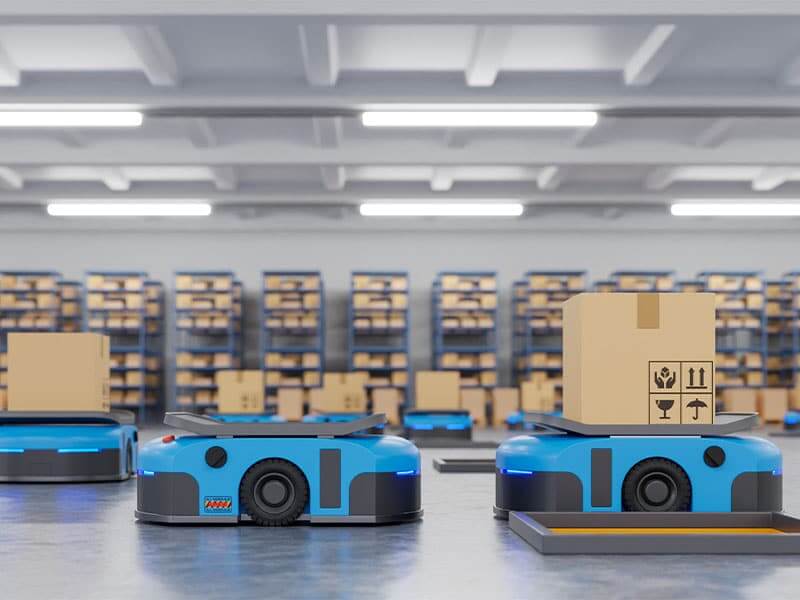
—AGV robots, also known as Automated Guided Vehicles, can be thought of as material handlers. They are equipped with automatic guidance devices such as electromagnetic or optical systems, controlled by computers, and are self-powered or have power conversion units. They are transport tools that can automatically travel along prescribed guidance paths. By integrating with WMS and MES, AGVs enable automated material handling.
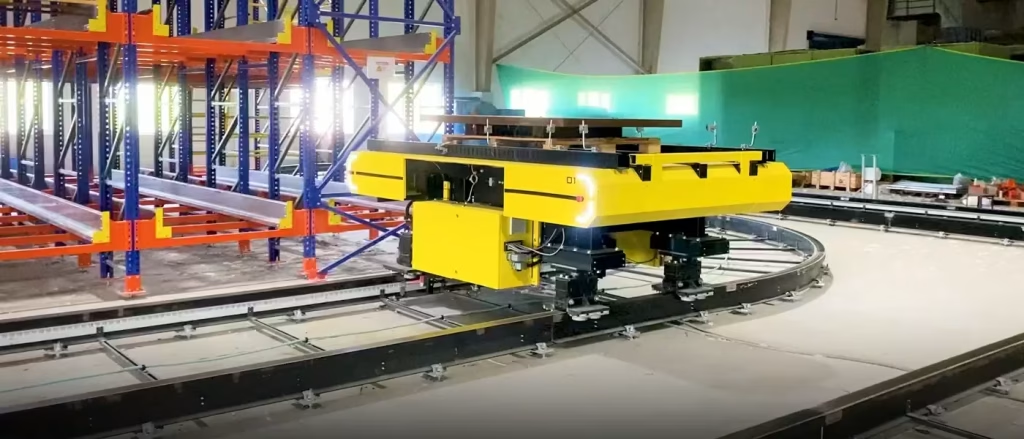
—An RGV robot, also known as a Rail Guided Vehicle, can be thought of as a miniature train running on rails. It is powered via contact rails or similar means and does not require batteries. Wherever the track goes, it can accurately travel there. It can be programmed to perform tasks such as picking, transporting, and placing, and can communicate with host computers or WMS systems. Combined with RFID, barcode, and other identification technologies, it enables automated recognition, storage, and retrieval tasks.
Recommended Related Reading from AI Robots Eidos
Understanding what these two mean is essentially about grasping the underlying logic of “rail‑bound rigidity” versus “trackless flexibility.” This helps capture their differences, enabling sound equipment selection based on specific scenarios, costs, requirements, and other factors, ultimately achieving the optimal configuration for an automated logistics system.
Interested readers may refer to articles that introduce these two types of equipment.
Automated Guided Vehicles(AGVs): The Complete Guide
Rail Guided Vehicle (RGV)
AGV Robots vs. RGV Robots: Positioning Accuracy
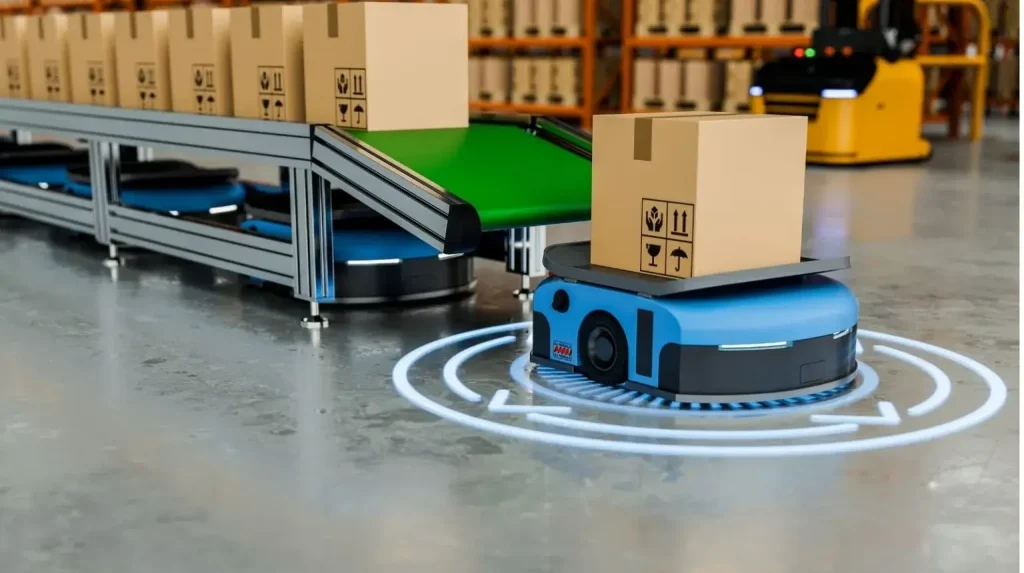
—The accuracy of AGV robots depends on their navigation methods: QR code or magnetic nail navigation achieves ±5 mm, while laser or SLAM navigation achieves ±10 mm. Do not underestimate this 5 mm difference—when docking with precision machine tools, ±10 mm may require mechanical floating compensation or vision-based positioning, which changes the procurement solution and costs for the enterprise.
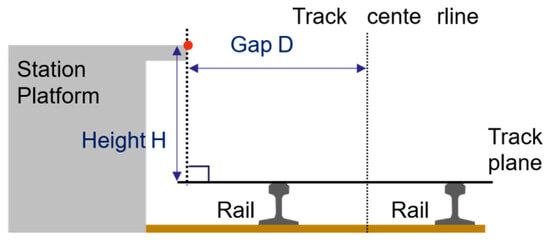
—RGV robots have an advantage in mechanical repeatability because they run on fixed rails. Their positioning accuracy generally reaches ±1 mm.
To prevent enterprises or readers from misunderstanding positioning accuracy, here is a practical case. In a construction machinery factory (the company name has been anonymized), three 15-ton battery-powered AGV robots replaced heavy forklifts for welding workshop distribution. Instead of pursuing ±2 mm accuracy, they chose a ±5 mm magnetic nail + table floating solution integrated with MES. After implementation, waiting time at welding stations dropped by 60%, and quarterly safety incidents fell from 1 to 0. Higher accuracy is not always better—what matters is meeting enterprise needs while operating stably.
AGV Robots vs. RGV Robots: Load Capacity and Speed
—AGV robots generally have smaller load capacities compared to RGV robots; commonly used models are light- or medium-duty. Heavy-duty models can be custom-made, but because the vehicle body and navigation systems require corresponding modifications, costs are very high. Overall, AGV robots are suitable for transporting light- or medium-load materials.
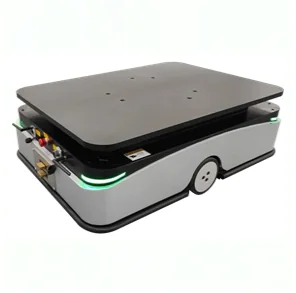
Due to the need to consider environmental factors such as obstacle avoidance, the actual operating speed of AGV robots is limited, generally around 60–120 meters per minute, making them suitable for routine-takt material handling.
—RGV robots, supported by rails, operate very smoothly with high positioning accuracy (±1 mm). This makes them suitable for heavy-load transport or high-precision material docking, such as machine tool loading/unloading. RGV speeds can reach 120–300 meters per minute with precise acceleration/deceleration, making them ideal for high-frequency, reciprocating production scenarios.

AGV Robots vs. RGV Robots: Flexibility
—AGV robots can change their travel routes very easily—simply modify the map program according to process requirements. Their scheduling systems also allow flexible adjustment of production takt.
—Because RGV robots draw power from contact rails and run on fixed tracks, route modifications are difficult once the track is laid, and they have poor adaptability to flexible production lines. Cross-line scheduling generally requires laying an additional set of tracks, resulting in poor flexibility.
Here is an example: a crane manufacturer first used 2-ton battery-powered AGV robots integrated with MES, which were compatible with the legacy system and increased capacity by 20%. When the production line was expanded later, they repurchased the same model. This “small-batch validation first, then replication” approach is difficult for RGV robots, because each repurchase requires laying new tracks. The higher the flexibility requirement, the more obvious the advantage of AGV robots.
AGV Robots vs. RGV Robots: Price & Cost
—AGV robots are more expensive due to their complex structure. In addition, infrastructure for the dispatching and navigation systems (magnetic nails/QR codes/laser reflector panels) requires one-time investment, and battery maintenance and replacement also incur ongoing costs. However, AGV robots are easier to deploy—no track laying is needed, effectively saving time costs.
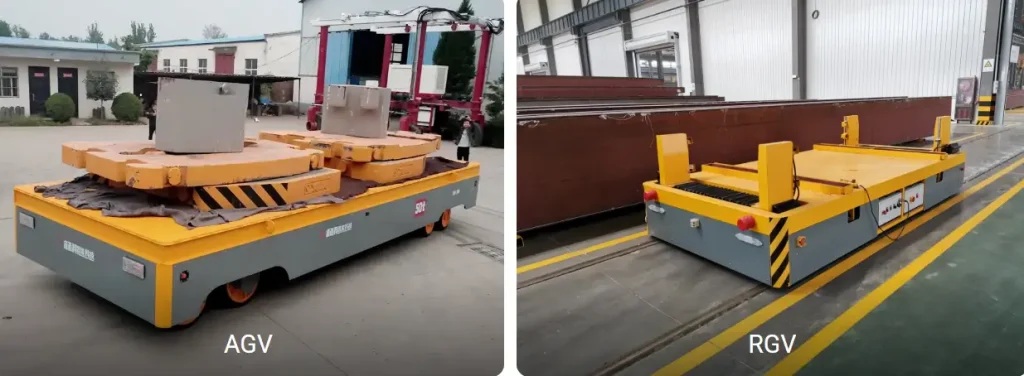
—Because RGV robots have a simple structure with mostly standard components, both the vehicle cost and maintenance cost are relatively low. However, enterprises should not overlook the hidden costs of track installation when purchasing. These hidden costs are sunk costs, mainly including floor leveling, track embedding, and utility rerouting.
Rail-guided vehicles may look cheap bare, but we have seen a client whose track modification for adding one workstation shut down production for 11 days—the lost capacity far exceeded the price difference between the two vehicle types.
What enterprises need to understand is that the true cost determinant is whether the production line requires frequent adjustments. If flexible production requires frequent line changes, the hidden costs of RGV robots will drive up total costs. For fixed production lines, RGV robots have lower total lifecycle costs.
AGV Robots vs. RGV Robots: Application Scenarios
—AGV robots do not require rails; their travel routes can be changed as needed. Compared to RGV robots, AGV robots are better suited for multi-variety, small-batch application scenarios, such as mixed-model assembly, cross-workshop transfer, or in old factories where rails cannot be installed.
—RGV robots move along fixed tracks with simple scheduling and no risk of getting lost. They are most suitable for single-product, fixed-takt, high-frequency shuttle operations—for example, reciprocating material supply alongside assembly lines, or picking/delivery from high-bay warehouses to workstations. On a fixed line, they operate very stably. “Stable” here refers to their speed range from 0–25 m/min to 0–18 m/min (specific speed depends on load), and the speed can be adjusted according to actual conditions.
AGV Robots vs. RGV Robots: A Comprehensive Comparison Table
| Comparison Dimension | RGV Robots | AGV Robots |
| Travel Mode | Fixed‑track travel, point‑to‑point only | Track‑free, free‑roaming; can detour, avoid, and reroute |
| Navigation Method | Mechanical track positioning, extremely high precision | Laser SLAM / magnetic tape / QR code / vision navigation |
| Path Flexibility | Poor: routes cannot be changed once the track is laid | Good: software‑based route changes, no hardware modifications needed |
| Operating Speed | Fast, smooth, ideal for high‑speed shuttling | Moderate; decelerates when avoiding obstacles |
| Load Capacity | High; can easily handle heavy‑load transport | Can also handle heavy loads, but at higher cost and with more complex structure |
| Positioning Accuracy | Extremely high (±1 mm), very stable for equipment docking | High (±5–10 mm); laser SLAM also offers good accuracy |
| Reliability | Good reliability due to track + contact rail power supply | Moderate reliability; more affected by environment, floor conditions, and obstacles |
| Cost | Vehicle itself is cheap, but track installation is a large one‑time investment | Navigation modules, dispatching systems, and safety systems are expensive |
| Maintenance Cost | Low; virtually maintenance‑free | High; sensors, batteries, and dispatching software require maintenance |
| Obstacle Handling | Cannot autonomously handle obstacles on the track | Automatic obstacle avoidance, detouring, and waiting |
| Dispatching Complexity | Simple: point‑to‑point, few‑vehicle scheduling | Complex: multi‑vehicle coordination, path planning, traffic control |
| Applicable Scenarios | Fixed routes, high‑frequency shuttling, heavy‑load docking with equipment | Multi‑point transport, cross‑area movement, warehouse‑to‑production‑line, flexible routes |
AGV Robots vs. RGV Robots: Selection and Combination
–AGV Robot Solution: Suitable for scenarios with high automation requirements, non-fixed routes, mixed human-vehicle traffic, and the need for flexible handling of light- to medium-load materials—such as smart warehouses, retrofitting old factories, and flexible production.
–RGV Robot Solution: Suitable for scenarios with fixed routes, high-frequency shuttling, heavy-load (several tons to over ten tons) material transport, and applications requiring extremely high positioning and docking accuracy—such as fixed assembly line node transfers or high-density automated warehouse inbound/outbound operations.
–Hybrid Combination Solution: Many large smart factories do not choose one over the other, but use a combination of AGV and RGV robots to leverage their respective strengths:
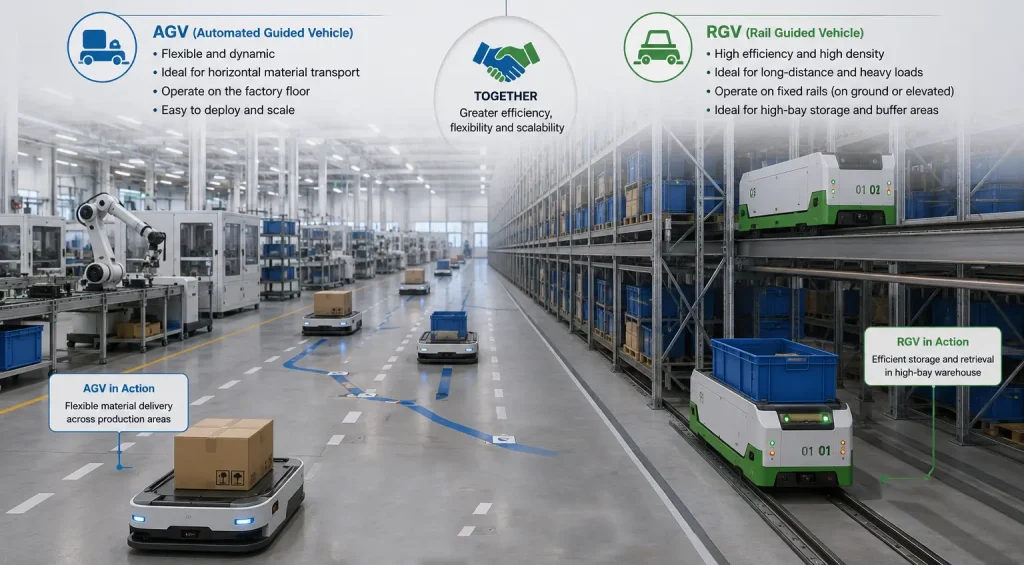
RGV handles high-density, high-precision inbound/outbound storage inside the automated warehouse.
After goods leave the warehouse, laser-guided AGVs transport materials to various production workstations.
This approach combines efficient storage with flexible line-side delivery, forming a complete closed-loop automated logistics system.
Insight from AI Robots Eidos about AGV Robots vs. RGV Robots
—In the future, when building new production lines or retrofitting existing ones, factories will first use digital twin simulations to model changes in product variants and batch sizes over the next three years, and then calculate the “line change frequency.” If the adjustment cycle is shorter than six months, they will skip the RGV evaluation process altogether and prioritize AGVs as the first choice; if the adjustment cycle is longer than two years, they will then consider RGV. This “volatility‑first” decision‑making model will fundamentally rewrite the traditional equipment selection methodology, making flexibility a mandatory indicator rather than an optional extra.
—Every movement of an AGV generates data on position, route, time, obstacle avoidance counts, and more. After AI analysis, this data can reflect in real‑time the logistics congestion points on the shop floor, material waiting patterns at workstations, and even process bottlenecks. In contrast, because RGV paths are fixed and offer only a single data dimension, they can only report “whether arrival was on time.” In the future, AGVs will be more than just material handlers—they will become a “mobile sensor network” within the factory, and their data value may well exceed the equipment procurement cost itself.
—Currently, the ±1 mm accuracy of RGV is its core moat. However, laser/vision SLAM technology is rapidly iterating, and some high‑end AGVs are already approaching ±2 mm (with the help of ground markers or vision‑based secondary positioning). Once AGVs can achieve within ±2 mm at a controllable cost, RGV’s exclusive advantage in scenarios such as machine tool loading/unloading and automated warehouse inbound/outbound operations will be broken. In the next five years, accuracy will no longer be the decisive factor in equipment selection—stability and takt time will be.
Image Credits: Bluepathrobotics & Storepro & Craftsmanstorage & Mdpi & Bfbtransfercart & AI & Rencoindustrial & Rmktransfercart