Table of Contents
The humanoid robots integrate cutting-edge technologies, including advanced manufacturing, artificial intelligence, and sensing. Its industrial chain structure is similar to that of industrial robots, but the requirements for the performance, accuracy, integration, lightweight design, and power consumption of core components are more rigorous. It especially emphasizes the deep integration of force perception, dynamic balance control (motion control algorithms), and artificial intelligence (AI decision-making). Currently, the industry is still in the early stages of transitioning from laboratory research to commercial applications, but it has enormous potential.
Definitions of Humanoid Robots
Humanoid robots are defined as robots that imitate human appearance and behavior, possessing a high level of intelligence. Compared to traditional industrial robots and service robots, the most significant characteristic of humanoid robots is their “limb” structure, movement patterns, and perception methods that resemble those of humans. Empowered by advanced artificial intelligence models, these robots achieve imitation of human physical abilities, skills, and intelligence on three levels.
Characteristics of Humanoid Robots
Humanoid robots exhibit three main characteristics: anthropomorphic intelligence, humanoid form, and broad applicability.
| Anthropomorphic Intelligence: Humanoid robots can achieve human-like perception, decision-making, and control abilities through the empowerment of advanced artificial intelligence models. Additionally, they can also utilize cloud-based “brains” and intelligent networking methods, breaking the limits of having “one body, one brain” to realize a leap in computational power and intelligence.
| Humanoid Form: The human form is the result of natural selection through biological evolution. Currently, all city infrastructure and tools utilized in daily life are designed with the human shape in mind. By highly simulating the human form, humanoid robots can quickly integrate into environments designed for humans to execute complex tasks, providing greater versatility and adaptability.
| Broad Applicability: Humanoid robots possess greater tolerance and adaptability than humans, allowing them to operate in unstructured environments over extended periods at low costs. They effectively address future labor shortages and will be widely utilized in industrial production, public services, and specialized operations, potentially demonstrating even greater advantages in certain fields.
Significance of Designing Robots in Human Form
The essence of pursuing a “humanoid” design revolves around the issue of versatility in robots. The core point is whether it is currently necessary to endow robots with human-like “general capabilities” through anthropomorphic design. It raises the question of whether to aim for multifunctionality or specialized use. Based on current developments, humanoid robots are primarily being tested in industrial scenarios. Compared to the complex tasks in later service application scenarios, industrial tasks are relatively repetitive and simple; thus, the demand for humanoid features is not particularly strong.
As the “brain” technology gradually improves, a general humanoid robot will be the ultimate form. However, before that, various evolutionary stages and branches are necessary. The combination of a humanoid body with customized components may be the optimal solution before full commercialization is achieved. Therefore, in the long run, “humanoid” is the ideal form for robots; in the current context, a complete “humanoid” design is not the only option.
Classification of Humanoid Robots
Due to the significant challenges in developing humanoids, companies have adopted various strategies, such as using reverse joints, wheeled or wheeled-leg combinations, and two-finger/three-finger dexterous hands to replace fully anthropomorphic structures to achieve partial humanoid functionality.
Based on Their Forms
Currently, mainstream humanoid robots can be categorized into three major types based on their form:
| Wheeled Humanoid Robots: Primarily utilize wheeled drive, emphasizing tactile sensors and dexterous hand operations.
| Legged Humanoid Robots: Emphasize leg movement capabilities, while the arms are mainly used for balance.
| General-purpose Humanoid Robots: Equipped with bipedal locomotion, dual arms, hands, and various sensory and AI functionalities, adaptable to multitasking in open environments.
Wheeled Humanoid Robots | Legged Humanoid Robots | General-purpose Humanoid Robots | |
| Features | Wheel-driven + Upper Body Robot Arms + Dexterous Hand Solutions Emphasis on tactile sensors + the manipulation functions of dexterous hands while also possessing mobility | Emphasizes the robot’s leg movement capabilities with hands primarily used for balance | Equipped with bipedal + dual arms + dual hands + various sensors + artificial intelligence capabilities Built on a comprehensive hardware and software foundation to adapt to multiple tasks in open environments |
Representative Products | 1Xtech EVE, Paxini TORO-ONE | Unitree G1 | Tesla Optimus, Zhiyuan Robotics Expedition A2 |
Based On Applications
Based on specific application scenarios and primary functions, humanoid robots can be classified into several types:
| Special Operations Humanoid Robots: Used for tasks such as patrolling, inspection, rescue, and hazardous operations.
| Industrial Humanoid Robots: Employed in industrial production and logistics, such as goods handling and manufacturing.
| Educational Humanoid Robots: Serve as teaching aids, providing interactive learning content.
| Entertainment Humanoid Robots: Interact with humans to provide companionship and entertainment.
| Public Service Humanoid Robots: Offer services in hotels, restaurants, shopping malls, and other public venues.
| Household Service Humanoid Robots: Assist with eldercare, childcare, and household chores.
| General-purpose Humanoid Robots: Can be utilized across various fields, including industry, services, and education.
Core Components of Humanoid Robots
The core components of humanoid robots include reducers, motors, lead screws, dexterous hands, sensors, bearings, and others. These core components and key modules constitute the rotating joints, linear joints, etc., of humanoid robots.
In terms of cost structure proportions, motors, sensors, reducers, and lead screws represent significant portions of the overall costs. According to the “2024 Humanoid Robot Industry Chain White Paper,” the value proportions of lead screws, frameless torque motors, reducers, force sensors, hollow cup motors, and bearings in humanoid robots are 19.00%, 16.00%, 13.00%, 11.00%, 8.00%, and 5.50%, respectively.
Motors
Robot motors can be classified based on their topology into radial flux motors, axial flux motors, frameless torque motors, and hollow cup motors.
| Hollow cup motors are suitable for micro joints with diameters ranging from 8 to 20 mm and are primarily used in precision components like dexterous hands.
| Internal rotor motors dominate joints with diameters between 30 and 80 mm and are mainly used in upper limb systems like robotic arms.
| External rotor motors are adapted for high aspect ratio joints with diameters of 100 to 180 mm, suitable for legged robots with high dynamic lower limb demands.
| Axial flux motors exhibit high torque density characteristics; however, due to technical bottlenecks, their practical applications are currently limited.
Dexterous Hands
Humanoid robots are highly complex mechanical devices that mimic the structure and functionality of human hands. Dexterous hands need to possess flexibility, delicacy, and a variety of functions similar to human hands. The United States currently holds a leading position in robotic dexterous hand technology, with many companies and research institutions accumulating substantial technical experience in hardware design and intelligent control systems for dexterous hands. In recent years, China’s technological accumulation in the field of robotic dexterous hands has rapidly increased, showcasing a vast market size and a swift commercialization process.
Lead Screws
Lead screws are high-precision components that convert rotary motion into linear motion or vice versa. In the field of robotics, lead screws are primarily used for driving joints and motion mechanisms, achieving high-precision motion control. Lead screws can be categorized into three main types: trapezoidal lead screws, ball lead screws, and planetary rolling lead screws. They play a crucial role in the robotics field, specifically for joint and motion mechanism drive systems.
Reducers
Reducers are precise mechanical transmission devices that convert the high-speed rotation of motors into lower speeds while increasing output torque. They are core components of robots, with bearings being essential parts of reducers. Their role is critical in both humanoid and industrial robots. The most widely used types are harmonic reducers and RV reducers.
Sensors
Sensors are the perception modules of humanoid robots, enabling them to sense the external environment, monitor internal operating states, and provide feedback for motion control. Sensors are the first step in the interaction between robots and their environment. Currently, robots primarily utilize five types of sensors—lidar, cameras, millimeter-wave radar, ultrasonic sensors, and GPS—along with their combinations to perceive the environment.
The humanoid robot market is expected to open up opportunities for force sensors, with a global market size projected to exceed $7 billion by 2030. In this domain, the market size for six-dimensional force sensors in humanoid robots is expected to reach $2 billion.
Components of Humanoid Robots
Perception System
The perception system of humanoid robots is the core of their ability to sense the environment, understand their own state, and interact with the world. It is akin to the sensory and nervous systems of humans, comprising a highly complex and integrated multimodal system. This system mainly includes the following components:
| Visual Sensors: Primarily composed of cameras, including monocular, binocular, and depth cameras, used to obtain 2D images and 3D depth information. They form the basis for environmental recognition and navigation.
| Auditory Sensors: Includes microphone arrays and audio processing software, used for sound capture, enabling voice interaction and sound source localization.
| Force/Torque Sensors: Typically installed at joints or feet to measure forces and torques during contact with the environment.
| Tactile Sensors: Distributed on the surface of the robot’s skin, simulating human touch, and used to perceive information such as pressure, temperature, and texture.
| Inertial Measurement Unit (IMU): Comprised of accelerometers and gyroscopes, used to detect the robot’s acceleration, angular velocity, and posture changes, serving as the core for maintaining balance and stable motion.
| Position/Encoder Sensors: Installed at various joints to accurately measure the rotation angles and positions of each joint, fundamental for achieving precise motion control.
| Proximity Sensors: Such as infrared, ultrasonic, and LiDAR, used to detect nearby obstacles, enabling obstacle avoidance and safety protection.
In simple terms, the IMU ensures the robot “stands stable,” the visual sensors ensure it “understands what it sees,” and the force/torque sensors ensure it “moves gently and carefully.” These three components together form the most critical technical pillars for safe and intelligent interaction between humanoid robots and their environment. Visual sensors (especially depth cameras), IMUs, and force/torque sensors are particularly key components.
Visual sensors are the primary source of information for advanced cognitive functions such as SLAM (simultaneous localization and mapping), object recognition, and gesture recognition, with their performance directly determining the robot’s understanding of the environment.
IMUs are crucial for bipedal robots in maintaining dynamic balance; without them, robots cannot perceive their own tilt and acceleration, making them prone to falls and forming the foundation for all motion control.
Force/torque sensors are central to achieving “compliance control” and safe human-robot interaction, allowing robots to “sense” forces, thereby completing tasks that require fine power control, such as shaking hands without squeezing too tightly or picking up eggs without crushing them.
Control System
In addition to hardware, humanoid robots have an upstream control system, which refers to the software part, including high-dynamic-performance control algorithms (the “cerebellum”), embodied intelligence with generalization capabilities, and advanced artificial intelligence (the robot’s “brain”) that closely resembles human cognition.
The “brain” is responsible for sensing the external environment and simulating human thinking and decision-making processes, while the “cerebellum” mimics biological organisms in performing complex motion control, namely motion management.
| The “Brain”: Currently, the technology of the humanoid robot’s “brain” is centered around large models, providing task-level interaction, environmental perception, task planning, and decision-making control capabilities.
| The “Cerebellum”: The motion planning and control of the robot’s “cerebellum” are key to enabling natural and fluid movements in humanoid robots. This mainly includes two categories: model-based control methods and learning-based control methods. In simple terms, it involves gathering data for learning and continuously optimizing actions. The current mainstream approaches include remote control, where human operators remotely control robots to directly capture data suitable for a wide range of tasks.
Execution System
The execution system of humanoid robots is often metaphorically referred to as the robot’s “limbs” and “muscles.” It is a crucial subsystem that converts commands issued by the higher-level decision-making “brain” into actual physical movements. This system consists of a series of highly integrated electromechanical components, including servo motors, reducers, drivers, sensors, and structural transmission devices, working together to perform functions such as torque output, motion transmission, and posture control.
The performance of the execution system directly determines several core motion metrics of the robot, such as maximum output force, joint movement speed, positioning accuracy, dynamic response capability, and compliance and safety during human-robot interaction. These characteristics not only affect the quality of basic movements but also relate to the robot’s adaptability and task completion in complex environments.
A well-designed, highly complex execution system is fundamental for the robot to achieve stable walking, fast running, and precise object manipulation, even completing high-precision tasks like threading a needle or engraving. Furthermore, it directly impacts the robot’s energy consumption levels and durability, making it a significant factor in determining whether the robot can be applied practically.
Joint Actuator (Assembly)
This is the core integrated unit of the execution system, equivalent to the robot’s “joints.” It is not merely a straightforward assembly of components but involves system-level engineering that includes motor electromagnetic design, precision mechanical transmission, thermal management, sensor fusion, and advanced control algorithms (such as force control). Achieving the best balance among high torque density, high efficiency, low inertia, and high-bandwidth force control requires deep interdisciplinary knowledge (mechatronics) and extensive iterative data. The technological moat of companies like Tesla and Boston Dynamics largely relies on this. A joint actuator assembly typically includes:
| Driver: The power source, primarily a motor (such as brushless DC motors or torque motors) or hydraulic cylinders. Motors dominate modern humanoid robots due to their ease of control and cleanliness.
| Reducer: Motors typically feature high speeds and low torque, while robot joints require low speeds and high torque. The reducer serves the purpose of reducing speed and amplifying torque. Commonly used waveless reducers and planetary reducers are favored for their high precision, small volume, and large reduction ratios.
| Brake: Commonly referred to as a brake. It locks the joint during a power outage or when a specific posture needs to be maintained, preventing the robot from moving uncontrollably due to its own weight or external forces, ensuring safety.
| Controller: Usually integrated near or within the actuator, responsible for receiving commands from the upper layer (such as position, speed, and torque commands) and performing closed-loop control (current loop, speed loop, position loop) to accurately drive the motor. Additionally, sensors like position sensors and torque sensors are also located within the actuator.
Body Structure
This is the skeleton of the execution system, constructed from various lightweight, high-strength materials (such as carbon fiber, titanium alloy, and aerospace aluminum) through precision machining (such as connecting rods and joint casings). It determines the robot’s form, weight distribution, and load capacity.
Transmission Structure
It transmits the motion and force generated by the actuator to the target area. In addition to the aforementioned reducers, it also includes synchronous belts, gear systems, and link mechanisms. For example, some designs use “direct drive” or employ synchronous belts to position motors closer to the robot’s body to reduce the weight and inertia of the distal limbs.
Among these components, the joint actuator assembly (especially torque density and force control capabilities) is the most critical component. The overall motion performance of the humanoid robot (power, speed, efficiency) is directly determined by the performance of each joint actuator. Key metrics to consider include “torque density” (the torque produced per unit weight) and “force control bandwidth and precision.”
Higher torque density means that larger forces can be output from smaller, lighter volumes and weights, which allows the robot to be more agile and energy-efficient, with less inertia during movement. Precise and rapid force control capabilities form the basis for the robot to achieve compliant interaction, safe contact, and mimic the elasticity of human muscles (impedance control). Without it, robots would be stiff and dangerous. The impressive performance of Tesla’s Optimus and Boston Dynamics’ Atlas is largely attributed to their highly autonomous design and optimized joint actuators.
The execution system is unequivocally the core of the cost structure of humanoid robots, with its high cost share stemming from extreme complexity and demanding performance requirements. As the “limbs” and “muscles” of the robot, the execution system necessitates the collaborative operation of numerous high-precision, high-power-density joint modules distributed throughout the body.
Each joint is essentially a precise mechatronic system, integrating valuable harmonic reducers, frameless motors, torque sensors, encoders, and customized structural components. The high technological barriers and high costs associated with these core components, along with the system integration, collaborative control, and reliability verification, bring significant research and manufacturing costs. Therefore, the key path to reducing the overall cost of humanoid robots lies in breakthroughs in the technology of the execution system and scaling down expenses.
The future trend is modularization of joints, representing the ultimate form of system-level integration and a concentrated reflection of the technological capabilities of whole machine manufacturers. Companies that can provide integrated assemblies will gain greater value and bargaining power. The future development of humanoid robot execution systems will trend towards joint modularization, evolving from the current discrete parts procurement and assembly model into a system-level integration and delivery of entire joint actuators.
This trend represents the ultimate form of mechatronic design; it is not merely the stacking of components like motors, reducers, and sensors, but requires deep integration and collaborative optimization of power output, transmission precision, torque sensing, real-time control, heat dissipation management, and underlying algorithms within a very small space. This highly integrated modular joint can significantly reduce the assembly complexity for manufacturers, shorten research and development cycles, and notably enhance the robot’s motion performance, reliability, and consistency.
Thus, the design and manufacturing capabilities of joint modules have become a benchmark for assessing the technical strength of whole machine manufacturers. Enterprises capable of providing such high-performance, high-reliability, “ready-to-use” joint assemblies will no longer act as traditional component suppliers but will upgrade to essential system-level Tier 1 suppliers. By offering complete technical solutions and deeply binding downstream customers, they will occupy a central position in the industrial value chain. This not only allows them to capture the substantial premiums beyond the value of individual components but also gives them strong market bargaining power through technological barriers and the authority to define product specifications.
Other Systems
In addition to the above key components, the cooling system, power system, and others are also important modules of humanoid robots.
Cooling System
High power density in actuators generates a lot of heat during operation. The cooling system of humanoid robots is one of the key technologies that determines whether they can run continuously, stably, and perform at a high level. It faces multiple unique challenges, such as extremely compact spaces, strict weight limits, variable postures (like bending or falling), leading to difficulties in maintaining thermal management stability, and concentrated heating in high power density joints and computing units, all while needing to ensure environmental sealing, low noise, and energy efficiency, making it far more complex than traditional electronic devices. Its design needs to strike a delicate balance among heat dissipation efficiency, weight, volume, reliability, energy consumption, and cost.
The cooling system of humanoid robots is evolving towards a “hybrid, integrated, and intelligent” technological path, deeply integrating multimodal technologies such as liquid cooling (for efficient heat transfer from joints and computing units), heat pipes/thermal spreaders (for rapid heat conduction), and phase change materials (to handle instantaneous thermal peaks). It is also trending towards structural integration with the robot’s skeleton and shell to minimize weight and maximize efficiency while relying on intelligent algorithms for real-time heat management prediction and dynamic control, ultimately achieving a global optimum in performance, endurance, and reliability.
Power System
The power system provides energy to all “muscles,” primarily consisting of high-energy-density batteries and cables distributed throughout the body, responsible for power distribution and data transmission.
The power system of humanoid robots is the foundation for their high-performance operation. The core challenge is how to simultaneously meet high energy density (long endurance) and high power density (burst power) demands under extreme weight and space constraints, while ensuring absolute safety. The current technological approach mainly involves using high-energy-density lithium-ion batteries combined with 48V and above high-voltage platforms (to reduce transmission losses) and utilizing smart battery management systems for precise monitoring and protection, while relying on highly integrated power electronic components to drive joint motors.
Future trends may focus on revolutionary breakthroughs in solid-state batteries, AI-driven global intelligent energy management (for dynamic power optimization), and evolving towards distributed hybrid energy storage architectures (such as primary battery + supercapacitor) to handle instantaneous peak power demands, ultimately achieving synergistic optimization of energy efficiency, power, and reliability.
Challenges Faced by Humanoid Robots
Dexterous Hand Sensation
The human hand is often regarded as a masterpiece of nature, with approximately 17,000 specialized tactile receptors distributed across each palm. These receptors act as well-trained “scouts,” always alert, capable of precisely sensing minute differences in force, texture, and temperature. The most advanced robotic hands currently fall short when compared to the powerful sensory capabilities of human hands, achieving merely a fraction of this sensing ability. They resemble children still learning to walk, often struggling with complex tactile perception tasks, unable to discern subtle distinctions or detect minute temperature changes.
Scarcity of Tactile Data
In the field of tactile data, foundational technological advancements are nearly nonexistent, lacking even a complete data collection and processing methodology. While voice data can be easily captured using microphones and image data can be conveniently obtained through cameras, the collection of tactile data is considerably more complex. Acquiring tactile data requires installing specialized tactile sensors on the robot’s hands or other contact areas. However, current tactile sensor technology is still immature, facing issues such as low precision, slow response times, and poor reliability. Moreover, different types of tactile sensors produce data in various formats and features, lacking a unified standard, making the processing and analysis of tactile data exceptionally difficult.
Safety Concerns
Full-sized, walking humanoid robots must continuously input enormous energy to maintain an upright walking posture, transforming them into “mobile iron blocks filled with power.” Simply put, the greater the mass and speed, the more energy an object possesses; this energy is released destructively when a humanoid robot falls. If future humanoid robots increase in size to double that of current models, the harmful energy released during a fall will increase geometrically according to the relationship between energy and mass, and speed, potentially reaching eight times the current levels.
Development Directions for Humanoid Robots
Collaborative Driving of Physical Practice, Physical Simulators, and World Models
The cognitive capabilities of humanoid robots can be driven by the collaboration of physical practice, physical simulators that create high-fidelity training environments, and world models that provide essential internal features of the environment. The integration of these three elements ensures a rich, effective, and realistic environment, useful for training humanoid robots in both contact and non-contact interactions, laying the groundwork for their decision-making and control abilities.
Multilevel End-to-End Embodied Decision-Making
Inspired by multimodal large models, research in cognitive and planning studies, underpinned by mathematical foundations and merged with the outcomes from life scientists, integrated with real-time control modules, can significantly enhance humanoid robots’ generalization and practicality in unstructured environments.
Model Predictive Control and Embodied Intelligence
From a control perspective, integrating model predictive control, reinforcement learning, and embodied intelligence from life sciences is promising. This approach combines the dynamic optimization capabilities of model predictive control with adaptive decision-making from reinforcement learning, further integrating it with the redundant multi-loop control mechanisms found in life sciences. This could steer humanoid robots to develop human-like features, realizing new controls for embodied intelligence and improving adaptability and performance in novel environments.
Generative AI-Driven Humanoid Robot Design
By unifying the optimization of motors, reducers, drivers, structures, connectors, and materials, along with integrating scientific advancements from engineering, the physical simulator can achieve coordinated optimization of hardware and control strategies, automatically exploring optimal designs for humanoid robots during tasks.
High Cohesion and Dynamic Adaptation of Embodied Intelligent Hardware-Software Consistency
Humanoid robots require consistency between hardware and software. During the hardware development phase, it’s essential to preset the interface specifications for adaptive algorithms. In algorithm design, physical constraints should be embedded, ensuring a blend of soft and hard elements. This means both hardware and software should be jointly verified through simulations, keeping the system coherent and letting software modules align closely with the hardware, ensuring the overall system meets expectations for hardware-software consistency.
Humanoid Robot Factories
In simulation environments, achieving natural language interaction, environment generation, robot design, decision-control algorithms, and hardware-software consistency algorithms can lead to a synergistic evolution. Such systems can enable rapid design according to performance and demand, resulting in high-quality embodied intelligent robotic systems to serve society.
Large-Scale High-Quality Datasets
Aiming to construct large-scale, high-quality datasets based on physical entity collection and simulation synthesis is crucial. Here, high quality is key, while achieving a smaller scale is a scientific aspiration. This can significantly improve humanoid robot configuration optimization, multimodal training efficiency, and cross-scenario strategy transfer abilities.
Development of Humanoid Robot Clusters and Human Collaboration
This involves integrating collaborative mechanisms from multiple intelligent agents, constructing groups of embodied intelligent robots. Continuous enhancement of humanoid robot safety and empathy towards humans is essential, allowing these robots to genuinely integrate into human spaces and become true companions.
Interdisciplinary Open Source Community for Humanoid Robots
The advancement of humanoid robots necessitates collaboration among information science, engineering and material science, mathematical physics, and life sciences. This will gather top scientists and engineers from various fields worldwide, promoting technological discussions in embodied intelligence and fostering deep integration and collaborative development of the entire industrial chain.
Safety Assessment and Ethical Framework for Humanoid Robots
Through behavioral norm validation, decision interpretability analysis, and data security studies, a comprehensive safety assessment system and ethical framework for humanoid robots can be established. This ensures the reliability, interpretability, and safety of their decision-making and behavior in complex open environments, enabling humanoid robots to serve in various industries effectively.
Applications of Humanoid Robots
Humanoid robots are used in various applications, such as:
| Industrial General Operations for Loading, Unloading, and Transporting: In industrial production and logistics warehouses, tasks like low-precision loading and unloading, as well as lightweight material handling, often face issues such as high repetition, significant labor intensity, and limited efficiency. Humanoid robots, with their flexible arms, precise grasping capabilities, and mobility, can collaborate with automated production line control systems and warehouse management systems to complete loading and unloading tasks according to production rhythms, navigating between shelves to transport materials, effectively enhancing the smoothness of production lines and the efficiency of logistics flow.
| Automotive Manufacturing Sorting and Material Preparation: The automotive manufacturing process involves numerous types of components, making traditional manual sorting prone to mistakes and inefficient. Humanoid robots utilize precise visual recognition systems to differentiate various types of materials, employing flexible robotic arms to grab and place items, and interfacing with material management systems to retrieve demand information, accurately configuring materials on shelves and in warehouses to optimize production processes.
| Military:
Military humanoid robots are a key component in achieving ‘zero casualties’ through ‘robot substitution’ in intelligent warfare. It is foreseeable that as humanoid robot technology matures and is gradually applied in the military field, it is expected to become a new growth pole in military intelligence following unmanned aerial vehicles, unmanned boats, unmanned underwater vehicles, and unmanned ground vehicles.
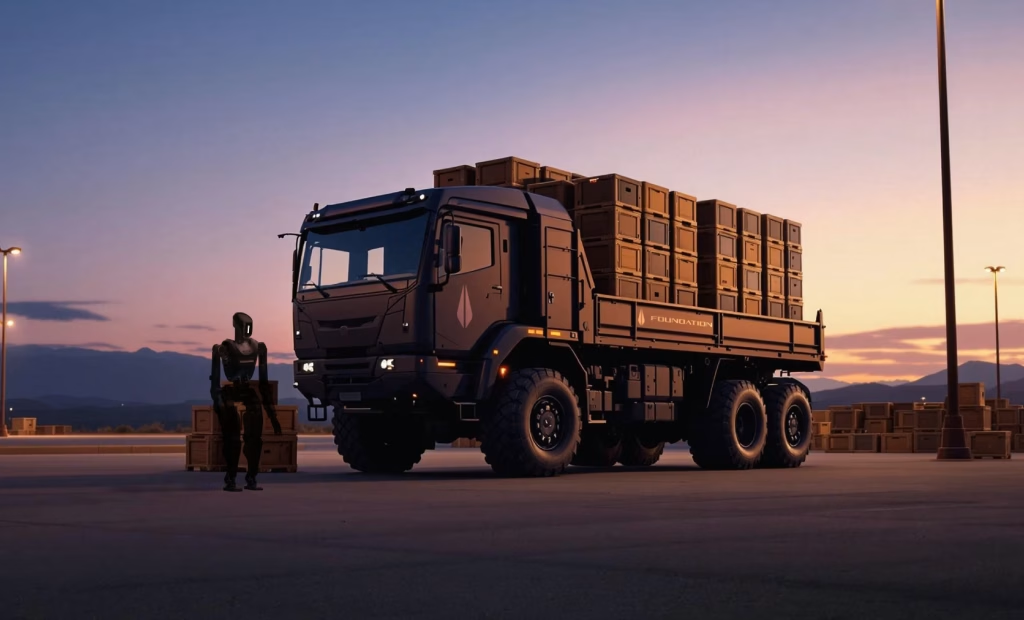
It is important to note that the application of humanoid robots in the military domain is still in the developmental stage and faces challenges such as energy supply, ethics, and cost control.
Recommended In-depth Reading from AI Robots Eidos
Military humanoid robots should guarantee at least three points:
| Obey humans and not alter the programs that are attached to them, ensuring they do not act violently outside the user’s constraints.
| Respect humans by strictly distinguishing between humans and other objects.
| Protect humans by being able to appropriately halt and limit excessive use of violence.
If readers would like to learn more about military humanoid robots, please read on about related articles:
News: Will 50,000 Robot Warriors Go to The Battlefield?
| Quality Inspection of 3C Manufacturing Materials: The production of 3C (computer, communications, and consumer electronics) products is extensive and rapidly evolving, requiring high speed and accuracy in quality inspections. Manual inspections face limitations in efficiency and accuracy. Humanoid robots equipped with high-precision visual sensors and intelligent detection algorithms can identify external defects and size accuracy of materials, coordinating with production management systems to provide feedback on results, thereby enhancing product quality control levels.
| Shipbuilding Grinding and Polishing: The shipbuilding process often involves harsh environments for hull grinding and polishing, where manual operations can impact worker health and quality stability. Humanoid robots are capable of adapting to these tough conditions, completing grinding and polishing tasks through their strong power and precise motion control abilities, cooperating with design and production management systems to improve surface treatment quality.
| Oil and Petrochemical Production Line Inspection: The working environment of oil and petrochemical production lines can be hazardous, with manual inspections facing challenges such as high safety risks and limitations in precision and frequency. Humanoid robots equipped with various sensors can monitor line parameters in real time, identify leaks and equipment anomalies, and cooperate with production monitoring and safety management systems for early warnings, ensuring production safety.
| Power Production Station Operations: The operating environment of power stations can be dangerous, with high risks associated with manual operations. Unmanned stations have an urgent demand for reliable monitoring. Humanoid robots with precise movements can perform button operations and collect equipment data in real-time, cooperating with automation control and scheduling systems for remote operations, thus enhancing the stability and safety of power station operations.
| Emergency Response and Disaster Relief: In emergencies, human rescue efforts often face high risks and limited response efficiency. Humanoid robots can adapt to dangerous environments, equipped with sensors, gas detectors, thermal imaging devices, and other equipment to monitor on-site conditions in real-time. They can assist in searching for trapped individuals, deliver emergency supplies, and integrate with emergency command systems to provide on-site data, supporting rescue decisions.
| Commercial Services for Guiding and Welcoming Guests: In commercial venues such as malls, exhibition halls, and hotels, high traffic can lead to insufficient reception, low efficiency in guiding, and meal delivery. Humanoid robots possess natural language interaction capabilities and friendly appearances, providing services such as welcoming guests, guiding them, and delivering meals to rooms, integrating with venue information systems and room management systems to enhance service experiences and technological image.
| Assistance in Daily Living and Companionship: With an aging population, there is a shortage of elderly care personnel, and families also have needs for child companionship, home cleaning, and daily assistance. Humanoid robots can offer comprehensive support with their gentle appearance and caring voice. In elderly care, they can provide support, medication reminders, and monitor the elderly’s status, responding to emergencies to alleviate the manpower pressure in elderly care. In terms of household assistance, they can handle repetitive tasks like cleaning and organizing items, working with smart home devices to enhance convenience. For companionship, they can engage children in interactive games and storytelling activities, enhancing the happiness and warmth of family life.
| Precision Field Operations in Agricultural Production: Agricultural processes like sowing and harvesting often involve high labor intensity and necessitate meticulous management. Humanoid robots can efficiently perform lightweight crop picking, agricultural material transport, weeding, and precise pesticide spraying, utilizing sensors to monitor land conditions and pest issues, thereby enhancing production efficiency and precision.
Market Potential for Humanoid Robots
The year 2025 is widely hailed by the industry and capital markets as the “Year of Mass Production for Humanoid Robots.” This indicates that the industry is transitioning from the phases of technological research and prototype demonstration to a new stage of scaled production and initial commercialization application. The global humanoid robot market is expected to experience unprecedented growth.
| Morgan Stanley estimates that humanoid robots will accelerate their deployment, with stock levels reaching 90 million, 134 million, and over 1 billion units by 2030, 2040, and 2050, respectively, generating annual sales of $20 billion, $1.2 trillion, and $4.7 trillion.
| Goldman Sachs optimistically forecasts that the humanoid robot market could reach $154 billion by 2035, which is equivalent to one-third of the electric vehicle market or smartphone market in 2021.
| Deutsche Bank predicts the humanoid robot market will grow to $75 billion by 2035 and may exceed $1 trillion by 2050, with global sales potentially surpassing 70 million units.
| GGII (High-Tech Robotics Industry Research Institute): The “2025 China Humanoid Robot Industry Development White Paper” anticipates that global sales of humanoid robots could reach 12,400 units in 2025, with a market size of ¥6.339 billion. By 2030, global sales will approach 340,000 units, exceeding ¥64 billion. By 2035, global sales of humanoid robots will exceed 5 million units, with a market size surpassing ¥400 billion.
EVTank: The research institution, in collaboration with the IVE (Institute of Value Engineering), states that 2025 is heralded as the “Year of Mass Production for Humanoid Robots,” with shipments expected to surpass 20,000 units and a market size close to ¥9 billion. As the humanoid robot industry chain gradually improves, its penetration in industrial and service scenarios continues to deepen, with global demand projected to reach 18 million units by 2035, raising the market size to ¥1.5 trillion.
Potential Business Models for Humanoid Robots
Product Model
Direct sales and leasing of hardware represent the most straightforward and primary business model, offering humanoid robots as standardized products for sale or lease to customers. For example, selling robots designed for assembly lines to manufacturing facilities or providing robots for rescue operations in hazardous environments. The revenue model is based on a one-time hardware fee along with initial software licensing or leasing fees. The profitability of this product model hinges on cost control under economies of scale, achieved through technological iteration and mass production to optimize costs to critical thresholds—this is a prerequisite for market explosion.
Service Model
The fundamental value of humanoid robots lies in their ability to replace or assist humans in completing specific tasks; thus, a deeper model involves directly selling “labor.”
Robot as a Service (RaaS): Clients do not bear high acquisition costs and maintenance burdens but instead pay fees based on usage duration, task volume, or subscription periods to “hire” robots. This lowers the entry barrier for clients while providing service providers with ongoing cash flow and customer retention. For instance, a monthly subscription for a warehouse inspection robot service.
Task as a Service (TaaS): Clients do not pay for the “presence” of robots but rather for the “specific results” achieved. This is a more thorough service-oriented model where clients only care about whether tasks are completed, without concern for which robot performs the task or how it is done. For example, logistics companies pay robot service providers based on the number of items sorted by the robots.
Solution as a Service (SaaS): Providing complete solutions that combine hardware and software for specific scenarios. System integrators conduct secondary development of robots, scene adaptations based on the specific needs of clients in particular industries, and integration with other devices (such as elevators, access control systems, and management systems), providing customized, holistic solutions.
Ecosystem Platform Model
Once hardware volumes reach a certain scale, the real value will shift towards software and ecosystems, forming a more robust business model similar to today’s smartphones.
Operating System Licensing: Developing a universal operating system for humanoid robots (similar to Android for smartphones) and licensing it to other hardware manufacturers for fees. This can rapidly unify technical standards and expand market share.
Application Store and Developer Ecosystem: Developers create specialized capabilities for enterprise or home robots. They can sell various skill packages in a “Robot App Store.” Developers earn revenue through the platform’s app store while sharing profits with the platform and hardware manufacturers.
Computing Power Sharing Subscription Platform: Similar to purchasing mobile data or subscribing to iCloud, when a robot’s internal computing power is insufficient, users can call upon cloud computing power to address complex tasks.
Data Monetization: Robots continuously collect environmental, operational, and user data during their operations. Once anonymized and analyzed, this data can generate significant value, such as optimizing robot performance and providing business insights like supermarket shelf arrangement optimization and production capacity bottleneck analysis, potentially leading to independent industry data analysis reports. Ultimately, data itself could become a new source of value, resulting in a Data as a Service (DaaS) model.
Cutting-Edge and Future Models
Integration with AI Large Models: Humanoid robots serve as the “body” of AI large models, with general artificial intelligence (AGI) perceiving and intervening in the physical world through robots. The business model may shift to an “AI model subscription fee + hardware access fee.”
New Economic Infrastructure: Humanoid robots could become foundational units for smart cities, unmanned warehouses, and automated factories, generating vast amounts of real-time data to drive the optimization of social and economic systems.
Additionally, the operation, support, and remanufacturing of humanoid robots will likely create a vast service market. In the future, there could be a widespread network of “robot service outlets” nationwide, offering routine maintenance, repair services, software upgrades, and even “skill retraining” (loading new programs into robots).
FAQs About Humanoid Robots
What Conditions Are Required for the Commercialization of Humanoid Robots?
The commercialization of humanoid robots is a systematic project, not simply a matter of technological iteration. It requires a coordinated evolution involving technology, costs, market, society, and legal frameworks. To achieve a true breakthrough, humanoid robots must satisfy several core conditions:
Technological Maturity: Achieving Breakthroughs in Performance and Reliability
Technological maturity is the foundation for commercialization. However, the capabilities of leading humanoid robots are mostly demonstrated in controlled environments, still falling short of the complex real-world demands of commercialization. Humanoid robots must exhibit three core capabilities: “seeing clearly, reasoning correctly, and executing precisely.”
First, they need to possess environmental perception capabilities to sensitively capture and understand information about their surroundings.
Second, they require autonomous reasoning and decision-making capabilities to logically assess and make decisions based on perceived information, determining subsequent actions.
Lastly, they must have human-like execution capabilities, enabling them to perform rational and coordinated movements like humans.
Cost Control: Achieving Reasonable Price Points
No matter how good the performance is, if the price is exorbitant, commercialization is impossible. Currently, the costs of prototypes like Optimus can reach hundreds of thousands or millions of dollars, relegating them to laboratory or specialized military uses. Commercialization must adhere to economic laws, with a mature supply chain and scaled production as the first steps toward cost reduction.
Currently, core components such as precision servo motors, force control sensors, and high-precision reducers are expensive, necessitating design optimizations, material innovations, and the establishment of specialized scaled supply chains—similar to how Tesla built its electric vehicle supply chain—to significantly lower production costs and bring prices to critical thresholds, such as placing total costs within the price range of ordinary cars or even lower. In addition to purchase costs, it is necessary to consider the total cost of ownership (TCO), including maintenance, repairs, energy consumption, and software subscription fees. The TCO must be significantly lower than the equivalent human labor costs.
Market Positioning and Demand Alignment:
While technology and high costs represent supply-side issues, robust and willing-to-pay real demand is essential to drive commercialization. The advantage of humanoid robots lies in their adaptability to human environments, but during the initial phases of commercialization, focusing on segments with clearly defined pain points and strong willingness to pay is critical; blindly pursuing “universality” may lead to failure.
For users, a clear return on investment (ROI) is the most intuitive indicator for attracting them to pay. For enterprise users, this means robots must represent “more cost-effective labor.” Their replacement value is the easiest to calculate and accept. Robots need to prove that their total costs throughout their lifespan are lower than those of human labor or that they can accomplish tasks that humans cannot.
Infrastructure and Ecosystem: Building a Soil for Development
A successful product alone cannot create an entire industry. Like any other industry, the commercialization of humanoid robots requires strong infrastructure and ecosystem support. For example, a developer ecosystem can offer robust software development kits, simulation environments, and open-source communities, attracting many developers to create new applications and capabilities for robots, enriching their functionality. Additionally, a well-established backend support network is necessary, including robust sales, distribution, repair, and maintenance networks—akin to a “4S store” for robots.
Social and Legal Acceptance: Removing Last Barriers
When a highly anthropomorphic, capable machine enters human living and working spaces, it may trigger a series of profound social issues. Internationally recognized safety standards and mandatory certification systems must be established to ensure that robots are absolutely safe on the physical level (avoiding sudden malfunctions and mechanical injuries), on the network level (ensuring data safety and protection from hacking), and on behavioral levels (ensuring decisions align with human ethical standards).
Legal and regulatory frameworks need to delineate responsibilities clearly. For instance, who is liable when robots cause property damage or personal injury? Is it the owner, user, developer, or manufacturer? Legal definitions of tort liability and product liability must be established in advance. Ethical guidelines for robot behavior also need to be formulated, such as ensuring they do not harm humans or follow directives, and defining how these principles can be practically implemented in complex real-life scenarios.
Only when these conditions are met can humanoid robots shed their “tech star” image and truly emerge as powerful tools, deeply and broadly integrating into the veins of human economies, ushering in a new era.