
Table of Contents
Industrial 6 axis robots can move in six directions and perform complex tasks with high precision and consistency. These robots have been widely adopted in industries such as automotive, electronics, and aerospace.
What is a 6 Axis Robot?
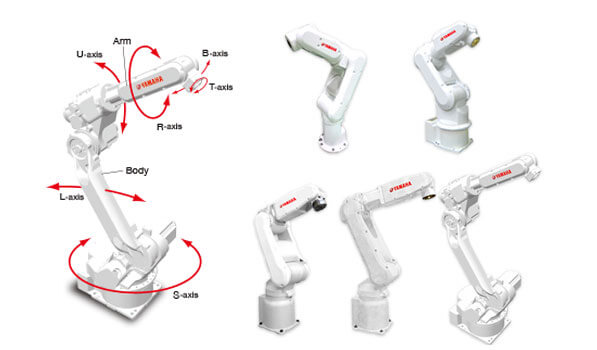
A 6 axis robot is an industrial automation device equipped with six independently movable joints. Common industrial 6-axis robots consist of the rotary base (S-axis), lower arm (L-axis), upper arm (U-axis), wrist rotation (R-axis), and wrist swing (B-axis), which together enable six degrees of freedom of movement.
6 axis industrial robots provide the flexibility, strength, and reach required for most applications, including welding, material handling, spraying, gripping, and more. They can perform motions such as pitch, roll, and yaw, with the end effector operating within Cartesian space (X/Y/Z + orientation).

Recommended Reading from AI Robots Eidos
In order to provide readers with a comprehensive understanding of industrial robots, it should be noted that, in addition to six-axis robots, there are other types, such as SCARA robots and collaborative robots, each with its own specialized application areas. Interested readers can explore in-depth articles related to these robots.
Components of 6 Axis Robots
Mechanical Body of 6 Axis Robots
| Base: Serves as the fundamental supporting structure, typically mounted on the floor or a fixed platform. It provides stability and enables rotational movement around the vertical axis, allowing the robot to cover a larger horizontal working range.
| 6 Axis Robot Arm: Includes the upper arm and lower arm. The lower arm connects the base to the upper arm, achieving up-and-down swinging through joint movement, determining the vertical range and reach of the robot arm. The upper arm connects the lower arm to the wrist and can swing forward/backward or extend/retract, assisting the lower arm in adjusting the end effector’s position and expanding the workspace.
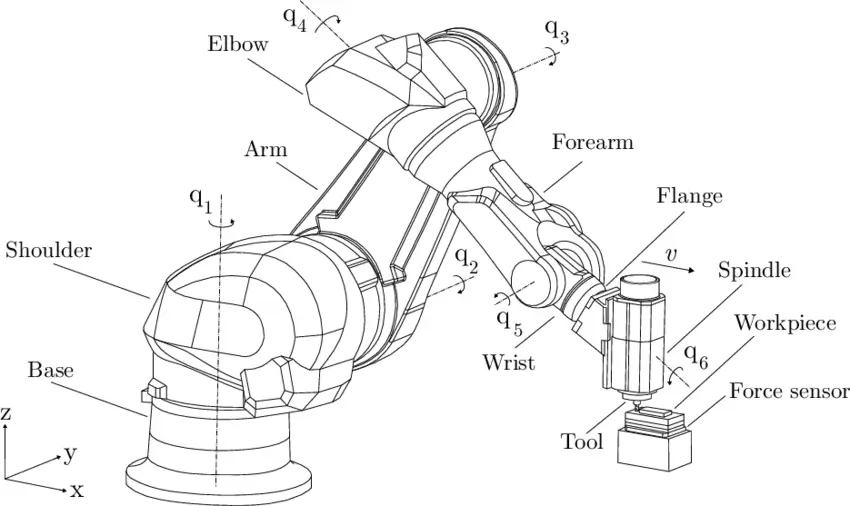
| Wrist: Located at the end of the upper arm, typically composed of multiple joints, responsible for adjusting the orientation of the end effector through pitch, yaw, and roll motions, enabling precise position and direction control.
| End Effector: Mounted at the end of the wrist, it can be replaced with different tools according to task requirements, such as grippers, welding torches, spray guns, suction cups, etc.
Drive System
| Servo Motors: Provide power to each joint of the robot, requiring high power-to-mass ratio, high torque-to-inertia ratio, wide speed regulation range, and fast response characteristics to ensure precise joint movement.
| Reducers: Work in conjunction with servo motors to convert the motor’s high-speed, low-torque output into low-speed, high-torque output, meeting the robot joints’ requirements for load-bearing and precise motion. Common types include RV reducers and harmonic reducers.
| Servo Drives: Receive commands from the controller to control the current, speed, and position of servo motors, achieving precise motor driving and ensuring the robot moves according to predetermined trajectories and parameters.
Control System
| 6 Axis Robot Controller: Serving as the robot’s “brain,” the 6 axis robot controller receives programming instructions, processes sensor data, and calculates motion parameters for each joint through motion control algorithms. 6-axis robots involve various complex control algorithms.
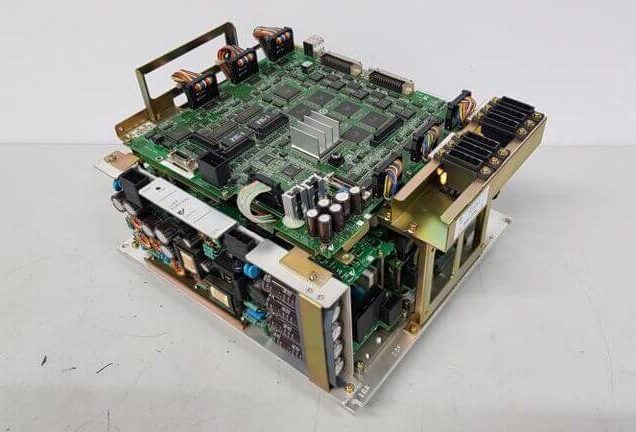
Here, two common algorithms help readers understand: Inverse Kinematics Algorithm (calculates the angle values of each joint based on the target position and orientation of the robot’s end effector. By establishing the robot’s kinematic model, such as the DH parameter method, it maps the end effector pose to joint variables to solve for inverse solutions), and Neural Network Control Algorithms (utilize the nonlinear mapping capability and learning ability of neural networks to model and control the robot’s kinematic and dynamic models. Through training neural networks to approximate the robot’s actual behavior, precise robot control can be achieved. Neural network control algorithms remain at the forefront of research).
Other control algorithms include PID control algorithms, trajectory planning algorithms, Model Predictive Control (MPC) algorithms, adaptive control algorithms, fuzzy control algorithms, etc., which are not detailed here due to space limitations. These control algorithms can be combined and optimized according to specific application scenarios and requirements to achieve precise position control, speed control, and force control.
| Teach Pendant: Used for programming and operating the robot. Operators can manually guide the robot through desired motions via the teach pendant, record key points and motion sequences, or directly input programming instructions for offline programming and online debugging.
| Sensors: Include joint position sensors, force sensors, vision sensors, proximity sensors, etc., providing real-time feedback to the control system for monitoring the robot’s motion status, detecting external environmental changes, and enabling obstacle avoidance and precise operation functions.
Typical Axis Configuration of 6 Axis Robots (Articulated Type)
Due to their larger range of motion, industrial 6 axis robots can perform many types of applications. Each axis represents an independent motion or degree of freedom, allowing direct movement to programmed points. The motions defined by each axis include:
| Axis Number | Name | Position | Motion |
| Axis 1 | S-Axis (Rotation) | Base | Left/right rotation of the entire robot |
| Axis 2 | L-Axis (Lower Arm) | Base of upper arm | Forward/backward swing of the upper arm |
| Axis 3 | U-Axis (Upper Arm) | Base of forearm | Forward/backward swing of the forearm |
| Axis 4 | R-Axis (Wrist Rotation) | End of forearm | Rotation of the forearm (wrist roll) |
| Axis 5 | B-Axis (Wrist Bend/Swing) | Wrist | Up/down swing of the wrist |
| Axis 6 | T-Axis (Wrist Twist/Rotation) | End flange | Rotation of the end flange (tool flange) |
Classification of 6-Axis Robots
Based on load capacity, 6-axis robots can be classified into light-load, medium-load, and heavy-load 6-axis robots. Different load capacities suit different application scenarios.
| Type | Typical Load | Application Examples |
| Light-load | 3–10 kg | Suitable for tasks requiring high precision and flexibility but low load capacity, such as precision assembly, electronic component handling, and small parts processing. |
| Medium-load | 10–50 kg | Widely used in automotive parts assembly, machining, packaging lines, etc., capable of handling medium-weight parts, welding, and spraying operations |
| Heavy-load | >50 kg | Mainly used in heavy machinery manufacturing, logistics warehousing, large component handling, etc., such as steel billet handling in steel plants, goods palletizing in logistics centers, and installation and handling of large molds. |
Advantages of 6 Axis Robots
| Flexibility: 6 axis robots excel in tasks requiring high flexibility. The six-axis motion enables them to navigate around obstacles and easily access confined spaces. This versatility is similar to the dexterity of the human arm, making them ideal for applications requiring precision and flexibility.
| Precision Level: The additional axes of 6 axis robots provide precise control and movement. They can perform delicate tasks such as grasping, placing, and manipulating objects with extremely high precision. This accuracy is crucial for applications with strict tolerance requirements, such as electronic assembly and quality inspection.
| Minimal Interference: Compared to articulated robots with fewer axes, 6 axis robots have a smaller footprint, occupying less space on the production floor. Their compact design and 360-degree joint rotation allow them to operate in confined areas without interfering with other equipment or robots, minimizing space requirements in automated production facilities.
| Productivity: Combining flexibility, precision, and minimal interference, 6 axis robots can complete tasks faster and more efficiently than other robot types. They can work continuously without frequent repositioning, maximizing productivity.
6 Axis Robot Programming
6 axis robots are complex machines requiring precise programming and control systems to perform tasks effectively. Programming these robots involves defining the specific actions, operations, and sequences they need to execute.
| Teach Pendant: A common method for programming 6 axis robots is using a teach pendant. This handheld device allows operators to manually guide the robot through desired motions and record each point and movement. The robot can then accurately replicate these actions during operation. Teach pendants are particularly useful for programming complex paths or situations requiring frequent reprogramming.
| Offline Programming: Offline programming is another widely used method, especially for large-scale operations. This approach involves creating and simulating robot programs on a computer using specialized software, without using the physical robot. Offline programming reduces downtime, allows path optimization before execution, and enables simultaneous programming of multiple robots.
Selection of End Effectors For 6 Axis Robots
An end effector is a specialized tool attached to the end of a 6 axis robot arm, designed to interact directly with the work environment. These devices are crucial for determining the specific tasks a robot can perform and greatly enhance the robot’s versatility. End effectors act as the robot’s “hands,” enabling it to manipulate objects, perform operations, and interact with the surroundings in various ways.
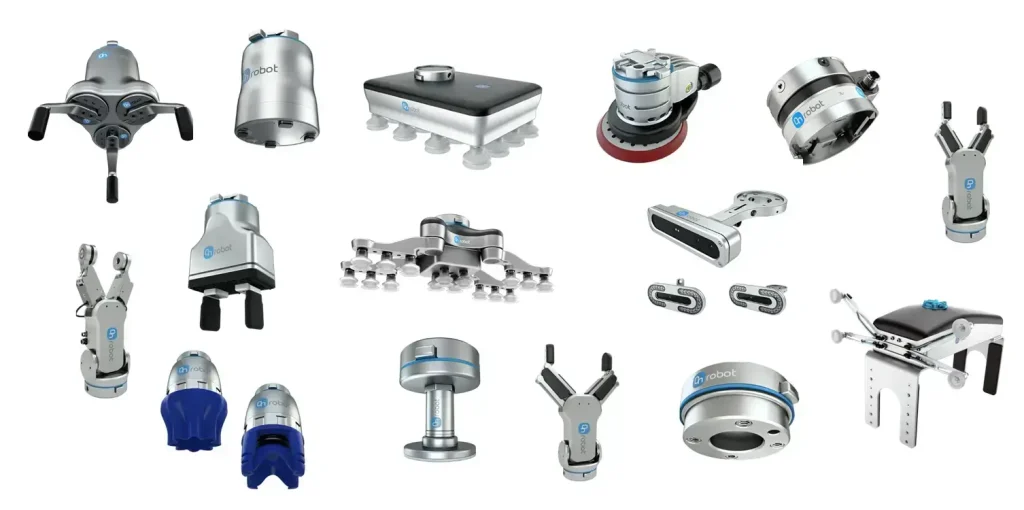
The choice of end effector significantly impacts the robot’s functionality. For example, gripper end effectors enable robots to pick up and manipulate objects, making them suitable for assembly or material handling tasks. Welding torches allow robots to perform precise welding operations in manufacturing environments. Suction cups are ideal for handling smooth, flat surfaces in packaging or logistics applications.
End effectors extend the functionality of 6-axis robots, allowing them to adapt to different tasks without changing the entire robot. This flexibility is particularly valuable in manufacturing environments where production requirements may change frequently.
| End Effector Type | Description | Application |
| Gripper | Used to hold and manipulate objects | Assembly, packaging, and material handling |
| Welding Torch | Used to join materials by welding | Metalworking, automotive manufacturing |
| Suction Cup | Used to pick up smooth surfaces using suction | Warehouse automation, pick and place operations |
| Tool Changer | Enables quick tool changeover | Flexible manufacturing systems |
| Nozzle | Used for applying coatings or paints | Paint spraying, coating applications |
Industrial 6 Axis Robot Prices (For Reference)
For high-end industrial 6 axis robots with load capacity above 15kg, extremely high precision, advanced motion control algorithms, and intelligent functions, suitable for automotive manufacturing, aerospace, and other industries demanding high precision and reliability, the price range is between $20,000 and $70,000 (such as high-end models from Fanuc, ABB, etc.).
Industrial 6 axis robot prices are significantly influenced by factors such as load capacity, precision, reach, controller version, and application software packages. Therefore, the prices mentioned in this article are for reference only.
Technical Specifications of 6 Axis Robots (For Reference)
The IRB 1100 is a member of ABB Robotics’ latest generation of 6 axis industrial robots, with a payload capacity of 4 kg, designed for the manufacturing industry using robot-based flexible automation.
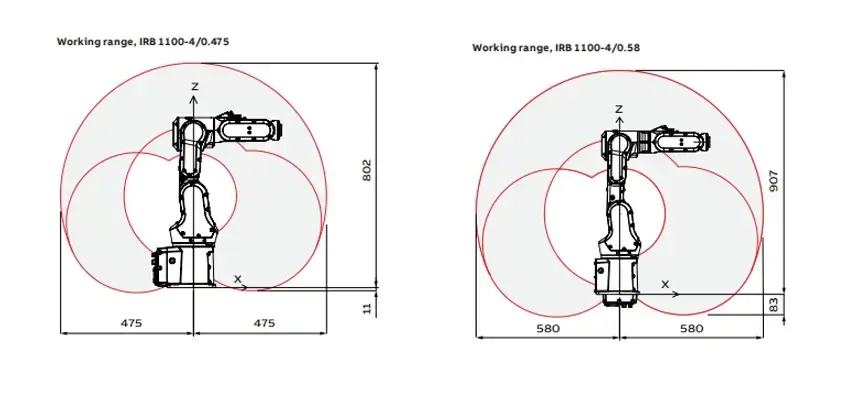
| Robot version | Reach (m) | Payload (kg) | Armload (kg) |
| IRB 1100-4/0.475 | 0.475 | 4 | 0.5 |
| IRB 1100-4/0.58 | 0.58 | 4 | 0.5 |
| Number of axes | 6 | ||
| Protection | Standard IP40. Option IP67. | ||
| Cleanroom | Option ISO 4 | ||
| Mounting | Any angle | ||
| Controller | OmniCore C30/C90XT | ||
| Integrated signal and power supply | Up to 16 Signals (C1+C2) on wrist (optional) | ||
| Integrated air supply | 4 air on wrist (Max. 6 Bar) (optional) | ||
| Integrated ethernet | One 1000 Base-T Ethernet port (optional) | ||
| IRB 1100-4/0.475 | IRB 1100-4/0.58 | |
| Pose repeatability, RP | 0.01 mm | 0.01 mm |
| Pose stabilization time, PSt (s), within 0.1 mm of the position | 0.08 | 0.19 |
| Path repeatability, RT | 0.05 mm | 0.05 mm |
Recommended In-depth Reading from AI Robots Eidos
To prevent misleading enterprises, it is important to point out that using ABB’s technical parameters is solely intended to help businesses gain a more intuitive understanding of 6-axis robots. Beyond ABB, there are many renowned industrial robot manufacturers worldwide. When selecting 6-axis robots, enterprises should choose the appropriate robot model from industrial robot manufacturers based on their actual needs. Interested enterprises can read this article about industrial robot manufacturers.
Applications of 6 Axis Robots
6 axis robots have transformed numerous industries with their versatility and precision. These robotic systems can perform various tasks and are indispensable equipment in modern manufacturing and production environments.
| Automotive Industry: In the automotive industry, 6-axis robots play crucial roles throughout various stages of vehicle production. They are used in body-in-white assembly, performing spot welding to connect body panels. These robots also excel in painting applications, providing consistent, high-quality surface finishes for vehicle exteriors. Additionally, they are used for tasks such as windshield installation, engine placement, and final assembly operations.
| Electronics Assembly: The electronics industry heavily relies on the precision and speed of 6-axis robots. These robots are used to assemble precision components such as circuit boards and mobile devices. They accurately perform tasks like pick-and-place operations, soldering, and quality inspection. The ability of 6-axis robots to work in confined spaces makes them ideal for handling complex electronic components.
| Aerospace Manufacturing: The aerospace manufacturing industry benefits significantly from the capabilities of 6-axis robots. These robots are used in producing aircraft components, performing tasks such as drilling, riveting, and composite material layup. Their precision is particularly important when assembling large structures like fuselages and wings.
Insight from AI Robots Eidos about 6 Axis Robots
The future of 6-axis robots will break through ‘ultra-precision’ and develop towards ‘ultra-heavy load.’
| In the dimension of ultra-precision, the integration of parallel and serial structures is breaking through the precision limits of traditional six-axis robots. High-precision, high-speed 6-axis robots, with advantages such as high structural stiffness and rapid dynamic response, achieve repeat positioning accuracy at the micrometer level, overcoming the technological bottlenecks of ultra-high speed and ultra-precision in fields like precision electronic assembly.
| In the dimension of ultra-heavy load, heavy-duty 6-axis robots with load capacities exceeding 200kg or even 500kg are transforming operational modes in heavy manufacturing scenarios. For instance, six-axis robots used for welding large engineering machinery structural components implement multi-layer and multi-pass welding techniques to achieve zero-defect welding. In industries such as steel, shipbuilding, and heavy machinery, six-axis robots are taking on tasks that originally required large specialized equipment or the collaboration of multiple cranes.
Image Credits: Researchgate & Web & Kemek & Kawasakirobotics & ABB & Sp-automation & Machineseeker